
TO make serious reply to this deceitful, deceptive and empty pretence, is a little hard to do. To see a person who can not go three squares to the house of God on foot, especially if it should be a little unpleasant, who can dance till midnight, “for amusement,” speaking of its being healthful, is ridiculous in the extreme. It may be, for anything we know, that for any person who has become so useless as to sit, day after day, and not move enough to circulate their blood, dancing would prove healthful. But there are a thousand things better for them. A visit to the sick, to the poor and the distressed, with something for their necessities, would be vastly better for both soul and body. Almost any kind of useful labor would be more healthful, and leave vastly less remorse of conscience. But if a person has such an aversion to labor to visiting the sick, the poor and needy, or doing anything useful, they deserve no health, and the world will only be the better off when they are out of it. More health, permanent happiness and real enjoyment are found in an industrious and useful life than all the seekers of pleasure ever knew. The man of useful life has no time for pleasure and amusement. His time is taken up, wholly taken up, and he is so happy in it, that it appears short, in constant acts of usefulness. But pleasure-seekers are constantly devising how to while away time, to pass it off or murder it. Time appears the greatest burthen they have, through their whole life, and, at death, the trouble is, that they have not more time. The good man appears pressed through life to do the good he desires to do, but when death comes, his work is done, well done, and he dies in hope of hearing the Lord say, “Well done, good and faithful servant; enter thou into the joys of thy Lord.”
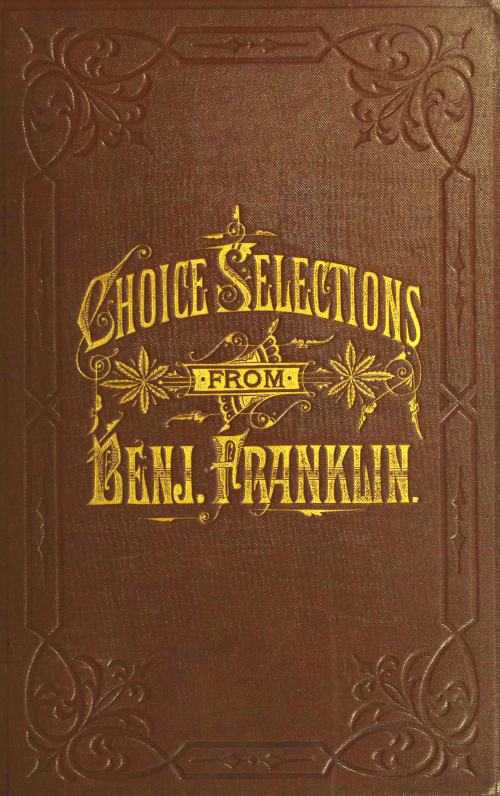
A Book of Gems, or, Choice selections from the writings of Benjamin Franklin
Explore more books like this:
About This Book
A curated anthology of sermons, debates, tracts, and miscellaneous religious writings arranged by subject and indexed for quick reference. Selections treat biblical authority, church order and practices (such as baptism and communion), pastoral responsibilities and preaching, moral exhortation, repentance and salvation, missionary effort, and reflections on life’s brevity. Short homiletic pieces blend doctrinal argument with practical counsel and urgent appeals for immediate personal and communal reform, offering guidance for Christian conduct and for those engaged in ministry or church renewal.