
IN reading the history of the church, one is overwhelmed to see how innovations have crept in and eat the vitals out of the church. At every period of the church, when there was any vitality in it, any spirituality or devotion to God, there has been a constant effort on the part of the enemy, through some well-meaning, but worldly minded professors of religion, to work things into the church, or to work something out of it, in the nature of the case calculated to corrupt and destroy it. We must be awake to these wily manœuverings and guard against them, or they will ruin the great work so well begun and so successfully carried on in our time. The insidious, wily and stealthy machinations of the Grecian and Gnostic philosophers, did an immense work in corrupting the primitive church. Many of these did this, too, with the best intentions in the world. They thought it would be a grand acquisition to the Christian religion, an accomplishment and refinement, to append to it philosophy, and require every preacher to be a philosopher. These were constantly edging into the pure religion of Christ their fine philosophical notions, pagan customs and ceremonies, and destroying the church whenever they did it. On the other hand, learned Judaizers were foisting Judaism into the church at every opportunity. Between Judaizers on the one hand, and Gnostic philosophers on the other, they amalgamated Christianity, Judaism and Paganism, and made Romanism. It was easy to obtain the idea of infant membership from Judaism, the idea of image worship from Paganism, and the idea of one true church from Christianity, and thus incorporate a system with a membership based in the flesh, making all the infants members, without any regeneration, under pagan idolatry, in worshipping images, and at the same time, with the idea that they are the true church.
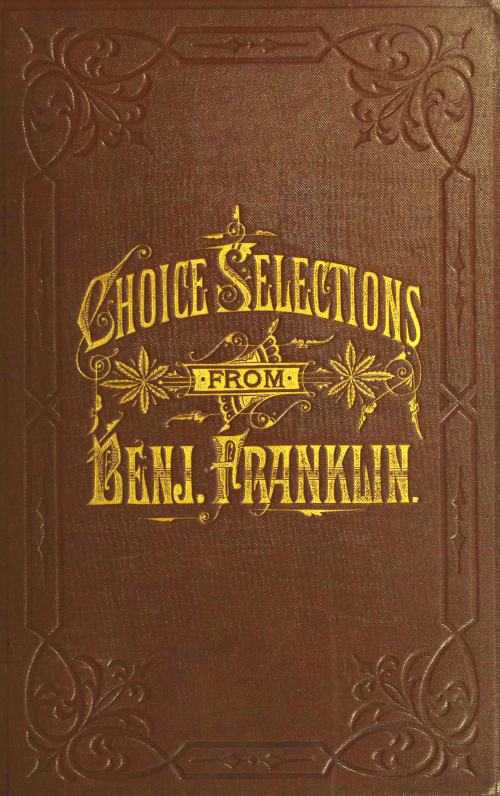
A Book of Gems, or, Choice selections from the writings of Benjamin Franklin
Explore more books like this:
About This Book
A curated anthology of sermons, debates, tracts, and miscellaneous religious writings arranged by subject and indexed for quick reference. Selections treat biblical authority, church order and practices (such as baptism and communion), pastoral responsibilities and preaching, moral exhortation, repentance and salvation, missionary effort, and reflections on life’s brevity. Short homiletic pieces blend doctrinal argument with practical counsel and urgent appeals for immediate personal and communal reform, offering guidance for Christian conduct and for those engaged in ministry or church renewal.