
CHAPTER VIII
THE READING OF BIOGRAPHY
Since literature is, broadly, the written record of human life, biography, the life story of real men, lies at the core and center of literature. On one side biography is allied to history, which is the collective biography of many men. On the other side it is related to fiction.
In our discussion of “History” we found that there are two ideals or methods of writing it: one the picturesque, the other the scientific. The scientific historian accuses the picturesque historian of falsifications and disproportions. Scientific history is new and aggressive and it accentuates its differences from the old ideals. Yet there is no essential opposition between fact and an imaginative representation of fact. Gibbon is picturesque, yet he is one of the first great historians to make exhaustive study and accurate use of documents. Carlyle can be as eloquent when he is telling the truth as when he is misled by his love of color and his partisan passions. The great historian of the future will not falsify or distort facts except as human nature must always intervene before the facts which it presents in human language. The true historian will have great imagination, great vision, and yet have scrupulous care to precisions of truth. For the present, history is recovering from its traditional eloquence and trying to learn to present facts honestly and clearly. Never again will the spirit of history and historical criticism tolerate such a magnificent fabrication as the end of De Quincey’s “Flight of a Tartar Tribe,” in which he gives, with all the paraphernalia of a learned note, the inscription carved on the columns of granite and brass to commemorate the migration of the Kalmucks. The columns are a structure of De Quincey’s fancy, and the inscription is in such prose as he alone among white men or Chinamen knew how to write! In De Quincey’s time it was not considered an ethical aberration to invent facts. In a ponderous article which he wrote for the Encyclopædia Britannica on Shakespeare, he quoted the poet from memory and spun some of the biography from his own fancy. The pious and learned President of Harvard College, Jared Sparks, for the greater glory of America and its founder, “improved” the style of Washington’s private papers and ably defended the emendations. And Weems, an early biographer of the man who seems nobler the more truly we know him and who needs no legend to dignify him, wrote his life of Washington with the deliberate purpose, indicated on the title page, of inculcating patriotic and moral lessons in the young. Hence the cherry-tree story.
History has improved in its morals, if not in its manners, and scientific biography is making some headway. But biography is still in a hazy state of legend and myth. Approach any man you choose, especially among men of letters who have been written about by other men of letters, and you find a mass of conjecture and legend masquerading as fact. Sometimes there is an added garment of disguise, the dignified gown of science and scholarship.
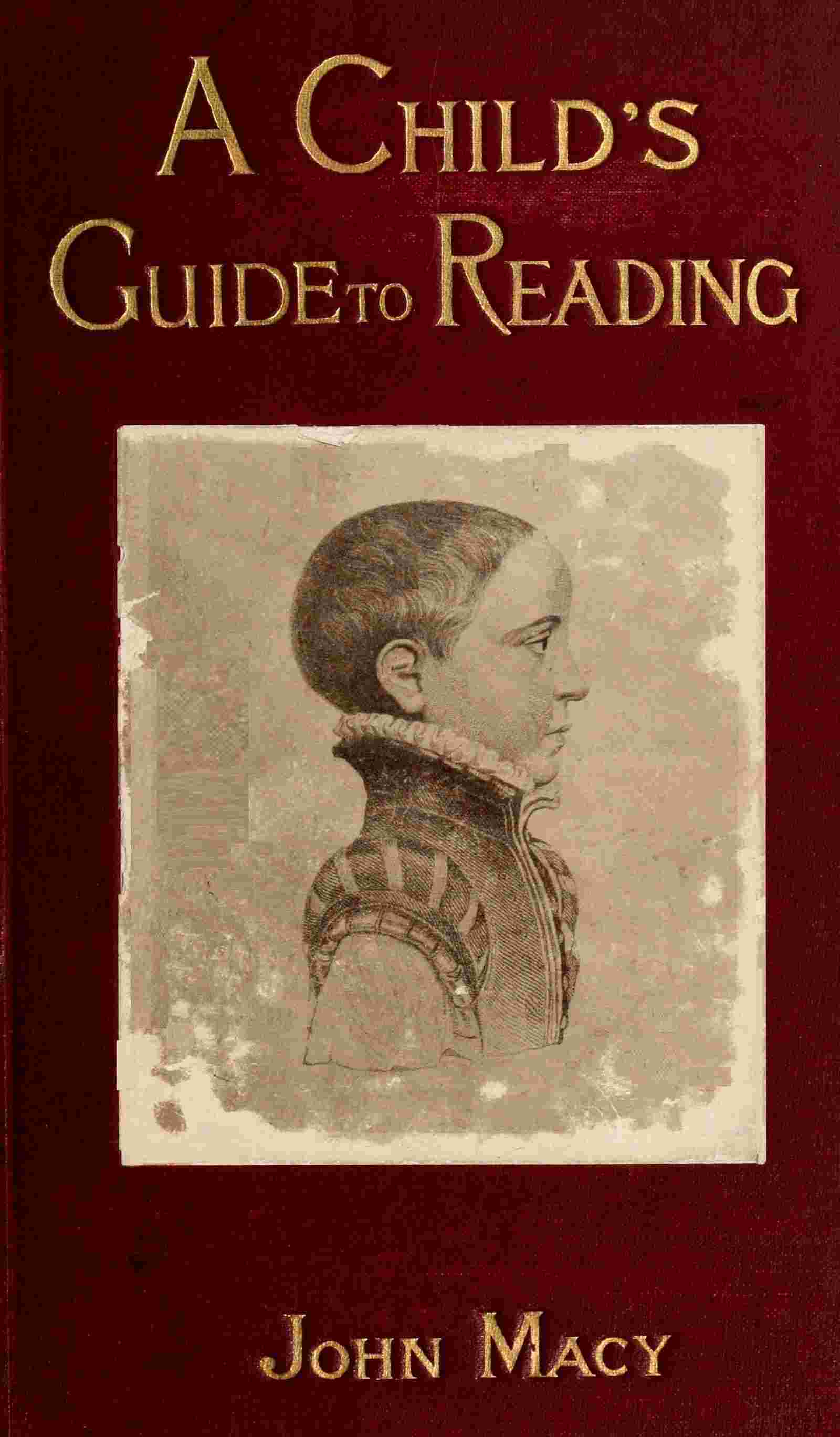
No great writer has suffered from credulous and weak-principled biographers so much as the greatest of all—Shakespeare. Most of the lives of him are gigantic myths, built on hardly as many known facts as would fill two pages of this book. Of late historians and men of science have begun to laugh at literary biographers for making such confusion of the institution of Shakespeare biography. It is well enough for the young reader to learn carefully the biographical notes prefixed to the school editions of Shakespeare, for the better the young reader learns school exercises and the notes in the text books, the better basis he has for reading and thinking for himself. I may say, however, that there are at present, so far as I know, only two books on the life of Shakespeare which are trustworthy, Halliwell-Phillips’s “Outlines,” which gives all the documents, and a recent masterly discussion of the documents by George G. Greenwood called “The Shakespeare Problem Restated.” It is a problem and not one for us to go into here except that it illustrates what we are saying about scientific and fanciful biography. I should not wonder if another generation were more interested than our fathers have been in the poetic achievements, whatever they are, of the man whose youthful portrait is on the cover of this book—Francis Bacon. One thing is certain: the rising generation had better learn early to approach with caution and tolerant scepticism books bearing such titles as “Shakespeare, Man, Player and Poet,” “Shakespeare, His Life, His Mind and His Art.” We had better bend our attentions to the plays themselves, and when we wish to read about Shakespeare, turn not to the so-called biographies and “studies in Shakespeare” by college professors, but to the great critics, Coleridge, Hazlitt, Lamb, De Quincey, Pater.
As we said that we, mere readers, should leave scientific history in the hands of specialists, so we may leave the problems of literary biography to expert investigators. We are interested rather in that kind of biography which is as old as the earliest legends of heroes, that which celebrates the great ones of the earth. If it is true to fact so much the better; but since biographers are likely to be the friends, kinsmen, admirers of their subjects, biography will be the last division of history to be informed with the scientific spirit. And so far as it is an art, it will err on the right side, like fiction and poetry, by presenting an ennobled view of human nature.
That biography is an art is proved by the admittedly great examples. The novelist who creates a fictitious biography has no more difficult and delicate task than the biographer who finds in a real life story the true character of a man, and gives to the events which produced the character artistic form, unity, and movement. Boswell’s “Life of Samuel Johnson” and Robert Southey’s “Life of Lord Nelson” are as beautifully designed as the best novels. Boswell’s masterpiece resembles a realistic novel and Southey’s “Nelson” is like a romantic tale of chivalry and heroism.
Benjamin Jowett, the great professor of Greek at Oxford, said that biography is the best material for ethical teaching. In many ways it is the best material for all kinds of teaching. For everything that human beings have done and thought is to be found in the life stories of interesting individuals, so that biography opens the way to every subject. In our discussion of history we said that the directest path to the heart of an historical epoch is through the biography of an important figure or a wise observer of that epoch. There is no better political history of America during the Civil War than Nicolay and Hay’s “Life of Lincoln.” Grant’s “Memoirs” contains all that an ordinary reader needs to know of the movements of the Northern armies after Grant took command. The memoirs and reminiscences of Davis and Confederate generals give us an adequate account of the civil and military movements of the Southern side. Carlyle’s “Cromwell,” no matter how biased and overwrought it seems to discriminating students, will open the seventeenth century for those of us who cannot be specialists in history. Bourrienne’s “Memoirs of Napoleon,” in the English translation, is a good introduction to the history of Europe during the Napoleonic wars (and it makes little difference to us that the book was largely rewritten and augmented by the French editor). Morley’s “Life of Gladstone” is a history of Victorian England. The life of Luther is the heart of the Protestant Reformation.
The layman who would know something of the tendencies of modern science cannot do better than to read the biographies of men of science in which sympathetic pupils have told in a style more simple than the masters’ treatises the intellectual principles and human conditions of the masters’ work. Such biographies are the “Life and Letters” of Darwin, of Huxley, of Agassiz. The “Life of Pasteur” by Valery-Radot, which has been translated into English, is a clear account of the main tendencies of modern medicine, the subject that all the world is so much interested in. Anyone who reads it will know better how to make his way through the masses of popular articles on medicine and public health in the current magazines.
Since literary men are the most interesting of all heroes to other makers of books, it is natural that the lives of the masters of literature should have been written in greater abundance and usually with greater skill and charm than the lives of any other class of men. A good way, perhaps the best way, to study literature is to read the lives of a dozen or a score of great writers. An ambitious youth, determined to lay the foundations of a knowledge of literature, might begin to read in any order the biographies in the series called English Men of Letters. From that series I should cross out William Black’s “Goldsmith” and substitute Forster’s or Washington Irving’s “Life of Goldsmith”; I should also omit Leslie Stephen’s “George Eliot” and read instead the “Life and Letters” by J. W. Cross. It would be as well to pass by Mr. Henry James’s “Hawthorne” in favor of the biography by Mr. George E. Woodberry in American Men of Letters.
It will not be wise even for the enthusiastic reader of literature to confine his reading in biography to the lives of men of letters. There is such a thing as being too much interested in bookish persons. Men of action have led more eventful lives than most writers, and their biographers are likely therefore to have more of a story to tell. Whenever you find yourself interested in any man, when some reference to him rouses your curiosity, read his biography. In general it is better to read about him in a complete “Life,” even if it is a bulky one in a forbidding number of volumes. You are not obliged to read it all. It is better to roam for half an hour through Boswell than to read a short life of Johnson. This is a day of pellet books, handy volumes, and popular compendiums; we need to learn again the use and delight of a little reading in big books, in which we can dwell for long or short periods. We need, also, to get over the idea that only learned persons and special students can go to original documents. A boy of fifteen will have more fun turning over the state papers and letters and addresses of Washington and Jefferson and Lincoln than in reading a short encyclopedia article on one of those great men. Just try it the next time you happen to be wandering aimlessly in a public library and see if you do not stumble on something interesting. The whole “Dictionary of National Biography” is not so much worth owning and, except for purposes of reference, not so much worth reading as half as many volumes of first-hand biography.
The first of all original documentary biography is autobiography. A man knows more about his own life than anyone else and he is quite as likely to tell the truth about it as his official biographer. “The Story of My Life” is always an attractive title, no matter who the hero is. If an autobiography has continued to find readers for a number of years, it is likely to be worth looking at. Sometimes men who are not entitled to be called great have written great autobiographies. The “Autobiography” of Joseph Jefferson is full of delightful humor and sweetness. At a time when the theater is not an institution of which we are proud and actors as they appear in the public prints are usually bores and vulgarians, Jefferson’s “Autobiography” will give the reader a new sense of the potential dignity of the stage and of the humanity of the actor’s profession. Among the great men who have written autobiographies we have mentioned Mill and Franklin and Grant. Others who have written delightful volumes of self-portraiture are Goethe, Gibbon, Trollope, Mrs. Oliphant. As a working rule, I should suggest that when you are interested in a man, you should first read his autobiography if he wrote one. If he did not, turn to the most complete story of his life, the one that contains whatever letters and documents have survived. And as a third choice try to find a life of him by some writer who was intimate with him during his life, or who is an expert in the subject to which his life was devoted, or who is a master in the art of biography.
LIST OF BIOGRAPHIES
Supplementary to Chapter VIII
This list of biographies does not constitute a catalogue of great men. It merely gives some biographies that have literary quality or some other quality that makes them important. The subject of the biography is given first whenever the person written about would naturally come into the mind before the author of the book; thus: Samuel Johnson; “Life” by James Boswell. In other cases the author comes first; thus: Plutarch; Lives.
John and Abigail Adams. Familiar Letters of John Adams and His Wife, Abigail Adams, During the Revolution.
Joseph Addison. Life, by William John Courthope.
In English Men of Letters.
Thomas Bailey Aldrich. Life, by Ferris Greenslet.
Alfred the Great. Life, by Walter Besant.
Henri Frédéric Amiel. Journal, translated by Mrs. Humphrey Ward.
Aurelius Augustinus. Confessions of St. Augustine.
A remarkable autobiography. Pusey’s translation is in Everyman’s Library.
Francis Bacon. Life and Letters, edited by James Spedding.
James Matthew Barrie. Margaret Ogilvy.
Barrie’s life of his mother; a delicious book.
George Henry Borrow. The Bible in Spain.
The subtitle defines this interesting book: “The journeys, adventures, and imprisonments of an Englishman in an attempt to circulate the Scriptures in the peninsula.” Readers of Borrow (see page 75 of this Guide) will be interested in his “Life and Letters,” edited by William I. Knapp.
Robert Browning. Life and Letters, by Alexandra Leighton Orr.
James Bryce. Studies in Contemporary Biography.
Edmund Burke. Life, by John Morley.
In English Men of Letters.
Robert Burns. Life, by John Gibson Lockhart.
Julius Cæsar. Life, by James Anthony Froude. Commentaries on the Gallic and Civil Wars.
Thomas Carlyle and Mrs. Carlyle. Life and Letters, by James Anthony Froude.
Thomas de Quincey. Autobiographic Sketches. Confessions of an English Opium-Eater. Reminiscences of the Lake Poets.
Charles Dickens. Life, by John Forster.
In the edition abridged and revised by the English novelist, the late George Gissing.
George Eliot. Letters and Journals, edited by John Walter Cross.
Ralph Waldo Emerson. Life, by Oliver Wendell Holmes.
In American Men of Letters. See also Emerson’s letters to Carlyle and John Sterling.
Francis of Assisi. Life, by Paul Sabatier.
In the English translation.
Benjamin Franklin. Autobiography.
William Ewart Gladstone. Life, by John Morley.
Johann Wolfgang von Goethe. Autobiography.
Translated in Bohn’s Library.
Oliver Goldsmith. Life, by Austin Dobson. See also the biographies by John Forster and Washington Irving.
Ulysses Simpson Grant. Personal Memoirs. Life, by Owen Wister (in the Beacon Biographies).
Thomas Gray. Letters, edited with a biographical sketch by Henry Milnor Rideout.
Alexander Hamilton. Life, by Henry Cabot Lodge.
In American Statesmen.
Nathaniel Hawthorne. Hawthorne and His Circle, by Julian Hawthorne. Life, by George Edward Woodberry (in American Men of Letters).
Oliver Wendell Holmes. Life and Letters, edited by John Torrey Morse, Jr.
Thomas Henry Huxley. Life and Letters, edited by Leonard Huxley.
Washington Irving. Life and Letters, edited by Pierre Munroe Irving. Life, by Charles Dudley Warner (in American Men of Letters).
Jeanne d’Arc. Life, by Francis Cabot Lowell. Life, by Andrew Lang. Condemnation and Rehabilitation of Jeanne d’Arc, by J. E. J. Quicherat (in the English translation).
Samuel Johnson. Lives of the Poets, selected by Matthew Arnold. Life of Johnson, by James Boswell (in two volumes in Everyman’s Library).
John Keats. Life, by Sidney Colvin.
In English Men of Letters.
Charles Lamb. Letters, edited by Alfred Ainger.
Robert Edward Lee. Life, by Philip Alexander Bruce. Life and Letters, by John William Jones. Recollections and Letters, by R. E. Lee, Jr. Life, by Thomas Nelson Page.
Abraham Lincoln. Life, by John George Nicolay and John Hay. A Short Life of Abraham Lincoln, by John George Nicolay. Lincoln, Master of Men, by Alonzo Rothschild.
David Livingstone. Last Journals in Central Africa. How I Found Livingstone, by Henry Morton Stanley.
Henry Wadsworth Longfellow. Life and Letters, edited by Samuel Longfellow.
Thomas Babington Macaulay. Life and Letters, by George Otto Trevelyan.
John Stuart Mill. Autobiography.
John Milton. Life, by Mark Pattison.
In English Men of Letters.
Napoleon. Life, by John Gibson Lockhart. Life, by William Milligan Sloane. Memoirs of L. A. F. de Bourrienne. Life, by John Holland Rose.
Margaret Oliphant. Autobiography and Letters.
Charles William Chadwick Oman. Seven Roman Statesmen of the Later Republic: the Gracchi, Sulla, Crassus, Cato, Pompey, Cæsar.
Samuel Pepys. Diary.
Two volumes in Everyman’s Library.
Plutarch. Lives.
In the Elizabethan translation by Thomas North, or the modern translation by Arthur Hugh Clough. An abridged edition of this is published for schools by Ginn & Co.
Jacob August Riis. The Making of an American.
Walter Scott. Memoirs of the Life of Sir Walter Scott, by John Gibson Lockhart.
There is an abridged edition of Lockhart, edited by J. M. Sloan.
William Shakespeare. The Shakespeare Problem Restated, by George G. Greenwood. Outlines of the Life of Shakespeare, by James Orchard Halliwell-Phillips.
At the present time the most reliable works on Shakespeare’s life.
William Tecumseh Sherman. Memoirs. Home Letters of General Sherman, edited by M. A. DeWolf Howe.
Robert Southey. Life of Nelson.
In Everyman’s Library.
Anthony Trollope. Autobiography.
Izaak Walton. Lives of John Donne, George Herbert and Richard Hooker.
George Washington. Life of Washington, by Washington Irving. The Seven Ages of Washington, by Owen Wister. Life, by Woodrow Wilson.
John Wesley. The Heart of Wesley’s Journal, with an essay by Augustine Birrell, published by Fleming-Revell Co.
The journal is found in four volumes of Everyman’s Library.