
DEMONSTRATION RESULTS
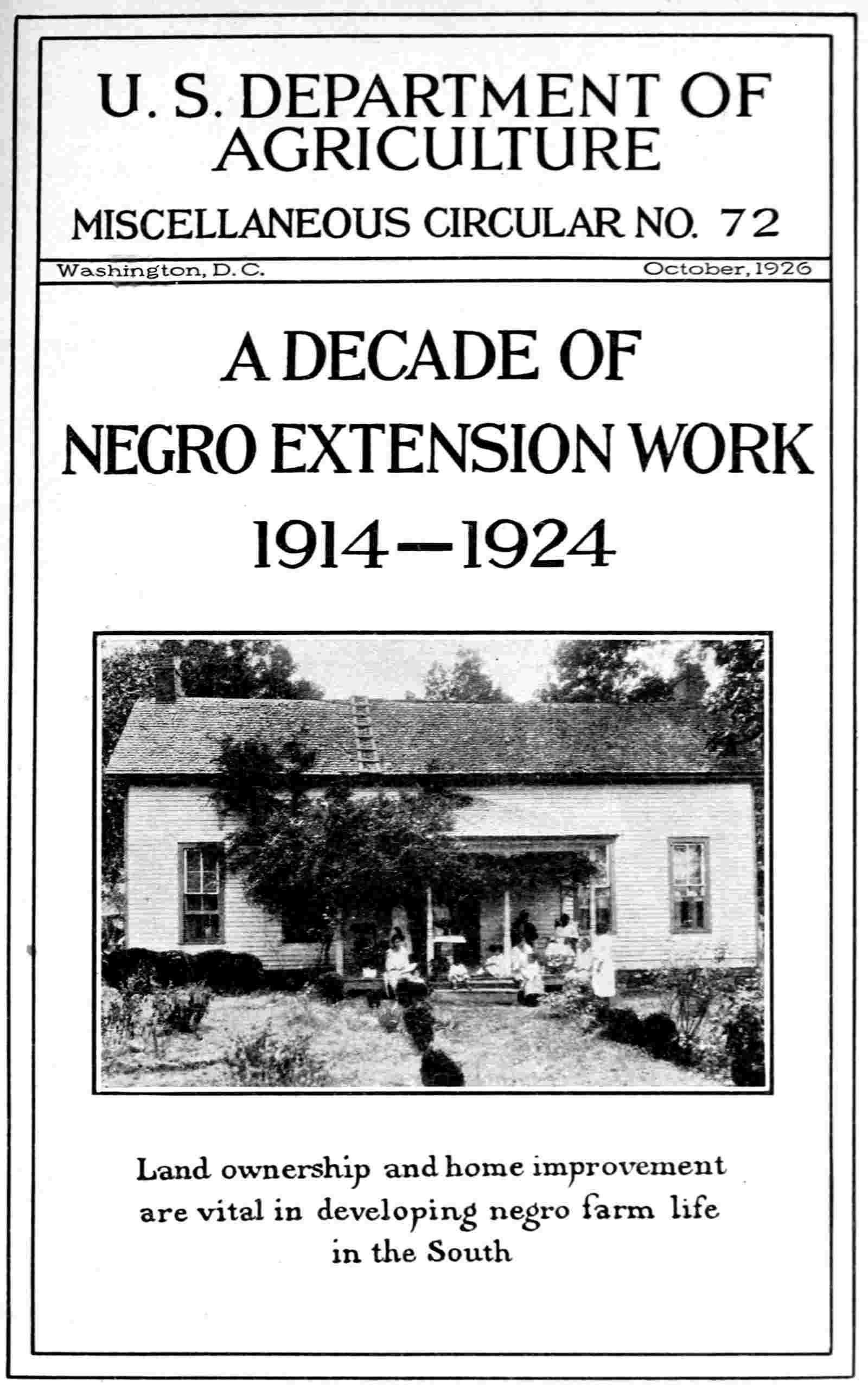
At the close of the first decade of negro extension under the Smith-Lever Act, it is well to make permanent record of some of the achievements of the negroes in extension work, not only as a matter of recognition and commendation, but also to set up milestones to mark progress. At the close of the next decade these figures will have even greater interest than now. In fact, they will increase in importance and value with the passing of time.
The statistics which follow are not complete because they pertain to the activities of negro agents only. Hundreds of white agents have done some work with negroes, which is not reported separately. It is probably safe to say that the numbers represented in the 1924 report might be doubled. Since a system of extension work for negroes by negroes has been evolved, the tendency has been to turn the responsibility over to negro agents. The most harmonious relations prevail between white and negro agents in all the States and white agents always stand ready to advise and help.