
WeRead Powered by ReaderPub
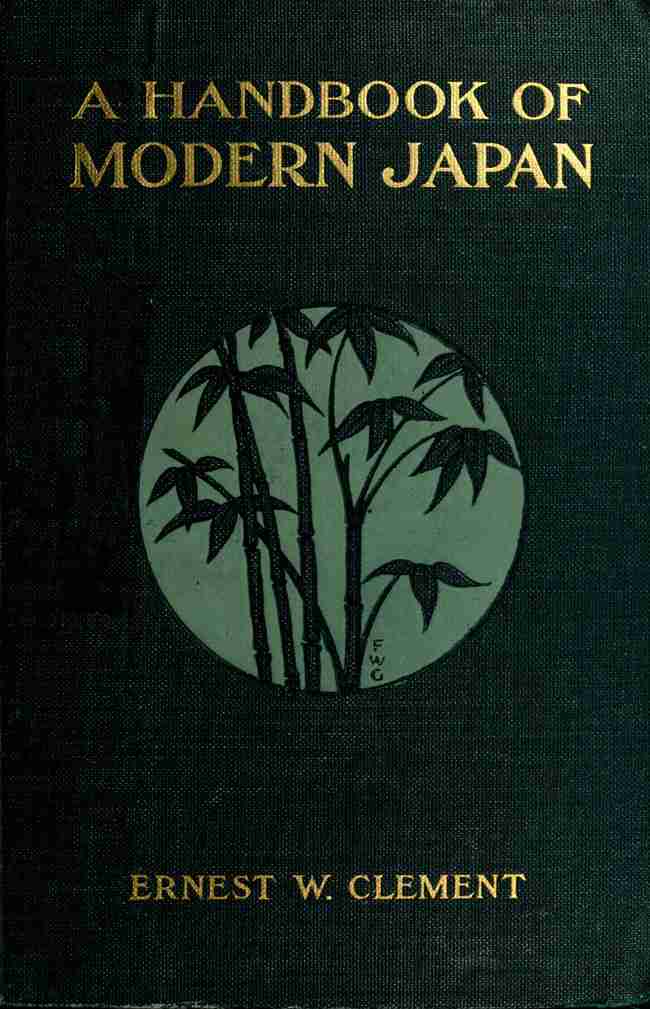
A Handbook of Modern Japan cover

A Handbook of Modern Japan

Chapter 5: JAPANESE PRONUNCIATION
Open in WeRead

Explore more books like this:

About This Book

The work surveys Japan’s physical geography, economy, transport, daily life, customs, and national character, then reviews both older and modern history alongside constitutional, local, and legal institutions. It examines religion, philosophy, literature, education, aesthetics, social change, and the role of women, and it assesses Japan’s international position including wartime and expansion topics. The author presents social transformation as largely government-directed, with conservative popular attitudes contrasted against progressive official reforms. Organized into concise chapters with maps, illustrations, and bibliographies, the volume functions as a compact handbook offering an overview of contemporary conditions and references for further study.

JAPANESE PRONUNCIATION

a like a in father
e   „   e  „  men
i    „   i  „  pin
o   „   o  „  pony
u   „  oo  „ book
ai as in aisle
ei    „    weigh
au as o in bone
ō   „  „   „   „
ū as oo in moon

i in the middle of a word and u in the middle or at the end of a word are sometimes almost inaudible.

The consonants are all sounded, as in English: g, however, has only the hard sound, as in give, although the nasal ng is often heard; ch and s are always soft, as in check and sin; and z before u has the sound of dz. In the case of double consonants, each one must be given its full sound.

There are as many syllables as vowels. There is practically no accent; but care must be taken to distinguish between o and ō, u and ū, of which the second is more prolonged than the first.

Be sure to avoid the flat sound of a, which is always pronounced ah.

A HANDBOOK
OF
MODERN JAPAN