
A camp fire circle at Bryce Canyon. Courtesy Union Pacific Railroad.
A view of Hurricane (1929). Courtesy U. S. National Park Service.
Members of International Geological Congress on tour of Parks at Bryce Canyon, August 21, 1933. A. M. Woodbury, guide (seated, 5th from left): K. E. Weight, Naturalist at Bryce (Standing, 3rd from left): Dee Chamberlin and Chauncey Parry, drivers (standing right).
When the Utah Parks Company took over the Wylie camp in Zion, it was planned to construct a large hotel, but Director Mather firmly refused permission. He finally agreed to the lodge and cabin system, now serving the Park tourists. El Escalante Hotel in Cedar City was ready by the season of 1924. New accommodations were under construction in Bryce Canyon and Cedar Breaks. Reports from elated visitors, improvement of roads and accommodations and consistent advertising all resulted in vastly increased travel. The tourist traffic jumped from 8400 in 1924 to 16,817 in 1925. About half that number visited North Rim and presumably Bryce and Cedar Breaks. The tide was in full flow. For the season of 1925 new tourist busses with demountable tops for viewing the spectacular canyon walls were purchased. Busses, however, served only a small part of the traveling public, for America was on wheels and the roads were now such that auto traffic could roll in easily. The Grotto Campground was enlarged, equipped, and supplied with water. The survey of the Pine Creek road and tunnel was completed and Wayne Wonderland was dedicated.
Richard Evans was borrowed from the U.S. Geological Survey and served as acting superintendent during the tourist season for two years, while Walter Ruesch remained in charge during the balance of the year. Two permanent park rangers assisted Ruesch, Donald J. Jolley, appointed August 1, 1920, and Harold Russell, who had worked summers from 1920 to 1923 and who received permanent appointment in October of the latter year. All three were closely associated with developments and improvements in the canyon. In 1927, E. T. Scoyen was appointed permanent superintendent.
The Nature Guide Service in Yosemite and Yellowstone had proved so successful that it was decided to extend such services to other parks. It was initiated in Zion by the writer, June 19, 1925, and continued to mid-September. There was no precedent to follow, but the work gradually grew through succeeding summers into the Naturalist Service. During the next five summers, museum collections of natural history specimens, pioneer relics, and library books gradually accumulated and a museum was established in 1928. Information concerning the history, flora, fauna and geology of the canyon was collated. Lectures at the camp ground, at the Lodge, and the guided trips along the Narrows trail were developed and pictures and lantern slides were shown. In 1929, a mimeographed publication, the Zion-Bryce Nature Notes, was undertaken and a Natural History Association was organized to handle publications.
In 1926, daily bus service was established from Cedar City around the loop to Zion, North Rim and Bryce. The East and West Rim trails were reconstructed with better grades and locations. The West Rim Trail was dedicated at a ceremony held at the time of the visit of Crown Prince Gustavus and Princess Louise of Sweden, on July 11. A new road was constructed between Rockville and the Park boundary and the proposed Parunuweap road was surveyed.
In 1927, the Utah Parks Company took over the Wylie Camps at North Rim and the bus service from the Parry Brothers, and a lodge and cabins were constructed on the brink of North Rim at Bright Angel Point, so arranged that the Great View into Grand Canyon could be seen from the windows. This was completed in 1928.
In the meantime, Bryce Canyon was being developed by the Utah Parks Company under the direction of the Forest Service, in the expectation that eventually it would be transferred to the Park Service. The lodge and cabins were built some distance from the rim so that the beauties of the canyon could be preserved to best advantage. When Mather yielded to pressure to allow Bryce Canyon to become a national park if all private holdings were eliminated, Congress passed a bill, June 7, 1924, providing for the establishment of a Utah National Park upon the fulfillment of Mather’s conditions. The principal difficulty was that the State of Utah owned a section of land at a strategic point on the rim of the canyon. It took four years to fulfill the conditions, and before they were arranged Congress passed a revised bill. February 25, 1928, nearly doubling the size of the area and changing its name to Bryce Canyon.
When it became certain that the conditions would be fulfilled, the Union Pacific arranged for a large excursion (September 14-17, 1928). The party included: Carl R. Gray, president of the railroad; Stephen T. Mather, Director of the U. S. National Park Service, and Horace M. Albright, his assistant; Henry H. Blood, Chairman of the Utah State Road Commission (later Governor of Utah, 1933-1941); Congressmen Don B. Colton from Utah, and Philip D. Swing of California; Mayor John F. Bowman of Salt Lake City; Charles F. Burke, U. S. Commissioner of Indian Affairs; Thomas H. McDonald, Chief of the U. S. Bureau of Public Roads; Heber J. Grant, President of the Mormon Church, and his counselor, Anthony W. Ivins; representatives of the press, chambers of commerce and other organizations, and a host of lesser officials and advisers, including the writer.
After spending the first night in Zion, the party journeyed via Pipe Springs to the Kaibab and North Rim, where on September 15, 1928, the new Kaibab Trail and the Grand Canyon Lodge were dedicated. The next day the visitors reached Bryce Canyon where similar services were held in the evening. Congressman Don B. Colton formally presented deeds of the private land to Director Mather, who declared that the conditions having been fulfilled, Bryce Canyon had become a National Park.
VIEW FROM ONE OF THE GALLERIES OF THE FAMOUS ZION-MT. CARMEL TUNNEL. From UTAH—A guide To The State. Utah WPA Writers Project.
Thus the great scenic areas of southern Utah had finally been established as national parks and monuments, adequate roads and travel accommodations had been provided, and efforts had been made to give the casual tourist a deeper appreciation of the natural treasures at his disposal. Within the next few years many of the immediate projects for facilitating travel through the Park area were completed. The bridge across the Marble Gorge of Grand Canyon, a few miles below Lee’s Ferry, was dedicated June 15, 1929.
The next year saw the official opening of the Zion-Mt. Carmel highway, one of the most spectacular engineering feats in the history of road-building. From the canyon floor the road turns to the east up Pine Creek Canyon and spirals upward on a four-mile roadway to a tunnel paralleling the face of the vertical cliffs for 5,613 feet. Five galleries cut from the tunnel to the canyon wall offer the motorist vantage points for viewing the awe-inspiring scenery. Construction within the National Park cost $2,000,000; from the Park to Mt. Carmel a state and federal project, also cut in great part from solid rock, cost in excess of $500,000. Still later the road up the floor of Zion from the checking station on the main highway was reconstructed and made a modern oil-surfaced highway. Thereafter, until America’s entry into World War II, each summer brought greater throngs of visitors into the wonderland.
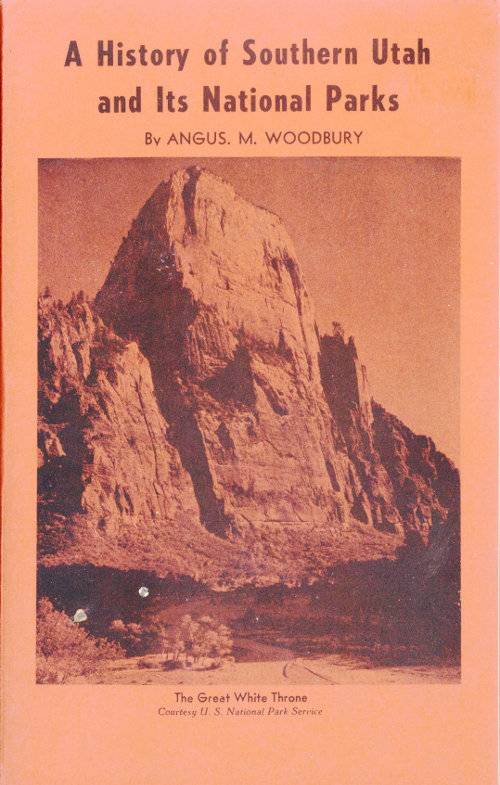
At long last the nation had awakened to the greatness of the gift nature had bestowed upon it, and in future years unnumbered generations will come to marvel at the wonders of the country which is southern Utah and at the austere majesty of the Great White Throne—generations free from the dread and superstition that made primitive races fear its unimagined heights no less than its long shadows and dazzling brilliance in the sun.
Symbol of Nature’s handiwork, this central and most magnificent of Zion’s features still echoes the distant footfall of Spanish padre and American Frontiersmen passing unwittingly by its dooryard; it is mindful of the day when the first Mormon pioneer lifted uncomprehending eyes to the solitude of its summit, and of that other day when religious fervor called it Zion, the dwelling place of peace. Men have come, cutting their trails, building their roads, roofing their shelters, dreaming their dreams. The human tide around its base has ebbed and flowed, according to human wont, but it remains serene, aloof, alone. It will be so a thousand years from now.
EPILOGUE
Twenty-one years after Bryce Canyon became a national park, a “coming of Age” party was celebrated at Bryce Canyon on September 15, 1949. The Utah Parks Company acted as host. The Park Service cooperated by inviting to the celebration all those that could be found who were present at the dedication in 1928.
The guests began arriving at Bryce Canyon the day before the celebration. A group that met in the dining room that evening included M. R. Tillotson, Regional Director of the Park Service; P. P. Patraw, Assistant Director and former Superintendent of Zion and Bryce Canyon National Parks; Dr. Harold C. Bryant, Superintendent of Grand Canyon National Park; Dr. Angus M. Woodbury, Professor of Zoology, University of Utah, formerly Park Naturalist of Zion and Bryce; their wives and Mr. Victor Petrosso, formerly manager of El Tovar Lodge at Grand Canyon. Others arrived next day including B. J. Finch, formerly District Engineer of the U. S. Bureau of Public Roads; W. P. Rogers, Manager of the Utah Parks Company; Joel L. Priest, Jr. and E. C. Schmidt of the Union Pacific; Mr. and Mrs. David Rust of Provo, Utah; Mr. and Mrs. M. V. Walker, Naturalist of Zion and Bryce National Parks; Jack Christensen of Cedar City; D. C. Dix of the Salt Lake Tribune; and other officials of the Park Service and Utah Parks Company, making a total of 41. Many other invited guests expressed regret at not being able to attend. Those that were present at both the 1928 and 1949 celebrations included the Tillotsons, Finch, Woodbury, Christensen, Schmidt and the Rusts.
Festivities started at noon with a luncheon in the Lodge dining room, after which, about 40 guests were taken on a tour in an ultra modern luxurious Utah Parks bus by Park Naturalist M. V. Walker along the Bryce Rim as far as Rainbow Point and Yovimpa View where everyone enjoyed the friendly greetings of old acquaintances, the superb natural sculptures and the marvelous vistas from the high points where the Aquarius Plateau, the Henry Mountains, the Kaiparowits Plateau, Navajo Mountain and the Kaibab were all to be seen in the unsurpassed landscape.
At 7 p.m., the group converged on the superintendent’s residence where Mr. and Mrs. Smith held open house and dispensed hospitality lavishly.
At 8:15 p.m., the group moved to the lodge dining room where a sumptuous banquet given by the Utah Parks Company was followed by a program at which Superintendent Smith presided and interestingly introduced the speakers. Ranger in charge, John G. Lewis gave the address of welcome. Reminiscences of the early days in the Utah National Parks were related by Dr. Woodbury, who also referred to the outstanding work which Mr. B. J. Finch, formerly of the Bureau of Public Roads, did in pioneering the Zion-Mt Carmel Highway and Tunnel.
Lean-to Natural Bridge overlooking Springdale in Zion Canyon. Courtesy U. S. National Park Service.
Mr. Tillotson gave the main speech of the evening, in which he called attention to the great growth in travel into Bryce from 21,977 in 1929 to 189,493 in 1949, and pointed to the fine work of the Utah Parks Company in making this possible. He also reported that Dr. Thomas H. McDonald, Commissioner of the U. S. Bureau of Public Roads, who had been present in 1928 but could not come in 1949, wrote that “Bryce Canyon, since I first saw it, has been to me one of the most delightful places in the West. I have long felt that a vacation road from Southwest Colorado crossing the Colorado River and coming into Bryce Canyon through Escalante, if properly developed and controlled, offers the best opportunity in the west ...” and thus kindled a fire under the hopes of all Bryce enthusiasts for it would open up the heart of the great scenic area of southeastern Utah, of which, Zion, Bryce and Wayne Wonderland are on the outskirts.
Mr. W. P. Rogers responded with a witty talk about old times, spoke of the fine cooperation of the Park Service and proposed a further reunion in another five years.
The next day, the writer retraced old trails in Zion Canyon and visited the museum and park headquarters where Naturalist Walker explained the developments taking place. Especially prominent was the great increase in the literature available to the public provided by the Natural History Association that had been organized by the writer in 1929. This included pictures, colored slides and publications, among which the works of Dr. H. E. Gregory on the geology of the region were outstanding.
FOOTNOTES
H. H. Bancroft, History of Utah (San Francisco, 1884-86), pp. 22, 23.
H. M. Chittenden, The American Fur Trade of the Far West (New York, 1935), 2 Vols.
Robert Glass Cleland, From Wilderness to Empire (New York, 1944).
H. C. Dale, The Ashley-Smith Explorations (Los Angeles, 1918).
T. E. Farish, History of Arizona, (Phoenix, Arizona, 1916).
Albert Gallatin, Synopsis of Indian Tribes (Worcester, Mass., 1836) map, p. 265.
P. T. Hanna, “California’s Debt to Jedediah Strong Smith,” in Touring Topics (Los Angeles, California, September 1926).
C. H. Merriam, “Earliest Crossings of the Deserts of Utah and Nevada to Southern California; Route of Jedediah S. Smith,” California Historical Society Quarterly, 1923, Vol. 2, pp. 228-237.
J. G. Neihardt, The Splendid Wayfaring (New York, 1920).
Maurice Sullivan, The Travels of Jedediah Smith (Santa Ana, California, 1934).
A. M. Woodbury, “The Route of Jedediah S. Smith in 1826 from the Great Salt Lake to the Colorado River,” Utah Historical Quarterly, 1931, 4:35-46.
INDEX
A B C D E F G H I J K L M N O P Q R S T U V W X Y Z
- A
- Adams,
- Nate, 179, 180, 189, 190
- Orza, 190
- River, 127, 128
- Adventure, Utah settlement, 148, 150, 151, 153
- Affleck, D. A., 193
- Agave, (yant), food, 119
- Agriculture, 138, 148
- Indian, 117, 118
- Ahlstrom, brothers, 182
- Albright, Horace M., 196-197, 199, 201, 208
- Allen, Rufus C., 144, 145
- Allred, John J., 153
- Alpine, Utah, 153
- Alter, J. Cecil, 195
- Amelanchier, (sarvis berries), 120
- Ames, Clark, 144
- Anderson,
- J., 139
- Miles, 139
- Mrs. Nancy, 145
- Anderson’s Ranch, 204
- Andrus, James, aids against Indians, 168, 169, 171, 174-176
- rescue expedition, 189
- Animals, predatory, hunted, 192
- Argonauts, 132
- Armstrong, G. G., 205
- Arrows, 118, 119, 121
- Arizona, Northern,
- colonized, 166
- explored, 164-166
- Strip, 189
- Army, Johnston’s, marches to Utah, 131, 164
- Arrowhead Route, 198
- Trail Association, 198
- Asa Creek, 142
- Ash Creek, 117, 124, 127, 133, 139
- Ashley, General (Wm. H.), 126
- Ashton, Willam, 151, 153
- Atkin, Grace, 111
- Atwood, S. F., 144
- Auerbach, H. S., 123, 128
- Automobile roads to Southern Utah Parks, 204, 205
- Averet, C. G., 153
- Averett. Elijah, 172
- Ayers, George, 158
- Heber, 158
- B
- Baker, John, 191
- Bamberger, Governor Simon, 200, 203, 205
- Bancroft, H. H., 127
- Barton,
- L., 139
- William, 139
- Battalion, Mormon, 153
- Beale, E. H., 121, 136
- Bear Valley, 128
- route, 142
- Bears, grizzly, 193
- Beaver, 140
- County protected by militia, 167
- Creek, 134
- Dam Wash, 127, 128
- River, 127
- Behunin,
- E. C., 112, 152, 155, 159
- Isaac, 151, 155-157, 161
- Berberis, fremonti, (weump berries), 120
- Berry,
- Isabel, 170
- Joe, 170
- Robert, 170
- Berryville, Utah, 166, 181
- Bigelow, Charles H., 198
- Big Springs, 190
- Birch Creek, 133
- Black, George, 153
- “Black Hawk War,” 159, 167
- Black,
- Joseph, 151, 152, 153
- explores Zion, 155
- Peter, 152
- Rock Canyon, 175
- Rock Springs, 123
- William, 153
- William, Jr., 153
- Bleak, James G., 149
- Bliss, Orley D., 182
- Blood, Henry H., 208
- Bolton, H. L., 123
- Bows and arrows, 118, 119, 121
- Bowman, John F., 208
- Bread meal, 119
- Brenchley, Julius, 138
- Bright Angel Point, Grand Canyon, 197, 208
- Brinton, Caleb D., 180
- Brooks, Juanita, 146, 165
- Brown,
- Newman, 153
- Robert, 153
- T. D.. 144
- Bryce Canyon, 201, 202
- bus service to, 207
- dedicated, 208
- lodge and cabins built, 207, 208
- made National Monument, 204
- modern development of, 194-209
- named, 182
- publicized, 194
- Bryce, Ebenezer, 182
- Buckskin Mountains, 189
- Bullock, David, 154
- Burgess, Hyrum, 144, 145
- Burial customs, Indian, 120
- Burke, Charles F., 208
- C
- Cabin, log in Zion Canyon, 155, 156
- Cable car across Colorado River, 192
- Cable, in Zion Canyon, 161-164
- mail, 162
- Mountain, 163
- Cactus, food, 117, 119
- “Call,” the, 135
- Camp, Charles L., 128
- Canebeds, 142
- Cannon,
- David H., 168
- George Q., 182
- Grant and Company, 191
- Lewis T., 192
- Cannonville, Utah, 182
- Canyons (see names of)
- Carpenter, William H., 153
- Castle Springs, 190
- Cattle ranches, 166
- Cattle, stolen, 167-179
- Cedar Breaks, 201, 203, 207
- Cedar Canyon, 136
- Cedar City, Utah, 127, 136, 160
- described, 137
- prepares for tourists, 202
- railroad built to, 203
- Toquerville road, 195
- Cedar Valley, 135
- Celebration, 134
- pioneer, 135
- Census of Southern Utah communities, 154
- Center Creek, 134
- Chaffant. W. A., 132
- Chamberlain,
- Solomon, 142
- Thomas, 191
- Chinle shales, 155
- Chittenden, H. M., 127
- Circleville Canyon, 132
- Clark,
- E. S., 191
- Oren, 169
- Clayton, William, 131
- Clear Creek, 127
- Cleland, Robert Glass, 127, 132
- Clifton, Utah, 182
- Cloth, cotton made, 145-147
- Clove, James, 192
- Coal industry, 136
- Cody, “Buffalo Bill,” 190, 191
- Cooke, Edward, 180
- Coleman, Prime T., 144
- Colorado River, 127
- crossed by cable car, 192
- crossings established, 166
- Colton, Don B., 208
- Communication in Zion Canyon, 161
- Com-o-it Indian tribe, 116, 117
- Conservation program instituted, 187
- Convicts build road, 195
- Copelan, Willis, 174-176
- Corn, 143
- Corn Creek, 127
- Cottam, Margery Brown, 180
- Cotton,
- grown, 145-150
- mill, 154
- wave, 149-150
- Cougars killed, 192
- “Court of the Patriarchs,” Zion Canyon, 155
- Cove Fort, 127
- Cox, Warren, 198
- Coyotes killed, 192
- Cram, Alex, 191
- Campton, Louis C., 206
- Crawford,
- family, 161
- William, 153
- Crickets eat crops, 153
- Crosby, Bill, 190
- Crops, 148
- Indian, 120
- “Crossing of the Fathers,” 125
- D
- Daines, Franklin D., 130
- Dale, H. H., 127
- Dalton family, 161
- Dame, William H., 167
- Dams, 145
- Dart, John, 142
- Death Valley, disaster in, 132
- Dellenbaugh, Frederick S., 180, 186
- DeMille, Oliver, 151
- DeMotte, Harvey C., 190
- Park, 190
- Dennet, Daniel Q., 153
- Dennett,
- family, 161
- John, 110, 112, 122, 204
- Mrs. John, 170, 171
- Deseret, Iron Company, 136
- State of proposed, 131
- Disease brought to Indians, 122
- Ditches, 145, 151
- Dixie, 137-150, 152
- Fruit Festival, 194
- Dixon, Robert, 144
- Dodge, Enoch, 172
- Dominguez, Father, 123
- Douglas, Stephen A., 131
- Draper, Utah, 153
- Draper, William L., 153
- Duck Creek, 142
- Duncan,
- Chapman, 139
- Retreat, Utah, census 1864, 154
- Utah, abandoned, 159
- Dunton, J. H., 139
- Dutton, Capt. Clarence E., 185
- E
- Eight-Mile Spring, 190
- Eldridge,
- Elnathan, 144
- Horace S., 150
- Election, pioneer, 135
- El Escalante Hotel, 202, 207
- Emerald Pool Canyon, (Zion), 157, 206
- Emett, Jim, 191, 192
- Emigrants, gold, 132
- English aristocracy urged to use Kaibab for sport, 190, 191
- Epilogue, 210
- Erigonum inflatum, 143
- Erosion at Kanab, 182
- Escalante,
- Desert, 124
- expedition, 123-126
- Fray Silvestre Velez de, excerpt from journal of, 114, 117, 118, 120, 123-126, 128
- Valley, 172
- Evans, Richard, 207
- Everett,
- Edward, 133
- Expedition,
- against Indians, 174-176
- to Zion Canyon, early, 123
- Explorations of Southern Utah,
- early, 123-130
- Mormon, 130-149
- Eyring, Henry, 174
- F
- Fair, World’s at St. Louis, Zion pictures at, 186, 187
- Famine in “Dixie,” 154
- Farish, T. E., 127
- Farm implements, pioneer, 157
- Farming, community, 160
- Farms,
- Indian, 117-120, 140, 141, 143
- of Zion Canyon, 155
- Farnsworth,
- Lovina, 147
- Moses M., 180
- Ferries established on Virgin River, 166
- Fifer of Mormon Battalion, 153
- Fillmore,
- railroad to, 203
- Utah, 134
- Financial, panic, effect on Utah, 159
- Finch, B. J., 205, 206
- Fire at Kanab fort, 180
- Fish, Joseph, 172
- Fisher, Frederick Vining, 198
- Flag raised, Mormon, 134
- Flanigan,
- David, 163
- family, 161
- Tom, 116, 153
- Floods, 151, 153, 182
- Forest, Kaibab National, 189-194
- Fort, 145
- at Kanab, 180, 181
- Pearce, 124
- Sanford, 169
- Forts, built in Kane County, 179
- Fox Creek, 142
- Frauschum, Mr., 153
- Fredonia, Arizona, 182, 183
- Freeman, Capt., 175
- Fremont, Capt. John C.,
- explorations of, 128-130
- report of, 131
- Frost, Allen, 180
- Fruit orchards, 148
- G
- Gallatin, Albert, 127
- Galliego, Jose, 121
- Galloway, Nathan, 193
- Game,
- conservation of, 192
- Indian, 119
- Garcia, Arze, Expedition, 126
- Gardner, Henry, 166
- Georgetown, Utah, 182
- Gifford,
- family, 161
- Oliver D., 112, 156, 161, 186, 204
- Samuel K., 153
- Gillespie, R. H., 139
- Glen Canyon Ford, 166
- Glendale, Utah, 166, 181
- Golding, Robert J., 150
- Gould, Samuel, 133
- Goulding, Daniel, 182
- Gould’s Ranch, 172
- Grafton, Utah, 151, 154, 159
- Graham, Utah, 181
- Grapes, wild, 120
- Grapevine Springs, 140
- Grand Canyon,
- Cattle Company, 191
- Highway Association, 196
- Transportation Company, 191
- Grand Canyon of the Colorado, 124, 125
- artist assigned by U. S. Government, to paint, 190
- auto pathfinding trip to, 193, 195, 197
- bridge in, 209
- bus service to, 207
- Jacob’s Lake Highway, 195
- Lodge dedicated, 208
- modern development of, 194-209
- National Game Preserve, 192
- Monument established, 193
- North Rim, early history of, 189-194
- publicized, 194
- surveyed, 185
- trail built across, 191, 192
- visited by J. C. Alter, 195
- West Rim Trail, 207
- Grand Wash Cliffs, 166
- Grant, Heber J., 202, 208
- Gray, Carl R., 198, 203, 208
- Grazing,
- in the Kaibab, 190
- in Zion Canyon stopped, 200
- Great Organ, Zion Canyon, 199
- Great Red Arch, Zion Canyon, 161
- Great White Throne, Zion Canyon, 161, 163, 199, 209
- Green,
- Sam, 116
- James, 153
- Greenland Peninsula, 192
- Gregory. Dr. Herbert E., 123, 185, 190
- Grey, Zane, 192
- Grimes, Oliver J., 201
- Grist mill, 152
- Grotto campground, Zion Canyon, 204, 207
- Guards against Indians, 173
- Guide, tourist, 192
- Gunnison River, 123
- Gustavus, Crown Prince, 208
- Gypsum, 133
- H
- Haight, Isaac C., 133, 147
- Hall,
- John C., 151, 153
- Thomas, 153
- Halloran, W. J., 205
- Halterman, S. A., 201
- Hamblin, Jacob, 144, 145, 164-165
- aids against Indians, 175
- holds peace conference with Navajos, 177-179
- in Kaibab region, 189
- missionary among, Indians, 179
- Hamblin, Walter, 191
- Hanchett, Lafayette, 205
- Hancock, Cyrus, 173, 174
- Hanna, P. T., 127
- Harding, President Warren G., visits Southern Utah Parks, 204
- Hardy, Augustus P., 144, 145
- Harmony, Utah, 143
- Harriman, Edward H., 198
- Harris,
- Mountain Pass, 142
- W. R., 123
- Harrison, Peter (Indian), 122
- Harrows, 157
- Harry, Philip, 123
- Haskell,
- Maria Woodbury, 146
- Thales H., 144, 146, 165
- Hastele, (Indian), 177
- Hatch,
- Ira, 144, 145
- Meltair, 182
- Utah, 182
- Heap,
- G. H., 121, 136
- William, 157
- Heap’s farm, 156
- Hediondilla, (creosote bush), 124
- Heller, Edmund, 203
- Henefer, William, 144
- Henrie, James, 182
- Henrieville,
- Creek, 182
- Utah, 182
- Hepworth, Thornton, Jr., 163
- Hewlett, Sylvester, 133
- Higbee, J. M., 171
- Highway 89 prospected, 194
- Highway 91, 196, 198
- Logan to St. George, 194
- Highways built to Southern Utah Parks, 194-209
- Hillers, Jack, 186
- Hillsdale, Utah, 181
- Hirschi,
- Claud, 198
- David, 186-187, 196
- Hogs slaughtered, 156
- Hole-in-the-Rock, 183
- Horne, Joseph, 147
- Horses stolen, 121, 167-179
- Hotel El Escalante, 202, 207
- Hough, Emerson, 203
- Houserock Valley, 191
- Houses, adobe, 136, 189, 190
- Howell, Joseph, 192
- Hoyt,
- Silas, 166
- T. C., 191, 192
- Huber,
- Albert, 153
- Edward, 153
- Hunt, Capt. Jefferson, expedition, 131, 132, 135, 136
- Hunting, 192, 193, 195
- Indian, 118, 119
- in the Kaibab, 190-193
- Huntington, Al, 191
- Hurricane,
- Fault, 124
- Utah, road convention at, 196
- Hyde, Orson, 131
- I
- Implements, Indian farming, 120
- Indian,
- baskets, 118
- burial customs, 120
- camps, 118
- chief, 121
- contribution to present culture, 113
- cooking, 119
- depredations, 129, 159, 165-179
- force concentration of pioneers, 159
- food, 117-120
- grinder, 119
- law, 116
- moccasins, 118
- myths, 112, 113
- ornaments, 118
- pictographs, 133
- raids, 166-179
- robes, 118
- school, 144
- squaws—work of, 120
- sugar, 119, 120
- superstitions re: Zion Canyon, 112-113, 148
- trading expedition, 177
- treatment of the infirm, 120, 121
- tribes, extinct, 122
- water jugs, 118
- weapons, 118, 119, 121
- Indians,
- baptized, 145
- disarmed, 171
- Ingram, Lord, 191
- Iron Company, Deseret, 136
- Iron,
- County, colonized, 134
- protected by militia, 167
- industry, 135, 139
- Military District, 167
- Springs, 135
- ore, 133, 134
- Irrigation, 182
- Indian, 120
- I-u-goon, derivation of word, 115
- Ivins, Anthony W., 191, 198, 205, 208
- J
- Jacob’s Lake, 189
- Well, 190
- Jeffers, LeRoy, 201
- Jepson, James, 159
- Jennings,
- Henry, 175
- James H., 153, 156, 161
- Johnson,
- Benjamin, 181
- George, 181
- Joel H., 181
- Joseph, 181
- Nephi, 144, 147, 150, 151, 182
- Seth, 181, 182
- Sixtus E., 173
- “Twist,” 148
- Utah, 181
- William, 181
- Johnston’s Army, 131, 164
- Jolley,
- Bryant, 184
- Donald J., 207
- Henry B. M., 166
- William J., 166
- Jones,
- Col. C. J., (Buffalo Jones) (Buffalo Bill) 139, 192, 193
- Kumen, 183
- Randall L., 202, 203, 205
- Stephen V., 185
- Jordan River, 153
- Judd, Zadock, 139
- K
- Kaibab,
- Indian derivation of name, 114
- Land and Cattle Company, 191
- National Forest, 164, 189-194
- buggy driven to, 191
- established, 191
- stocked with cattle and horses, 190
- used by English aristocracy, 190, 191
- Plateau, 189
- tribe, (Indian), 117
- Kaibabit Indians, survivors of, 122
- Kai-ne-sava, Indian spirit, 112, 113
- Kanab,
- Creek, 166
- fort, 180, 181
- Indian derivation of name, 114
- Trail, dedicated, 208
- Utah, 166, 180, 181
- erosion at, 182
- raided by Indians, 168, 169
- region explored, 177
- resettled, 179, 180
- Wash, 182
- Kanarra,
- Indian chief, 141
- source of name, 114
- Utah, 133
- Kane County,
- expanded, 179-182
- explored and settled, 164-166
- protected by militia, 167
- Kane Springs, 189
- Kenner, Dr. S. A., 151, 153
- King, Wesley, 188
- Klapper, Charlie, 151, 153
- Klingensmith, Philip, 148
- Knell, Benjamin, 144
- Knight,
- Jesse, 192
- Samuel, 144, 145
- Knives, skinning, 118
- Kolob Promontory, 133
- L
- Lady Mountain, Zion Canyon, 206
- Lakes, (see names)
- Lamb, Ed., Jr., 191
- Lances, Indian, 121
- Lane, Franklin K., 196
- Langston,
- Clarinda, 163
- John, 153
- LaVerkin Creek, 124, 128
- promontory, 133
- Leany, Hyrum, 119
- Lee,
- John D., 135, 148, 179
- in Kaibab region, 189
- leads exploration of Virgin River, 139-141
- leads southern settlement, 137-144
- ranch, 181
- raided, 172
- settles at Ash Creek, 143
- Lee’s Ferry, Arizona, 166
- Lemon, James, 151
- Levearskin (LaVerkin) River, 139
- Lewis, David, 145
- Liberty pole, 134
- Limestone, 133
- Lion, mountain, captured, 192, 195
- Little, James, 177
- Littlefield, David O., 182
- Little Salt Lake, 135
- Livestock,
- in Kaibab Forest, 190, 191
- stolen by Indians, 166-179
- Logan-St. George highway, 194
- Long Valley, 142, 166
- abandoned, 171, 172
- Canyon, 142
- Utah, 179, 181
- Louise, Princess, 208
- Lost River, 127
- Lott, John, 144
- Lumber transported, 161-164
- Lumbering, 142
- Lunt, Henry W., 197-199
- M
- Mail cable, 162
- Maize, 117, 118
- Mammoth Creek, 142
- Manderfield, J. H., 198
- Mangum, John (Mangram), 179
- Manly, William Lewis, 132
- Manti, Utah, 132
- Marble Gorge Bridge of the Grand Canyon of Arizona, 209
- Marysvale Canyon, 127
- Marshall, E. J., Co., 191
- Massacre, 170
- Mather, Stephen T., 197, 202, 206, 208
- Maxwell, W. B., 166, 171
- Maxwell’s ranch raided, 172
- Mabey, Charles R., 205
- Mayo, Tommy (Indian), 114
- McArthur, D. D., 174
- McConnell, Jehiel, 179
- McDonald,
- Graham, 192, 193
- Thomas, 208
- McFate,
- Jim, 153
- Joe, 153
- McKinnon, Major, 191
- McIntyre, Robert, 168-169, 189
- Means, Howard C., 205, 206
- Measles among the Indians, 122
- Meeks, Priddy, 142, 166
- Merriam, C. H., 127
- Mestes Expedition, 126
- Mexican War, 130
- Mill,
- cotton, 154
- flour, 152
- molasses, 153
- saw, 181
- steam, 190
- shingle, 163
- Military posts established in Southern Utah, 173
- Militia, in Southern Utah, organized against Indians, 137, 167-176
- Millard County, 115
- Millett,
- Alma, 151
- Joseph, 153
- Milmey, Lord, 191
- Minerals, iron, 133
- Mission sites located by Escalante, 125, 126
- Missionaries, Mormon, 144-149
- Missionary expedition, between the Virgin and Colorado Rivers, 164-166
- Mitchell, Dr. Charles, 182
- Moccasin, Arizona, 166
- Springs, 180
- Moencopi, 178
- Molasses mill, 153
- Monument, National,
- Act, 187
- Zion Canyon made, 164
- Monuments, National, 187, 191, 193
- Moqui Indians, mission to, 164-166
- Mojave Desert, 127
- Moran, Thomas, 190
- Morgan,
- Dale L., 131
- John, 180
- Mormon,
- Battalion, 131, 153
- missionaries among Indians, 144-149, 179
- policy re: Indians, 137
- settlement, early, 130-151
- Trail, 131
- Mormons,
- colonize Southern Utah, 135
- effect of upon Paiute government, 122
- explore Southern Utah, 130-149
- Morris, Hyrum, 153, 158
- Mountain Meadows, 128
- visited by Fremont, 129
- Mountains, (see names of)
- Mt. Carmel,
- Highway, 209
- Utah, 166, 181
- Mount Zion, 206
- Muddy River, 128
- Mukuntuweap, (see Zion Canyon)
- Munk,
- Mrs. Eunice, 157
- Peter, 152
- Murdock,
- and Fotheringham, Beaver, Utah, 191
- John R., 144
- Museum at Zion Canyon, 207
- Musser, Milton A., 180
- Mustache, Frank, (Indian), 114, 115
- N
- Names, place, in Zion, 199
- National Monument Law, 187
- National Monuments, 191, 193
- Zion Canyon made, 187
- National Park Transportation and Camping Company, 203
- Naturalist Service, 207
- Navajo Indian,
- depredations, 167-179
- hold peace conference, 177
- raids, 166-179
- Navajo Indians unfriendly to missionaries, 165
- Neff, Andrew L., 131
- Neihardt, J. G., 127
- Neslen, C. Clarence, 202
- New Harmony, Utah, 145
- Newman, Elijah, 151, 153, 161
- Noble, Edward A., 180
- North Rim of the Grand Canyon of the Colorado,
- early history of, 189-194
- Highway in, 195
- Northrop, Utah, 151, 154, 159
- O
- Oak Creek, 148
- Oak Spring, 190
- Observation Point, Zion Canyon, 187
- Occupations, pioneer, 138
- Old Grafton, Utah, abandoned, 151
- Old Spanish Trail, established, 126, 128
- Ookie berries, 120
- Orderville, Utah, 183
- Otter Creek, 140
- Otters, 140
- Owen, Jim “Uncle,” 192, 198
- P
- Pah-Utah Indians (Paiute), 121
- Pahvant Valley, 115
- Paiute Indians,
- cultivation, 140, 141
- depredations, 167-179
- legends, 113
- Mormon effect upon, 122
- territory occupied by, 113, 114
- mode of life, 115, 116
- Palmer, William R., 114, 116, 117
- Panguitch Lake, 141
- Utah, 128
- fortified, 170
- re-settled, 181
- Valley, 142
- Paragonah, Utah, 128, 132, 136
- Parashont Mountains, 189
- Parks, Southern Utah, history of, 184-209
- Park-to-Park Highway conference, 203
- Paria, (Pahrea)
- Indian derivation of name, 114
- River, Lee’s Ferry at, 189
- Utah, 114, 179
- Parowan,
- Canyon, 135, 141
- Utah, 134, 137, 171
- Par-roos River, Indians of, 117
- Parrusis Indians, 117, 118
- Parrusit Indians,
- habits and customs, 115-122
- survivor of, 122
- Parunuweap Canyon, 147
- Indian derivation of name, 114
- settlement, 155
- Parry,
- Chauncey, 199, 203
- Gronway, 203
- Pathfinder tour to Grand Canyon, 195, 197
- Peace council, Navajo, 177
- Pearce, J. D. L., 173-175
- Pearce’s Ferry, 166
- Pendleton, Mark A., 184
- Peopling of Little Salt Lake Valley, celebration, 134
- Petty,
- Albert, 152, 153, 159
- Frank, 164
- Frank, Jr., 164
- George, 151
- Photographer, pioneer, 179
- of Zion, (Major J. W. Powell’s Exploration Party), 186
- Phragmites (Indian sugar), 119, 120
- Pilar River, 117
- Pinchot, Gifford, 187
- Pine Creek route road, 206
- Pine nuts, 120
- Pine Spring, 190
- Pioneer,
- farm instruments, 157
- occupations, 138
- wagon raided by Indians, 172, 173
- Pipe Springs, Arizona, 166, 180
- council of war at, 171
- Place names,
- Indian, 114, 115
- in Zion Canyon, 199
- Spanish, 128
- Pleasant Valley, 142
- Plows, hand, 157
- Pollock, Samuel, 147
- Polygamy, 183
- Potato Valley, (Escalante), 172
- Powell, Maj. J. W., 114, 177, 180, 185, 186, 190
- Pratt,
- Orson, 131, 150, 151
- Parley P., 132, 136, 144, 148
- exploration of Southern Utah, 133-134
- Prunus, (choke cherries), 120
- Q
- Quinnarrah, Indian chief, 141
- R
- Railroads,
- built in Southern Utah, 203
- developed in Northern Utah, 138
- Railroad officials visit National Parks, 197
- Red Creek, 132, 135
- Red Desert, 124
- Reeves, Josiah, 147
- Remy, Jules, 138, 146
- Richards, Franklin D., 136
- Richie, Robert, 144
- Riddle, Isaac, 144
- Rider, John, 180
- Rigg Springs, 190
- Riggs,
- B. A., 162
- William, 147
- “Rio de Los Angeles,” 128
- Rio del Pilar (Ash Creek), 124
- Rio Virgin Manufacturing Company, 154
- Rishel, W. D., 195, 197
- Rivers, (see names)
- Road,
- Commission, Utah State established, 194
- Commissioner, Utah State, 199
- concrete, 205
- convention, 196
- through Zion Canyon, 158, 162
- wagon, 134, 194
- Roads,
- to Southern Utah Parks, 204, 205
- constructed, 194-209
- Federal aid for, 204, 205
- Robinson, Richard, 144-145
- Rock Creek, 134
- Rockville, Utah, 116, 151, 153, 154, 171
- Rolf, John, 157, 159, 161
- Roosevelt, President Theodore enacts National Monument Act, 187
- in Grand Canyon, 195
- Ross, George, 179
- Roundy, Lorenzo W., 144, 169, 189
- Rubus, (raspberries), 120
- Ruesch, Walter, 200, 202, 205, 207
- Russell,
- family, 161
- Harold, 207
- Major, 173
- Rust, David D., 188, 191, 192, 193
- S
- Salina Canyon, 128
- Salt Lake Tribune sponsors auto pathfinding tour to Southern Parks, 195, 197
- San Juan,
- County explored, 183
- River settlements, 183
- Santa Clara Creek, 127, 133
- dam, 145
- Santa Clara,
- Indian Reservation, 122
- Mission, 148
- River, 128, 140
- route used by Jedediah S. Smith, 127
- Valley, 140
- Saunders, B. F., 191
- Savage, C. R., (pioneer photographer), 179
- Sawmill, 164, 181, 190
- Scoyen, E. T., 207
- Scutumpah, Utah, 181
- Seegmiller,
- Carol, 184
- Dan, 190, 191
- Emma, 184
- William W., 114
- Sevier River, 127, 128, 132, 141
- country raided, 169
- Sevy, George W., 181
- Sheep stolen, 167
- Shelton, Marion J., 165
- Shin-na-wav (Indian Spirit), 112, 113
- Shingle mill, 163
- Shivwits Indians, 112, 117
- survivors of, 122
- “Shunes” (Indian), 151
- Shunesburg, Utah, 150, 151, 153-155, 159
- derivation of name, 114
- Shurtz, Peter, 143, 169, 189
- Silver Reef, Utah, 122
- Skins, used for clothing, 118
- Skull Cap Valley, 142
- Slavery, Indian, 121
- Smith,
- George A., 135, 150, 205
- visits Kanab, 179
- George Albert, Jr., 165
- J. C. L., 141
- Jedediah Strong, 117, 128, 148
- expedition, 126, 127
- John L., 142
- Joseph, 131, 157
- Silas S., 169, 170
- Thomas S., 135
- Smoot, Reed, 192, 196, 202
- Snow,
- Erastus, 136, 150, 167
- General of Militia, 173, 175
- Joseph S., 198
- Leo A., 187, 202
- Soap Creek, 114
- Southern Utah,
- and Arizona Parks linked by road, 204, 205
- colonized by Mormons, 135
- early explorations of, 123-130
- early Mormon settlement in, 130-151
- Indians, 111-123
- martial law declared in, 170
- Parks, history of, 184-209
- Parley P. Pratt’s exploration of, 133-134
- roads constructed in, 194, 209
- settlements, abandoned, 159
- Spanish Fathers’ explorations, 123-126
- Spanish place names, 128
- Spanish Trail, Old, established, 126, 128
- Spencer, D. S., 197
- Spencer, Howard O., 184
- Springdale, Utah, 151, 153, 154, 159, 161
- Springs, hot sulphur, 124
- Spry, Governor William, 194, 197, 198, 202
- Squashes, 117, 143
- Staples, George, 153
- State of Deseret proposed, 131
- Steele, John, 139, 141, 173
- Stevens,
- Amos, 153
- Barney, 153
- Charles, 153
- Ezra, 152, 153
- Henry, 153
- Hyrum, 151, 153, 172
- Stewart,
- George R., 182
- Isaac, 150
- Levi, 178-180
- ranch and sawmill, 190
- Margery, 180
- Quinby, 164
- Scott P., surveying party, 164
- St. George, Utah, settled, 149
- Dixie Fruit Festival at, 194
- —Logan Highway, 194
- Stockraising, 138
- Stocks, Henry, 151, 153
- Stout,
- Alfred P., 163
- Eliza, 163
- family, 161
- Lionel, 163
- Mrs. Mary Jane, 163
- Strawberry Creek, 142
- Strong,
- Ezra, 153, 166
- Hyrum, 153
- Sullivan, Maurice, 117, 127
- Sulphur Creek, 128
- River, 124
- Summit Creek Canyon, 135
- Surveying,
- expedition to Zion Canyon, 187
- party in Zion Canyon, 164
- Swains Creek, 142
- Swing, Phillip D., 208
- T
- Tamarisk trees, 124
- Taylor, Orson, 158
- “Temple of Sinawava”, Zion Canyon, 155, 206
- “Temples and Towers of the Virgin”, Zion Canyon, 185
- Tenney, Nathan, 151
- Terry,
- family, (John R.) 161
- Jacob E., 153
- James P., 153
- Thaxton, James, 153
- Thompson, William, 180
- Thorley, Richard A., 199, 202
- Thornton,
- Amos G., 144
- J. W., 152
- Three Patriarchs, Zion Canyon, 199
- Tillohash, Tony, (Indian) 112, 115
- Tobacco, wild, 156
- Tonaquint, Utah, 145, 147, 148
- Tonaquintit Indians, 117
- Toquer, Chief, 144
- Toquerville,
- source of name, 114
- Utah, settled, 147
- settlers, move to, 171
- —Cedar City road, 195
- Tourist busses, 207
- guide, 192
- travel in Parks, 207
- Trail built across Grand Canyon of the Colorado, 191, 192
- Mormon, 131
- Old Spanish, established, 126, 128
- Trails in Zion Canyon, 206
- Trappers, 126, 128
- Transportation to Zion Canyon, mode of, 158
- Travel in Parks, 207
- Tropic, Utah, 182
- Trumbull Mountains, 189
- Tufts, W. O., 199
- Tullis, David, 144
- Tunnel in Zion Road, 206
- Tut-se-gavits, Indian chief, 121