
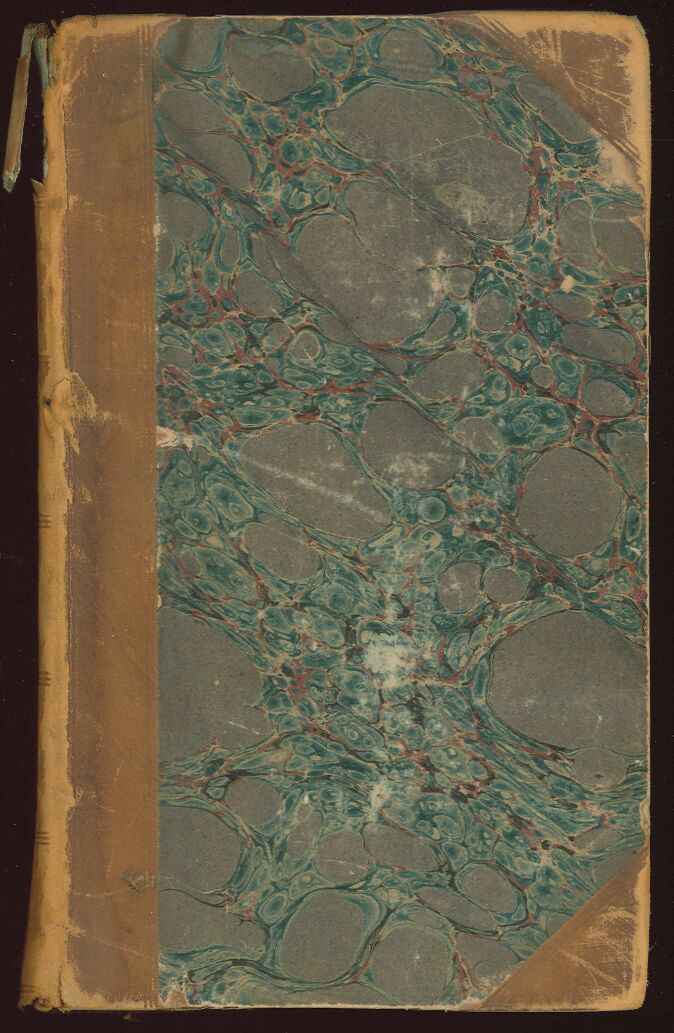
The Project Gutenberg eBook of A Lecture On Heads
Title: A Lecture On Heads
Author: George Alexander Stevens
Release date: June 12, 2007 [eBook #21822]
Most recently updated: February 9, 2013
Language: English
Credits: Produced by David Widger
A LECTURE ON HEADS
By Geo. Alex. Stevens
WITH ADDITIONS,
By Mr. Pilon
AS DELIVERED by Mr. Charles
Lee Lewes.
TO WHICH IS ADDED, AN ESSAY ON SATIRE.
WITH
FORTY-SEVEN HEADS By Nesbit, From Designs By Thurston.
1812.
ADDRESS TO THE PUBLIC.
There having been several pirated editions published of this Lecture, it is necessary to describe their nature, and to explain the manner in which they were obtained; from which the public will judge, how much they have been imposed upon by the different publishers.
When the Lecture was first exhibited, a very paltry abridgment was published by a bookseller in the city. This edition was so different from the original delivered by Mr. Stevens, that he thought it too contemptible to affect his interest, which alone prevented him from commencing any legal process against the publisher for thus trespassing on his right and property.
Mr. Stevens, having exhibited his Lecture with most extraordinary success in London, afterwards delivered it, with a continuance of that success, in almost every principal town in England and Ireland. During this itinerant stage of its exhibition, it had received great additions and improvements from the hints and suggestions of Churchill, Howard, Shuter, and many other wits, satirists, and humourists, of that day. It therefore re-appeared again in London almost a new performance. This, I suppose, induced another bookseller in the Strand to publish his edition, with notes, written by a Reverend Gentleman: however this might be, Mr. Stevens obtained an injunction against the continuance of that publication; he was dissuaded from proceeding to trial by the interposition of friends, who persuaded the litigants, over a bottle, to terminate their difference; Mr. Stevens withdrew his action, and the publication was suppressed. I relate this circumstance from the authority of Mr. Stevens himself. The public will, no doubt, be surprised to find that this Lecture should ever have been pirated, by one who is now complaining of a similar act against himself. I am no advocate for any infringements of right or property; but I cannot avoid thinking, that complaints of this nature come with a very ill grace from those who have committed the same species of literary depredations themselves. The last piratical publication of this Lecture was by a stationer in Paternoster-Row, who has had the assurance to use my name without having my authority, or even asking my permission. He likewise very falsely and impudently asserts, that he has published it as I spoke it at Covent-Garden theatre. It is so much the contrary, that it contains not a syllable of the new matter with which it was then augmented. With respect to the rest, it is taken from the spurious and very imperfect abridgment first mentioned in this piratical list. It is, therefore, evident, that the original Lecture was never before published until this opportunity which I have taken of thus submitting it to the Public, for their approbation and patronage, whose
Most humble and devoted servant
I am,
CHARLES LEE LEWES.
July 22, 1785.
Contents
PROLOGUE,
Written By Mr. Pilon Spoken At The Theatre Royal, Covent-Garden, June 24, 1780.
A few doors lower burnt the quorum out.
Sad times, when Bow-street is the scene of riot,
And justice cannot keep the parish quiet.
But peace returning, like the dove appears,
And this association stills my fears;
Humour and wit the frolic wing may spread,
And we give harmless Lectures on the Head.
Watchmen in sleep may be as snug as foxes,
And snore away the hours within their boxes;
Nor more affright the neighbourhood with warning,
Of past twelve o'clock, a troublesome morning.
Mynheer demanded, at the general shock,
"Is the Bank safe, or has it lower'd the stock?"
"Begar," a Frenchman cried, "the Bank we'll rob,
"For I have got the purse to bribe the mob."—
"Hoot awa, mon!" the loyal Scot replies,
"You'll lose your money, for we'll hong the spies:
"Fra justice now, my lad, ye shanna budge,
"Tho' ye've attack'd the justice and the judge."—
"Oh! hold him fast," says Paddy, "for I'll swear
"I saw the iron rails in Bloomsbury-square
"Burnt down to the ground, and heard the mob say,
"They'd burn down the Thames the very next day."
Tumult and riot thus on every side
Swept off fair order like the raging tide;
Law was no more, for, as the throng rush'd by,
"Woe to my Lord Chief Justice!" was the cry.
And he, rever'd by every muse so long,
Whom tuneful Pope immortaliz'd in song,
Than whom bright genius boasts no higher name,
Ev'n he could find no sanctuary in fame;
With brutal rage the Vandals all conspire,
And rolls of science in one blaze expire.
But England, like the lion, grows more fierce
As dangers multiply, and foes increase;
Her gen'rous sons, with Roman ardour warm,
In martial bands to shield their country arm,
And when we trembled for the city's fate,
Her youth stood forth the champions of the state;
Like brothers, leagu'd by nature's holy tie,
A parent land to save, or bravely die.
Did Britons thus, like brothers, always join,
In vain to crush them would the world combine;
Discord domestic would no more be known,
And brothers learn affection from the throne.
But know your Lecturer's awful hour is come
When you must bid him live, or seal his doom!
He knows 'tis hard a leader's post to fill
Of fame superior, and more ripen'd skill.
The blame will all be mine, if troops should fail,
Who'd lose their heads, but never could turn tail
Who no commander ever disobey'd,
Or overlook'd the signals which he made.
Under your auspices the field I take,
For a young general some allowance make;
But if disgracefully my army's led,
Let this court-martial then cashier my head.
ADDITIONAL LINES TO THE PROLOGUE,
Spoken At Newbury,
In
Consequence Of Lady Craven Bespeaking The Lecture,
Some Lines On Dreaming
She Saw Her Heart At Her Feet.
Written By Mr. Pratt.
'MIDST scenes like these, for so her lines impart,
The Queen of Benham lost that gem her heart;
Scar'd by the din, her bosom treasure flew,
And with it every grace and muse withdrew.
But far, or long, the wanderer could not roam,
For wit and taste soon brought the truant home!
One tuneful sonnet at her feet it sung,
Then to her breast, its snowy mansion, sprung;
Thither it went, the virtues in its train,
To hail the panting blessing back again.
On its fair throne it now appears as Queen,
And sheds its lustre o'er this humble scene;
Its radiant sceptre deigns o'er me to spread
The genial beams which fancy feign'd were fled.
Ah, no! her gentle heart this night is here;
Where'er 'tis wanted-you will find it there:
In vain the Muse shall fix it on the floor,
It knocks this ev'ning at the Lecturer's door,
And smiles, with him, that riot is no more.
LECTURE ON HEADS.
PART I.
Every single speaker, who, like me, attempts to entertain an audience, has not only the censure of that assembly to dread, but also every part of his own behaviour to fear. The smallest error of voice, judgment, or delivery, will be noted: "All that can be presumed upon in his favour is, a hope that he may meet with that indulgence which an English audience are so remarkable for, and that every exhibition stands so much in need of."
This method of lecturing is a very ancient custom; Juno, the wife of Jupiter, being the first who gave her husband a lecture, and, from the place wherein that oration was supposed to have been delivered, they have always, since that time, been called curtain lectures.
But, before I pretend to make free with other people's heads, it may be proper to say something upon my own, if upon my own any thing could be said to the purpose; but, after many experiments, finding I could not make any thing of my own, I have taken the liberty to try what I could do by exhibiting a Collection of Heads belonging to other people. But here is a head [shews Stevens''s head] I confess I have more than once wished on my own shoulders: but I fear my poor abilities will bring a blush into its cheeks. In this head Genius erected a temple to Originality, where Fancy and Observation resided; and from their union sprang this numerous and whimsical progeny. This is the head of George Alexander Stevens, long known and long respected; a man universally acknowledged of infinite wit and most excellent fancy; one who gave peculiar grace to the jest, and could set the table in a roar with flashes of merriment: but wit and humour were not his only excellencies; he possessed a keenness of satire, that made Folly hide her head in the highest places, and Vice tremble in the bosoms of the great: but now, blessed with that affluence which genius and prudence are sure to acquire in England, the liberal patroness of the fine arts, he now enjoys that ease his talents have earned, whilst Fame, like an evening sun, gilds the winter of his life with mild, but cheerful beams. With respect, but honest ambition, I have undertaken to fill his place, and hope my attention and zeal to please, will speak in behalf of conscious inferiority.
A HEAD, to speak in the gardener's style, is a mere bulbous excrescence, growing out from between the shoulders like a wen; it is supposed to be a mere expletive, just to wear a hat on, to fill up the hollow of a wig, to take snuff with, or have your hair dressed upon.
Some of these heads are manufactured in wood, some in pasteboard; which is a hint to shew there may not only be block-heads, but also paper-skulls.
Physicians acquaint us that, upon any fright or alarm, the spirits fly up into the head, and the blood rushes violently back to the heart. Hence it is, politicians compare the human constitution and the nation's constitution together: they supposing the head to be the court end of the town, and the heart the country; for people in the country seem to be taking things to heart, and people at court seem to wish to be at the head of things.
We make a mighty bustle about the twenty-four letters; how many changes they can ring, and how many volumes they have composed; yet, let us look upon the many millions of mankind, and see if any two faces are alike. Nature never designed several faces which we see; it is the odd exercise they give the muscles belonging to their visages occasions such looks: as, for example; we meet in the streets with several people talking to themselves, and seem much pleased with such conversation. [Here take them off.] Some people we see staring at every thing, and wondering with a foolish face of praise, [make a face here]; some laughing, some crying. Now crying and laughing are contrary effects, the least alteration of features occasions the difference; it is turning up the muscles to laugh [do so here], and down to cry.
Yet laughter is much mistook, no person being capable of laughing, who is incapable of thinking. For some people suddenly break out into violent spasms, ha, ha, ha! and then without any gradation, change at once into downright stupidity; as for example-[Here shews the example.]
In speaking about faces, we shall now exhibit a bold face. [Shews the head. ]
width="100%" />
This is Sir Whisky Whiffle. He is one of those mincing, tittering, tip-toe, tripping animalculæ of the times, that flutter about fine women like flies in a flower garden; as harmless, and as constant as their shadows, they dangle by the side of beauty like part of their watch equipage, as glittering, as light, and as useless; and the ladies suffer such things about them, as they wear soufflée gauze, not as things of value, but merely to make a shew with: they never say any thing to the purpose; but with this in their hands [takes up an eye-glass] they stare at ladies, as if they were a jury of astronomers, executing a writ of inquiry upon some beautiful planet: they imagine themselves possessed of the power of a rattle-snake, who can, as it is said, fascinate by a look; and that every fine woman must, at first sight, fall into their arms.—"Ha! who's that, Jack? she's a devilish fine woman, 'pon honour, an immensely lovely creature; who is she? She must be one of us; she must be comeatable, 'pon honour."—"No, Sir," replies a stranger, that overheard him, "she's a lady of strict virtue."—"Is she so? I'll look at her again—ay, ay, she may be a lady of strict virtue, for, now I look at her again, there is something devilish un-genteel about her."
Wigs, as well as books, are furniture for the head, and both wigs and books are sometimes equally voluminous. We may therefore suppose this wig [shews a large wig] to be a huge quarto in large paper; this is a duodecimo in small print [takes the knowing head]; and this a jockey's head, sweated down to ride a sweepstakes. [Takes the jockey's head.] Now a jockey's head and a horse's head have great affinity, for the jockey's head can pull the horse's head on which side of the post the rider pleases: but what sort of heads must those people have who know such things are done, and will trust such sinking funds with their capitals? These are a couple of heads which, in the Sportsman's Calendar, are called a brace of knowing ones; and, as a great many people about London affect to be thought knowing ones, they dress themselves in these fashions, as if it could add to the dignity of ahead, to shew they have taken their degrees from students in the stable, up to the masters of arts, upon a coach-box. [ Gives the two heads off, and takes the book-case.]
The phrase of wooden-heads is no longer paradoxical; some people set up wooden studies, cabinet-makers become book-makers, and a man may shew a parade of much reading, by only the assistance of a timber-merchant. A student in the temple may be furnished with a collection of law books cut from a whipping-post; physical dictionaries may be had in Jesuits' bark; a treatise upon duels in touchwood; the history of opposition in wormwood; Shakespeare's works in cedar, his commentators in rotten wood; the reviewers in birch, and the history of England in heart of oak.
Mankind now make use of substitutes in more things than book-making and militia-men: some husbands are apt to substitute inferior women to their own ladies, like the idiot, who exchanged a brilliant for a piece of broken looking-glass; of such husbands we can only say, they have borrowed their education from these libraries, and have wooden, very wooden tastes indeed. [ Gives it off.]
Here's a head full charged for fun [takes the head], a comical half-foolish face, what a great many upon the stage can put on, and what a great many people, not upon the stage, can't put off. This man always laughed at what he said himself, and he imagined a man of wit must always be upon the broad grin; and whenever he was in company he was always teasing some one to be merry, saying, "Now you, muster what do you call 'im? do now say something to make us all laugh; come, do now be comical a little." But if there is no other person will speak, he will threaten to "tell you a story to make you die with laughing," and he will assure you, "it is the most bestest and most comicallest story that ever you heard in all your born days;" and he always interlards his narration with "so as I was a saying, says I, and so as he was a saying, says he; so says he to me, and I to him, and he to me again;——did you ever hear any thing more comical in all your born days?" But after he has concluded his narration, not finding any person even to smile at what he said, struck with the disappointment, he puts on a sad face himself, and, looking round upon the company, he says, "It was a good story when I heard it too: why then so, and so, and so, that's all, that's all, gentlemen." [Puts on a foolish look, and gives the head off.]
Here is Master Jacky [takes the head], mamma's darling; when she was with child of him she dreamt she was brought to bed of a pincushion. He was never suffered to look into a book for fear of making him round-shouldered, yet was an immense scholar for all that; his mamma's woman had taught him all Hoyle by heart, and he could calculate to a single tea-spoonful how much cream should be put into a codlin tart. He wears a piece of lace which seems purloined from a lady's tucker, and placed here, to shew that such beings as these can make no other use of ladies' favours than to expose them. Horace had certainly such a character in view by his dulcissime rerum—"sweetest of all things;" all essence and effeminacy; and that line of his—Quid Agis, dulcissime rerum? may be rendered, "What ails you, master Jacky?" As they have rivalled the ladies in the delicacy of their complexion, the ladies therefore have a right to make reprisals, and to take up that manliness which our sex seems to have cast off.
Here is a Lady in her fashionable uniform. [Takes up the head.] She looks as if marching at the head of a battalion, or else up before day to follow the hounds with spirit; while this lies in bed all the morning, with his hands wrapped up in chicken gloves, his complexion covered with milk of roses, essence of May-dew, and lily of the valley water. This does honour to creation; this disgraces it. And so far have these things femalized themselves, by effeminate affections, that, if a lady's cap was put on this head, Master Jacky might be taken for Miss Jenny [puts a lady's cap on the head of Master Jacky]; therefore grammarians can neither rank them as masculine or feminine, so set them down of the doubtful gender. [Puts off the heads.]
Among the multitude of odd characters with which this kingdom abounds, some are called generous fellows, some honest fellows, and some devilish clever fellows. Now the generous fellow is treat-master; the honest fellow is toast-master; and the devilish clever fellow he is singing-master, who is to keep the company alive for four or five hours; then your honest fellow is to drink them all dead afterwards. They married into Folly's family, from whom they received this crest, and which nobody chooses to be known by. [ Takes up the fool's cap.]
This Fool's Cap is the greatest wanderer known; it never comes home to any body, and is often observed to belong to every body but themselves. It is odd, but the word nobody, and the term nothing, although no certain ideas can be affixed to them, are often made such use of in conversation. Philosophers have declared they knew nothing, and it is common for us to talk about doing nothing; for, from ten to twenty we go to school to be taught what from twenty to thirty we are very apt to forget; from thirty to forty we begin to settle; from forty to fifty we think away as fast as we can; from fifty to sixty we are very careful in our accounts; and from sixty to seventy we cast up what all our thinking comes to; and then, what between our losses and our gains, our enjoyments and our inquietudes, even with the addition of old age, we can but strike this balance [Takes the board with cyphers]—These are a number of nothings, they are hieroglyphics of part of human kind; for in life, as well as in arithmetic, there are a number of nothings, which, like these cyphers, mean nothing in themselves, and are totally insignificant; but, by the addition of a single figure at their head, they assume rank and value in an instant. The meaning of which is, that nothing may be turned into something by the single power of any one who is lord of a golden manor. [Turns the board, shews the golden one.] But, as these persons' gains come from nothing, we may suppose they will come to nothing; and happy are they who, amidst the variations of nothing, have nothing to fear: if they have nothing to lose, they have nothing to lament; and, if they have done nothing to be ashamed of, they have every thing to hope for. Thus concludes the dissertation upon nothing, which the exhibitor hopes he has properly executed, by making nothing of it.
This is the head of a London Blood, taken from the life. [Holds the head up.] He wears a bull's forehead for a fore-top, in commemoration of that great blood of antiquity, called Jupiter, who turned himself into a bull to run away with Europa: and to this day bloods are very fond of making beasts of themselves. He imagined that all mirth consisted in doing mischief, therefore he would throw a waiter out of the window, and bid him to be put into the reckoning, toss a beggar in a blanket, play at chuck with china plates, run his head against a wall, hop upon one leg for an hour together, carry a red-hot poker round the room between his teeth, and say, "done first for fifty."
He was quite the thing, either for kicking up a riot, or keeping it up after he had kicked it up: he was quite the thing, for one day he kicked an old woman's codlin-kettle about the streets: another time he shoved a blind horse into a china shop—that was damned jolly: he was a constant customer to the round house: a terror to modest women, and a dupe to the women of the town; of which this is exhibited as a portrait. [ Take the head.] This is the head of a Man of the Town, or a Blood; and this of a Woman of the Town, or a ———; but whatever other title the lady may have, we are not entitled to take notice of it; all that we can say is, that we beg Mirth will spare one moment to Pity; let not delicacy be offended if we pay a short tribute of compassion to these unhappy examples of misconduct; indeed, in the gay seasons of irregular festivity, indiscretion appears thus—[takes off that, shews the other:] but there is her certain catastrophe; how much therefore ought common opinion to be despised, which supposes the same fact, that betrays female honour, can add to that of a gentleman's. When a beauty is robbed, the hue and cry which is raised, is never raised in her favour; deceived by ingratitude, necessity forces her to continue criminal, she is ruined by our sex, and prevented reformation by the reproaches of her own. [Takes it off.] As this is the head of a Blood going to keep it up [takes it off], here is the head of a Blood after he has kept it up. [Shews that head.] This is the head of a married Blood—what a pretty piece of additional furniture this is to a lady of delicacy's bed-chamber: What then? it's beneath a man of spirit, with a bumper in his hand, to think of a wife: that would be spoiling his sentiment: no, he is to keep it up, and to shew in what manner our London Bloods do keep it up. We shall conclude the first part of this lecture by attempting a specimen—[puts on the Blood's wig]: "Keep it up, huzza! keep it up! I loves fun, for I made a fool of my father last April day. I will tell you what makes me laugh so; we were keeping it up, faith, so about four o'clock this morning I went down into the kitchen, and there was Will the waiter fast asleep by the kitchen fire; the dog cannot keep it up as we do: so what did I do, but I goes softly, and takes the tongs, and I takes a great red-hot coal out of the fire, as big as my head, and I plumpt it upon the fellow's foot, because I loves fun; so it has lamed the fellow, and that makes me laugh so. You talk of your saying good things; I said one of the best things last week that ever any man said in all the world. It was what you call your rappartées, your bobinâtes. I'll tell you what it was: You must know, I was in high spirits, faith, so I stole a dog from a blind man, for I do love fun! so then the blind man cried for his dog, and that made me laugh; so says I to the blind man, 'Hip, master, do you want your dog?' 'Yes, sir,' says he. Now, only mind what I said to the blind man. Says I, 'Do you want your dog?' 'Yes, sir,' says he. Then says I to the blind man, says I, 'Go look for him.'—Keep it up! keep it up!—That's the worst of it, I always turn sick when I think of a parson, I always do; and my brother he is a parson too, and he hates to hear any body swear; so I always swear when I am along with him, to roast him. I went to dine with him one day last week, and there was my sisters, and two or three more of what you call your modest women; but I sent 'em all from the table before the dinner was half over, for I loves fun; and so there was nobody but my brother and me, and I begun to swear; I never swore so well in all my life; I swore all my new oaths; it would have done you good to have heard me swear: so then, my brother looked frightened, and that was fun. At last he laid down his knife and fork, and lifting up his hands and his eyes, he calls out, Oh Tempora! oh Mores!—-'Oh ho, brother!' says I, 'what, you think to frighten me, by calling all your family about you; but I don't mind you, nor your family neither—Only bring Tempora and Mores here, that's all; I'll box them for five pounds; here,—where's Tempora and Mores? where are they?—Keep it up! keep it up!"
PART II.
THE FIVE SCIENCES: ARCHITECTURE, PAINTING, POETRY, MUSIC, AND ASTRONOMY.
This is a small exhibition of pictures. These pictures are placed here to shew the partiality of the present times. Formerly seven cities contended for the honour of having Homer for their countryman; but as soon as it was known these sciences were born in England, the whole club of Connoiseurs exclaimed against them, saying, it was impossible that there could be any real genius among them, our atmosphere being too thick and too heavy to nourish any fine ideas. These sciences, being found out to be mere English, were treated as impostors; for, as they had not a handsome wife, nor sister, to speak for them, not one single election vote in their family, nor a shilling in their pockets to bribe the turnpike door-keeper, they could not succeed; besides, Chinese, zig-zag, and gothic imitations, monopolized all premiums: and the envy of prejudice, and the folly of fashion, made a party against them. They were so weak in themselves, as to imagine the merits of their works would recommend them to the world. Poor creatures! they knew nothing of the world, to suppose so; for merit is the only thing in the world not recommendable. To prevent starving, Architecture hired herself as a brick-layer's labourer to a Chinese temple-builder; Painting took on as a colour-grinder to a paper-stainer; Poetry turned printer's devil; Music sung ballads about the streets: and Astronomy sold almanacks. They rambled about in this manner for some time; at last, they picked up poor Wit, who lay ill of some bruises he had received one masquerade night.
As poor Wit was coming down the Haymarket, just as the masquerade was breaking up, the noise of a pickpocket was announced, upon which Buffoonery fell upon Wit, and mangled him most piteously. Invention stood Wit's friend, and help-ed him to make his escape to those Sciences. Now it happened that night, Lady Fashion had lost her lap-dog, which Wit found, and brought to these his companions, for whom Architecture built a little house; Painting made a portrait of it: Poetry wrote a copy of verses upon it, which Music put a tune to; and Astronomy calculated the dear creature's nativity; which so pleased Lady Fashion, that she recommended them to the house of Ostentation, but left Wit behind, because as wit was out of taste, Fashion would not have any thing to say to it. However, some of her Ladyship's upper servants invited Wit into the steward's room, and, according to the idea some folks have of Wit, they begged he'd be comical. One brought him a poker to bend over his arm; another desired he would eat a little fire for 'em before dinner; the butler requested a tune upon the musical glasses; my lady's woman desired he would tell her fortune by the cards; and the grooms said, "as how, if his honour was a wit, he could ride upon three horses at once." But before Wit could answer to any of these questions, the French governess belonging to the family came down stairs, and ordered Wit to be turned out of doors, saying, "Vat want you vid Vit, when you are studying à la Françoise? I'll vous assurez, I'll vous assurez, if you will have us for your masters, you must have no vit at all." [The sciences taken off.]
Poor Wit being turned out of doors, wandered about friendless, for it was never yet known that a man's wit ever gained him a friend. He applied himself to the proprietors of the newspapers, but upon their inquiring whether he understood politics, and being totally ignorant of them, they would not employ him. He enquired after Friendship, but found Friendship was drowned at the last general election; he went to find out Hospitality, but Hospitality being invited to a turtle-feast, there was no room for Wit; he asked after Charity, but it being found that Charity was that day run over by a bishop's new set of coach-horses, he died broken-hearted, being a distemper which, although not catalogued in the Materia Medica, is very epidemical among beautiful women, and men of genius, who, having worn themselves out in making other people happy, are at last neglected, and left to perish amid age and infirmity, wondering how the world could be so ungrateful.
Here is the Head of a Connoisseur. [Takes the head.]—Though born in this kingdom, he had travelled long enough to fall in love with every thing foreign, and despise every thing belonging to his own country, except himself. He pretended to be a great judge of paintings, but only admired those done a great way off, and a great while ago; he could not bear anything done by any of his own countrymen; and one day being in an auction-room where there was a number of capital pictures, and, among the rest, an inimitable piece of painting of fruits and flowers, the Connoisseur would not give his opinion of the picture until he had examined his catalogue, and finding it was done by an Englishman, he pulled out his eye-glass [Takes the eyeglass,] "O, Sir," says he, "these English fellows have no more idea of genius than a Dutch skipper has of dancing a cotillion; the dog has spoiled a fine piece of canvas; he's worse than a Harp-Alley sign-post dauber; there's no keeping, no perspective, no fore-ground;—why there now, the fellow has attempted to paint a fly upon that rose-bud, why it's no more like a fly than I am like an a—a—." But as the connoisseur approached his finger to the picture, the fly flew away—His eyes are half closed; this is called the wise man's wink, and shews he can see the world with half an eye; he had so wonderful a penetration, so inimitable a forecast, he always could see how every thing was to be—after the affair was over.
Then talking of the affairs of administration, he told his lordship, that he could see how things were all along, they could not deceive him. "I can see if other people can't; I can see, if the ministry take the lead, they won't be behind hand." This man found out the only scheme that ever could be invented for paying off the national debt; the scheme that he found out, he discovered to the ministry as follows:
"Now, my lord duke, I have a scheme to pay off our nation's debt without burthening the subject with a fresh tax; my scheme is as follows: I would have all the Thames water bottled up, and sold for Spa water. Who'll buy it, you'll say? Why the waterman's company must buy it, or they never could work their boats any more: there's a scheme to pay off the nation's debt, without burthening the subject with a fresh tax." [ Takes the head off.]
Here is a companion for that connoisseur; this is one of your worldly-wise men, wise in his own conceit; he laughed at all modes of faith, and would have a reason given him for every thing. He disinherited his only son because the lad could not give him a reason why a black hen laid a white egg. He was a great materialist, and thus he proved the infinity of matter. He told them, that all round things were globular, all square things flat-sided. Now, Sir, if the bottom is equal to the top, and the top equal to the bottom, and the bottom and the top are equal to the four sides, ergo, all matter is as broad as it is long. But he had not in his head matter sufficient to prove matter efficient; being thus deficient, he knew nothing of the matter. [ Takes off the head.]
We shall now exhibit a Freeholder's Head in a very particular state—in a state of intoxication. [Shews the head.]
These pieces of money are placed like doors over the senses, to open and shut just as the distributor of the medicine pleases. And here is an election picture [shews it]: all hands are catching at this; 'tis an interpretation of that famous sentiment, "May we have in our arms those we love in our hearts." Now the day of election is madman's holiday, 'tis the golden day of liberty, which every voter, on that day, takes to market, and is his own salesman: for man at that time being considered as a mere machine, is acted upon as machines are, and, to make his wheels move properly, he is properly greased in the fist. [ Gives off the picture. ] Every freeholder enjoys his portion of septennial insanity: he'll eat and drink with every body without paying for it, because he's bold and free; then he'll knock down every body who won't say as he says, to prove his abhorrence of arbitrary power, and preserve the liberty of Old England for ever, huzza! [Gives off the head.]
The first contested election happened between the three goddesses upon Mount Ida, whose names were, Juno, Minerva, and Venus, when Paris was the returning officer, who decreed in favour of Venus, by presenting her with the golden apple. [ Takes up the money.] Juno, on her approaching Paris, told him, that though it was beneath her dignity to converse with a mortal, yet, if he would be her friend, she would make him a nabob. Minerva told him how that learning was better than house and land, and if he would be her friend, she would teach him propria quæ maribus. But Venus, who thought it would be wasting time to make use of words, gave him such a look as put her in possession of the golden apple. The queen of beauty, out of gratitude to Paris, who had so well managed the election for her, made him a present of several slices of that golden pippin, and, in commemoration of that event, such slices have been made use of as presents at all other general elections; they have a sympathy like that which happens to electrical wires, let a hundred hold them in their hands, their sensations will be the same; but they differ from electricity in one essential point, which is, that though the touch be ever so great, it never shocks people.
It is a general remark, that novelty is the master-passion of the English; nothing goes down without it, and nothing so gross, that it will not make palatable; the art therefore of insuring success in this town to every adventurer, is, to hit upon something new, as the phrase is; no matter what it is, it will prove equally attracting, whether it be a woman riding upon her head at Westminster-Bridge, or one without any head at all, debating upon politics and religion at Westminster Forum: but here, let not my fair countrywomen condemn me as an unmannerly satirist; we respect the taste and understanding, as much as we admire the beauty and delicacy of the sex; but surely no woman of sense would suppose we meant to offend her, if we said she was the most improper person in the world to be made a captain of horse, or a member of parliament.