

A Proposal for the Better Supplying of Churches in Our Foreign Plantations, and for Converting the Savage Americans to Christianity, By a College to Be Erected in the Summer Islands, Otherwise Called the Isles of Bermuda
Explore more books like this:
About This Book
An essay proposes founding a college in the Bermuda islands to supply well-trained clergy for colonial churches and to prepare young Indigenous Americans as missionaries. It criticizes poorly qualified colonial ministers and planter neglect of religious instruction for enslaved people, and recommends recruiting native children under ten, preserving their language while educating them in Christian doctrine, rhetoric, history, practical mathematics, and some medicine. Graduates would receive orders and return as missionaries. The proposal outlines organizational steps such as seeking a royal charter and funds and emphasizes shaping students with religious zeal and civic virtue to improve morals and facilitate conversion.
About the Author

More Books by This Author
 A Treatise Concerning the Principles of Human Knowledge
by George Berkeley
A Treatise Concerning the Principles of Human Knowledge
by George Berkeley
 An Essay Towards a New Theory of Vision
by George Berkeley
An Essay Towards a New Theory of Vision
by George Berkeley
 The Querist / Containing Several Queries Proposed to the Consideration of the Public
by George Berkeley
The Querist / Containing Several Queries Proposed to the Consideration of the Public
by George Berkeley
 The Works of George Berkeley. Vol. 1 of 4: Philosophical Works, 1705-21
by George Berkeley
The Works of George Berkeley. Vol. 1 of 4: Philosophical Works, 1705-21
by George Berkeley
 Three Dialogues Between Hylas and Philonous in Opposition to Sceptics and Atheists
by George Berkeley
Three Dialogues Between Hylas and Philonous in Opposition to Sceptics and Atheists
by George Berkeley
You May Also Like
 "My country, 'tis of thee!" / Or, the United States of America; past, present and future. A philosophic view of American history and of our present status, to be seen in the Columbian exhibition.
by Willis Fletcher Johnson
"My country, 'tis of thee!" / Or, the United States of America; past, present and future. A philosophic view of American history and of our present status, to be seen in the Columbian exhibition.
by Willis Fletcher Johnson
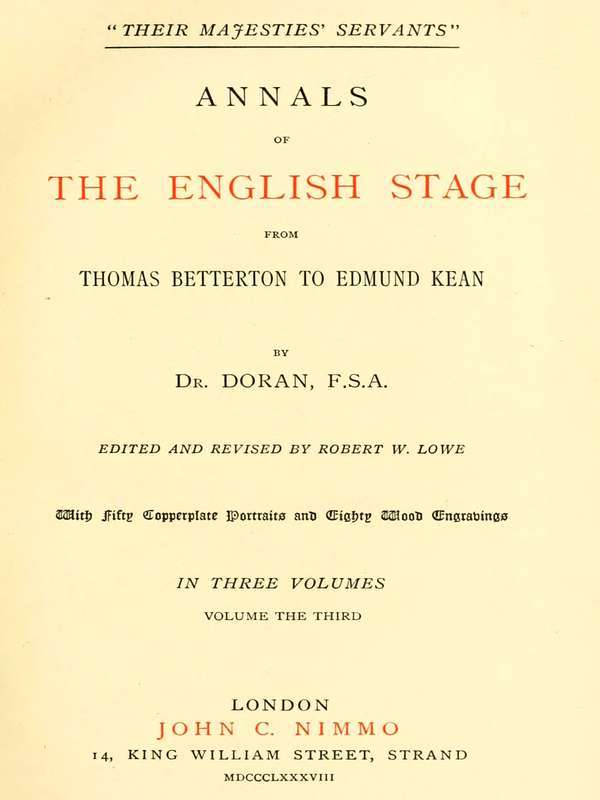 "Their Majesties' Servants." Annals of the English Stage (Volume 3 of 3)
by Dr. Doran
"Their Majesties' Servants." Annals of the English Stage (Volume 3 of 3)
by Dr. Doran
 1811 Dictionary of the Vulgar Tongue
by Francis Grose
1811 Dictionary of the Vulgar Tongue
by Francis Grose
 A Beginner's History of Philosophy, Vol. 2: Modern Philosophy
by Herbert Ernest Cushman
A Beginner's History of Philosophy, Vol. 2: Modern Philosophy
by Herbert Ernest Cushman
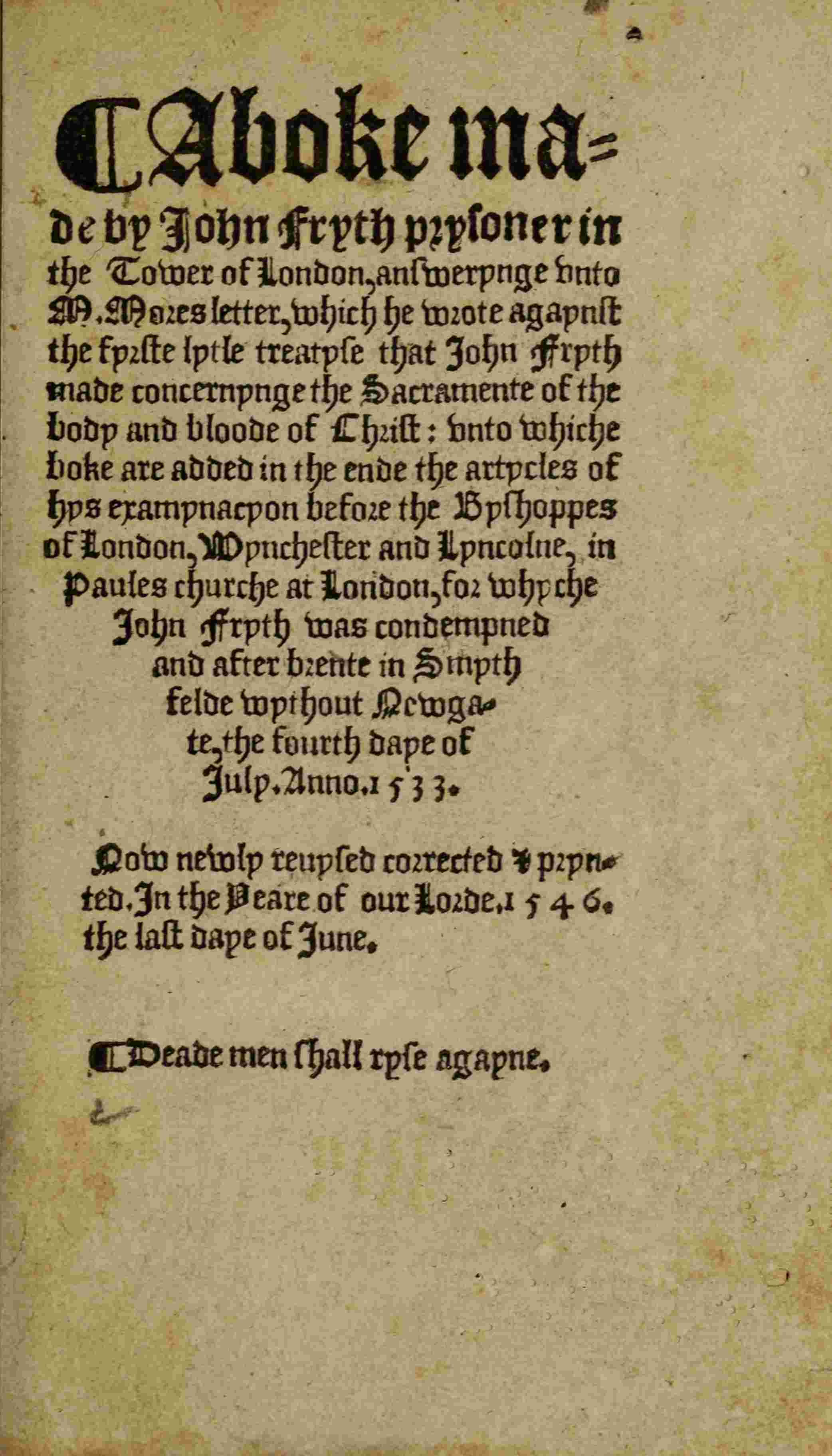 A boke made by John Fryth, prysoner in the Tower of London / answerynge unto M. Mores letter, which he wrote agaynst the fyrste lytle treatyse that John Fryth made, concernynge the sacramente of the body and bloude of Christ
by John Frith
A boke made by John Fryth, prysoner in the Tower of London / answerynge unto M. Mores letter, which he wrote agaynst the fyrste lytle treatyse that John Fryth made, concernynge the sacramente of the body and bloude of Christ
by John Frith
 A Brief Account of the Destruction of the Indies / Or, a faithful NARRATIVE OF THE Horrid and Unexampled Massacres, Butcheries, and all manner of Cruelties, that Hell and Malice could invent, committed by the Popish Spanish Party on the inhabitants of West-India, TOGETHER With the Devastations of several Kingdoms in America by Fire and Sword, for the space of Forty and Two Years, from the time of its first Discovery by them.
by Bartolomé de las Casas
A Brief Account of the Destruction of the Indies / Or, a faithful NARRATIVE OF THE Horrid and Unexampled Massacres, Butcheries, and all manner of Cruelties, that Hell and Malice could invent, committed by the Popish Spanish Party on the inhabitants of West-India, TOGETHER With the Devastations of several Kingdoms in America by Fire and Sword, for the space of Forty and Two Years, from the time of its first Discovery by them.
by Bartolomé de las Casas