
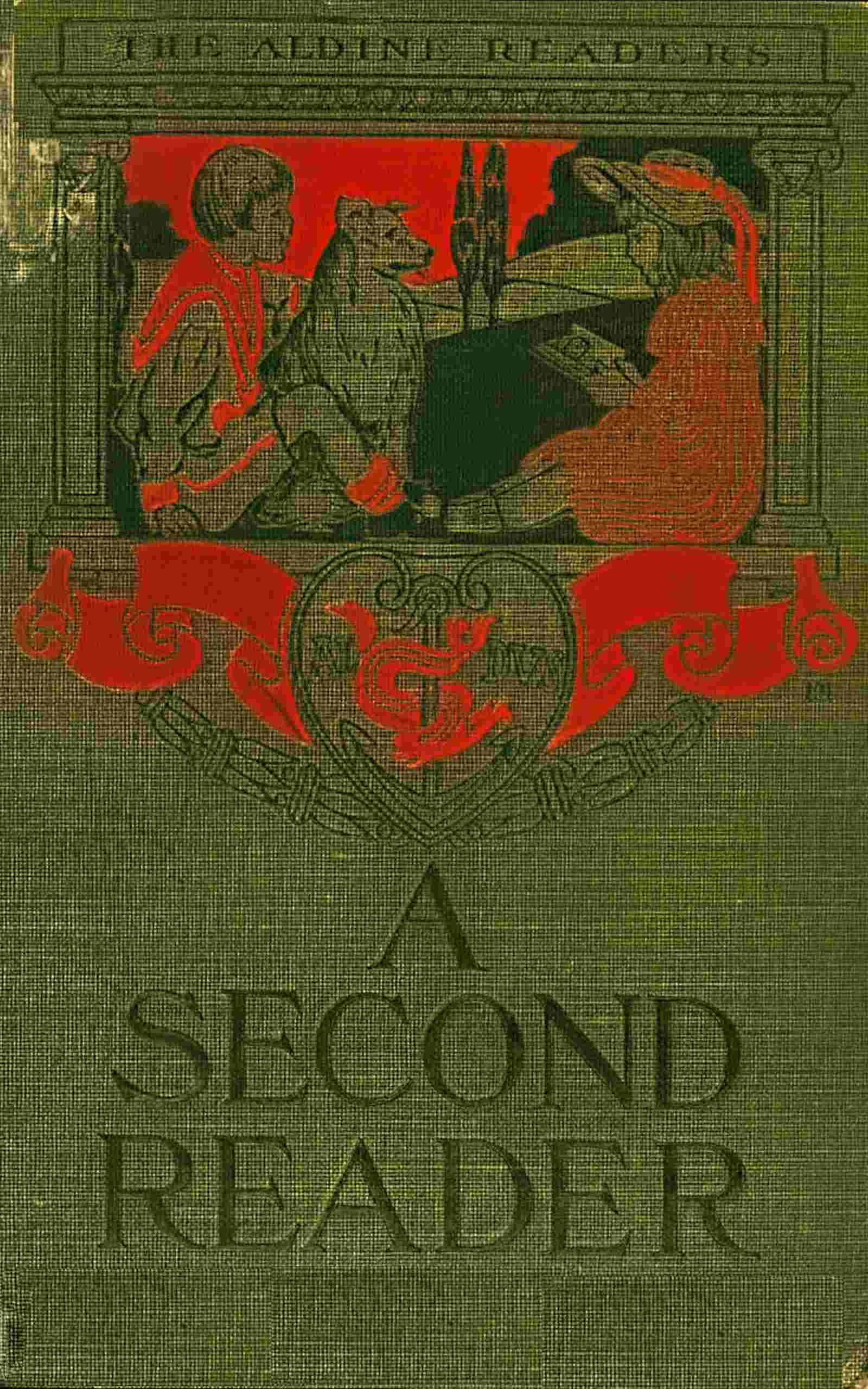
THE LITTLE SHEPHERDESS
- soft
- taste
- awoke
- lost
- (s eek)
- ch eek
One morning a pretty little shepherdess drove her flock of sheep to the meadow. There she watched them while they ate the fresh, green grass. How sweet it tasted to the hungry sheep!
A large dog went with the shepherdess to help care for the sheep. He was the shepherd.
The shepherd let no lamb go astray. If one got too far from the flock, Mr. Shepherd ran after him.
“Bow-wow! Go back!” cried the shepherd.
The shepherdess took good care of her flock, too. She led them where the grass was greenest and sweetest.
When noon came all the sheep had eaten enough. So they lay down quietly in the cool shade of some old oak trees. Little Bo-peep lay down too, with her good shepherd dog beside her.
How cool and still it was there! Little Bo-peep could hear only the gentle rustling of the leaves overhead. She could feel only the soft wind on her cheek.
The wind blew more and more softly; the leaves rustled more and more gently. Soon little Bo-peep was fast asleep.
“Bo-peep, Bo-peep, where are you?”
“Bow-wow, bow-wow, bow-wow-wow!”
“Bo-peep, Bo-peep!”
Little Bo-peep awoke with a start. She sat upright, her eyes wide open. Not a sheep could she see. Her dog was not beside her. It was dark; the stars were twinkling overhead. How frightened the little shepherdess was!
“Bow-wow!”
“Bo-peep, Bo-peep! Where are you, child?” Surely that was her mother’s voice.
“Here, mother, here I am, under the big oak tree!” called Bo-peep.
Up rushed the dog, and mother followed close behind.
“Where are my sheep, mother? I fear they are lost.”
“Where is my little Bo-peep? I feared she was lost.”
“Here is your Bo-peep, dear mother. How long I must have slept!”
“Your sheep are all safe at home. Old Rover drove them in long ago.”
This is the way Bo-peep lost her sheep; this is the way she found them. And this is the way Bo-peep was lost; and this is the way she was found.
DISCONTENT
- (l azy)
- cr azy
- swal lows
- to geth er
- pleas ant
- dull er
- (b ear)
- w ear ing
- (g ave)
- s ave
- br ave ly
- June
- (g ather)
- r ather
- per haps
- hon est
- pas sion
- col or
BELLING THE CAT
- sn ug
- d ug
- aw oke
- sp oke
- fam i ly
- life
- pounce
- h ole
- st ole
- warn ing
- st eal
- m eal
- g ood
- st ood
- straight
A family of rats had their home in a barn.
They made many snug nests in the warm hay.
They dug holes through the hay from nest to nest.
They ran in and out and all about the barn. They had nothing to fear.
When they were hungry they could always find nice grain in the stalls. They became very fat.
And they were as happy a family of rats as one could wish to see.
But one day a big black cat found the rats’ barn.
That was a sad day for the rat family!
This cat was not fat and he was not happy.
He was very thin, very cross, and very hungry.
One thing he liked to eat best of all things in the world—rats.
How he did love nice, fat, happy rats! At last he had found them, a whole big family of them!
This hungry, greedy cat now had rat for breakfast, rat for dinner, and rat for supper. And sometimes he had rat between meals.
Very soon this cat began to grow fat and happy.
But happy cats make unhappy rats. While this cat grew fat, these rats grew thin.
Yet in the stalls there was just as much grain as ever. But it was only a very hungry rat that dared go for it. For no rat could tell when the cat might pounce upon him.
That sly cat stole about without a sound.
The most watchful rat could hear nothing, could see no living thing.
Then, pounce! The wicked cat’s claws held him fast.
So, many a poor rat went to the stall, and never came back. And the rat family was growing smaller day by day.
At last the wise old rats saw that something must be done. So they called a meeting of the whole family of rats, as many as were still alive.
When all had come together in a safe place and were still, the oldest and wisest rat rose up on his hind legs.
He stood up very straight, very tall, and very thin.
“My dear brothers and sisters, my dear children and grandchildren!” began the wise old rat.
“You all know the one fear of our lives.” Every rat trembled.
“That wicked cat has grown fat and sleek feeding on your brothers, your mothers, your wives, and your children.
No one of you knows when his turn may come to make a meal for that ever hungry monster.
He steals upon you without warning.
He is never seen, he is never heard, until it is too late.
But you were not called together to hear what you already know only too well.
You were called here to do something to make your lives safer and happier.
What can be done? Who has a plan?”
The old rat waited.
All the other rats looked from one to another, but no one spoke.
“Well, then,” said the wise old rat at last, “listen to me.
If we only knew where the cat was, we could not be caught. If we could only hear him coming, we might get out of his reach.
Now, my plan is this. We will hang a bell to that cat’s neck.”
“The very thing! Hurrah! Hurrah!” cried all the rats together.
“Why haven’t we thought of that before?
No more of us will go to make dinners for that old cat.
Now, for all the corn we can eat!”
And away sprang the hungry rats for the stalls.
“Stop! Stop!” cried the wise old rat. “Back to your places!
The bell isn’t on the cat’s neck yet.”
Slowly and sadly the starving rats settled back.
“Now,” the old rat went on, “who will tie the bell around the cat’s neck?”
“Not I! Not I! Not I!” squeaked the poor frightened rats.
And they trembled all over at the very thought.
Then they sat very still and looked at each other.
Oh! how hungry they were! How sweet that yellow corn in the stall would taste.
One by one they began to steal away softly.
Where do you think they were going?
Rat families still live in barns.
Cats still feed upon them.
But no rat has ever tried to make life safer by belling a cat.
THREE OF US KNOW
- bal lad
- se crets
THE DANDELION
- gyp sy
- gild
- idle
THE MAGPIE’S LESSON
- ma ple
- mean
- learn
- hooted
- ea gle
- (en ough)
- r ough
- (gr owl)
- owl
- pa tient
- (h ome)
- d ome
- (l eaves)
- eaves
- w eave
- o ri ole
- cov er
- troub le
- moun tain
- (b ud)
- m ud
- yon der
- choose
- roofs
- build
- (afr aid)
- p aid
Years and years ago—ever so many years ago—only one bird in the whole world knew how to build a nest. That wise bird was the magpie.
One day all the other birds came to the magpie. They wanted to learn how to build nests. They begged the magpie to teach them.
“Indeed, I am glad to teach you,” said Mrs. Magpie. “Just listen and watch me. First, you must choose a tall tree, like this great maple. Then take sticks—”
“A tree,” broke in the bold eagle, “a tree here in this valley! No trees nor valleys for me! My nest shall be on the highest cliff of yonder mountain.”
And away flew the eagle without waiting to hear more of the magpie’s lesson. To this day he puts together a few rough sticks on a rocky mountain cliff, and calls them a nest.
The magpie began again. “Take sticks like these,” she said, “to a high branch.”
“Are you a fool?” cried the lark. “Don’t you know that the first strong wind will blow your nest to the ground?” “And the first boy who comes this way will throw stones at it,” put in Mrs. Bob-o-link.
“No high branches for us,” sang the lark and the bob-o-link together. And down they flew into the tall grass of the meadow. There they have made their nests ever since.
Mrs. Magpie didn’t even look at the birds flying away. “Weave the sticks together so, in and out,” said she cheerfully. “That will make the bottom of the nest.”
“I don’t mean to set my nest on a branch like that,” spoke up the oriole. “The wind surely would blow it off, as the lark just said.”
And the oriole flew away and hung her nest from little twigs. There you may see it to-day swinging in the wind far out at the end of a long branch.
“Plaster the inside of your nest with mud,” Mrs. Magpie went on again. “Then line it with soft grass, so.”
“Dear, dear, so much work to make a nest!” yawned the whip-poor-will. “I’m not going to take the trouble.” And that lazy bird hasn’t made a nest from that day to this. She just lays her eggs in a hollow on the ground, or perhaps on a log.
“Who, who, who would go to all that trouble!” hooted the owl. “I think I have a better plan.”
She looked very wise, but said no more. You can guess what her plan was when you find her eggs in a crow’s or a hawk’s old nest.
“Now take more mud and sticks,” began the patient magpie once more. “You need to build a dome over your nest. That is to hide the little ones and to keep out the rain.”
“Oh, never mind the dome,” said the robin. “I will cover my little ones with my wings. I can hide them and keep off the rain.”
“You are right, Mrs. Robin,” said the crow. “We have no use for domes.” And to this day neither robins nor crows have built domes over their nests.
Mrs. Magpie paid no more heed to these birds than to the others who had already left her. She went quietly on building her nest, just as she knew it ought to be built. Soon it was done, dome and all.
“Indeed, Mrs. Magpie,” said the swallows, “we like your nest. The dome is a fine thing, but why should we build it? There are plenty of domes already built; we need only to make our nests under them.”
Ever since then some swallows have made their nests under banks. Others have made theirs under roofs of open barns; and still others under eaves.
So all the birds flew away and left Mrs. Magpie with never a “thank you.” Each one built her nest as she pleased. And each one thought her way so much better than the magpie’s.
But the magpie still builds her nest in the top of a high tree. She makes it of mud and sticks and covers it with a dome.
THE BLUEBIRD
- cro cus
- mer ry
- daf fo dils
THE WOLF AND THE STORK
A greedy wolf got a bone stuck in his throat. Try as he would, he could not get the bone out. At last he lay down to die, as he thought. But just then a stork came that way.
“Good day, Mr. Wolf,” said the stork, kindly.
But the wolf could not answer a word.
The stork soon saw what the matter was, and with his long beak pulled the bone out of the wolf’s throat. Without a word, the greedy wolf sprang up and went on with his dinner.
The stork, who was very hungry, began to pick up a few morsels of meat.
“Be off with you!” snapped the wolf. “How dare you touch my meat!”
“Is that the thanks I get for saving your life?” said the stork.
“Thanks!” answered the wolf, “did I not let you draw your bill out of my jaws in safety? It is you who should be thankful.”
THE INDIAN MOTHER’S LULLABY
- roe buck
- pap poose
- Man i tou
- slum ber ing
- breezes
- prai rie