
![A Theological-Political Treatise [Part IV] cover](/books/content/992/OEBPS/8552706984705130687_992-cover.png)
About This Book
The text examines the origins and limits of political authority, arguing that natural right equals the extent of an individual's power and that people form commonwealths by agreeing to live under reason to secure safety. It analyzes what civil and private rights remain after transfer to sovereign power, contending no one can truly yield every right, and uses the Hebrew commonwealth as a historical example to draw lessons about mixed power, priestly influence, and causes of decay. It stresses that the sovereign holds authority over outward religious forms to preserve public peace, distinguishes internal conscience from external worship, and insists laws of the state should regulate religion insofar as they promote social stability.
About the Author

More Books by This Author
6 picks
![A Theological-Political Treatise [Part III] cover](/books/content/991/OEBPS/8757799030540838383_991-cover.png) A Theological-Political Treatise [Part III]
by Benedictus de Spinoza
A Theological-Political Treatise [Part III]
by Benedictus de Spinoza
 Ethica / In meetkundigen trant uiteengezet, vertaald, ingeleid en toegelicht / door Jhr. Dr. Nico van Suchtelen
by Benedictus de Spinoza
Ethica / In meetkundigen trant uiteengezet, vertaald, ingeleid en toegelicht / door Jhr. Dr. Nico van Suchtelen
by Benedictus de Spinoza
 Ethics
by Benedictus de Spinoza
Ethics
by Benedictus de Spinoza
 Ethics — Part 1
by Benedictus de Spinoza
Ethics — Part 1
by Benedictus de Spinoza
 Ethics — Part 2
by Benedictus de Spinoza
Ethics — Part 2
by Benedictus de Spinoza
 Ethics — Part 3
by Benedictus de Spinoza
Ethics — Part 3
by Benedictus de Spinoza
You May Also Like
6 picks
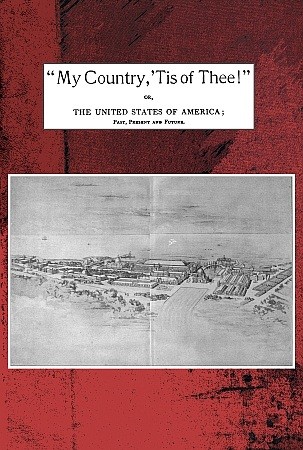 "My country, 'tis of thee!" / Or, the United States of America; past, present and future. A philosophic view of American history and of our present status, to be seen in the Columbian exhibition.
by Willis Fletcher Johnson
"My country, 'tis of thee!" / Or, the United States of America; past, present and future. A philosophic view of American history and of our present status, to be seen in the Columbian exhibition.
by Willis Fletcher Johnson
 "Their Majesties' Servants." Annals of the English Stage (Volume 3 of 3)
by Dr. Doran
"Their Majesties' Servants." Annals of the English Stage (Volume 3 of 3)
by Dr. Doran
 1811 Dictionary of the Vulgar Tongue
by Francis Grose
1811 Dictionary of the Vulgar Tongue
by Francis Grose
 A Beginner's History of Philosophy, Vol. 2: Modern Philosophy
by Herbert Ernest Cushman
A Beginner's History of Philosophy, Vol. 2: Modern Philosophy
by Herbert Ernest Cushman
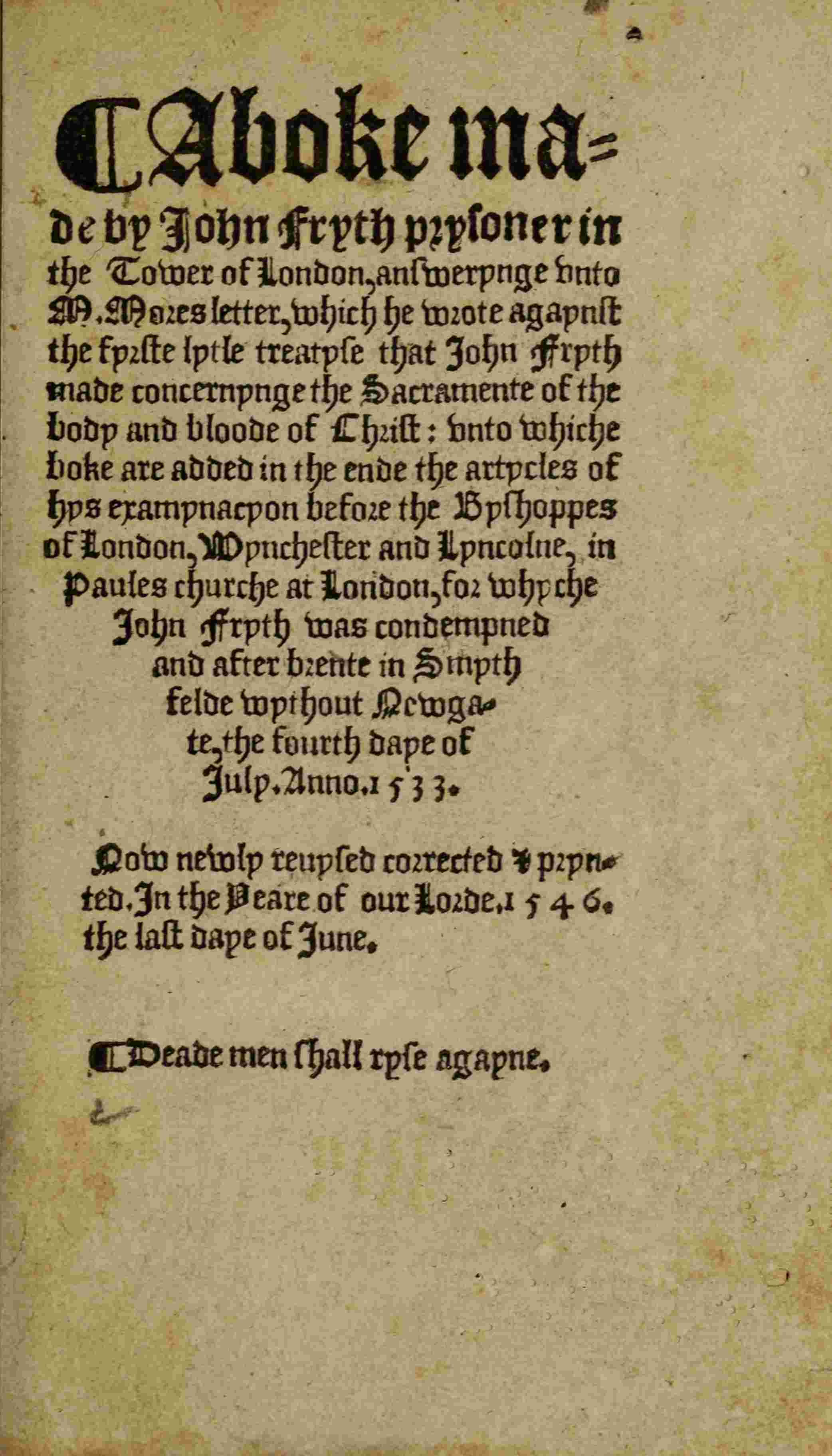 A boke made by John Fryth, prysoner in the Tower of London / answerynge unto M. Mores letter, which he wrote agaynst the fyrste lytle treatyse that John Fryth made, concernynge the sacramente of the body and bloude of Christ
by John Frith
A boke made by John Fryth, prysoner in the Tower of London / answerynge unto M. Mores letter, which he wrote agaynst the fyrste lytle treatyse that John Fryth made, concernynge the sacramente of the body and bloude of Christ
by John Frith
 A Brief Account of the Destruction of the Indies / Or, a faithful NARRATIVE OF THE Horrid and Unexampled Massacres, Butcheries, and all manner of Cruelties, that Hell and Malice could invent, committed by the Popish Spanish Party on the inhabitants of West-India, TOGETHER With the Devastations of several Kingdoms in America by Fire and Sword, for the space of Forty and Two Years, from the time of its first Discovery by them.
by Bartolomé de las Casas
A Brief Account of the Destruction of the Indies / Or, a faithful NARRATIVE OF THE Horrid and Unexampled Massacres, Butcheries, and all manner of Cruelties, that Hell and Malice could invent, committed by the Popish Spanish Party on the inhabitants of West-India, TOGETHER With the Devastations of several Kingdoms in America by Fire and Sword, for the space of Forty and Two Years, from the time of its first Discovery by them.
by Bartolomé de las Casas