
COPYRIGHT
1910 BY
THE PENN
PUBLISHING
COMPANY
Introduction
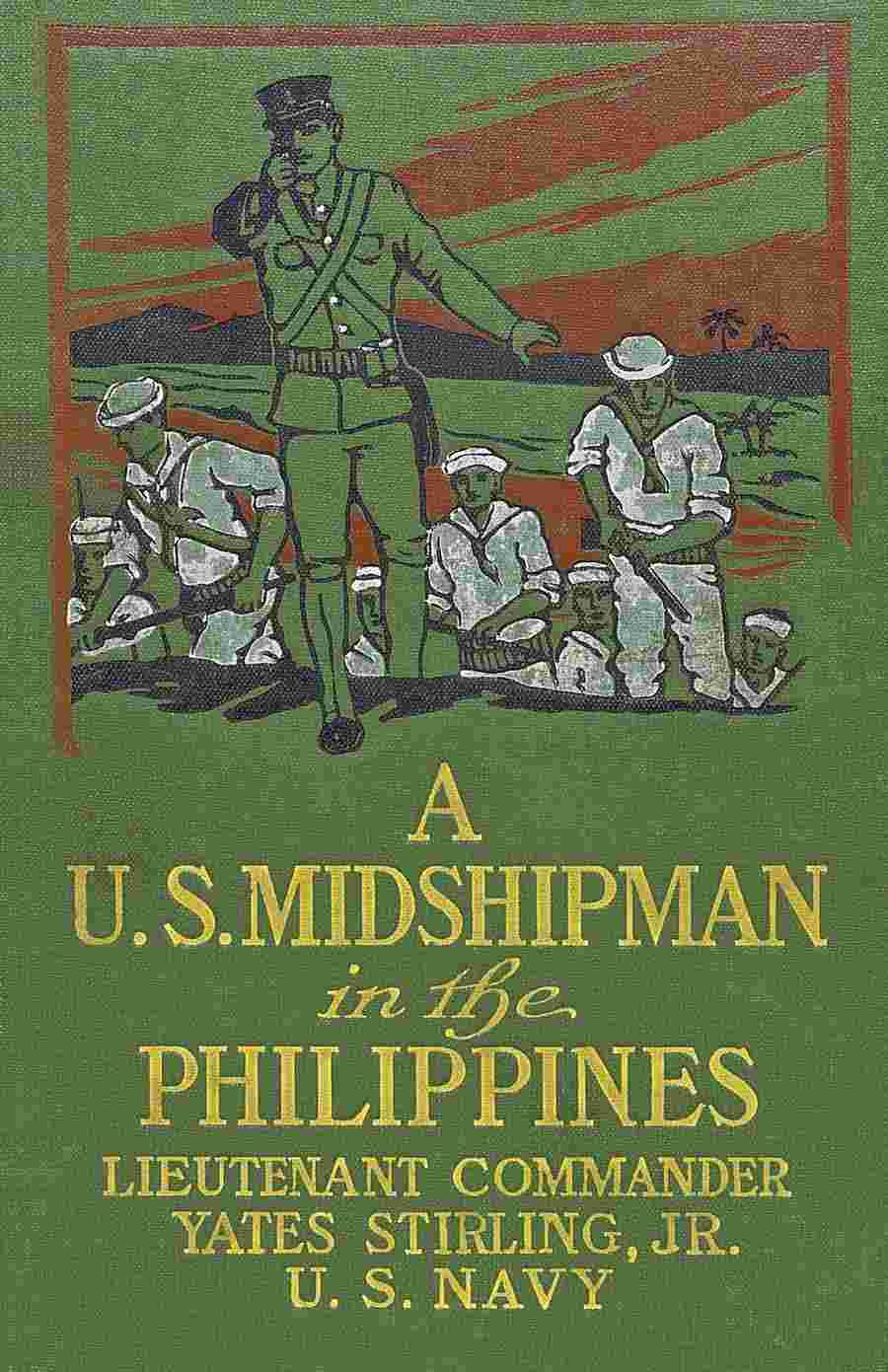
The writer has attempted to describe in this volume the life of two young midshipmen of the United States Navy, serving in a small gunboat in Philippine waters.
The fighting between the United States troops and the lawless bands of Filipino bandits (for they were bandits, more or less, after Aguinaldo’s army had been dispersed) was in most cases “hand to hand” and to the death. The navy had but small share in this war, but in some instances the helpful coöperation of their web-footed brothers saved the soldiers from embarrassing situations.
Midshipman Philip Perry and his classmate at Annapolis, Sydney Monroe, first made their appearance in “A United States Midshipman Afloat.” They had a part in stirring adventures during one of the frequent South American revolutions. Here they became involved in diplomatic intrigue, and had some success; but unfortunately diplomatic successes cannot always be proclaimed to the world.
“A United States Midshipman in China” told of the adventures of the same boys in China during a threatened uprising of fanatical Chinese against the foreigners. Here again diplomacy counseled silence, and their reward for saving the day was a mild rebuke from their admiral. One of the principal characters in all three books is Jack O’Neil, a typical modern man-of-war’s man.
These books are written in an endeavor to portray the life led by young officers in the naval service. The writer’s own experiences warrant the belief that the incidents are not unusual. The midshipmen are not merely automatons. To one of Napoleon’s pawns an order was an order, to be obeyed, right or wrong. But the doctrine, “their’s not to reason why” when “some one has blundered” is no longer accepted as an excuse for poor results. In these days of progress we court-martial an officer who stubbornly obeys an order, when he knows that to do so will injure the cause he has sworn to uphold.
Further account of the boys’ stirring adventures will be found in “A U. S. Midshipman in Japan” and “A U. S. Midshipman in the South Seas.”