

An Enquiry into the Causes of the Frequent Executions at Tyburn (1725)
Explore more books like this:
About This Book
A series of persuasive letters examines why so many people are condemned to death at public executions, describing the Newgate-to-Tyburn spectacle and how it fosters morbid fascination rather than reform. The author argues that the penal code prioritizes deterrence over rehabilitation and considers how harsh penalties, social practices, and failures in prosecution encourage crime; proposes reforms such as tighter control of receivers of stolen goods, discouraging public recovery notices, separating prisoners by age and severity, minimizing pardons, swift sober execution, and making punishment more dissuasive by using executed bodies for dissection or removing condemned persons from society to increase deterrent effect. Vivid scenes and moral reflection illustrate these claims.
About the Author

More Books by This Author
 A Letter to Dion
by Bernard Mandeville
A Letter to Dion
by Bernard Mandeville
 Aesop Dress'd; Or, A Collection of Fables Writ in Familiar Verse
by Bernard Mandeville
Aesop Dress'd; Or, A Collection of Fables Writ in Familiar Verse
by Bernard Mandeville
 An Enquiry into an Origin of Honour; and the Usefulness of Christianity in War
by Bernard Mandeville
An Enquiry into an Origin of Honour; and the Usefulness of Christianity in War
by Bernard Mandeville
 The Fable of the Bees; Or, Private Vices, Public Benefits
by Bernard Mandeville
The Fable of the Bees; Or, Private Vices, Public Benefits
by Bernard Mandeville
You May Also Like
 "Bear ye one another's burdens." A Plain Sermon on the Lancashire Distress
by James Galloway Cowan
"Bear ye one another's burdens." A Plain Sermon on the Lancashire Distress
by James Galloway Cowan
 "Brother Bosch", an Airman's Escape from Germany
by Gerald Featherstone Knight
"Brother Bosch", an Airman's Escape from Germany
by Gerald Featherstone Knight
 "Hear Ye the Rod, and Who Hath Appointed It" / A Sermon for the Fast Day, October 7, 1857
by James Galloway Cowan
"Hear Ye the Rod, and Who Hath Appointed It" / A Sermon for the Fast Day, October 7, 1857
by James Galloway Cowan
 "The Red Watch": With the First Canadian Division in Flanders
by John Allister Currie
"The Red Watch": With the First Canadian Division in Flanders
by John Allister Currie
 "Their Majesties' Servants." Annals of the English Stage (Volume 1 of 3)
by Dr. Doran
"Their Majesties' Servants." Annals of the English Stage (Volume 1 of 3)
by Dr. Doran
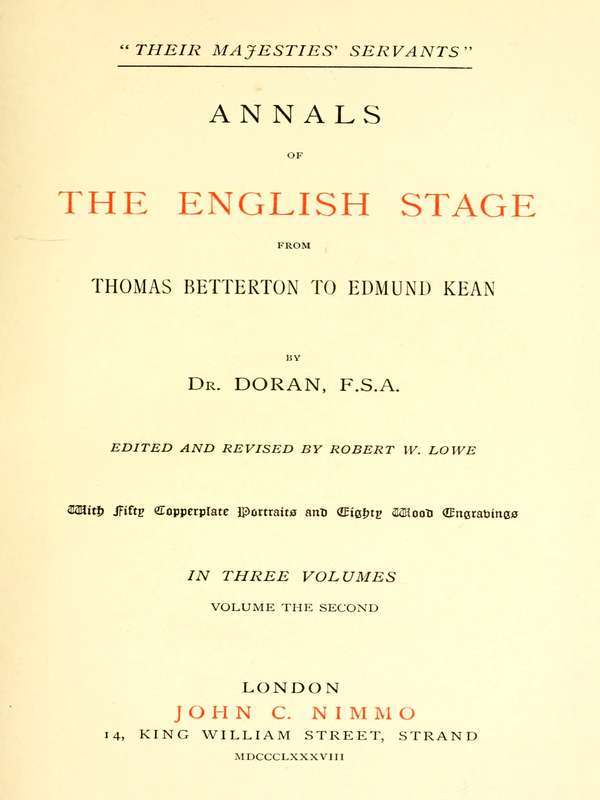 "Their Majesties' Servants." Annals of the English Stage (Volume 2 of 3)
by Dr. Doran
"Their Majesties' Servants." Annals of the English Stage (Volume 2 of 3)
by Dr. Doran