
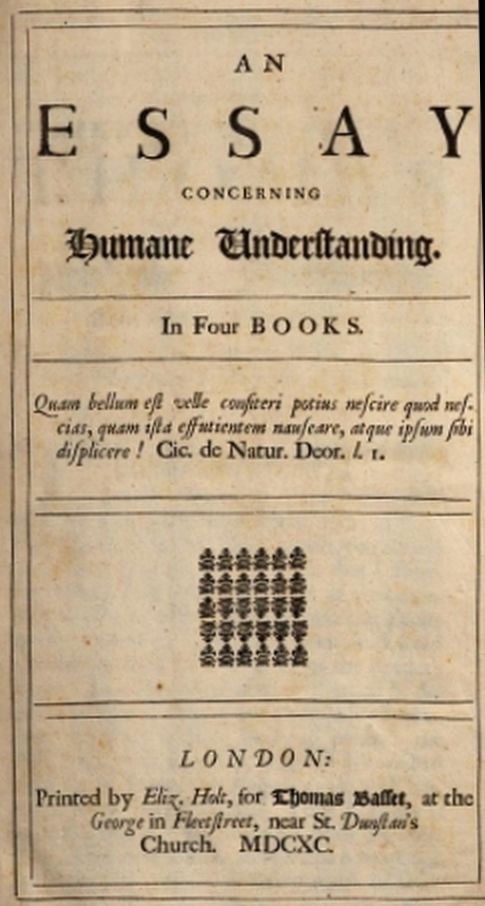
An Essay Concerning Humane Understanding, Volume 1 / MDCXC, Based on the 2nd Edition, Books 1 and 2
Explore more books like this:
About This Book
The author rejects innate principles and argues that the mind starts as a blank slate, acquiring all ideas through sensation and reflection. He distinguishes simple ideas received directly from the senses or internal reflection and complex ideas formed by combining, comparing, and abstracting them. He analyzes mental operations such as perception, retention, discernment, and association, and treats specific notions including space, duration, number, infinity, causation, substance, identity, relation, and power. He also considers distinctions between clear and obscure, adequate and inadequate, true and false ideas, and explains how ideas are linked into complex modes and judgments, offering an empiricist account of the origins and structure of human knowledge.