
WeRead Powered by ReaderPub
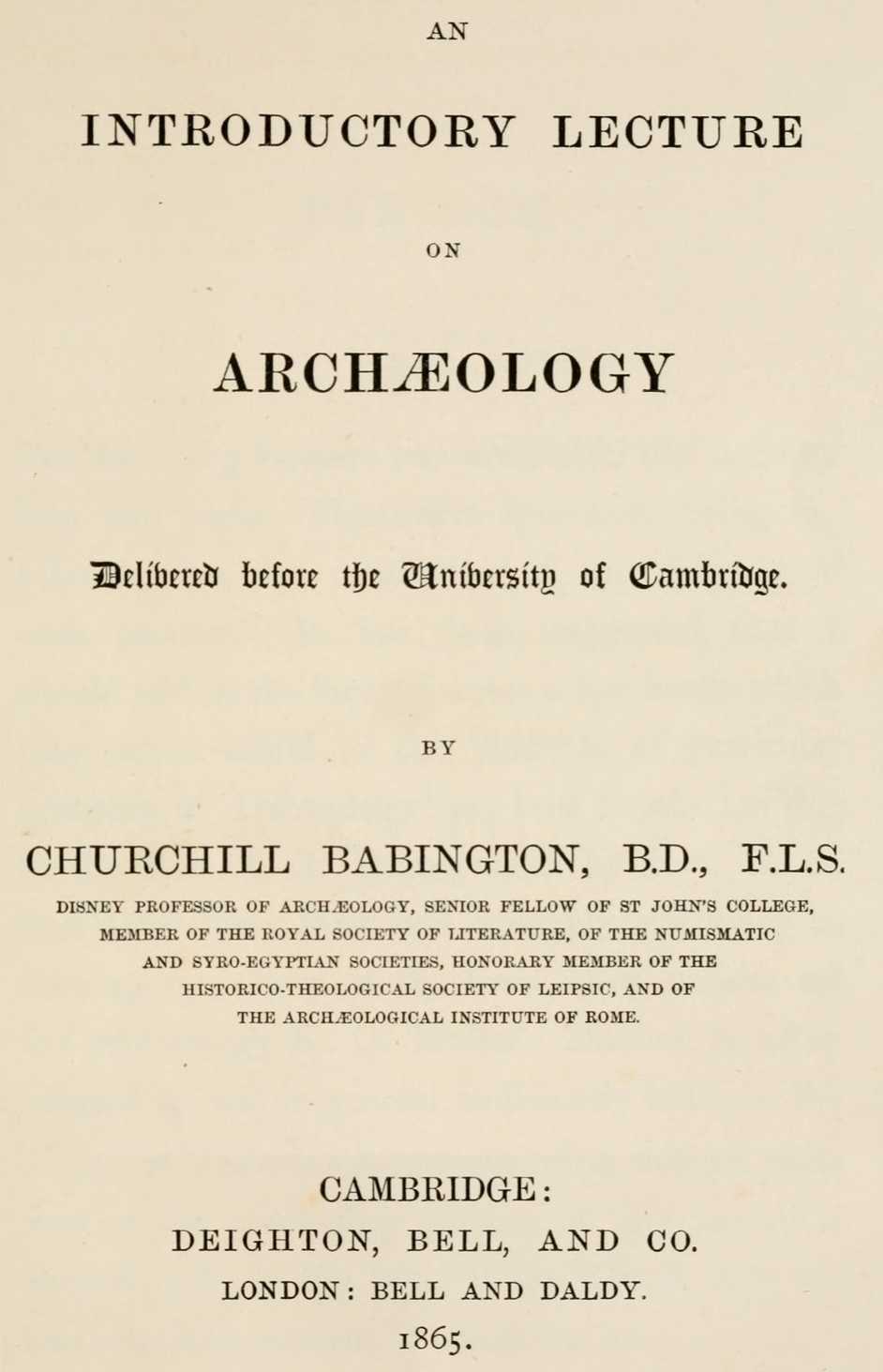
An introductory lecture on archæology cover

An introductory lecture on archæology

Chapter 2: PREFACE.
Open in WeRead

Explore more books like this:

About This Book

The author defines archaeology as the study of history through its contemporary monuments and outlines a broad field extending from primeval remains to classical and medieval survivals. He describes the range of material evidence—buildings, tombs, roads, coins, inscriptions, ceramics, metalwork, and everyday objects—and surveys surviving material from Near Eastern, Greek, Roman, Celtic, Byzantine, and medieval European contexts. He explains the professorship's comprehensive remit, outlines methods of collection, excavation, and epigraphic study, and lists desirable qualifications such as precise scholarship, knowledge of alphabets, an eye for art, and natural-history acquaintance, concluding with archaeology's pleasures and its mutual enrichment of literature and modern art.

PREFACE.


The following Lecture was divided in the delivery into two parts; illustrative specimens being exhibited after the conclusion of the delivery of each portion. It has been suggested that I should add in the form of notes a few books which may prove useful to the students of particular branches of Archæology; my best thanks are due to the Rev. T. G. Bonney and the Rev. W. G. Searle for their kind and valuable assistance in drawing up certain of the lists. For ancient art and archæology K. O. Müller’s Manual, so often referred to, will in general sufficiently indicate the bibliography, and it is only in a few departments, in numismatics more especially, that it has been deemed necessary to add anything to his references. M. Labarte’s Handbook, from which a great part of the concluding portion of this lecture is derived, will do the same thing, though in a far less complete manner, for medieval art.