
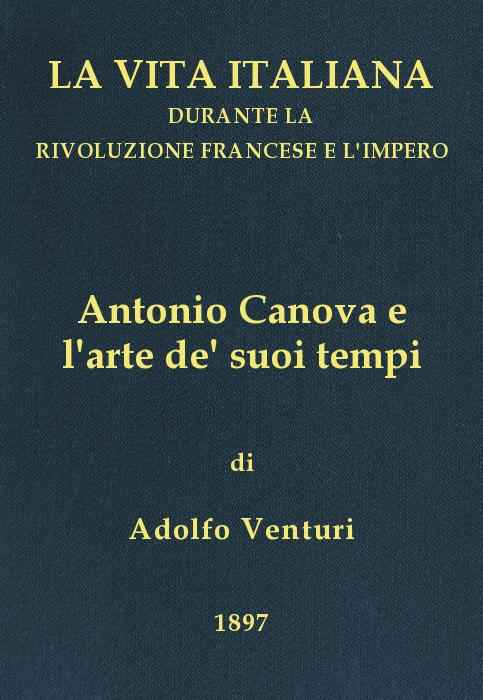
Antonio Canova (1757-1822), e l'arte de' suoi tempi / La vita italiana durante la Rivoluzione francese e l'Impero
Explore more books like this:
About This Book
The lecture explains how Italian art became dominated by classical imitation, losing its popular religious and social functions and becoming formulaic and academic; it critiques Baroque excesses and the 18th‑century revival of antiquity, arguing that erudition and idealizing critics isolated art from the public. It examines the sculptor's early study of classical casts and the tension between naturalistic feeling and learned convention, describes formative experiences among Rome's ruins, and follows his efforts to regenerate sculpture by combining lived observation with neoclassical models while confronting the limitations of a revival that often required explanatory allegory.
About the Author
You May Also Like
6 picks
 "Phiz" (Hablot Knight Browne), a Memoir.
by Frederic George Kitton
"Phiz" (Hablot Knight Browne), a Memoir.
by Frederic George Kitton
 "Præterita": souvenirs de jeunesse
by John Ruskin
"Præterita": souvenirs de jeunesse
by John Ruskin
 "The spirit of '76": Some recollections of the artist and the painting
by Henry Kelsey Devereux
"The spirit of '76": Some recollections of the artist and the painting
by Henry Kelsey Devereux
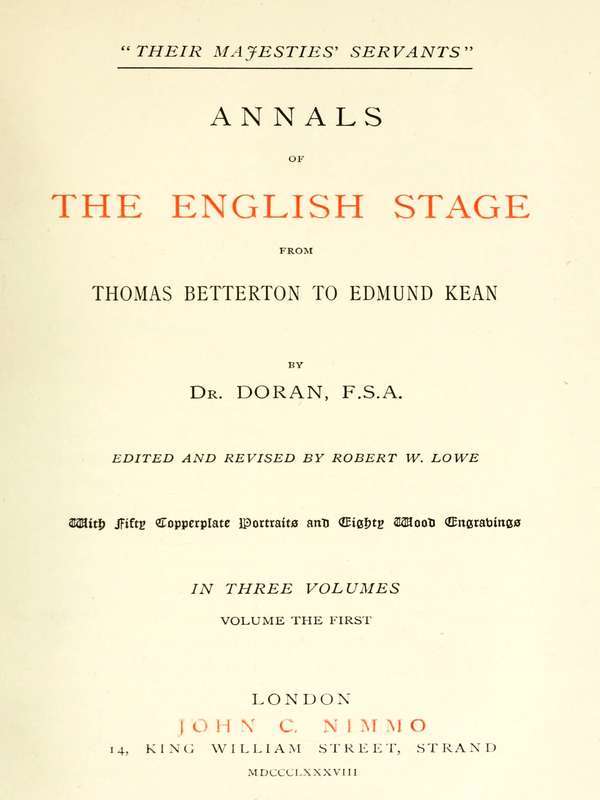 "Their Majesties' Servants." Annals of the English Stage (Volume 1 of 3)
by Dr. Doran
"Their Majesties' Servants." Annals of the English Stage (Volume 1 of 3)
by Dr. Doran
 A architectura religiosa na Edade Média
by Augusto Fuschini
A architectura religiosa na Edade Média
by Augusto Fuschini
 A Book About the Theater
by Brander Matthews
A Book About the Theater
by Brander Matthews