
About This Book
A series of six illustrated lectures examines how astronomical discoveries arise, comparing deliberate search, mathematical prediction, and chance. The author uses case studies that range from planetary identification and the prediction followed by observational confirmation of a planet, to classical measurements exposing aberration of light and the nutation of the Earth’s axis, and to more accidental finds such as novae and comets. Other chapters treat the discovery of regular sunspot cycles and the detection of subtle variations in latitude, emphasizing the roles of method, instrumentation, and serendipity. Prefatory remarks reflect on luck versus skill and note the sources and observatory experiences behind the accounts.
About the Author

You May Also Like
6 picks
 A Brief Account of Radio-activity
by F. P. Venable
A Brief Account of Radio-activity
by F. P. Venable
 A Brief History of Element Discovery, Synthesis, and Analysis
by Glen W. Watson
A Brief History of Element Discovery, Synthesis, and Analysis
by Glen W. Watson
 A Budget of Paradoxes, Volume I
by Augustus De Morgan
A Budget of Paradoxes, Volume I
by Augustus De Morgan
 A Color Notation / A measured color system, based on the three qualities Hue, Value and Chroma
by A. H. Munsell
A Color Notation / A measured color system, based on the three qualities Hue, Value and Chroma
by A. H. Munsell
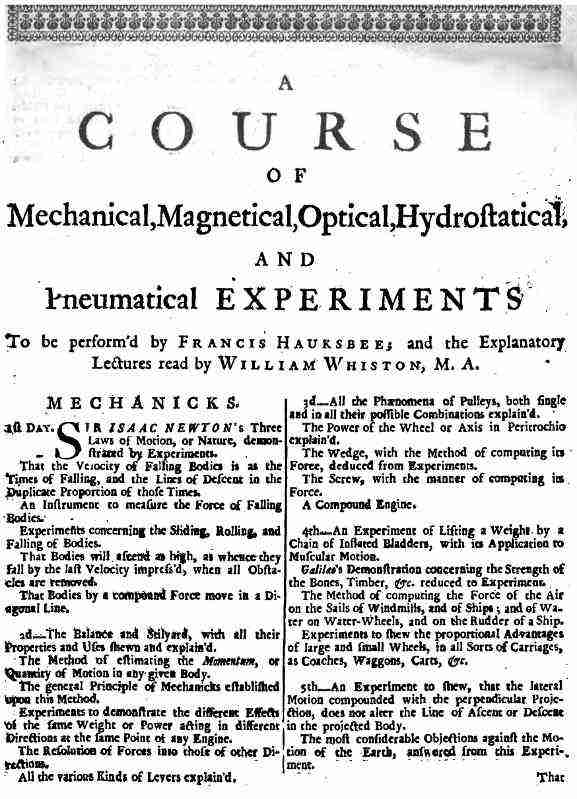 A Course of Mechanical, Magnetical, Optical, Hydrostatical and Pneumatical Experiments / perform'd by Francis Hauksbee, and the Explanatory Lectures read by William Whiston, M.A.
by William Whiston
A Course of Mechanical, Magnetical, Optical, Hydrostatical and Pneumatical Experiments / perform'd by Francis Hauksbee, and the Explanatory Lectures read by William Whiston, M.A.
by William Whiston
 A Discourse Presented to the Most Serene Don Cosimo II., Great Duke of Tuscany, Concerning the Natation of Bodies Vpon, and Submersion In, the Water.
by Galileo Galilei
A Discourse Presented to the Most Serene Don Cosimo II., Great Duke of Tuscany, Concerning the Natation of Bodies Vpon, and Submersion In, the Water.
by Galileo Galilei