
In the morning the Cub hastened to the barn. Either the old-fashioned latch had sprung up, or some one had been there before him, for the little fox, having eaten every scrap of food, and thereby gained strength, had gone his way, which, according to the string of footprints, was up in the rock and hemlock country behind the farm. Yet after supper on that night, and all the others that came before the spring thawing, a woman’s figure, wearing a cape under which was concealed a dish of scraps, outwitting Tatters, slipped from the pantry door, and going around the barn, halted at a flat rock set in a group of hemlocks, presently returning with the empty platter, her face wearing as rapt an expression as that of some pious woman of old carrying food to the haunts of hermit or saint of the pillar.
February, as if sick of its dreary self, suddenly fell away before March’s vigour, and its first gusty mood had softened before Brooke and Adam realized themselves at least the sole guardians of their parents and the homestead; yet in spite of this and the work it entailed, the Cub managed to spend at least a couple of hours a day with Stead at the lodge on Windy Hill, and Brooke tried to snatch a little time for painting, but even with her mother’s help her toil was by far more constant and exacting than her brother’s. However, direct motive had come to both of them, and that alone can make one walk sure-footed on the tight rope which at intervals through life replaces a safe path. Brooke worked persistently, using Tatters, Pam, and Robert Stead’s hunting dogs as studies, conscious of crudeness, imperfections, and the need of criticism, but letting nothing quench her spirit as long as the spark of vitality flashed back at her. She longed for the warm weather to come, so that she might work outdoors, and use as a studio an old hay-thatched shed on the hillside, once a sheepfold, which opened northeast toward the river valley.
At this juncture Robert Stead, whose technical training and passionate love of nature and animal life gave his words more than a casual value, stepped in, both as encourager and critic, and Brooke eagerly promised to try a picture of Manfred,—“a serious order,” Stead called it,—as soon as the season would permit. Meantime he brought her books and studies of animal anatomy, of whose cost she little guessed, and in explaining the details to her forgot both his warp and himself, becoming for the time that most enthralling of beings, the man of middle age who blends all the directness and fervour of youth with the subtle and reassuring charm of matured experience.
Was it a wonder that Brooke was glad at his coming? Between herself and the usual man twice her age she would have felt need for greater ceremony of outward deference. With Stead the friendship had begun on the most informal of footings, and been almost instantly cemented with the gratitude born of his kindness to her brother, as well as the mutual isolation of the two households; while over it all hung Dr. Russell’s words of caution, that owing to the peculiar circumstances of his life, she must not regard Stead in the same light as other men or magnify his little acts of kindness. Dear honest doctor, even he, with all his fine humanity, could not diagnose the human emotions with anything like finality.
Here again the need of money in hand, even for canvas, pressed upon Brooke, and like many another before her, she seized what came nearest to hand; and when the Cub discovered a head of Pam upon the cover of the sugar bucket, he straightway removed it from the closet to his room, thereby letting some very early ants into the sugar.
One great lesson in portrait art Brooke learned for herself in those lonely days, that whatever the care and detail of finish, the life and likeness is the work of but a few strokes.
Meanwhile the fox’s head on the bread-board stood on the mantel-shelf in the kitchen, watching Brooke as she went about her work, until she began to feel a mysterious kinship with the little doglike animal of the narrow eyes, and talked to it as if it was a human companion.
One day she had gone for a call at Mrs. Enoch Fenton’s, where, ever since that first January afternoon, she went when the tension of the mental and physical became too great, to be soothed and relaxed by the cripple’s cheerful common sense. She felt more than ever the absolute necessity of adding at once to the family income, as for the second time since their arrival she had been obliged to draw on the slender principal. Though the real motive for the visit was to consult the Deacon, indirectly, through his wife, about the likelihood of finding a man willing to cultivate the farm on shares, the talk drifted toward the topic of ways and means, in spite of Brooke’s constant resolve to keep such matters to herself.
“If you want to get folks’ money steady,” Mrs. Fenton said, pausing in her occupation of sewing a button on one of the Deacon’s blue hickory shirts, and using her thimble finger to point and emphasize her remarks, “you must give ’em something they want and need in exchange for it, and what they need most constant is something good to eat!”
Brooke smiled to herself, thinking of the pieman’s similar reasoning concerning his wife’s “revelation,” but did not in any way apply the matter personally until Mrs. Fenton’s next sentence.
“The jell and jam market is a good one, only it’s pretty well taken up, hereabouts, by Miss Ryerson at the Mill Farm, t’other side of Stonebridge. She puts up for nearly all the city people clear through to Gordon, and last year she added cherry bounce and blackberry brandy. Strange enough, too, made by your Great-grandmother West’s rule,—I suppose you know she accommodated wayfarers with meat and drink down at the farm, and being strictly temperance had a great name for her ginger-mint pop; the rule is in my book now. The old sign used to be in the far side of your attic, behind the four-poster—it was a fox chasin’ a goose, and I always heard it came from the old country; that reminds me, Enoch says that old bed is set up, and your father’s sleepin’ on it again—well, old times lets go hard sometimes.
“Why, last year Miss Ryerson cleared two thousand above the wages of her woman she keeps now to help her out. Of course there’s more in making such things than meets the eye of those that hasn’t been inside the preservin’ kettle, so to speak. It’s the keepin’ sound and eatin’ well that counts, and that’s why, like everything else, for every ten that tries the business, nine drop out because they pinch and neglect, and slop somewhere, and don’t give the best there is. In eatin’ there’s always a market for the best. But jam and jell won’t do for you, for let alone not havin’ experience, you’d have to put out everything for a season to catch your market, same as they cast away samples of new soap and bakin’ powder.
“Oh, yes, I almost forgot that you were askin’ about that man for the ploughing! Enoch saw a big strong Dane, or Swede, or some of those north-country people, down at the smithy last night. He’s come here lately, and hired the little Bisbee cottage on the river road—plans to fix it up, and plant a bit of garden, ’n make it ready for his sweetheart that’s coming over in the fall. They say he’s got a bit of money saved and table boards at Bisbee’s sister’s. He wants to work on shares or by the day this season, so’s to have time for his own work between. He brought a letter to Mr. Denny, the printer down at the Bee office, and he says he’ll recommend him willing. Somebody like that, steady, and who would go ahead, would be better for a girl like you than a wild Polack that you’d have to manage, or one of our town boys that would likely feel called to boss you. Father says the fellow doesn’t own a horse mower yet, but we’ll lend ours, and you’ve got a plough and scythes, as I suppose Keith showed you. Father’ll bargain with him for you, and plan out the work—he thinks it’ll be better to let the man see you’ve a farming friend that knows, to come between you and what you’ve never seen done, and in consequence hev no notion of.”
Thanking the dear old lady both with words and the spontaneous kiss of sudden gratitude, which she prized far more, Brooke walked home in a sort of dream. She passed, quite unheeded, the blooming hepaticas clustering amid the dry leaves in a sunny spot on the road bank, though she had been looking among their thick ruddy leaves for the flowers ever since Stead had shown her where they were bedded a week before. A song-sparrow, perched on a twig of silvery pussy-willow, threw back his head as she passed, and poured forth the most melodious verse of his changeful song. She scarcely heard it, or if she did, paid no heed, any more than she did to the fact that Tatters had flushed a partridge down in one of the wood roads that start from the highway and end in silence, leaving her for its ecstatic but fruitless quest.
Going to the kitchen, she stood before the mantel-shelf looking at the fox, as if at an oracle that must one day speak to her. Then something cool seemed to touch her brain, clearing it and crystallizing her thoughts, as it had that night when the plan of coming to the homestead drove away the oppression of despair itself.
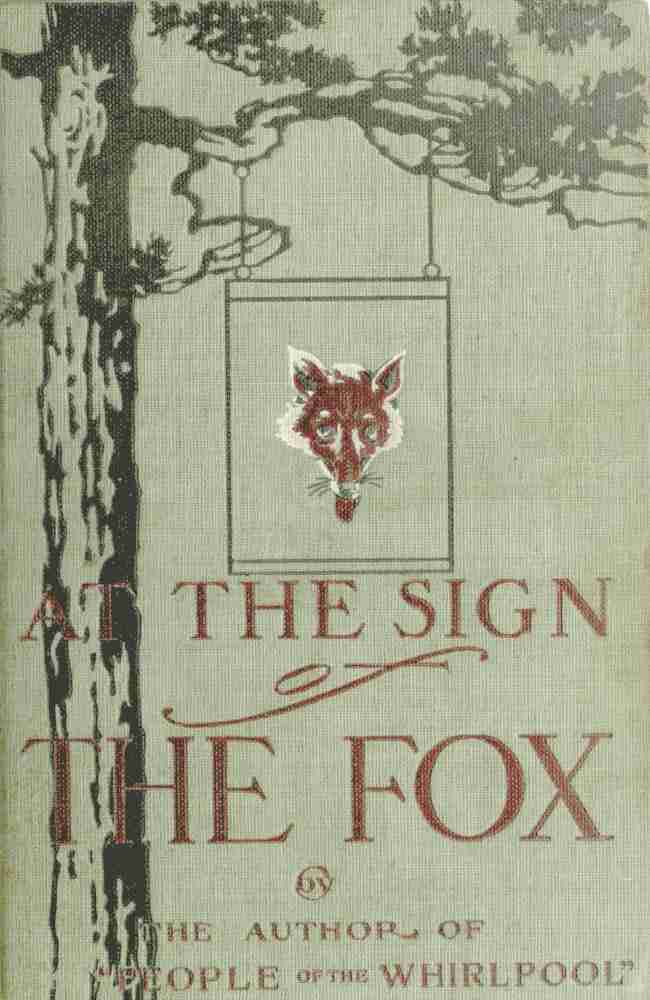
“Yes,” she said aloud, “to win money it must be the best of its kind. What can I do that is the best?—paint animals? by and by perhaps—but for daily bread this spring? Ah, it has come! I can make sandwiches, all kinds, of the very best (how the Hendersons and Bleeckers gobbled them up), to go with mother’s tea, also the bread for them! I will make the summer drink of ginger ale, ice, a lemon slice, and three sprigs of mint, that father once said tasted so much better than the ginger-root affair they bottle for sale. I will play I am Great-granny West, swing out my sign, and ‘accommodate wayfarers’—that is, the pleasure drivers between Stonebridge and Gordon—with food and drink, as Mrs. Fenton put it! She says a day never passes from May to November but what people in driving stop, and beg to buy even bread and milk. Grandma West’s sign was a fox and a goose, but to-day geese are out of the running. My sign shall be only the Sign of the Fox. You shall hang out over the gate on the old pine in an iron frame, and talk wisely to the passers-by,” she said, looking up at the picture.
Then, taking the bread-board down from the shelf, she kissed the fox on the nose in the fervour of hope that was dawning.
“Instead of cakes and ale, or anything like that, you shall have just one word—tea—painted over you, and we will leave them to guess the rest,” and Brooke, who was in a mood to declare that the wise beast winked, and licked his lips, needs must laugh at the curious yet satisfactory blending of her dreams of the future, love, painting, and fame, with the eternal everyday theme, bread and butter!
After a moment the revulsion came. What would her mother say? That passed away in the thought that she could not object, for to act untrammelled was unquestionably the first link in the chain by which Brooke was to endeavour to keep the family bound together. Yet it was a relief when, an hour later, the plan had been thoroughly discussed and formulated, to find that her mother not only fully approved, but was already on the alert, and full of suggestions to make the simple service as dainty as might be.
Silent Stead was the first to throw a wet blanket upon the scheme, his reasons being purely personal, as it usually developed that they were; though he would bitterly have resented the idea of it. He found it difficult to put his objections into reasonable words, and so merely retired within himself, and was “grumpy,” as the Cub put it.
The Cub came back from the village a few days later with the rings and frame for the sign, which the blacksmith had fashioned; and Brooke, after varnishing the bread-board well to keep out the weather, had fitted it in place, and was looking at the result when Stead came in. In his arms he carried several packages of bulbs and garden seeds for her, which he dropped on the table. He had a lovely hillside garden of his own below the lodge, which he and José tended, and already he was planning a more elaborate arrangement of the old-fashioned kitchen garden at the farm than Miss Keith had attempted, saying, in answer to Brooke’s objection, that it would perhaps be more than they could care for:—
“Turn about is fair play; you give me, an idler, a daily resting spot between the valley and the hill; why may I not give you a spot to rest in between the day’s work? For God’s sake, do not make me feel more of a cumberer of the ground than necessary!”
As for the gifts of seeds and roots, to Mrs. Lawton, accustomed as she had been to the perfect southern courtesy of such things, that bore no obligation between neighbours and equals, they seemed quite matters of course, and of no special import.
Mrs. Fenton, when Brooke told her of the new venture, and consulted her as to the ways of the great folk of the neighbourhood, and their seasons for coming and going, had expressed her opinion that the first of May was time enough to begin, as then the people in general ran over from Boston and New York for a few days at a time to start the wheels in motion, and take a breath of air. This left Brooke a full month for her preparations, and both Robert Stead and the mail carrier noticed the frequency with which letters flew between herself and Lucy Dean during this time.
Brooke, at first being humble-minded as to her ability, and therefore as to the prices to be charged, was gradually convinced by her hard-headed friend that if her wares were the equal of those which Tokay furnished the same patrons at their houses in town, why might she not charge the same at the wayside tea garden of the Moosatuk, where such things had hitherto not only been unattainable but unknown?
To clinch her unanswerable argument, Lucy had made and sent to her friend a box of dainty cards, such as are often used at bazaars in private houses. A fox’s head appeared at the top—next below TEA, lemon or cream—MILK—FOXHEAD JULEP (the name with which they had christened Granny West’s delicious ginger, lemon, and mint concoction). Then followed the price-list of sandwiches—cheese—potted chicken—lettuce—jam, and plain bread and butter, singly or by the dozen, according to Tokay’s schedule. And Brooke accepted Lucy’s advice, but exacted a promise that she should tell no one, nor exploit the plan in any way, saying, “I want the venture to make its way from the inside out, not from the outside in.”
Thus the matter was settled, and when mother and daughter had agreed that it was best to use the exquisite fern-leaf china cups and saucers for their added attraction over commoner china, and there seemed nothing more to do but to work along in the interim, a new difficulty suddenly smote Brooke. Though she and her mother might brew and bake, who was to serve the tea to those who, lacking footmen, wished it brought to carriage or served in the porch, which Brooke already called her Tea Garden, where she planned, if business warranted, to place some seats and small tables?
One day, the very last of March, Deacon Fenton stopped at the West farm, and in answer to Mrs. Lawton’s urgent invitation to come in, replied: “Thank you kindly, but not to-day. I’m looking for that farmer daughter of yours. I’ve fetched up the new man, and given him an idee of the plantin’. He seems to sense it all right, though he’s kinder soft and unconditioned, and slow for spring ploughin’, and his hands blister up so’s I told him he’d better wear sheepskin mits fer a spell, as it’s some time he claims since he worked land for his mother. That don’t count, however, when it’s work on shares. You get your half jest the same if he’s a week doin’ a day’s work, and that’s the sense on it fer a girl like yourn, who can’t be expected to drive farm hands up to the bit, as must be did if you’re goin’ to git enough offen your land to feed a sparrer! Where’s the young lady? A-paintin’ pussy cats—no, I think it was wild rabbits likely, in the barn, Adam said, only I didn’t see her when I tied up. I thought maybe she’d like to go down to the ploughed field, and be made acquainted with her new help. She won’t need to bother much with him, not payin’ out wages, but it may come in handy for her to have speech with him, jest the same.
“Say, Mis’ Lawton, the tea and spice pedler saw that fox-head sign, settin’ in there in the kitchen, and he says the firm he travels fer are just introducing a new brand of condensed goat’s milk, and if she’d paint out a nice, white, lively-lookin’ goat with a pretty, dressed-up baby sittin’ on its back, and a dreadful thin baby sittin’ on the road a-crying ’cause she didn’t get none, he reckons he could get her all of twenty-five dollars for it—maybe more. There’s a fine big carriage goat boardin’ at Bisbee’s fer the winter that she could copy—’tain’t a milking one, but she might add to it a little. Thought I’d jest mention it; you know ’tain’t often she might get the chance to turn picture paintin’ into something useful and instructive and payin’ all to onct.”
At this juncture Brooke appeared to speak for herself, and, after she had cleaned the paint from her fingers with turpentine, the shrewd old farmer and the warm-hearted young enthusiast walked side by side down the cross-road, skirting the hay-field, now growing green around the moist edges. The meadowlarks were soaring and singing, the first white butterflies fluttered in the sun, and down from the garden wafted an odour that tells of spring in every quarter of the globe, the perfume of the little white English violets. These nestled in sociable tufts under the protection of the leafless bushes of crimson and damask roses in the garden that Great-granny West had planted,—violets whose ancestors had doubtless come overseas in company with the Sign of the Fox and the Goose.
The unploughed corn-field lay to the right of the cross-road, and to reach it they were obliged to skirt a small field of fall-sown rye that was bounded by the roadway. As they picked their way along the stubbly edge, between which and the stone fence ran one of those little brooks of the hill countries that brawl and rush along in spring and autumn, but shrink away and keep their silence in summer heat and winter cold alike, Brooke paused once or twice to look upon her River Kingdom, which, after the rain and freshet of a week past, was now showing the first real signs of life. Dun and gray were still the prevailing hues of the river woods, except where a ruddy or golden glow lying on the tree-tops told of swamp maples or willows. The hemlocks on the rocky banks looked rusty and winter-worn, not having yet donned their curved-tipped new feathers. The marsh meadows, thickly studded with ponds by the overflow, alone showed solid green, and glittered with the sunlit emerald leaves of the arums, that had now risen above and concealed their ill-smelling mottled red blossoms.
Here and there on the hillsides the columns of pearl-gray smoke, wafted straight skyward, showed both the location of cultivated land where litter and brush were burning, and also that the wind was in abeyance, and the sun once more in power. The sky wore a misty veil over the blue, and the Moosatuk, rushing, foaming, and overleaping itself in its spring-running seaward, drew more from the ground for colours than of the sky reflections. Now and again an uprooted tree would be swept by, turning and stretching its bare arms upward, as if giving signals of distress, and then a log would plunge along, striking against the submerged rocks, rearing, and plunging again like a gigantic water snake.
Yes, in deed and in truth, life had returned to the River Kingdom at the sound of the voice of the waters, and yet throughout all the wide expanse the only human touch was in the field below, where a man, who cast a Titan’s shadow behind him, was driving a plough into the deep, cool soil, slowly shattering the stubbly hillocks of last year’s corn. Calmly he worked, but with finality. The reins that guided the horses hung loose about his neck, for he only made use of them at the turnings, while the motive power seemed to come less from the horses than from the shoulders of the man who kept the ploughshare true in its course.
Brooke Lawton stood spellbound. For the first time she saw and comprehended the most primitive labour of primitive man, and it appealed to every sense of her body,—the mental, spiritual, physical,—appealed to her as had the freshly baked loaves, by its symbolism as well as directness, for beneath the leavening development of generations, side by side with the temperament for music expressed in rhythm and colour defined by pigments, walked another Brooke, the primitive woman.
Ah! if she could but fix and paint the scene as she felt it! Instantly the ploughman stood as the rightful ruler of the River Kingdom, and dominated it. It was not the personality of the man, for she had not yet seen his face, merely his fitness to his surroundings. Enoch Fenton’s voice broke the spell: “A slow worker, as I told your ma (I put in my mare with your horse, it’s too heavy for one), but that don’t signify in share farmin’; you won’t hev to watch out sharp until the harvestin’, and then I’ll help you out. If you was left to yourself, you might fare like that pretty city Widder Harris, down to the Forks; she let old Ed Terry keep her cow fer half the milk. Firstly the cow was dry, and Mis’ didn’t get any of course; time went along, and the cow calved, and after a week Mis’ Harris went across lots with her kettle fer her milk.
“‘There’s no milk due you,’ said old Terry, chuckling. ‘How’s that?’ says she, mad-like, ‘I’m to get half, and I saw you take in a full pail this morning.’ ‘That’s all true,’ says he, ‘half comes to me, and your half goes to the calf!’
“Not that I expect this chap is that kind; he’s sort o’ mild and solemn, that’s why I chose you a foreigner; the native is often overcrafty to work with green women folks that ain’t had the picklin’ experience gives. There’s fellers round here would sell you cold storage eggs for settin’ as quick as not. I know ’em, and bein’s you’re a friend o’ Dr. Russell, wife and I feel a charge to look after you a spell. Now ’f it was Keith, she’s different—no cold storage eggs for her! Do you hear when the weddin’s coming off? That’s the only bargain of hers I mistrust. The sharpest women on general trading most allers slips up on matrimony. I’ve often said to ma, when it comes to matrimony, I think the Lord loves and favours women best that, when they sets their mind on a poor sinful man, jest closes their eyes, and topples right into marriage without bargaining.
“Old Terry was a corker! ’twas he that was mowin’ fer me one day, and I says at the nooning, ‘Will you take rum and water, or cider?’ Says he, ‘As the rum’s handiest, I’ll take that while you’re drawin’ the cider!’
“Hi there, Henry! Henry! halt at the turn!” he called to the ploughman as they reached the field edge. “It’s good he understands English, and speaks it only a little back-handed. What’s his other name? Let’s see—Petersen? no that was the one that wanted a steady job. Yes, I remember, it’s Maarten,—they spell it with double a where he comes from.
“This is Miss Lawton you’re agoin’ to halve the crops with, and bein’ as it is she expects you’ll measure full and fair, and something over, and she wants you to remember that I’m standing by her, and my eye teeth is cut!”
“Why, I didn’t tell you to say that, deacon. I’m sure Mr. Maarten will be fair,” stammered Brooke, feeling personally embarrassed at the implied lack of confidence, and oblivious of the wink that her agricultural preceptor had given her, for he had simply wished to show the newcomer that she had a protector; while she stood there colouring with distress, her hand half raised, not knowing whether she was to greet the farmer, as she had made a point of doing their neighbours, or keep the reserve that belonged to the city service of inferiors.
As for the man, he stood quite still, one hand on the plough, the other lifting his wide hat by the crown in greeting, an act of politeness no country yokel would have vouchsafed. What he said she could not hear, but the single glance he gave her, though interrupted by the shadow of his hat, tinged with a swift respect instead of lingering curiosity, she read as an appeal for fair trial and mercy for his awkwardness, so her outstretched hand dropped to the stone wall that divided them. Leaning on it, she asked some trifling questions that could be answered by a brief yes and no, to put him at his ease, then strolled on again along the field edges, only half listening to what Enoch Fenton said of the best rotation of crops for soil somewhat overfarmed, and half busy with her own thoughts, quickened in a dozen different ways by the impulse of spring.
“New man don’t seem sociably inclined to women folks,” said the deacon, with a chuckle; “funny he should be took that way too! Most as dumb and offish as Silent Stead up there on Windy Hill, though Stead’s thawed out considerable toward ’em, ain’t he, since you folks come here?” he added, in a persuasive tone intended to open further possibilities of conversation.
“Oh, that is not because we are women folks,” answered Brooke, simply, smiling at the old man’s eagerness; “it is also because of Dr. Russell, who introduced us. We are strangers, and lonely like himself, and you know he is teaching my brother, so that he may not wholly lose sight of college, and of course we are very grateful for that.”
“Want ter know!” was the enigmatical reply, the non-committal answer of the countryman, given as it always is with the falling inflection, though the words imply a question.
As they turned again toward the cross-road, the head of a man and horse could be seen above the leafless wild hedge that covered the fence. It was Robert Stead, and as he caught sight of Brooke, he pulled some letters from his saddle-bag and waved them toward her.
“As you’re likely to have company home, I reckon I’ll cut across lots,” said Enoch Fenton, dryly, noticing her eagerness, for letters always opened a realm of possibility, while the deacon’s query about Keith West’s marriage reminded Brooke that she had not heard from the prospective bride for nearly a month, and so she had unconsciously hurried her steps.
When she reached the bars (four rough chestnut poles held by old horseshoes driven into the posts like staples,—the relic of an old country tradition to keep the distemper from the cattle pastured therein), Stead had already dismounted, and stood waiting for her, and saying, “Letters first,” handed her the package—six in all: two for her mother, one being in the writing of Mr. Dean, and one of the lawyer; one from Lucy; two in strange hands, and the last addressed in the square, upright characters that she had seen once before, this also readdressed by Charlie Ashton.
With a swift movement she dropped them into the pocket of her brown linen pinafore, and, turning backward toward the Moosatuk, let the beauty of the vista—which at that point was framed by the mottled trunks of two gigantic plane trees that linked their gnarled branches across the roadway—take the place of speech for a few moments.
“Then you too love the river, and turn to it as I do,” Stead said, watching her face, and attributing its changeful expression, now wrapt, now alert, to its influence.
“Yes, surely,” she answered, looking far off and beyond, “and I think I must have known it somewhere in dreams, perhaps before ever I saw it. You do not know that when I was only a child I christened all over there, as far as eye can see, my River Kingdom, and said that some day I would be fairy queen of it!”
“Yes, I know; Dr. Russell once told me of your gypsying,—and now?” Stead dropped Manfred’s bridle that he had been holding, and drew a step nearer to the young woman, while the horse, feeling his liberty, began to crop the tender tufts of grass that were growing between the wheel tracks. “Is it not still your kingdom?”
“Yes and no. The kingdom is still there, but fairy days have flown away with their kings and queens, and all of that; it is only a corner of the same big round workaday world, though an enchanted one, and I am only just one woman in it, not even a gypsy queen. The river alone has not changed: when I am quiet, it soothes me; when I am restless and dissatisfied, it moves for me and cools the fever. This winter, when it was frozen and buried, I too felt turned to stone at times, or as if I stood by watching the face of some one I loved who was dead. If the ice had lasted another month, I do not think I could have borne it,” and Brooke, as she gazed, clasped her hands before her with a gesture half supplication, half resolution, that had always been peculiarly her own.
Then Stead saw that the hands, with the firm, but slender fingers that tell of the artistic temperament, were no longer white and rose-tipped, but roughened and seamed like the ground itself with the stress of the winter,—the patient hands of the woman who works, not of the queen who toys.
Suddenly the frost wherein his heart had been encased, numbing him all these eleven years, melted in the sunshine of her simple, wholesome womanliness, and broke away with a swift wrench, like the ice of the river in the force of the freshet. The red blood pulsed anew and sang in his ears the eternal spring song that was all forgotten, or worse yet, disbelieved; for a single moment it swirled him about, and hurried him along, struggling uselessly, backward toward youth,—a perilous journey.
Manfred, who had cropped all the grass within easy reach, now nibbled sharply at his master’s pocket for sugar; with an impatient gesture Stead turned—and the moment passed; while Brooke, once more sweeping the landscape with her gaze, slowly stretched out her arms toward it unconsciously, and began to climb the hill again. The last detail of it all that lingered in her memory was the ploughman following in the furrow that his strength made true, and as the two walked slowly homeward, the ploughman in his turn stopped, and, lifting his hat to cool his head, stood watching them.
Robert Stead stopped at the barn to show the Cub, now in the first enthusiasm of the coming trout season, how to repair an old rod of his father’s that had grown brittle from disuse, and Brooke carried the letters to her mother, reading that from Lucy; but she took the one marked Overveen to her own room presently, where, sitting by the window, she opened it slowly. It held a single sheet that bore these words—random verses from the “Lost Tales of Miletus,” carefully copied—no less, no more!
Holding the paper clasped against her breast, again Brooke’s thoughts sought counsel of the river, but now between her and it, a silhouette standing against the water, on the slope below the ploughman guided the horses to and fro unceasingly across the corn-field.