
The month of Lucy Dean’s stay spread itself over the entire summer, and before she left the fragrance of wild grapes came from the river woods, and the blue ribbon binding the tasselled grasses of the moist meadows was loomed of Puritan fringed gentian instead of royal fleur-de-lis. Time was when Lucy’s protracted presence, under like circumstances, would have been a strain, akin to moving in a comedy of rapid action, where every actor must be on the alert to take his cue. But to this restless, high-strung woman love had come as a clarifier, like the magic electric touch that vitalizes the air after the summer storm has passed, and makes the breath come more freely.
As she became an open book to her friend, their relative positions altered, and the transparent Brooke of old in her turn became a mystery to Lucy, while Stead fairly piqued her to the point of anger. She thought she knew at least the eyemarks of masculine devotion, and before Stead’s June departure she had read them in all their changefulness when his eyes rested upon Brooke, and wondered if she were wholly blind, or seeing it unwillingly, feigned blindness. Time would tell, she thought, for judging by herself, she knew that, to some moods at least, separation is the searcher of hearts in doubt. All visible signs, however, had failed, as on the return the visits, though hardly less frequent, seemed to lack the personal spontaneity of before, and to come under the family or merely casual order. Still this might be accounted for by the fact that Stead was absorbed in the designing of a serious piece of work of some magnitude, and the remote hermitage had become the destination of men of divers sorts,—old friends who had been held almost forcibly aloof and new professional acquaintances.
Dr. Russell, who had been at too great a distance to divine the intimate reason of the revulsion, laid it wholly to the humanizing effect of the general companionship and contact with the wholesome, firm-purposed family life of the homestead, and he rejoiced exceedingly that at last his friend had, as it were, separated self from shelf, and stood aside from the self-inflicted gloom of his own shadow. But one day, chancing upon Stead in New York, and reading a different, yet deeper, suffering, purged of old selfishness, in his face, his habit of mental diagnosis, tinged with kindly philosophy, was at an equal loss with Lucy’s lightning intuition.
As to Brooke, she walked straight forward, almost mechanically, throughout those summer days, filled alike with work and sunshine. The anxiety of the winter had been to know if the new life could possibly become a permanence. Now life under the Sign of the Fox seemed a thing assured; and yet the days seemed longer labourwise now than before, for though Brooke could read the material future, she did not know herself. The culmination of Stead’s friendship pained her, almost haunted her, though chiefly because it had laid bare the needs of her own heart. Ideal and real alike had grown intangible. Even Lorenz’ picture seemed to look at her in reproach, and the giant shadow of the farmer-on-shares crossed the fields less frequently now that the growing time was past. It seemed, too, that Enoch Fenton’s words were proving true, for the man had grown gaunt under the scorching sun and toil, and Bisbee duly reported that his plans had fallen through about his sweetheart and settling, and that he was going to the old country before winter.
As to Lucy’s proposed descent upon the farmer-on-shares, begun in a spirit of teasing and continued purely through curiosity, it was, as she afterward termed it, “a regular toboggan slide”; and no matter in what way or from where she approached him, without the least apparent effort on his part, he was immediately at the farthest possible point away from her. So that a one-sided wager she had made with Brooke, who professed complete ignorance, that she could tell the colour of his eyes and what he would look like without his “barbarous beard” at first sight, remained unproven,—for Lucy there was no near-by first sight at all.
From the West homestead Lucy Dean had gone to Gordon to visit Mrs. Parks. After she had been away a week the early twilight saw her coming up the cross-road from Gilead station, driven by the ubiquitous Bisbee boy in the same buggy that had brought Ashton the night of the storm.
No one was ever wholly surprised at any action on Lucy’s part, and when Mrs. Lawton and Brooke noticed that the buggy had driven away again, they concluded that Lucy had come to bid them good-by before returning home, as the papers were full of the return of the new Mrs. Dean to New York, of the satisfaction of their friends in general, and of the popularity of the couple. They themselves were both dubious as to how Lucy would enjoy being even temporarily only a daughter in the house where she had reigned supreme; and though Mr. Dean had cordially approved of Lucy’s engagement, it was well understood that it must necessarily be a long one.
After the greetings were over, and Lucy learned their thoughts of her coming, she did not appear as much at ease as usual.
“The fact is,” she began abruptly, “I haven’t come to say good-by; I’m stopping with Mrs. Parks until she goes to town, for the Senator has to be away, and we hit it off nicely together. I’ve taught the heir apparent endless tricks, so that he can outrank any baby of the social circus, and consequently of course they adore me.
“I’ve come to bid Tom good-by, for he is suddenly being sent abroad to report socially, politically, and otherwise on that Congress at The Hague. Of course it isn’t exactly the work of city editor, but he knows the ground and languages and all of that, besides which it will be good for him in every way, and he sails on Saturday!”
“But where is he?” asked Brooke, too much puzzled to be surprised. “We have not seen him, and how do you expect to meet him here when he knows that you are in Gordon? though I’ve often thought it safest to look for you where you are not, for there is where you are usually to be found,” and then they both laughed at the Irish bull Brooke had perpetrated.
“The telephone, my dear—from Gordon to New York—price one dollar! He wired frugally: ‘Sail for Hague Saturday, will be in Gordon to-night,’ upon which I called him up, and limited his trip to Gilead, supper at the Sign of the Fox, afterward the Commercial Hotel by the depot, unless urgently requested by Mrs. Lawton to pass the night in the wasp room with the black walnut furniture! Unfortunately, as you have no ’phone, I could not inform you of the arrangement until I came in person,” and even Adam Lawton joined quietly in the laugh that followed Lucy’s audacious confession.
“There will be a ’phone here for you to announce your marriage next summer, if you grow impatient of watching and waiting,” said Brooke mischievously; “so many people have asked us to have it that they may send orders with less trouble, and then both Cousin Keith and mother think that it would be real economy of both time and material for us to know when large parties are driving out.”
Tom Brownell came duly, and Mrs. Lawton almost purred with content as she saw the pair of strong young faces at the tea-table, happy with the tender happiness that is refined by a coming parting for anticipated good. Again the two paced up and down the path beside the house in the moonlight, but this time it was the young hunter’s moon, curved as a powder-horn, and hurrying early to bed after his sun mother, that looked narrowly between the trees athwart the western sky.
“It will be a splendid trip for you,—nothing could be better,” said Lucy, brightening; “you’ve not had a month out of the city these two years past.”
“It would be better if it were to be our wedding journey,” answered Brownell; “being engaged may be an excitement and stimulant to the sluggish, but for us the calmness of certainty would be far better; but as it is, dear, I am more than thankful for my half-loaf.”
Lucy did not speak for a few moments, and then, turning swiftly and putting both hands on his shoulders, in her old earnest fashion, said, transfixing him with her black eyes, in which mischief and pleading now struggled for mastery: “If a thing would be better, it is wrong not to do it, for we are bound to do our best. It shall be our wedding journey. How much money have you of your very own?”
Stunned into plain fact-telling, Brownell named a sum of less than three thousand dollars, accumulated of extras and contributions to magazines.
“Good! I have as much more of my half year’s allowance, which papa always pays in advance; it will do very nicely!”
“But Lucy, you wonder, I will not take a wedding trip or travel on your money!”
“Certainly not; yours will be more than enough for two months! I will save mine for the suburban cottage furniture on our return, and I can paper a not too big room beautifully myself, if the paper has stripes to guide by. Miss Keith taught Brooke and me this past summer, and we practised on the pantry, which looks quite well, because when the shelves were put back they hid the bubbles, where our arms ached and we didn’t rub the paper smooth.”
“But think a moment, sweetheart,” almost gasped Brownell, who felt that he was on the full run downstream toward rapids for which he had not a paddle adjusted to shoot in safety. “Where shall we be married? This is Wednesday,—there are only three days! How about your father? and then, clothes?—women always need clothes! Don’t think I am objecting; it’s only that I will not take unfair advantage of your warm-heartedness,” he added, as a shadow of disappointment lurked on her piquant face.
“Where? Here, to-morrow, at the Sign of the Fox, father and company to be bidden by telephone; they can arrive at three-forty, and go on to Gordon later. As to clothes—oh, Tom! all women have clothes enough in which to follow their heart’s desire, and I have trunks full!”
Then that slim young hunter’s moon (which should have been in bed) thought some one called him softly, and, looking back, saw what would have lured his godmother Diana from her hunting trail of solitude!
For the second time that season the personal affairs of Lucy and Brownell electrified the sober old house by their rapidity, and each one received the news quite differently. Miss Keith rushed for the raisin jar and began seeding with might and main, and handled the spice boxes until they rattled, for it would take all the early morning hours to bake the wedding cake, and all the early afternoon to cool it.
The Cub was in his element, as, with Billy harnessed to the buggy, he escorted Tom Brownell to the telephone office and the parson’s. Brooke and Lucy opened a great chest in the attic, where some gowns of past luxury were stowed away, to find a muslin for Brooke’s part of bridesmaid; while Mrs. Lawton, thinking as ever first of her husband, told him of the happenings with her hand resting on his, to secure attention, and at the same time wondered, somewhat apprehensively, how the sight of his old friend in the flower of his prosperity would affect him. She need not have troubled, for Adam Lawton dwelt in that strange between-land called Peace, where life is made up of apathy and simple comfort, and was content, a state altogether different from the triumphant peace that follows work achieved or victory won.
So it came about that the next afternoon at five, in the little library of the homestead, two strong human identities merged, and Lucy, no longer Lucy Dean, in her dark red travelling gown, her bouquet made by Brooke of fleece-white garden chrysanthemums, turning to her father, clasped her arms about his neck with a new fervour, and whispered, “You see I’m still following your lead, you dear old daddy, so have a care!” Then, led by Brownell, she went to the screened porch, gay with bright leaves and berries, to cut the wedding cake, which, both well baked and safely cooled, crowned the hastily improvised collation. Tatters and Pam appeared wearing white neck bows, and the only outsiders were Mrs. Parks and Charlie Ashton, the mysterious coming of whom no one could fathom, and of which he emphatically declined to tell. Although Brooke watched him wistfully and lingered after the others had left for Gilead station, he made no sign.
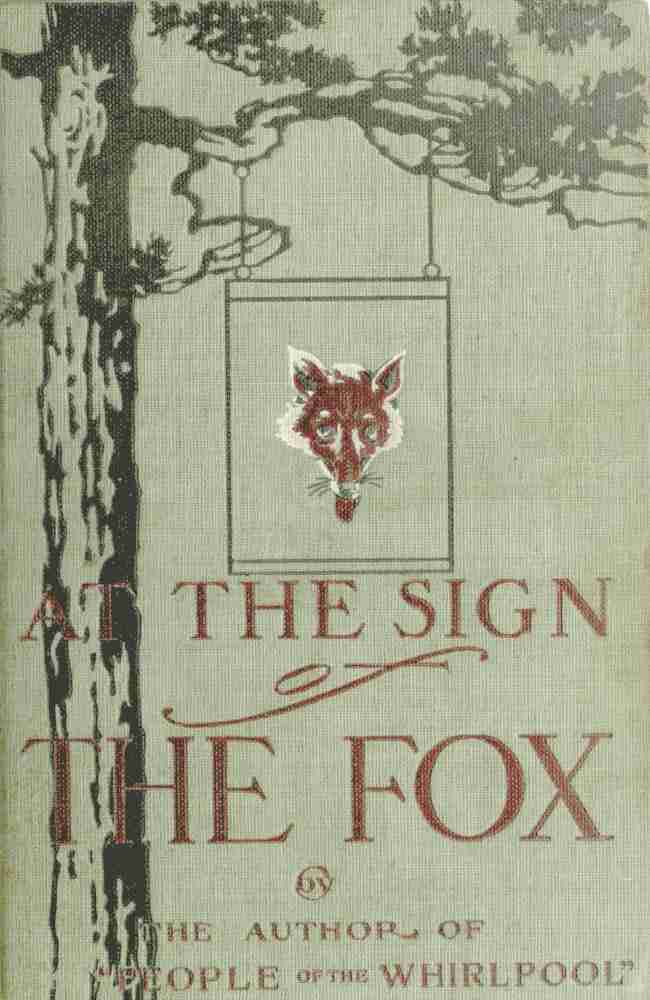
It was three months since Lorenz had sent word or token. Was it, after all, only an illusion? Brooke even began to doubt if Ashton’s was really the hand that had forwarded the letters from Lorenz. She was minded to ask him outright, but while she hesitated the moment passed, for, entering Mrs. Parks’s landau, he returned with her to Gordon. Looking up at the Sign of the Fox, her talisman, as she passed under it and in at the gate, she wondered if it would ever see another wedding, and smiled in spite of her own thoughts, and at the possible comic answer to them as she looked up the path and saw the parson, lately installed, an unencumbered man of sixty, taking his fourth cup of tea, alternating lemon and cream, while Miss Keith twittered about him with the eatables, and gave a deeply freckled blush at some remark he made in stowing a small, flat package of wedding cake in his waistcoat pocket. Thus does hope often triumph over experience.
Again it was the hunting season, and Dr. Russell would soon come for his autumn holiday. Stead waited for him with more than usual eagerness, being in pitiful want of companionship in which he need no longer play a part that was growing every day more impossible and intolerable. Brooke desired to see the doctor, and learn if possible how far her father’s steady and rational improvement might be trusted; and Miss Keith, remembering some past advice of his, began to feel tremulously that possibly before another visit she might need a fresh instalment, and so resolved to be forehanded.
Much game had been let loose during the past few years in the hill country in a sportsmanlike effort to restock it as far as might be, and when this is done there follows the pot-hunter with his snares. Robert Stead, always an enemy of these slouching malefactors of wood and brush lot, had this season announced that he was prepared to give the tribe no quarter. The very day before the doctor’s expected arrival he had covered their shooting grounds quite thoroughly, and after breaking numerous snares, set with the utmost boldness on his own immediate land, he took his gun and ambushed himself at dusk, telling José and two constables, whom he had summoned from the village, to be in readiness to come to him whenever the signal gun was fired, indicating the different routes that they were to take to make a capture the most likely.
Sunset came, and another hour passed, when a single report called the watchers; but as they circled in the direction of the sound, they did not meet the flash of Stead’s dark lantern as agreed, and heard no crash of bushes as of men in sudden flight,—nothing but darkness and deep silence.
José, the half-breed, bloodhound by nature, with even more of the animal instinct than human intelligence, the outcome of the trailing instinct coupled with much adventure, at once scented calamity. Was the gun the master’s or was it another’s? To him it had a heavy, muffled sound, and besides, it was not the discharge of both barrels, as agreed upon.
Returning quickly to the lodge, he seized the lantern and a flask of brandy, and locating the foot-path his master had purposed to take, stole carefully along it, the others following in his wake.
Suddenly he paused and lowered the lantern; before him, stretched between two trees, was what is called a foot-snare, a thin, stiff cord, well-nigh invisible, which was fastened across the path between the trees at such a height as to the most surely throw the passer. José cut this with a muttered curse and hurried on. Twenty yards farther he found another; still following the path, his nostrils began to quiver and his eyes to dilate, as if he felt a presence he could not see. A low groan made him bound forward, and he almost fell upon the form of his master, doubled upon the ground, head upon breast, where, in coming up the path, the third snare had thrown him.
Raising him in haste, one of the men stepped backward on his gun, and lo! the tale was told. The lurch of the sudden fall had reversed the weapon and pitched it against a tree bole, which, striking the cocked hammer, had discharged the gun, shooting its owner in the chest.
Laying him on the moss, José attempted to stanch the bleeding, which came also from the lips. “It is the lungs,” he muttered, and making the sign of the cross above his master, he poured some brandy down his throat, giving a grunt of satisfaction when it was swallowed. Awkward in emergency, yet the constables made stalwart bearers, and between them, guided by José, they carried Stead—now truly Silent—to the lodge, pausing now and then to reassure themselves, by his laboured breathing, that he was alive.
Once there, José used all the skill of the half-savage to make his master comfortable, one of the men bearing him company, while the other, leaving the rig in which they had come to Windy Hill, took Stead’s horse Manfred and rode against time for the Gilead doctor, who, also being a hunter and a firm friend of both men, telegraphed to Dr. Russell before starting on his drive.
The next morning, when news of the accident reached the homestead, Brooke was already on her way by train to Gordon to buy the weekly supplies according to her habit, and Mrs. Lawton, driven by Adam, wild with grief at the calamity to this friend, started for Stead’s home.
Arriving at Windy Hill by ten o’clock, they found Dr. Russell there, so that, with Dr. Love and José, who would not leave his master’s side, as nurse, and a coloured woman of the neighbourhood in the kitchen, material help was not needed; while as for personal sympathy, though Stead was quiet and perfectly conscious, Dr. Russell, who came into the book-strewn den to greet them, told them gently but firmly that the strain on the emotions would be most dangerous for Stead, as the wound from the scattered shot must prove fatal, rally as he might, and that he wished to arrange some business affairs as soon as might be. If later in the day he had the strength and the desire to see his friends, they would send down a messenger.
So mother and son drove home in silence to break the news to Brooke on her return, and Mrs. Lawton cautioned Adam that it must be done most gradually, for even Brooke’s mother did not know how far beyond the outward friendship her feelings might be involved, or even but what some deeper understanding was either foreshadowed or might actually bind them.
Dr. Russell had been alone with Stead for half an hour, José keeping jealous guard outside the door, where, lying upon the floor, he dozed lightly, worn out with the night’s reflected suffering.
Gradually the heart history of the last six months was revealed to the good physician, who, half sitting, half kneeling, by the narrow bed, hands clasped before him, eyes half closed as if to shut away outside things, might easily have passed for a purely spiritual confessor. Yet in the fact of closing his eyes lay his only power to keep back tears. Twice he essayed to speak and stopped, and then said gently, “A year ago you said that you would willingly give the rest of life if you could only feel and care once more. At least that wish has been granted.”
“Yes, and I rejoice in it, even now,” Stead answered slowly and painfully. “What now lies before me is to take the means and give, as far as it will do so, all that I have to secure the rest and comfort of the woman who gave me the power to care, but could not grant me more. There is paper in the desk, good friend, so now sit and write as I dictate. Black Hannah and the doctor outside shall be the witnesses.”
Then came to Dr. Russell the hardest task of all, to argue with one dying, but he did not flinch. “Stop for a moment, Robert, and think, led by your new power of caring. If Brooke could not take your love, do you think that she would take your money? Would not the idea hurt that same brave tenderness that kindled you to life? Think of some other way.”
“She said that there was ‘some one else,’ but that ‘he did not know.’ Some day his eyes will open, for God will not allow a steadfast heart like Brooke’s to be shut out of life.”
A struggle seemed to pass over Stead’s face that left a blueness about the lips and the eyes, that quivered and closed. Dr. Russell gave him a stimulant and waited in silence.
Presently the eyes opened and he spoke deliberately, as one reciting a hard lesson. “Then let me leave all in trust to you for the man Brooke Lawton marries, not to be known or given until their wedding day, when you must tell him all, and if he is struggling with life,—as I have a feeling that he is, for nothing else could keep him from such a woman,—for her sake he will take the gift as from man to man.”
“And if the day does not come, or he refuses?” asked Dr. Russell, joy at the man’s final unselfishness beaming from his face.
“After ten years, then let it become a part of the endowment of your hospital, in memory of the two Helens, my daughter and her mother.”
Thus the will was made with due regard to formality, making the doctor holder of a trust, the details of which were contained in sealed instructions to keep privacy; a certain sum being set aside to furnish the faithful José with an annuity; Stead’s lodge, guns, fishing rods, books, and furniture to Dr. Russell for his convenience as a shooting-box; his saddle-horse to Adam; and his pictures and his two dogs to Brooke herself, for these last were really the possessions he most prized. Then Dr. Love and Hannah Morley signed as witnesses, they having, as is needful, no part in the will.
For a short time Robert Stead seemed better, as if a load was lifted from his brain, but Dr. Russell was not deceived by it, while his heightening colour spoke of increasing fever.
About two o’clock Stead asked the time, and that he might be lifted up to see the river, that, far below in the distance, flashed by between the trees. But his sight no longer carried. Presently he said, “Do you think that Brooke would come here for one single moment?—would it be too hard for her to bear?”
“No; I have sent the horses for her, and she should be here at once. Yes, I see them now coming up the lower hill.”
Brooke entered alone, as Dr. Russell had asked, and led by him went to the bedside, gently taking the single hand that lay upon the counterpane, the other arm being bandaged at the shoulder. She knew by Dr. Russell’s face that there was perfect mutual knowledge, and that she might be herself without fear of misunderstanding.
Slipping down to her knees, to relieve the tension of stooping, neither spoke, for what is there to say when each knows the other’s grief and helplessness? Stead fastened his eyes upon her face with fading vision that still saw through and beyond.
“I cannot see the River Kingdom, it has faded from me, but you have come to me from it,” he said at last. Then looking toward Dr. Russell, he added, “Open the window, please, that I may hear the rushing of the water.”
“You could not hear it, there has been no rain this fall and the river is still; it is only in the spring flood that the waters rush noisily,” answered Dr. Russell, watching the man apprehensively.
Again a space of silence, and Stead murmured, “What was that about still waters?—a hymn or prayer or something of the sort. I used to know it when I was a little chap—my mother taught it me!”
Dr. Russell glanced at Brooke. Did she understand, and could she bear the strain and answer? Yes,—leaning forward, she repeated softly, close to his ear: “The Lord is my Shepherd; I shall not want. He maketh me to lie down in green pastures: he leadeth me beside the still waters. He restoreth my soul: he leadeth me—”
Here the grasp of Stead’s hand tightened, so that she paused abruptly, and turning toward her, he cried—“Child, child! that is what you have done—you have restored my soul to me!” and answering the unconscious appeal in the pleading eyes, Brooke, without hesitation, kissed him on the lips. Then, obeying a sign from Dr. Russell, she arose and passed quickly from the room.
The next day Robert Stead died, and to Brooke it seemed as if a hush must fall over all the River Kingdom,—the hawks stop sailing to and fro, the keen October wind rest from blowing, and the meadowlarks in the low fields cease their song. Yet it was not so, for this is not the law of life, which must forever be triumphant over the other law.
After a time people who had missed and wondered about Stead and Brooke concluded that they had been mistaken; the little gifts of the will were the natural ones to friends and neighbours, and the trust placed in Dr. Russell’s hands was natural, and doubtless for charity, and there was no one in the Hill Country who would deny his fitness to hold it.