
The Project Gutenberg eBook of Base-ball Ballads
This ebook is for the use of anyone anywhere in the United States and
most other parts of the world at no cost and with almost no restrictions
whatsoever. You may copy it, give it away or re-use it under the terms
of the Project Gutenberg License included with this ebook or online
at www.gutenberg.org. If you are not located in the United States,
you will have to check the laws of the country where you are located
before using this eBook.
Title: Base-ball Ballads
Author: Grantland Rice
Illustrator: C. H. Wellington
Release date: April 12, 2021 [eBook #65065]
Most recently updated: October 18, 2024
Language: English
Credits: Chuck Greif, deaurider and the Online Distributed Proofreading Team at https://www.pgdp.net (This file was produced from images generously made available by The Internet Archive)
*** START OF THE PROJECT GUTENBERG EBOOK BASE-BALL BALLADS ***
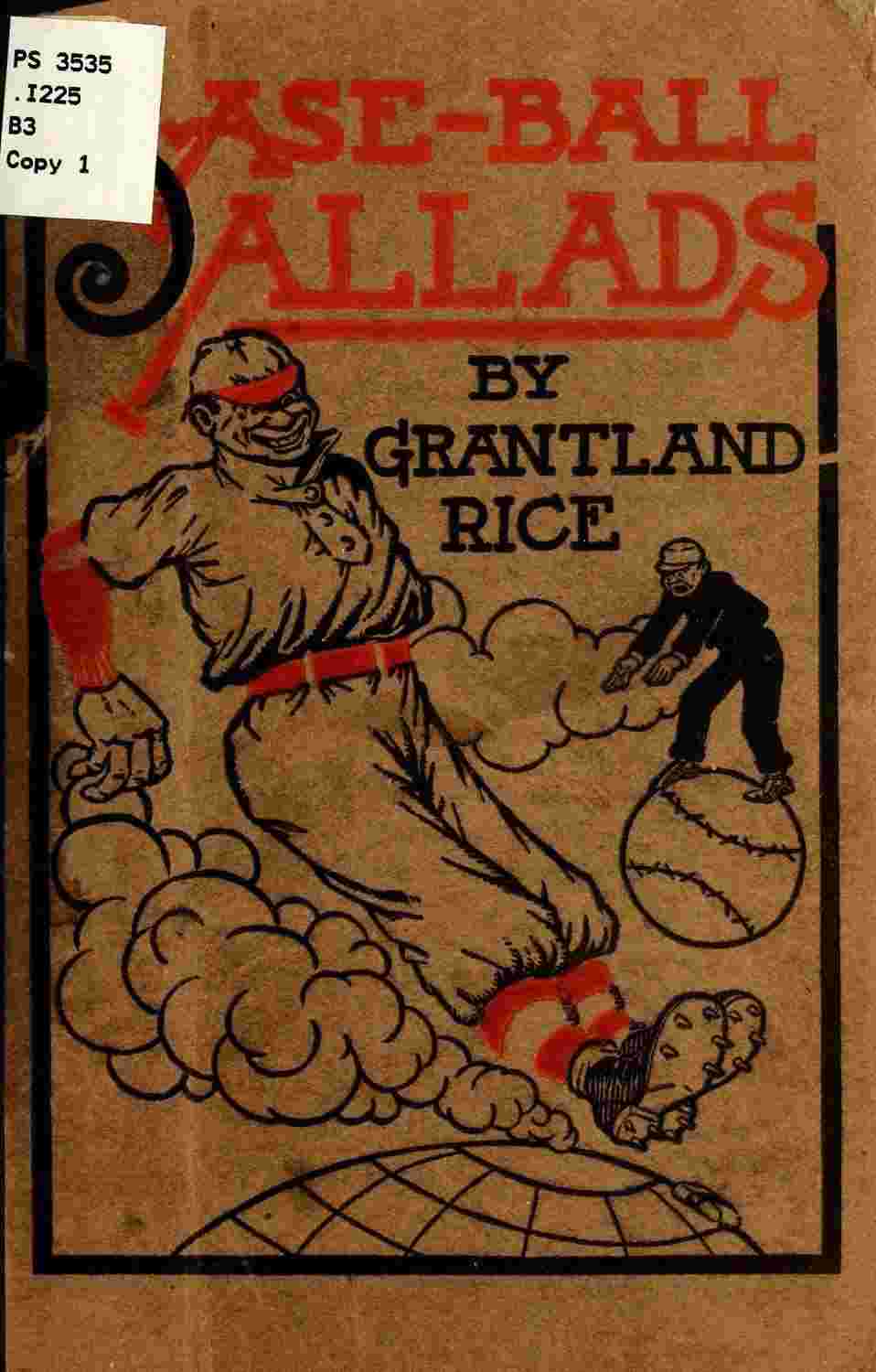
Base-Ball Ballads
BASE-BALL
BALLADS
By GRANTLAND RICE
Sporting Editor the Nashville Tennessean
Illustrated by C. H. WELLINGTON
THE TENNESSEAN COMPANY
NASHVILLE, TENNESSEE
Copyright, 1910,
BY
The Tennessean Company.
DEDICATED TO THE FAN
From lowly bootblack of the town
To merchant prince of high renown,
Or butcher, baker, candle-maker,
Lawyer, doctor, undertaker,
Priest or farmer, young or old,
Or rich or poor within the fold,
So that his spirit bows before
The bondage of the full box score—
Whatever be his name or fame,
So that his heart leans to the GAME.
To merchant prince of high renown,
Or butcher, baker, candle-maker,
Lawyer, doctor, undertaker,
Priest or farmer, young or old,
Or rich or poor within the fold,
So that his spirit bows before
The bondage of the full box score—
Whatever be his name or fame,
So that his heart leans to the GAME.
CONTENTS.
BASE-BALL BALLADS.
PLAY BALL.
“Play ball”—across the field of green
The signal sounds the game again;
Once more there reels across the scene
The shout and wild acclaim again;
The game is on, the fight begun,
Across the line of battle’s span
Until the final score is spun
With every record of the clan.
The signal sounds the game again;
Once more there reels across the scene
The shout and wild acclaim again;
The game is on, the fight begun,
Across the line of battle’s span
Until the final score is spun
With every record of the clan.
“Play ball”—the reveille has rolled
The bugle call to play again;
Once more beneath the banner’s fold
They troop across the way again;
The game is on, and in the fray
The tumult and the cheering sweep
Across the battle line of play
Until the twilight shadows creep.
The bugle call to play again;
Once more beneath the banner’s fold
They troop across the way again;
The game is on, and in the fray
The tumult and the cheering sweep
Across the battle line of play
Until the twilight shadows creep.
WHEN THE BUG IS ON THE BAWL.
Come, sing ye, Jimmy Riley, from your ancient lyric stock,
“When the frost is on the pumpkin and the fodder’s in the shock,”
And we’ll let the bounding echoes catch the lyric in your lay
As it darts around the bases to the outfield and away;
For there’s music in its make-up and there’s rhythm in its run,
With a touch of “back to nature” in its sentiment of fun.
But in some way it has struck us that the theme is out of date,
As a new age comes a-whizzing and a-curving by the plate;
So we’ll start another chorus as the echoes rise and fall:
“When the bat is on the bingle and the bug is on the bawl.”
“When the frost is on the pumpkin and the fodder’s in the shock,”
And we’ll let the bounding echoes catch the lyric in your lay
As it darts around the bases to the outfield and away;
For there’s music in its make-up and there’s rhythm in its run,
With a touch of “back to nature” in its sentiment of fun.
But in some way it has struck us that the theme is out of date,
As a new age comes a-whizzing and a-curving by the plate;
So we’ll start another chorus as the echoes rise and fall:
“When the bat is on the bingle and the bug is on the bawl.”
Come, sing ye, Jimmy Riley, and we’ll listen to your strain,
But we find our thoughts a-straying from the waving of the grain
To the waving of the bludgeons as the batters draw ’em back,
And they wave against the trade-mark with a wallop and a whack,
And “the swimmin’ hole” is faded, with its one-time tender pull,
To the “hole” the pitcher’s got in with the bloomin’ bases full;
And while, whatever happens, we will never have a knock
For the “frost upon the pumpkin and the fodder in the shock,”
There’s a later theme that draws us where the echoes rise and fall.
When the bat is on the bingle and the bug is on the bawl.
But we find our thoughts a-straying from the waving of the grain
To the waving of the bludgeons as the batters draw ’em back,
And they wave against the trade-mark with a wallop and a whack,
And “the swimmin’ hole” is faded, with its one-time tender pull,
To the “hole” the pitcher’s got in with the bloomin’ bases full;
And while, whatever happens, we will never have a knock
For the “frost upon the pumpkin and the fodder in the shock,”
There’s a later theme that draws us where the echoes rise and fall.
When the bat is on the bingle and the bug is on the bawl.
So come ye, Jimmy Riley, with a later song to sing:
“When the fan is on the frolic and the wallop on the wing,
When the swing is on the spitter and the swipe is on the swat,
When the bum is on the bobble and he boots one round the lot,
When the break is on the bender and the squad is on the slump,
Or the flag is on the flutter and the brick is on the ump.”
Belay that ancient chatter of the “fodder, frost, and shock”
When the rooter’s on the rampage and the knocker’s on the knock;
For a later theme has drawn us where the echoes rise and fall—
When the bat is on the bingle and the bug is on the bawl.
“When the fan is on the frolic and the wallop on the wing,
When the swing is on the spitter and the swipe is on the swat,
When the bum is on the bobble and he boots one round the lot,
When the break is on the bender and the squad is on the slump,
Or the flag is on the flutter and the brick is on the ump.”
Belay that ancient chatter of the “fodder, frost, and shock”
When the rooter’s on the rampage and the knocker’s on the knock;
For a later theme has drawn us where the echoes rise and fall—
When the bat is on the bingle and the bug is on the bawl.
CASEY’S REVENGE.
There were saddened hearts in Mudville for a week or even more;
There were muttered oaths and curses—every fan in town was sore.
“Just think,” said one, “how soft it looked with Casey at the bat,
And then to think he’d go and spring a bush league trick like that!”
There were muttered oaths and curses—every fan in town was sore.
“Just think,” said one, “how soft it looked with Casey at the bat,
And then to think he’d go and spring a bush league trick like that!”
All his past fame was forgotten—he was now a hopeless “shine.”
They called him “Strike-Out Casey,” from the mayor down the line;
And as he came to bat each day his bosom heaved a sigh,
While a look of hopeless fury shone in mighty Casey’s eye.
They called him “Strike-Out Casey,” from the mayor down the line;
And as he came to bat each day his bosom heaved a sigh,
While a look of hopeless fury shone in mighty Casey’s eye.
He pondered in the days gone by that he had been their king,
That when he strolled up to the plate they made the welkin ring;
But now his nerve had vanished, for when he heard them hoot
He “fanned” or “popped out” daily, like some minor league recruit.
That when he strolled up to the plate they made the welkin ring;
But now his nerve had vanished, for when he heard them hoot
He “fanned” or “popped out” daily, like some minor league recruit.
He soon began to sulk and loaf, his batting eye went lame;
No home runs on the score card now were chalked against his name;
The fans without exception gave the manager no peace,
For one and all kept clamoring for Casey’s quick release.
No home runs on the score card now were chalked against his name;
The fans without exception gave the manager no peace,
For one and all kept clamoring for Casey’s quick release.
The Mudville squad began to slump, the team was in the air;
Their playing went from bad to worse—nobody seemed to care.
“Back to the woods with Casey!” was the cry from Rooters’ Row.
“Get some one who can hit the ball, and let that big dub go!”
Their playing went from bad to worse—nobody seemed to care.
“Back to the woods with Casey!” was the cry from Rooters’ Row.
“Get some one who can hit the ball, and let that big dub go!”
The lane is long, some one has said, that never turns again,
And Fate, though fickle, often gives another chance to men;
And Casey smiled; his rugged face no longer wore a frown—
The pitcher who had started all the trouble came to town.
And Fate, though fickle, often gives another chance to men;
And Casey smiled; his rugged face no longer wore a frown—
The pitcher who had started all the trouble came to town.
All Mudville had assembled—ten thousand fans had come
To see the twirler who had put big Casey on the bum;
And when he stepped into the box, the multitude went wild;
He doffed his cap in proud disdain, but Casey only smiled.
To see the twirler who had put big Casey on the bum;
And when he stepped into the box, the multitude went wild;
He doffed his cap in proud disdain, but Casey only smiled.
“Play ball!” the umpire’s voice rang out, and then the game began.
But in that throng of thousands there was not a single fan
Who thought that Mudville had a chance, and with the setting sun
Their hopes sank low—the rival team was leading “four to one.”
But in that throng of thousands there was not a single fan
Who thought that Mudville had a chance, and with the setting sun
Their hopes sank low—the rival team was leading “four to one.”
The last half of the ninth came round, with no change in the score;
But when the first man up hit safe, the crowd began to roar;
The din increased, the echo of ten thousand shouts was heard
When the pitcher hit the second and gave “four balls” to the third.
But when the first man up hit safe, the crowd began to roar;
The din increased, the echo of ten thousand shouts was heard
When the pitcher hit the second and gave “four balls” to the third.
Three men on base—nobody out—three runs to tie the game!
A triple meant the highest niche in Mudville’s hall of fame;
But here the rally ended and the gloom was deep as night,
When the fourth one “fouled to catcher” and the fifth “flew out to right.”
A triple meant the highest niche in Mudville’s hall of fame;
But here the rally ended and the gloom was deep as night,
When the fourth one “fouled to catcher” and the fifth “flew out to right.”
A dismal groan in chorus came; a scowl was on each face
When Casey walked up, bat in hand, and slowly took his place;
His bloodshot eyes in fury gleamed, his teeth were clenched in hate;
He gave his cap a vicious hook and pounded on the plate.
When Casey walked up, bat in hand, and slowly took his place;
His bloodshot eyes in fury gleamed, his teeth were clenched in hate;
He gave his cap a vicious hook and pounded on the plate.
But fame is fleeting as the wind and glory fades away;
There were no wild and woolly cheers, no glad acclaim this day;
They hissed and groaned and hooted as they clamored: “Strike him out!”
But Casey gave no outward sign that he had heard this shout.
There were no wild and woolly cheers, no glad acclaim this day;
They hissed and groaned and hooted as they clamored: “Strike him out!”
But Casey gave no outward sign that he had heard this shout.
The pitcher smiled and cut one loose—across the plate it sped;
Another hiss, another groan. “Strike one!” the umpire said.
Zip! Like a shot the second curve broke just below the knee.
“Strike two!” the umpire roared aloud; but Casey made no plea.
Another hiss, another groan. “Strike one!” the umpire said.
Zip! Like a shot the second curve broke just below the knee.
“Strike two!” the umpire roared aloud; but Casey made no plea.
No roasting for the umpire now—his was an easy lot;
But here the pitcher whirled again—was that a rifle shot?
A whack, a crack, and out through the space the leather pellet flew,
A blot against the distant sky, a speck against the blue.
But here the pitcher whirled again—was that a rifle shot?
A whack, a crack, and out through the space the leather pellet flew,
A blot against the distant sky, a speck against the blue.
THE BUG’S VIEW-POINT.
Beyond the sleet, across the snows
He did not see the budding rose
That waved its crimson welcome to
An earth of green, a sky of blue,
Nor yet the daffy daffodils
That crowned the valleys and the hills;
The apple blossoms, pink and white,
That drifted into lanes of light;
He did not hear the bluebird sing
Nor yet the south wind whispering
In murmur through the maple trees
That swayed and slanted to the breeze
And harbored on each bending limb
The maker of a woodland hymn—
And yet, like every living thing,
He, too, had drawn his dream of spring.
He did not see the budding rose
That waved its crimson welcome to
An earth of green, a sky of blue,
Nor yet the daffy daffodils
That crowned the valleys and the hills;
The apple blossoms, pink and white,
That drifted into lanes of light;
He did not hear the bluebird sing
Nor yet the south wind whispering
In murmur through the maple trees
That swayed and slanted to the breeze
And harbored on each bending limb
The maker of a woodland hymn—
And yet, like every living thing,
He, too, had drawn his dream of spring.
He saw a gent arrayed in blue
Heave boldly into public view,
And in a fog-horn tenor call
To thousands: “Batter up—play ball!”
He saw a tall guy nod and beck
And then cut one around the neck,
While in a trance the slugger there
Inanely paddled at the air;
He saw the shortstop leave his place
And flag one back of second base
And wing it swiftly on ahead
To where the dashing runner sped;
He saw, before his flashing eye,
The keen outfielder fenceward fly,
And with a mighty effort pull
The drive down with the bases full.
Heave boldly into public view,
And in a fog-horn tenor call
To thousands: “Batter up—play ball!”
He saw a tall guy nod and beck
And then cut one around the neck,
While in a trance the slugger there
Inanely paddled at the air;
He saw the shortstop leave his place
And flag one back of second base
And wing it swiftly on ahead
To where the dashing runner sped;
He saw, before his flashing eye,
The keen outfielder fenceward fly,
And with a mighty effort pull
The drive down with the bases full.
He heard once more the rooters call,
The ringing clash of bat and ball,
The cry of “Belt it on the snout!
Don’t try to bunt there, whale it out!”
The groans and curses, cheers and jeers
Like music tinkled in his ears;
The grandstand rocked and roared in strife,
The howling bleachers leaped to life,
As whooping, jeering, shouting, cheering,
Praying, cursing, pleading, fearing,
Stamping, howling, smiling, growling,
Laughing, weeping, snarling, scowling,
Over city, field, and glen
The Bugland Chorus rang again—
For he, like every other thing,
Had drawn his dream of golden spring.
The ringing clash of bat and ball,
The cry of “Belt it on the snout!
Don’t try to bunt there, whale it out!”
The groans and curses, cheers and jeers
Like music tinkled in his ears;
The grandstand rocked and roared in strife,
The howling bleachers leaped to life,
As whooping, jeering, shouting, cheering,
Praying, cursing, pleading, fearing,
Stamping, howling, smiling, growling,
Laughing, weeping, snarling, scowling,
Over city, field, and glen
The Bugland Chorus rang again—
For he, like every other thing,
Had drawn his dream of golden spring.
THE COURTSHIP OF A SON OF SWAT.
They were seated in the parlor, and the lights were burning dim—
He was a major leaguer, she a fan, so fair and trim;
But they knew not as he opened up the game by murmuring “Love”
That father was the umpire on the stairway just above.
He was a major leaguer, she a fan, so fair and trim;
But they knew not as he opened up the game by murmuring “Love”
That father was the umpire on the stairway just above.
“I like your form,” he led off first; “with me you’ve made a hit;
Your curves are good, you’ve got the speed, and you are looking fit.
Now if with you, my turtle dove, I make a hit likewise,
Won’t you improve my single life and make a sacrifice?”
Your curves are good, you’ve got the speed, and you are looking fit.
Now if with you, my turtle dove, I make a hit likewise,
Won’t you improve my single life and make a sacrifice?”
“I’ll promise to support you, dear, with all my skill each day;
I’ll draft a pretty home for you and fix it right away.
If you’ll just call the game a tie, I will no longer roam;
And when I slide into the plate, please call me safe at home.”
I’ll draft a pretty home for you and fix it right away.
If you’ll just call the game a tie, I will no longer roam;
And when I slide into the plate, please call me safe at home.”
He swung like Wagner at his best, a sole-inspiring clout;
The son of swat slid down the steps; the umpire yelled: “You’re out.”
In matrimony’s busy league dumb plays are out of place;
I’d like to know the dope before I play too far off base.”
I’d like to know the dope before I play too far off base.”
“Remember that the game is rough when pay days fail to come;
Sometimes the salary whip is lame, the noodle’s on the bum;
And don’t forget you’ll be reserved for life and held in line,
But promise me you’ll never jump your contract, and I’ll sign.”
Sometimes the salary whip is lame, the noodle’s on the bum;
And don’t forget you’ll be reserved for life and held in line,
But promise me you’ll never jump your contract, and I’ll sign.”
He started warming up at once, with victory in his eye,
He shoved a fast one round her neck, the other was waist high.
Just here the umpire butted in. She said: “O, father, please,
There’s nothing wrong, for George is only showing me the squeeze!”
He shoved a fast one round her neck, the other was waist high.
Just here the umpire butted in. She said: “O, father, please,
There’s nothing wrong, for George is only showing me the squeeze!”
THE BUSH LEAGUER’S DREAM.
(From our “Songs of the Spring Recruit.”)
I.
The young recruit stood dreaming where the sultry sun was beaming,
With the perspiration streaming down his neck;
He had missed four easy chances, which aroused some angry glances,
And he saw his big league fancies were a wreck;
His work had been erratic, and he heard one mad fanatic
Yell in tones far from ecstatic: “Chase that cheese!”
Whereupon he drew a vision that was all to the Elysian,
And he spoke with much decision words like these:
With the perspiration streaming down his neck;
He had missed four easy chances, which aroused some angry glances,
And he saw his big league fancies were a wreck;
His work had been erratic, and he heard one mad fanatic
Yell in tones far from ecstatic: “Chase that cheese!”
Whereupon he drew a vision that was all to the Elysian,
And he spoke with much decision words like these:
Chorus.
“If I could run the bases like Bill Bryan,
If I only had Ted Roosevelt’s batting eye,
If I had the reach of Thomas Fortune Ryan,
I’d never let another chance get by;
If I only was as cool as Charley Fairbanks;
Or had control like Harriman has got,
I’d be the diamond daisy, and I’d set the bleachers crazy,
For I’d be the greatest player of the lot.”
If I only had Ted Roosevelt’s batting eye,
If I had the reach of Thomas Fortune Ryan,
I’d never let another chance get by;
If I only was as cool as Charley Fairbanks;
Or had control like Harriman has got,
I’d be the diamond daisy, and I’d set the bleachers crazy,
For I’d be the greatest player of the lot.”
II.
There had been a dearth of scoring, and the anxious Bugs were roaring
In the bleachers and imploring for a hit,
Until finally one fellow plucked a triple, ripe and mellow,
And the way those fans did bellow in a fit!
Just one little tap would cinch it, just one timely little pinch hit,
And the contest would be safely on the shelf;
But the bush league phenom madly swung in vain at three, then sadly
Walked away and murmured softly to himself:
In the bleachers and imploring for a hit,
Until finally one fellow plucked a triple, ripe and mellow,
And the way those fans did bellow in a fit!
Just one little tap would cinch it, just one timely little pinch hit,
And the contest would be safely on the shelf;
But the bush league phenom madly swung in vain at three, then sadly
Walked away and murmured softly to himself:
Chorus.
“If I only had a batting eye like Teddy,
If I had the speed of John D. ducking fines,
I’d have a big league job and hold it steady,
For I’d make both Cobb and Wagner look like shines;
If I could only ‘steal’ (in running bases)
Like all these ‘malefactors of great wealth,’
I’d be the diamond daisy, and I’d set the bleachers crazy,
And I wouldn’t be here playing for my health.”
If I had the speed of John D. ducking fines,
I’d have a big league job and hold it steady,
For I’d make both Cobb and Wagner look like shines;
If I could only ‘steal’ (in running bases)
Like all these ‘malefactors of great wealth,’
I’d be the diamond daisy, and I’d set the bleachers crazy,
And I wouldn’t be here playing for my health.”
SPRINGTIME IN THE HISTORY ROOM.
She spoke of Alexander as an eminent commander,
And showed ’em how this gentleman was always on the job;
But freckled Mickie Horner, blinking over in the corner,
Dreamed of Cobb.
And showed ’em how this gentleman was always on the job;
But freckled Mickie Horner, blinking over in the corner,
Dreamed of Cobb.
She praised the late J. Cæsar as a keen, artistic geezer
Whose performances in most ways deserved a lasting bonus;
But little Tim O’Grady, though his eyes were on the lady,
Thought of Honus.
Whose performances in most ways deserved a lasting bonus;
But little Tim O’Grady, though his eyes were on the lady,
Thought of Honus.
She lauded Mr. Hannibal, the chocolate-colored cannibal;
But when she asked young Heinie Schmidt who made the Romans dance,
With his brain-wheels on the whir, Heinie, looking up at her,
Answered: “Chance.”
But when she asked young Heinie Schmidt who made the Romans dance,
With his brain-wheels on the whir, Heinie, looking up at her,
Answered: “Chance.”
THE HOLD-OUT LEAGUE.
What has become of Bill Wiggins, the old star who passed up the game?
The three-hundred hitter who swore on his oath he would never return to the same?
He is still out of line as he promised, but suffering deeply with pain—
Poor Bill broke a leg when reporting day came in an effort to catch the first train.
The three-hundred hitter who swore on his oath he would never return to the same?
He is still out of line as he promised, but suffering deeply with pain—
Poor Bill broke a leg when reporting day came in an effort to catch the first train.
Where is Pat Kelly, the slabman, who swore he had pitched his last ball?
Who tore up his contract and said with a roar he “was finished for good and for all.”
When the Giants all meet at the depot, in vain Mr. Kelly they seek,
But they find on arriving in Texas that Pat has already been there a week.
Who tore up his contract and said with a roar he “was finished for good and for all.”
When the Giants all meet at the depot, in vain Mr. Kelly they seek,
But they find on arriving in Texas that Pat has already been there a week.
“This dope I give out’s on the level,” said Mike in a hot interview.
“Just make it as strong as the paper will stand. I will never come back; I am through.”
But when they arrived at the station, when the train to the training camp led,
They had to tie Mike to a telegraph pole to keep him from running ahead.
“Just make it as strong as the paper will stand. I will never come back; I am through.”
But when they arrived at the station, when the train to the training camp led,
They had to tie Mike to a telegraph pole to keep him from running ahead.
There is gloom in the camp of the Pirates—the Giants throw a fit of alarm,
For Matty and Wagner and Tenny have quit to take up a job on the farm.
But it’s queer when you turn to the line-up at the “Opening Chorus of Bing,”
That the first guys to quit on the diamond each fall are the first ones at bat in the spring.
For Matty and Wagner and Tenny have quit to take up a job on the farm.
But it’s queer when you turn to the line-up at the “Opening Chorus of Bing,”
That the first guys to quit on the diamond each fall are the first ones at bat in the spring.