
WeRead Powered by ReaderPub
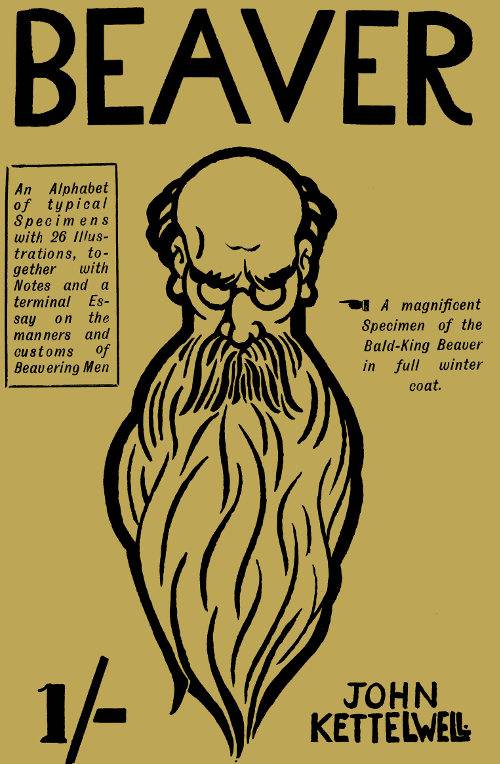
Beaver: An Alphabet of Typical Specimens / Together with Notes and a Terminal Essay on the Manners and Customs of Beavering Men cover

Beaver: An Alphabet of Typical Specimens / Together with Notes and a Terminal Essay on the Manners and Customs of Beavering Men

Chapter 18: Q. IS A QUEEN-BEAVER.
Open in WeRead

Explore more books like this:

About This Book

The work presents a comedic, alphabetized catalogue of facial-hair types, providing playful descriptions, idiosyncratic scoring rules for a fanciful sport of beard-spotting, and regional and stylistic variations; entries combine mock-naturalist observation, historical and literary allusion, and advice on claiming points. A closing essay discusses the manners, customs, and social rituals associated with bearding and the pastime's etiquette.

Q.
IS A QUEEN-BEAVER.

It has been objected that it is not gallant to score these undoubted rarities. Theoretically it is, certainly, not pretty conduct, but, on the other hand, all is fair in love and war, and ... has any man ever refused to shoot a rhinoceros on the plea that it was a female? (I merely ask ... someone may have done so. There may even be a close time for doe-rhinoes.) Be that as it may, the scoring of Queens is an affair of lineage. Regard this eighteenth century distich:—

“Here is a Pink-Queen, very rare,
Remember to count the sixteenth hair.”[1]

Queens are always scored extravagantly. Usually game; extra-rarities two games, and so on. The Pink-Queen is, without doubt, the rarest of her kind; conversely, when found, she is usually a superb specimen, in rich coat. The question of Queens is dealt with broadly in the terminal essay.

[1]
Queens cannot be scored unless they have more than fifteen hairs.