
“Rags”
“Rags” was not present. The boys did not miss him much, to be sure. Mr. Benson, their good old, gray-haired teacher, had brought the lad to the Sunday School about six months before, and until lately he had been present almost every Sunday. But Bob Jerrold had found not one friend among the members of his class.
He had gotten his nickname at the district school. The first time he came he had been dressed in queer old clothes, mostly notable because they were very ragged; and his garments had remained in the same condition until the children fixed upon the word “Rags” as his most appropriate name.
Not all boys begin life with an equally happy lot. Bob Jerrold was among the unfortunate. His father was a drunken good-for-naught, and his mother was a careless slattern and a boy is very apt to take after his parents. Moreover, his parents had long been despised by all the community as the very worst and lowest of people, a disgrace to the neighborhood. Nobody looked for any good in Bob. So it happened that Bob had to fight his way amid insult and abuse that his parents had earned for him.
One day a company of school children came by the tumble-down old place that the Jerrolds called home. Catching sight of Bob out by the barn on a hay-stack, someone threw a snowball. There was a loud laugh.
“Rags, Rags, Rags!” yelled the whole company.
“Want to fight?” yelled one of the rougher boys.
“He dassen’t. He might tear his clothes,” answered another.
Bob dropped his fork and began to dodge and throw back. He had recognized some of the members of his Sunday School class among the company.
At this moment there was a jingle of bells, and Mr. Benson drove up with his sleigh. The youngsters all piled in gleefully, and were soon riding merrily down the road.
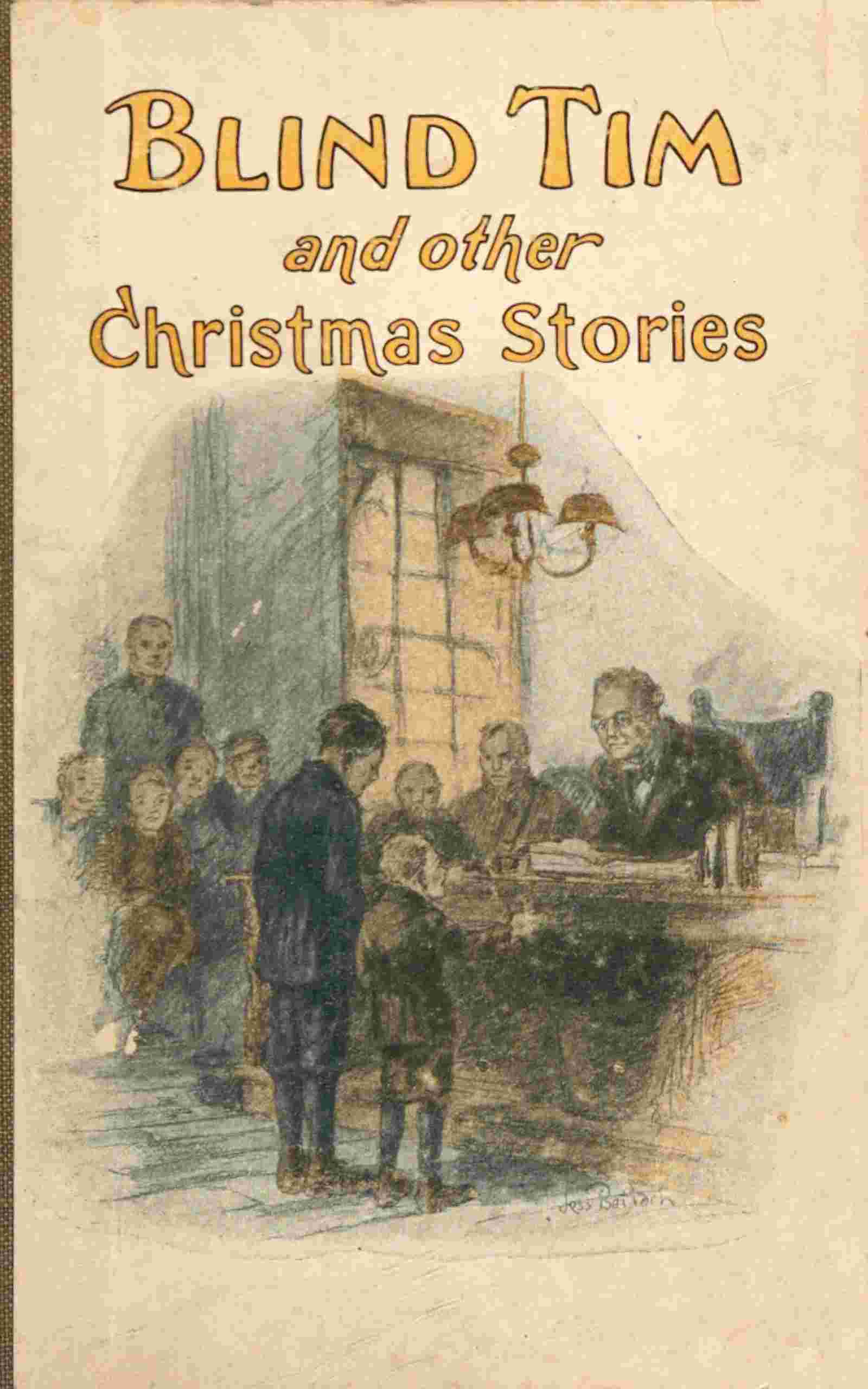
When Bob failed to appear in his place in the class next Sunday morning, and that for the second time, his teacher became anxious. He pitied the boy in his unhappy surroundings. He had been trying hard to keep the lad in Sunday School, but he knew how hard the struggle was for Bob. The good work now seemed at an end. Bob might be poor and ragged, and might fight his way in school, but on Sunday it was different. He could bear rags and shame and insult. But even he had some pride, and he refused to sit in a class together with boys who did not want him. After much effort, however, Mr. Benson persuaded him to be present at the Christmas entertainment and speak the piece that had been assigned him.
Christmas night came. The church was packed with happy people. Two beautiful evergreen trees were the center of attraction. Between them was an arch, on which were the words “Peace on earth, good will among men.” The exercises passed off cheerily, and even Bob, as he sat beside his teacher, dressed in a suit that some friend had given him, could not but catch the spirit of joy and good cheer that shone from the happy faces of the boys and girls about him. For every lad and lassie will agree when we say that there is no happiness like the glad anticipations of Christmas.
And nothing is so catching, you know, as the happy heart.
To Bob all this was a dream. Suddenly the minister, who had gone before the audience, called his name. At first he shrank back, frightened; but a smile from Mr. Benson reassured him, and he stepped upon the platform. The glitter of the lights dazzled his eyes, and the stare of the many people made him tremble. But he raised his head defiantly and began:
The dead silence that followed as Bob returned to his seat was followed by a hum of surprise. Who was that? That Bob Jerrold? Was it possible? The change in the lad when properly dressed was itself surprising. But the full tone and clear voice of the boy, the deep feeling with which he said each word, all contributed to draw sympathy about him.
The program was soon over, and the merry bells were jingling on the starlit Christmas night as Bob trudged homeward. In his hands he bore some gifts, too, a thing rather new to him. Altogether his heart was filled with gladness.
A few days later, James and Charlie, two lads from the Sunday School class, in passing by the humble home of the Jerrolds climbed the fence to see Bob, who was by the stables, mending a sled. Bob paused as the unexpected visitors approached, perhaps thinking they were there to tease him as had been usual.
“Hello, Bob,” called James. “Mending your sled? Can we help you? How did you break it?”
Of course, there was something said about traps and sports and skating and coasting. Many confidences were exchanged.
As they were to leave, both visitors suddenly looked uncomfortable, as tho neither knew what to say. Then James exclaimed:
“Oh, say, Bob, you haven’t been to Sunday School for a while.” Bob did not answer.
“Yes,” added Charlie, “the boys thought you spoke fine at the Christmas festival, and they’d like to have you come back.”
“’Cause,” said James, “Mr. Benson said the Christmas message was ‘Good-will among men,’ and he would like awful well for you to come, too. He’s a fine teacher, he is. We all like him.”
Bob glanced up suddenly. Mr. Benson had found a tender place in Bob’s heart, too, and he murmured something to the effect that he guessed he might come.
Thus Mr. Benson induced the boys to make up with Bob, and as a result he again entered the Sunday School. And where he had formerly met with scorn and abuse he now found a growing friendship, and you may well believe that the good-will of his fellows means much even to the humblest lad. The Christmas spirit came to that class and to that school with great blessing, but especially so to Bob Jerrold. Thus if the Christmas blessing comes truly home to our hearts, it will mend many a ragged place, and instead among our boys we shall find the whole cloth of manly-heartedness and Christian love.