
Illustrations
The photographs in this list marked thus * were taken by Miss Katherine Lewers, the others by the author. The coloring is the work of the author. Of the fifteen genera of Orchidaceæ in New England, all save Listera, Tipularia, and Aplectrum are represented in these illustrations.
| PAGE | |
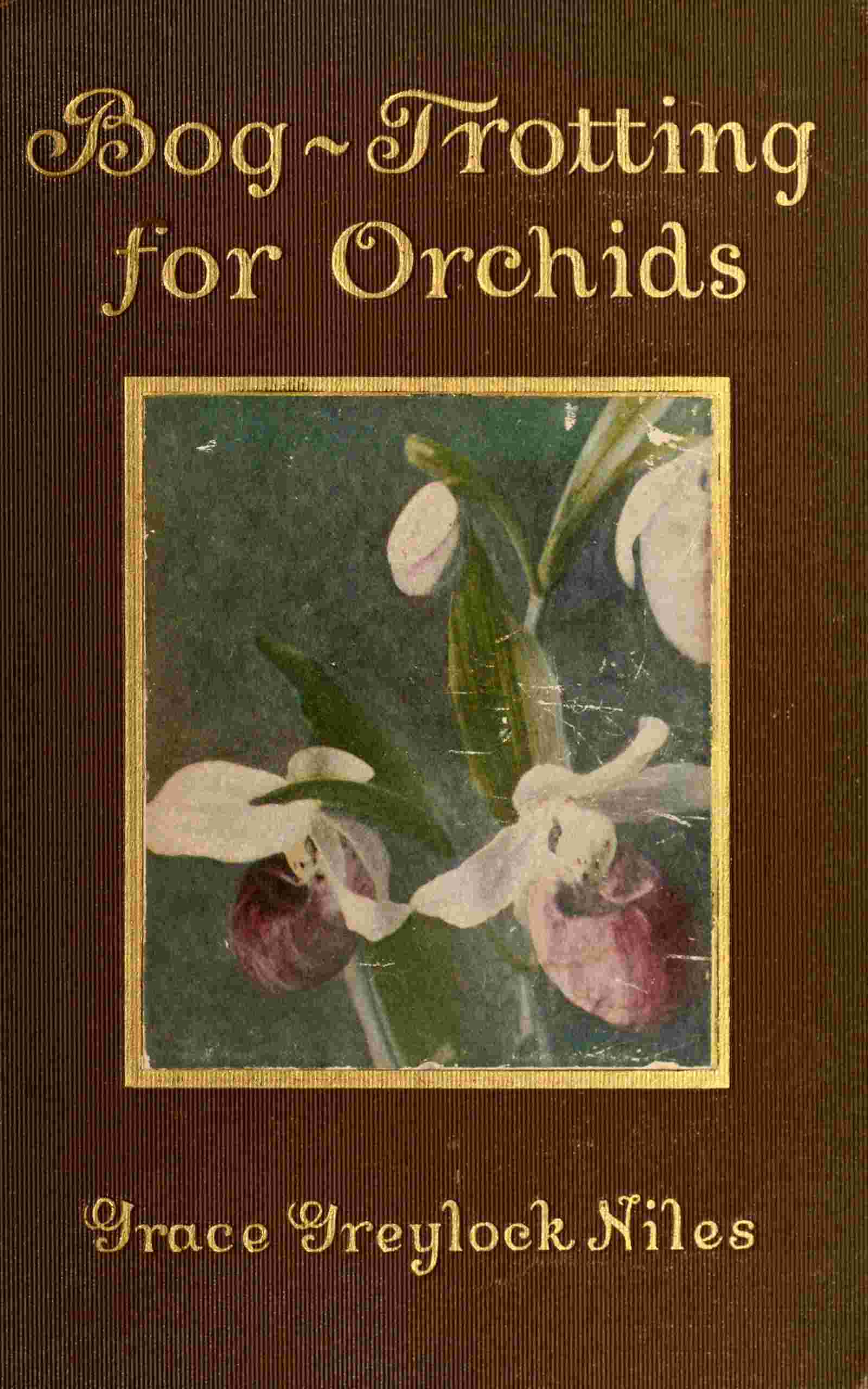
| The Pink Moccasin-Flower (Cypripedium acaule)* | Frontispiece |
| Colored | |
| The Large Yellow Moccasin-Flower (Cypripedium hirsutum)* | 4 |
| Colored | |
| The Botanizing Can, or Vasculum, Showing the White-Petaled Lady’s Slipper and Maiden-Hair Fern* | 8 |
| Mount Greylock’s Brotherhood—the Berkshire Highlands, from Mount Œta, Bennington County, Vermont, Showing the College Town of Williamstown in the Valley* | 10 |
| The Western Gateway of Hoosac Mountain, the Entrance to Hoosac Tunnel, North Adams, Massachusetts | 14 |
| Source of photograph unknown. | |
| Ball Brook, in the Swamp of Oracles, Pownal, Vermont* | 18 |
| The Showy Lady’s Slipper—the Queen of the Indian Moccasin-Flowers (Cypripedium reginæ)* | 24 |
| Colored | |
| The Fleur-de-Lis (Iris versicolor)* | 28 |
| The Fountain of Arethusa, near the Bogs of Etchowog, Pownal, Vermont | 30 |
| Round-Leaved Sundew (Drosera rotundifolia) | 32 |
| The Carnivorous Plants, commonly called Pitcher Plants, and Dumb Watches (Sarracenia purpurea) | 34 |
| The Bogs of Etchowog, Showing the Dome in the Distance, Pownal, Vermont* | 36 |
| The Ram’s-Head Lady’s Slipper (Cypripedium arietinum) | 42 |
| The Pink Moccasin-Flower (Cypripedium acaule)* | 48 |
| This is the only two-leaved Cypripedium found in the Atlantic region. | |
| Colored | |
| The Tall White Northern Orchis (Habenaria dilatata), near Arethusa’s Spring, Bogs of Etchowog, Pownal, Vermont | 52 |
| Colored | |
| The Showy Orchis (Orchis spectabilis) | 56 |
| The first orchid of the spring, found near the rocky borders of the Thompson Brook, East Pownal, Vermont. | |
| Colored | |
| The Small Yellow Fragrant Moccasin-Flower (Cypripedium parviflorum)* | 60 |
| Colored | |
| The Small White Moccasin-Flower (Cypripedium candidum) | 62 |
| Colored | |
| The Queen of the Indian Moccasin-Flowers (Cypripedium reginæ), from the Bogs of Etchowog, Pownal, Vermont | 68 |
| The Small Purple-Fringed Orchis (Habenaria psycodes) | 72 |
| The Showy Lady’s Slipper (Cypripedium reginæ)* | 78 |
| Colored | |
| The Northern Gap, Showing the Taconic Mountains of Bennington County, from Mount Œta, Vermont. The Bennington Battle Monument towers to the left in the Distance* | 86 |
| The Rose Pogonia (Pogonia ophioglossoides) | 88 |
| Colored | |
| The Thompson Brook, East Pownal, Vermont | 90 |
| The Grass Pink (Limodorum tuberosum) | 92 |
| This is a strange, beautiful orchid with a straight seed-pod (ovary). | |
| Colored | |
| The Perry Elm, Marking the Site of Fort Massachusetts, on the Harrison’s Flats, North Adams, Massachusetts, Showing Saddleback Mountain in the Distance | 96 |
| The Small Round-Leaved Orchis (Habenaria Hookeriana)* | 100 |
| Colored | |
| The Showy Orchis (Orchis spectabilis)* | 104 |
| Showing the plant nearly natural size. | |
| Colored | |
| The Large Purple-Fringed Orchis (Habenaria grandiflora) | 110 |
| From lithograph in Meehan’s Native Flowers and Ferns of the United States, 1: 1878. By permission. | |
| Colored | |
| The Blackberry Blossoms from Mount Œta, Pownal, Vermont* | 112 |
| The Yellow Clintonia (Clintonia borealis), Rattlesnake Brook Swamp, Mount Œta, Pownal, Vermont | 116 |
| “White, innocent twigs of apple”* | 126 |
| The Woodman’s Road through Rattlesnake Swamp, Mount Œta, Pownal, Vermont | 134 |
| The Beautiful Arethusa (Arethusa bulbosa) | 144 |
| Colored | |
| The Rattlesnake Plantain (Peramium), a Group of Three Species Collected on Rattlesnake Ledge, Mount Œta, Pownal, Vermont | 150 |
| The Snowy Dogwood Blossoms, from the Hills of Mosholu, New York* | 158 |
| 1. Indian Pipes (Monotropa uniflora); 2. Pine-Sap (Monotropa Hypopitys) | 164 |
| The Snow-Plant of the Sierra Nevada Mountains (Sarcodes sanguinea)* | 166 |
| Motherless Baby Whippoorwills* | 176 |
| A Colony of the Small Yellow Fragrant Moccasin-Flower (Cypripedium parviflorum) in the Glen of Comus, District Fourteen, Pownal, Vermont* | 178 |
| Colored | |
| The Mountain Laurel (Kalmia latifolia) | 184 |
| The Gregor Rocks, Hoosac Valley, from Pownal Centre Road, Vermont* | 188 |
| The Pot-Hole of Wash-Tub Brook, Pownal, Vermont, Showing the Stream Whirling through its Basin | 190 |
| An Ancient Pot-Hole, Showing an Erstwhile Revolving Stone, Located on the Granite Ridge, near the Wolf’s Den, Bronx Park, New York City* | 194 |
| The Bluebells of New England (Campanula rotundifolia)* | 196 |
| Three Rare Ferns from Gregor Rocks and Wash-Tub Brook Region, Pownal, Vermont: 1. Rue-in-the-Wall Spleenwort (Asplenium Ruta-muraria); 2. Purple-Stemmed Cliff-Brake (Pellæa atropurpurea); 3. Walking Fern (Camptosorus rhizophyllus)* | 198 |
| The Rocking Boulder, Located on the Granite Ridge near the Bear’s Den, in the Zoölogical Garden, Bronx Park, New York City | 200 |
| A pressure of fifty pounds causes this boulder to move about two inches. | |
| From photograph by George Stonebridge. | |
| The Red Wood Lily (Lilium Philadelphicum) | 210 |
| The Cascade of Notch Brook, at the Base of Mount Greylock’s Brotherhood, North Adams, Massachusetts | 212 |
| Notch Valley and the Bellows-Pipe, North Adams, Massachusetts. Mount Greylock towers up on the right, and the Ragged Mountains on the left hand | 218 |
| The Marble Arch of the Natural Bridge, North Adams, Massachusetts | 228 |
| The Star-Blossoms of the Grass of Parnassus (Parnassia Caroliniana), and the Ladies’ Tresses | 234 |
| The Hoosac River, Pownal, Vermont* | 238 |
| The Fragrant White Moccasin-Flower (Cypripedium Montanum) | 242 |
| Colored | |
| The Showy Moccasin-Flower (Cypripedium reginæ)* | 244 |
| This is the most gorgeous Cypripedium in the world, and without doubt one of the most ancient types of the genus. | |
| Colored | |
| The Pink Moccasin-Flower—the Stemless Lady’s Slipper (Cypripedium acaule)* | 246 |
| Showing the structure of the pendulous and bi-lobed labellum, and the processes of the sepals and petals. | |
| Colored | |
| The Showy Orchis (Orchis spectabilis)* | 248 |
| The first orchid of the season, showing the hooded fold above the orifice of the spur, and the processes of the flowers on the bracted scape. | |
| Colored | |
| A Group of Three Species of Genus Habenaria: 1. The Tall Northern Green Orchis (Habenaria hyperborea); 2. The Tall Northern White Orchis (Habenaria dilatata); 3. The Large Round-Leaved Orchis (Habenaria orbiculata)* | 250 |
| Colored | |
| The Spikes of Habenaria (Habenaria Andrewseii and Habenaria psycodes) | 252 |
| The Small Bog Orchis (Habenaria clavellata) | 254 |
| Andrews’ Rose-Purple Orchis (Habenaria Andrewseii) | 258 |
| The Beautiful Arethusa (Arethusa bulbosa) | 262 |
| Showing the structural parts of the flower, the single leaf, and bulbous root. | |
| Colored | |
| The Hooded Ladies’ Tresses (Gyrostachys Romanzoffiana) | 264 |
| The Nodding Ladies’ Tresses (Gyrostachys cernua) | 266 |
| The Slender Ladies’ Tresses (Gyrostachys gracilis) | 268 |
| The Haunts of the Rattlesnake Plantain (Peramium) amid the Pines and Spruces of the Domelet, Pownal, Vermont | 270 |
| The Green Adder’s-Mouth (Achroanthes unifolia) | 272 |
| The Large Twayblade (Leptorchis liliifolia) | 274 |
| Northern Calypso (Calypso bulbosa) | 276 |
| From lithograph in Meehan’s Native Flowers and Ferns of the United States, 1: 1878. By permission. | |
| Colored | |
| The Coral-Root (Corallorhiza) | 280 |
| The Grass Pink (Limodorum tuberosum) | 282 |
| A beautiful grassy-leaved orchid found in company with the dainty Rose Pogonia, and frequently with the rarer Arethusa in wild cranberry marshes. | |
| Colored | |
| Epiphytes, or Air Plants. A Corner in the Orchid House of the Botanical Gardens of New York City* | 284 |