
'Ter-morrer's the day of judgment,' said Arizona, as he lay on a bale of hay and squealed with laughter. He went round the 'tween-decks and told the horses so, rubbing their muzzles and pleasing the poor things very much. For he understood them as he did men, and loved them, perhaps, a trifle better.
'Ain't it a pity, horses, that you warn't endowed by a gen'rous Providence with a just sense of the ridik'lous? If, by a special dispensation, you was so endowed, you'd smile to know that Bertie, who talks horse like a burro, will be showed his real rank in nature and decorated with the newest thing in orders.'
He shook his head and again addressed his equine friends.
'Boys, you're goin' to the war and will see many jackasses in high places, but not a burro among 'em equal in jackassery to Mr. Bertie Fortescue. Did you say you'd hev a bit of hay, my son? Here you are, then, and good night to you.'
Everything went on wheels next day, and, save for one little uproar, caused by Bertie's not understanding what a Spaniard said, there was no trouble. Bertie talked severely to the unintelligent ass who didn't understand English, and a row was only saved by Arizona, who could yap Mexican wau-wau like a native of the country. The Spaniard said something not to be written, beginning with 'mucho,' and Bertie said he accepted the apology, and put away his gun.
'We're getting along first-rate, aw,' said Bertie, and so the whole ship's company said when night fell, and the stars came out and looked down on the pilgrimage of the Pilgrim on a calm sea, with just enough breeze from the east of north to make the windsails worth their positions in the general scheme of things. And at 5.30 P.M. the men took their grub, having watered and fed the eager and impatient cargo, and Ben Wilkins said the 'order' was ready.
'What order?' asked the rest eagerly.
''Tis between me and Arizona,' said Ben; 'and all I'll say is that it's for dear Bertie. Wait, and you'll see.'
At three bells in the second dog-watch they watered the horses again, as the weather was rather more than warm, and at eight bells they gave them hay for the last time till the morning. Bertie went his rounds, and at half-past eight was down on the orlop deck, which was so badly lighted with electric light that the men supplemented the electricity with lanterns. Though there were fewer horses there than on the 'tween-decks or the main deck, there were more men down on the orlop deck than on any other. And they were obviously much amused at something. What it was the owner's son did not know till he came right forward on the starboard side, having begun for'ard on the port side and walked aft. He found quite a gathering on the fore-hatch of No. 1 hold. A lot were sitting and the rest standing about in two groups, with Ben and Arizona in the midst.
'Good night, Bertie,' said some one from the background.
'Who the devil said that?' asked Bertie. He turned to Arizona. 'Was it you?'
'No, Bertie,' said Arizona, 'it warn't me, dear; I wouldn't think of takin' such a liberty with so fine a lookin' young man. Was it you, Ben?'
Ben shook his head.
'Not me, Bill. Would I call a nice young boy like him by such a horrid insultin' name? No, it warn't me that called him Bertie.'
Bertie gasped.
'Haw—haw!'
And the crowd said—
'Aw—aw!'
And then the young fellow, who certainly did not lack courage, made a bolt for the biggest gang, and naturally caught the slowest of the lot, who was a very harmless Dutchman. He knocked him down and pulled out his 'gun.' There was a dead silence for a moment, and then Arizona stepped up to him.
'What are you producin' that very fine weepon for?' he asked.
And Bertie roared—
'This is mutiny—mutiny!'
'Don't get excited, sir,' said Arizona; 'don't get flighty or flurried. With a tough and horrid crowd like this always keep cool. We wants to know unanimous what your purpose is in wearin' that weepon and pullin' it out and flourishin' it permiscus? For we're very peaceful and worships peace, and hates to die.'
'Go—go to the devil!' said Bertie. 'Confound you, let me pass.'
For now there were at least thirty men round him, and some of the stokers who were off duty stood in the background roaring with laughter.
'Make him hand over his gun, Bill,' said Ben, edging closer.
'We'd like to look at it to see if it's a real gun, sir,' said Arizona, with a very taking air of simplicity. 'Some of us reckons it's real, and some says your dad heeled you with a wooden one to scare a timid lot of boys from Arizona and Texas and Louisiana. Please let us look at it, sir.'
'Do, dear Bertie,' said the rest. And what happened then no one quite knew. Some said Bertie meant to shoot, some said he made a break for the brow which was the horse-gangway at the main hatch, and some say that Ben grabbed him. For about ten seconds there was a rough-and-tumble on the fore-hatch, in which three lanterns were finally expended, and then from the rumpus there emerged a pale and desperate Bertie, without a gun, in the grip of Ben, Arizona, and the silent Seth Graves. Jack from Missouri had the gun.
'Boys, the verdict of this expert is that this is a real gun,' said Jack, 'a real forty-five Frontier pistol, loaded with real cartridges. And if you pulls the trigger hard it's likely to go off.'
'There, dear Bertie, see what you've been monkeyin' with,' said Arizona. 'Mizzoura knows a gun well. You might have killed one of us poor boys, mostly orphans too, owin' to similar accidents happenin' to our paws.'
But the speechless son of the owner found his tongue.
'Let me go. I'll kill some of you! What the devil do you mean?'
He struggled frantically, and found his struggles entirely vain. For Seth Graves had him from behind in a clutch that it would have taken a small and healthy grizzly bear to get free of.
'I'll tell you what we mean,' said Ben, dusting himself carefully. 'We mean to give you some healthy advice. Mebbe you remember kickin' this child in the ribs when he was sick?'
'And me!' said Seth, who spoke for the first and last time.
'And you let on that you would kick me, boy,' said Arizona, 'and nothin' but the second officer interferin' saved you from it. Now we're goin' to investigate your case and decide what kind of immejit death will be joodishal. Boys, put a bale on the fore-hatch and I'll appint myself judge with a view to strict impartiality, for if I don't Ben Wilkins will, and he cayn't be impartial, as he said las' night he'd decided to hang the prisoner if he was appinted judge.'
He climbed on the bale.
'Boys, the Court is now sittin'. No one that the prisoner hez kicked can be on the jury. Them as he hez pulled his gun on ain't disqualified, or there wouldn't be no panel. Bein' sworn at ain't no disqualification neither.'
The jury was formed after several bitter quarrels. It was composed of a Louisiana man called Buckeye Joe; a Canadian-Frenchman known as French Pete; a young Californian originally from Mendocino County, but later from the San Francisco House of Correction; a Finn; a Dutchman from Amsterdam; an Englishman who had been born at sea, and brought up in Australia; and the Major, who in the struggle had annexed Bertie's eyeglass, and was now wearing it with the curious effect of making him look almost like a gentleman again, and several others who came from countries between Patagonia and Hudson's Bay.
'Our verdict is "Guilty,"' said the foreman, Buckeye.
'Don't be previous,' said Arizona; 'he is guilty, of course, we all know that, but we've got to act impartial and hear some evidence. And I've to sum up. You look out for my summing up, Bertie. It'll make you squirm, or I'm no true-born impartial citizen of the United States. Ben, take the stand and lay your complaint against this bobtail burro.'
The helpless prisoner shook his head feebly. He was entirely done for and seriously alarmed; there wasn't a kick left in him. Seth Graves' job was now a sinecure, and he let him go.
'This lop-eared leper kicked me,' said Ben Wilkins, who had been adding to his already extensive vocabulary of picturesque abuse by consorting with the stokers. 'He said "Get up, you lazy loafin' scumpot, and do your dooty," and with that he booted me in the ribs. If I was on the jury I'd bawl for death. And it's only because you asked me to let him off, Arizona, that I didn't slay him when I could stand. Boys, your verdict, if just, will be "death."'
This was irregular, and Arizona said so.
'You ain't addressin' the jury, Ben,' said the judge. 'You've no call to, either. I'll do that. You can stand down.'
'I heven't hardly cleared my throat to begin with,' urged Ben. 'I've a deal more to say, oh, a deal more.'
'Oh, dry up,' said Arizona. 'Who's running this Court, you or me? Where's the one-eyed galoot from Caraccas?'
The one-eyed galoot from Caraccas testified to having been smitten on the side of his head by Bertie. Bill translated the evidence without editing it. One-eye said he hadn't killed Bertie because he was too sick to do it. He addressed the Mexicans on the jury with much fervour, and though reproved by Bill, did not cease his oration till Ben, who was jealous, pulled him down.
A Dutchman spoke afterwards, but did not meet with great sympathy from the judge.
'Cut it short,'said Bill, 'a Dutchman don't count anyhow, hardly more'n a nigger.'
This was rather hard on three 'coons' grinning in the background, and lighting up the darkness with their teeth. However, Dutchmen and negroes are never really troublesome unless they are in the majority, and no protest was made.
After that Arizona refused to hear any more evidence.
'That'll do the palaver,' he said, 'it's as clear as the Missouri in flood-time that Bertie is a gone coon. He struck citizens of the United States with a British shoe, and he smote Caraccas over the cabeza with a British hand. The jury can consider their verdict, while the judge considers his sentence.'
'Ain't the prisoner to be allowed no defence?' asked old Wadd, who had been given the tip there was something on.
'To bee sure,' said Bill. 'Bertie, can you say anythin' to prevent your bein' found guilty right off?'
'Go to the devil!' said Bertie. 'I'll have you all in gaol for mutiny at Cape Town.'
'That's contempt of Court,' said Bill, 'but we pass it by secure in the dignity of our high office. Is there any one who can testify on behalf of poor doomed Bertie before the verdict is announced?'
Not a soul volunteered.
'What! no witnesses ez to character?' asked Bill. 'Would the seafaring gentleman in the background, who threw some reflections on me just now by inquiring if the prisoner warn't to hev no defence, like to speak on behalf of Bertie?'
Bob Wadd shuffled uneasily. But Green egged him on.
'His old dad ain't a bad sort,' said Wadd at last, with all that trepidation which paralyses an Englishman in his first speech. 'His old dad——'
'So far the Court is with you,' said Arizona. 'But the evidence is what lawyers justly calls irreverent. His old dad has our sympathy, but the griefs of the prisoner's parent cayn't interfere with the course of justice. Have you anythin' else to allege on his behalf?'
'Well, the grub's good in this packet,' said Wadd desperately. 'And old Mr. Fortescue——'
'Oh, give us a rest,' said the judge. 'You tire me, my son, by your continued irreverence. The fact is you cayn't rake up the least thing in favour of this benighted burro, and you slide off on the matter of the chewing, just as if the old man's notions of hash could help the criminal I see before me. Gentlemen of the Jury, what is your verdict?'
'Guilty,' said Buckeye Joe, 'and we all say it, and you might as well have heard us first as last.'
'Do you all say "Guilty"?' demanded Bill, ignoring the foreman.
'Yep, si, oui, ja, yes,' said the jury, 'by crimes, we do, all of us, todos, tous, the hull crowd unanimous. And we sentences him to death.'
'Rise up the prisoner,' said Bill, 'and the jury can sit down and hold their blamed tongues. This isn't lynchin'; this is a Court with a joodishul jedge. If witherin' sarcasm warn't lost on the lot of you, I'd tell you what I think of your trespassin' upon my rights. Rise up the prisoner.'
And Seth Graves 'rose' him up.
'Let me go, you damn fool,' said Bertie. 'How dare you? You've no right to do it, to make a fool of me. Help! help! I'm not going to stay here and be jeered at. Don't you touch me,' and he foamed at the mouth. Even Seth Graves found him hard to freeze to.
'Hold on,' said Arizona, now without a smile. 'Mr. Bertie Fortescue, mebbe you think this is a joke? Well, so it is, in one way, but not in the next. Do you reckon it a joke?'
'No,' said Bertie, through his teeth.
'You're right,' said the judge, 'for at the bottom, my son, it's tol'rable serious. While we've been takin' the evidence, I've been considerin' my sentences. I reckon one sentence ain't enough, so I'll do my best to put a few together. For the sentence of this Court is that you are to be told briefly and with a rasp what I and the rest think of you, my son. Silence, boys, there's somethin' actual afterwards, and I'm goin' to hev peace while I orate, or a few of you will go on deck in a horse-sling.'
Arizona stood up, and there was a look in his eye which produced order. He turned again to Bertie.
'You miserable young jackass,' said the impartial and just judge. 'You miserable young jackass, listen and l'arn. We've been good to you, I've been good to you, and by my orders your life hez been spared. You kicked Seth Graves, you hoofed Ben Wilkins in the ribs, you threatened to kick me, and if it hadn't bin for a friend of yourn on board this packet you'd ha' bin shot and thrown overboard. I wonder if you understand, my son, that you're no one, that you're ignorant, that you're as green and juicy as grass in rain. Mebbe you never saw men before. We're a rough and tough crowd, we've lived our lives, seen men die and taken chances ourselves, though I own some of us are little better than hoboes or tomayto-can vags, and you come along flourishin' a gun (thishyer gun) that you cayn't shoot with, and shoot off your mouth at us! By the great horn spoon, it's a marvel, boys, ain't it?'
'That's so,' said the crowd seriously.
'Do you believe me, Bertie, when I tell you straight that if I hadn't interfered you'd hev been dead by now?' asked Bill as he sat down again.
'No,' said Bertie.
Ben Wilkins got up and walked close to the prisoner.
'Don't you?' asked Ben. His eyes were like furnaces. 'Don't you?'
'Stand back, Ben,' said Bill. 'My son, don't you think you kin persuade yourself I speak the trewth?'
There was a strange short silence.
'Speak,'said Bill.
'Ye—es,' said Bertie.
Bill nodded.
'Ah, I thought you'd see it, my son. It's true, it's truer than most gospel, as preached. Why, you miserable galoot, what we thinks of you is below words. What do you know? You know nothin'. You reckon you know "horse." Let me tell that does, that you don't know "horse," nor mewel, nor even jackass. Your knowledge of horses is equal to your knowledge of men. Mebbe this'll teach you some. Your clothes don't make you a man, nor your eyeglass. You talked a while back about mutiny! Waal, I ain't an expert in mutiny, but my notion is that the only authority such as you possess is the authority nat'ral to a man. You've got none. You said you'd hev us all in gaol at Cape Town. Some of us hev assaulted you, eh? Well, you assaulted some of us. Is your opinion of yourself ez high ez it was at supper-time, or hev you come to the conclusion that you've suthin' to l'arn? I don't press for an answer, for I reckon one ain't required. You've been taken down some, and we've done it serious, and without violence, because you're a boy and may be made a man of yet. I ain't down on Englishmen, like some is out West. I know good men Englishmen, real good. But your kind, when green, would rise the dander of a peaceful cow. The order of this Court is, that your gun shall be throwed overboard, and that you'll wear no real gun while we're here to take care of you. Ben, break up Bertie's nice new gun, and do it now.'
Ben Wilkins smashed the stock of the six-shooter on the iron coamings of the hatch, and then broke the trigger. He threw the disorganised weapon into a muck-skip.
'Whose nice new gun has been taken away and bust up?' asked Ben.
'Baby Bertie's nice new gun has,' said the crowd.
'And now,' said Bill, 'to take the sting out of these proceedings, we propose to present you with a gun that cayn't do no harm. Produce the gun, Ben.'
And Ben produced a piece of wood shaped roughly in the form of a six-shooter.
'We invests you with the order of the wooden gun,' said Bill. 'And our advice to you is, that you will treasure it and put it up in your cabin and look at it daily till you come to understand why we presented it. From the way you've took these proceedings since your last fight to down Seth, which no man on board can do, this Court and the rest of the crowd hez hopes of you. Boys, do I voice the sentiments of this educational meetin' on the orlop deck o' the Pilgrim, belonging to Messrs. Fortescue and Son, when I say we all believe that this collegiate course will eventuate in makin' a man of Mr. Fortescue's son and heir?'
'You do,' said the unanimous crowd. 'We hev high hopes of him.'
'Release the prisoner,' said Bill. 'And this Court is dissolved into its constituent individuals.'
And Bertie rose from the hatch, not knowing where he was, or what he was, or who he was. But of one thing he was quite certain. He was not the young man who came below an hour before. He walked away perfectly quietly, not knowing that the wooden gun was suspended from his shoulder by a string.
'Ah!' said Bertie. He went through the crowd as if he didn't see them, walked up the brow to the 'tween-decks, and presently found himself outside his cabin on the spar deck. He nodded and said 'ha,' and found the order of the wooden gun. He dropped it inside the cabin and went for'ard to the bridge. Old Scantlebury waddled to him.
'Ain't it a lovely heavenly night, sir?' said the 'old man.' 'And going along so peaceful, while the stars shine on us. Are the horses all right, and the men?'
'They're—all right,' said Bertie. He seemed so silent that the skipper said no more.
'I wonder who Arizona meant when he said a friend of mine,' thought Bertie. 'I'll—I'll ask him.'
He went down below on the main deck and found Arizona leaning on a breast-rail and rubbing a big grey's muzzle.
'Arizona,' said Bertie.
'Yes, sir,' said Arizona.
'What friend of mine did you mean just now?'
Arizona looked at him. The electric light was strong there and fell on Bertie's face. It seemed quite different from what it had been. Arizona looked him full in the eyes as if nothing whatever had happened.
'It was the second mate, Mr. Forder, sir.'
'Why did he interfere?' asked Bertie.
'Well, sir,' said Arizona, 'he hez bin in Texas and in Arizona, and he understands things.'
Bertie turned away.
'He understands—what?'
'Us, I reckon,' said Arizona simply.
'Thanks,' said Bertie, and he went to the second officer's room, and tapped at the door. Forder opened to him, for he was reading.
'Yes,' he said, 'what is it?'
If he spoke without any audible tone of respect, it was only what Bertie looked for.
'I'm sorry we had that trouble the other day,' said the owner's son. 'I've had a talk with Arizona.'
'Don't mention it,' said Forder. 'It's a beautiful night, Mr. Fortescue.'
'It is,' said Bertie. 'Good night, Mr. Forder.'
'Good night, sir,' said the second officer.
And Bertie stood for half an hour by the rail looking into the sea.
'Damn!' said Bertie, 'I don't know——'
But Arizona said there were hopes of him.
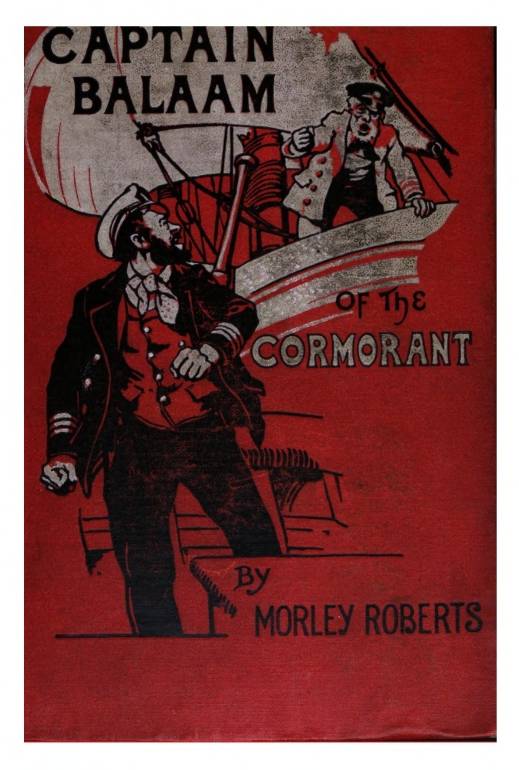
CAPTAIN BALAAM OF THE CORMORANT
Captain Balaam of the Cormorant was an ignorant old fool. Captain Benjamin Wood of the Scanderbeg said so. He was also obstinate, ferocious, blatant, bigoted, and given to liquor. Captain Benjamin Wood said this too. The crew of the Cormorant agreed with the crowd in the Scanderbeg that their skipper was a disagreeable personality: they phrased it differently, they said he was an adjectival 'blighter.' And yet for all that there was jealousy between the crews of the two ships, just as there was jealousy between the two skippers. The only difference between them was that the Scanderbegs believed in their ship and their skipper and the Cormorants believed in the Cormorant only. Both vessels hailed from the same port of registry; they both traded to Australia, and mostly to Melbourne; they were owned by related rivals, and manned for the most part by men who knew each others' home affairs. It was no wonder that when the Cormorant was re-masted, as she had been previously under-sparred, the Scanderbeg's crew was very greatly excited. Up to the present time their ship had made the best passages, and now Balaam had announced that he meant to lick the Scanderbeg by a ruddy ensanguined crimson month.
'You're an ignorant old ass, and can't do it,' said Captain Wood.
'I'm an ignorant old ass, am I?' retorted Balaam, who was slow at repartee. 'I'll show you!'
'I expect you will,' said Wood. 'I know you, Balaam.'
'You know me, do you?' said Balaam. 'Do you know anything against me? I despise you, Wood; I despise you. You shortened sail mighty quick that time we was in company off the Leuuwin. Oh yes, you 'anded that foretaups'l mighty quick, and I 'eld on to mine.'
'You'll not do it now the Cormorant has some real spars in her,' retorted Wood. 'You know, according to your own account, you could never put enough on her to do her any harm in a cyclone.'
'I never,' said Balaam; 'but any'ow this time I'll lick your ugly 'ead off. It don't foller because a man's full of scientific talk that 'e's a seaman. Great circles and double haltitudes and star hobservations make me sick!'
'They'd make you sick to work 'em out,' said Wood. 'When you got your ship resparred you might have got a new set of brains, Balaam.'
And he left Balaam foaming at the mouth as an old timber drogher foams under bluff bows with a whole gale behind her.
They left London River the same day, and lost sight of each other in the chops of the Channel. But since destiny was playing with them they lay close together under the Line for the best part of a fortnight in a dead calm. The Cormorant was the first to draw away in a series of light flaws, which were really the northern edge of the South-East Trade, and Balaam signalled to Wood: 'I'll report you!'
'Confound it, she's a wonder in light airs,' said Wood. 'But what she'll be in bad weather will settle it. I don't give in; not much.'
They ran across each other once more to the south of the Cape, and both ships had a first-class opportunity of showing what they could do in heavy weather.
'I'll run her under before I'll shorten sail,' said Wood.
'Blimy,' said Balaam, 'before I shorten down I'll 'ave the new sticks out of her.'
Mr. Briggs, the chief mate, implored him to go a bit easy. 'She's new to it, sir, and we're not settled down and set up the way she should be yet.'
'I'll show you,' said Balaam. 'If she ain't what she should be it's your fault. You're the mate, ain't you?'
But if the mate is responsible for the rigging the skipper is responsible for trying it, and Balaam drank hard and tried it high.
'I'd rather fetch into Hobson's Bay under jury rig than let that swine lick us,' said Balaam thickly. 'Mr. Briggs, h'ist that main-t'gall'ns'l over the reefed taups'l and let her scoot!'
If they hadn't once more lost each other in a screaming south-easter the catastrophe might have come right then. It was only when the Scanderbeg was swallowed up in thick weather and the night that Balaam got so drunk that Briggs ventured to shorten sail.
'I wish he'd keep drunk,' said Briggs bitterly to the second greaser.
'Ah, his bein' only squiffy is very tryin', sir,' replied Mr. Creak. 'It strikes me, sir, that the men are gettin' disgruntled at the way he keeps things goin'. They're beginnin' to want a lot of driving.'
'Then drive 'em,' said Briggs shortly. He was being driven himself.
The crowd for'ard were really very sore about everything. They had no particular grievance; that is, they only had seamen's grievances. The vessel was undermanned. Well, all British ships are. What's the good of an Englishman if he can't do more than any one else? They were, of course, badly fed. That was nothing: nothing even that it steadily grew worse. What hurt them was Balaam's way of looking at them. An Italian might have said he had the evil eye. They didn't mind his evil tongue. The truth is that Balaam was sand in their bearings; they got hot to think of him. They compared him with Captain Wood.
'That's a man,' said Charlie Baker; 'a real one.'
'You're over young to go so large about men, my son,' remarked Smith, a grey-haired veteran who had served his time in the Western Ocean; 'but I allow that Cap'n Wood is all there. When he was launched he was classed 100 A1 and no mistake.'
'With a broad A for iron and a Maltee Cross for built under special survey,' added Tom Paddle, who hailed from Newcastle, and had worked in a shipbuilding yard.
'I never heard of no Maltee Cross connected with ships,' said old Smith.
This raised an argument which lasted for the best part of an hour and ended in Paddle being put down by a unanimous vote, though he shouted as loudly as possible.
'You must be wrong,' urged his particular mate. 'Don't you 'ear we're all agin you?'
'I'll fight on it,' said Paddle fiercely.
''Ow could a scrap settle it?' asked Smith contemptuously. 'Suppose you and Baker fo't over it and you knocked Charlie out, would that make black white?'
'Then 'ow the devil is a man to know the truth of anything,' said Paddle pathetically.
It was the first argument of his that the rest owned had some sense in it. But the row blew over, as rows do in the fo'c'sle, and they abused the skipper till eight bells.
But if the row blew over it was more than the gale did. It lasted for forty-eight hours and was followed by another. The way Balaam carried sail made every sober man shake. That year, and at that season, running down the easting was no joke. And as Balaam knew the Scanderbeg would go as far south as possible on the Composite Great Circle Track he did likewise.
'Gawd's treuth,' said Charlie Baker, who was a joker, 'I've 'eard tell of the brave west winds, but these 'ere are puffectly reckless 'eroes!'
Old Balaam stumped the weather side of the poop, or hung on to the weather mizzen rigging and bawled—
'Let her scoot; what she can't carry—hic—she may drag. Mister Briggs—hic—shake out a reef in the main taups'l; I smells the cookin' on board the Scanderbeg, what ho!'
'Good Lord,' said Briggs. And Mr. Creak said so too.
'We'll be crawlin' into Hobson's Bay yet under a jury rig,' both mates agreed. They prophesied sadly, gloomily; and they prophesied right.
'The Scanderbeg will lick us by months,' they said. Here they prophesied wrong, for the Scanderbeg was a hundred miles only to the south'ard, and the same gale that was destined to whip the sticks out of the Cormorant was worse the further south it blew. They were then in latitude 45° S. and longitude 56° W., and the Crozets were on their starboard quarter. The real gale started at N.W. like a perfect fiend, grew into a hurricane from the west with the centre of the disturbance to the south-'ard, and when it passed away with frightful squalls into a steady sou'wester, the Cormorant was lying head to wind, anchored to part of her own wreckage, and she hadn't a feather to fly with. Captain Balaam went below and called to the steward.
'Bunting, rum!' said Balaam, and Bunting, who was as white as spindrift with terror, brought it. Balaam went to sleep calmly, and left matters to Briggs and Creak. The worst having come to the worst, being left to themselves, they proved to be men. They had something to do and did it. They cut all the wreck adrift and rigged a proper sea-anchor and repaired damages as best they could. But they couldn't repair the damage done to the provisions. The whole of the front of the poop had been burst in by the sea, and a big hole driven by the mizzen-topmast into the deck right through the poop and main deck into the lazarette. Into that there went so much water that anything not in tins was unfit to eat. And now all the pork and beef, save that in the harness casks, was found to be rotten.
'Great Scott!' said Briggs. The crew of the Cormorant anticipated starvation and had huge appetites. But they bore up well. A day ahead is enough for men of the sea. Charlie Baker took hold of the boys and felt them all over to see if they were fat. The others thought it an admirable joke. The boys were not so sure that it was.
'Never mind, mates,' said Baker, 'a boy will go a long way, and we 'ave three! But I wonder 'ow the Scanderbeg is makin' it?'
There is something peculiarly diabolical at times in the way of the sea. It was a coincidence, though perhaps an ordinary one, that the poor Scanderbeg was just then wallowing at a sea-anchor a hundred miles to the south of them, with nothing but the stumps of her masts to show a rag on. But it was a far more extraordinary coincidence that her crew were in danger of starvation. As Captain Wood did not drink, his steward did. It seems necessary that some one shall at sea, and though it is usually the skipper, who has no one to control him, it excites no surprise to find that the steward does. This particular specimen of a hard-worked individual went into the lazarette with an uncovered candle, sampled some rum, which was forty over proof, and fell asleep to wake in a world where we are led to believe drink is scarce, though smoking is permitted. And the Scanderbeg was on fire just when the wind from the N.W. and a falling barometer announced the approach of a hurricane.
The fire was put out and the steward dragged out, but what with fire and smoke and water combined, the provisions he had charge of were no more likely to do their duty than he was. They put him overboard gloomily, and that night the hurricane fell on them and did its worst.
'Well,' said poor Captain Wood, 'I'm afraid the Cormorant will beat us this time!'
But he did not take to drink and camp in a wet bunk as Balaam did. He worked day and night with his two mates, and made some sort of a show with a jury rig inside of twenty-four hours. But he was very much troubled about the 'grub.' Ships are never over-provisioned, and even the stock of canned goods had been fired and fuzed.
'I'd give fifty pounds for a ton of biscuits,' said Wood.
It wasn't till they were under way again and doing nearly four knots an hour with the sou'wester behind them, that an idea struck him.
'By Jove,' said the skipper. He slapped his thigh and suddenly became cheerful. Mr. Boden, the chief mate, was very curious but did not express his curiosity.
'The old man has something in his mind,' he told the second greaser, Tom Hankin.
'I wish I had something in my stomach,' said Hankin.
And the skipper went below. When he came up he altered the course to E.N.E., and Boden having taken a squint at the chart, became much more cheerful. So did Hankin, though he tightened his belt. So did the crowd for'ard, though they tightened theirs.
And the next day they ran across the Cormorant in that almighty waste of grey storm.
'Blimy,' said the crew, 'maybe we'll get some toke from this 'ere 'ooker wot's 'ad the syme misforchune as ourselves. I wonder what she is?'
So did Wood, and when he found out he would have been much more than human if he had not been pleased, though he had not read La Rochefoucauld.
'She won't lick us into Melbourne after all,' said the skipper.
He hove the poor old Scanderbeg to under the lee of the Cormorant, and she lay wallowing comfortably under a rag of a faked-up trysail and the head of a staysail showing on her forestay. Wood bellowed to windward with a speaking-trumpet, 'Where's Captain Balaam?'
Poor Briggs was tired and cross and insubordinate in his mind.
'In his bunk,' came down the wind.
'Is he hurt?'
'Drunk, sir,' said the distant voice.
'What did he say?' asked Wood of his mate.
'He said Captain Balaam was drunk, sir.'
'Ah,' said the skipper. He asked no more about Balaam, but inquired if they could let him have some provisions. The answer he got was rather a blow. But it was not so much of a blow to him as the question had been to Briggs.
'We're starving already,' bellowed Briggs forlornly to the wind, and the sea and the wreck to loo'ard of him.
'When will you get sail on her, d' ye think?' asked Wood.
'To-morrow,' replied Briggs.
'Make for St. Paul,' said Wood; 'provisions are stored there, so I see in the Directory. We'll share 'em!'
'Thanks,' said the other speaking-trumpet. And then silence fell between these two partners of the sea in high misfortune.
'She's really not so badly crippled as we are,' said Wood.
And that was true; so true, that on the morrow the Cormorant crept out of the waste of tumbling seas and the gloom of the grey dawn and wallowed past them. Balaam was on deck dancing.
'Licking thunder out of you, you dog,' was his polite message of thanks to the Scanderbeg. 'Crippled or all ataunto, we can knock spots off of your old barge.'
'Oh, he's a gentleman,' said Wood. 'We won't reply.'
'I'm sorry he's likely to get to the island first, sir,' put in his mate. 'I'd not be surprised if he grabbed all there is to get, sir.'
'Oh no, surely,' said Wood. But though he said so, the notion bit into him and made him all the more anxious to get more sail on her. He worked with the men like one of them, and only slept two hours out of the twenty-four.
'He's a bully old man,' said his hungry crew: 'the best skipper we ever sailed with. Oh, but ain't we 'ungry!'
They were hungrier yet when they sighted the crater of St. Paul and rounded to on the north-east coast opposite the broken entrances to the inner crater harbour. They anchored in deep water, and so long as the wind stayed west of south were in perfect safety. But there was no Cormorant in sight.
'By Jove,' said Wood, 'she's missed it after all. I'm not surprised. Balaam's no navigator. Called me a dog, did he? Well, I've smelt my way here and he's out of it.'
The crew were joyful and excited. This was something new, something a little out of the way in the dull, dead monotony of sea-life, which as a rule is about as interesting as running a water-cart up and down a suburban road. The august and awful sea is only august and awful for those who have august minds. Seamen as a rule haven't; they have only awful language.
'Blow me tight,' said Bill Waite from Shadwell. 'I sye, this is a gyme! Sye, Tom, let's desert and live 'ere for hever and make a farm!'
'Oh, let's,' said his mate, Fred Day. 'If it's anythin' like the Canary Bird Islands, it'll be a fine farm for sulphur and cinders. What I want is the grub, and get out of it. Give me Sandridge and a pot of she-oak.'
They went ashore, pulling in through the crater entrance, and were surrounded by gloomy walls nearly a thousand feet high.
''Tain't exactly as bloomin' as the Isle of Man,' said Bill, 'at least not on a Benk 'oliday. Where's the grub, d'ye think?'
They found out where it was very soon. At least, they considered they were able to deduce from the facts in front of them where it was. The rude stone and lava hut in which it had been stored stared them almost in the face. But it was odd, they said, that the door was open.
When Mr. Briggs reached it he turned round and looked very much disturbed. So did the hut. It had been disturbed recently, and there wasn't as much as the smell of a biscuit left in it.
'The Cormorant has been here and taken it all,' said Briggs. You could have knocked the boat's crew down with much less than a belaying pin. They collapsed upon adjacent blocks of lava and said things not fit for publication except in realistic novels.
'The swine,' sighed Charlie Baker. 'Oh, ain't there nothin', sir?'
'Not a thing,' said the mate. He led the way back to the boat, and under the wondering eye of the skipper, which was just then glued to a telescope, they embarked and rowed back like a funeral procession.
'Captain Balaam has taken all the provisions, sir,' said the mate.
'All?'
'Every biscuit, sir.'
'Get the anchor up and make sail,' said the skipper. He went below, and when he came on deck again the Scanderbeg was standing out to sea.
'Muster the men aft, Mr. Briggs,' said Captain Wood. And when they came aft the old man addressed them. The pith of his address lay in the tail of it.
'We must catch the Cormorant,' he said. And the men said they would if human hands could get enough sail on their old wreck to catch the robber and scoundrel, then somewhere to the east of them. Men and mates and the skipper took their coats off. They clapped make-shift sails on every stay till the Scanderbeg looked like a laundry drying-yard. They got up another jurymast made of the fished halves of the main topmast. They made her four knots into five, into five and a quarter, into five and a half, and then they lay down at midnight and dreamed of eating.
They sighted the Cormorant ahead of them two days later.
'There she is, the thief,' said the men. As the weather was now finer and dry, they wetted their rags of canvas so that the sails held a little more wind; they rigged up more canvas yet by lacing it to the foot of their foresail, which did most of the work. They hung out their clothes to dry, and tied them so that the very shirts held wind.
'All right, my sons,' said the crowd of the Scanderbeg, 'wait till we catch you.'
They drew up with her at dark. The weather was moderating fast, the heavy sea went down rapidly: the wind fell light, and stars shone through the breaking canopy of clouds. The Scanderbeg drew up on the Cormorant's starboard quarter slowly. It was obvious that in her present trim she could out-sail the other vessel anyhow, and this in spite of the fact that Briggs had made good use of his spare topmast. The Scanderbeg had none. It had broken from its lashings, and gone overboard like a match out of an emptied pail when she was nearly under water and came up out of the smother like a diver.
The crew of the Scanderbeg were on the fo'c'slehead.
'Will he run aboard of 'em? By crimes, there'll be ructions,' said Bill Waite dancing. 'Oh, the miserable dogs; oh, the scum o' the seas; oh, the pirates!'
'Dry up, you ass,' said his mate. 'The skipper's goin' to 'ail 'er!'
'Cormorant, ahoy!' said Captain Wood, who came for'ard to the t'gallant fo'c'sle. 'Cormorant, ahoy!'
'Hallo!' said Briggs from the poop.
'What made you take all the provisions, Mr. Briggs?'
'The captain's orders, sir,' said poor Briggs, who was obviously ashamed of himself and his ship. 'I couldn't help it, sir.'
The two moving wrecks were now almost alongside.
'Clew up the foresail, Mr. Hankin,' said Captain Wood.
The sail was clewed up, and now the Cormorant drew a little ahead.
'I want to see Captain Balaam,' said Wood. 'Is he drunk now?'
The night was suddenly dark, and the figures of the speakers barely distinguishable. Nevertheless those on the fo'c'slehead of the Scanderbeg were aware that Briggs suddenly disappeared and was replaced by some one else.
'I'm not drunk, you swab,' hiccuped Captain Balaam. It was a very obvious misstatement on his part. 'I'm not drunk, you miserable howler. There warn't enough grub for one, let alone two, so I collared the lot.'
A voice was heard from his ship which contradicted him.
'That's a lie. There was plenty for both!'
Balaam left the poop hurriedly and was heard inquiring for the mutineer who dared to put his oar in at such a time. Every man jack on the main-deck protested it was not he.
'Very well,' said Balaam, 'when I find who it is, I'll hammer him flat, flat! I'll massacre him!'
He came back to the poop and resumed his talk with Wood.
'Not enough for two—hic—and if there was you shouldn't have it. I'll give you a bag of split peas!'
The men in the Scanderbeg groaned. They had been living on split peas for three days. Bill Waite signified what he thought of the offer by taking an iron belaying pin from the rail and throwing it at old Balaam. It was a good shot, but the distance was too great. It hit the rail of the Cormorant and fell into the sea.
'Split peas,' said Fred Day; 'oh, lor'! What'll our old man say to that?'
Wood was a gentleman, and he very rarely used bad language. There are times, however, when language to do any good to the user must be bad, and Wood told Balaam what he thought of him. He ran the Scanderbeg close up alongside until Balaam thought he was going to be boarded, and then addressed him. His crew roared with applause and hissed Balaam furiously. They called him every horrible thing they could think of, and Charlie Baker said 'Hear, hear' from the Cormorant's main-deck.
'It ain't our fault, maties,' he cried. 'Old Balaam's a cock-eyed blighter!'
But Wood roared, 'Silence fore and aft,' and spoke once more.
'Will you divide the provisions, Captain Balaam? I ask you for the last time.'
'I'll see you sunk, burnt, and destroyed and doubly damned if I will,' said Balaam. 'I 'ates you, and don't hown to no obligation to you. You never was polite nor friendly. Now you're repentin'. You may go to blazes by express. My name's Balaam. I'm captain of this ship, and don't take horders from a scientific lubber like you. I ain't drunk—hic—though you say so. I'm as sober as a missionary, quite sober—hic—and hif you incites my crew to mutiny I'll sue you for damages and justice in Melbourne. Mr. Briggs, make sail, crack on!'
He retired to a hencoop and sent for the steward.
'Bunting, gimme a drop o' brandy and gin mixed with a dash o' rum in it,' said Balaam.
It was his favourite drink.
But in the Scanderbeg Wood was talking to Mr. Boden.
'All right, Mr. Boden,' said he, 'set the foresail and let us draw ahead. I'll not put up with this. We shall be starving in reality in three days. We'll get even as soon as ever the sea goes down.'
And somehow it got to the men for'ard that the situation was not to last. They ate pease pudding with loathing and smoked heavily.
'We relies on the old man,' they said. 'Oh, what a blighter old Balaam is.'
They kept a mile or two ahead of the Cormorant all that day, and when night fell again the sea was fairly calm and the sky clear.
'We've got three boats fit to go over the side,' said the skipper to Boden. 'Get 'em ready, and now it's dark you can have 'em swung out. Belaying pins will do.'
What belaying pins would do for soon appeared, when the skipper had the men mustered aft.
'Men,' he said, 'all the food which should have been divided is now on board the Cormorant, Captain Balaam, who is no gentleman——'
'He ain't no seaman neither, sir,' said Bill Waite. The others told him to dry up, and he subsided, blushing at his own audacity.
'And I propose to board his vessel and compel him to divide it.'
'Hurrah, hurrah, hurrah!' said the crowd. 'Oh, ain't this somethin' like!'
'If there is any resistance,' went on Wood, 'it must be put down. For that purpose each of you will take a belaying pin, but you will leave your knives behind. In half an hour I shall shorten sail and man the boats. You will all keep silence. I shall go with you myself to see that no unnecessary violence is used. Mr. Hankin, you will remain on board with two of the boys.'
As there were three boys it is unnecessary to state that there was an almost immediate fight to see who were to stay. Both who did were much more damaged next morning than the victim who went.
At midnight the foresail was clewed up and a few more of the make-shift sails furled. The boats were lowered safely, and in ten minutes the Scanderbeg was only manned by a sorry second mate and two sore boys. The vessel moved off slowly into the starry darkness, looking like a huge house-boat converted into a laundry. To the westward the Cormorant loomed darkly. She grew slowly as they waited in perfect silence.
'This will be a lesson to Balaam,' said Captain Wood across the quiet sea to Boden. 'I hope, I sincerely hope, that he is not drunk, Mr. Boden!'
'Gosh, we're pirates of the deep,' said Waite, and the men in his boat chuckled.
'Silence in your boat, Waite,' said the skipper. And as the Cormorant drew nearer and nearer the boats divided. The skipper's boat and Waite's lay ready to board her on the starboard side. Boden was to rush her on the port. Now they heard the very lip of the seas against her bows. Her broken spars stood up against the sky. They heard a voice aft. Some one struck one bell on board of her. The man on the look-out sleepily said that it was 'All well!' And now her bows were above them. They pulled a stroke and her sides loomed high.
'Hook on,' said the skipper, and before the Cormorant knew it she was seized by what Waite called 'the pirates of the deep.'
'She's ours,' said Waite as he jumped on deck and found no one to oppose him. In half a minute there wasn't a soul in the boats, which promptly went adrift. Mr. Briggs, who was the officer of the watch, was an unreluctant prisoner in the hands of Captain Wood.
'I couldn't stand it, you see,' said Wood, as he shook hands.
'I ain't a bit surprised,' replied Briggs; 'in fact, I rather reckoned you'd not put up with it.'
'Fetch up Balaam,' said Wood. And Balaam was brought up. By this time the two crews, who were no longer jealous of each other, were standing together on the main deck on the friendliest terms.
'You're our prisoners,' said Waite cheerfully. And the crew of the Cormorant laughed, while Balaam bellowed like a bull on the poop.
'It's piracy, rank piracy,' roared Balaam, as he struggled in the grasp of Boden and his enemy, the skipper of the Scanderbeg. 'This is piracy, and you'll be 'ung for it!'
They slammed him down upon a hencoop with considerable violence.
'Dry up, you old thief,' said Boden. 'You ought to be ashamed of yourself. If you don't stop kicking I'll land you on the jaw.'
He shook Balaam till his teeth chattered and he called on Mr. Briggs for help. Briggs turned his back to him and walked to the rail on the port side of the poop.
'We've come for those provisions, Captain Balaam,' said Wood, 'and we mean to have them.'
'You're a pirate,' said Balaam thickly, 'oh, you're a pirate.'
'And you're a miserable, cowardly thief,' replied Wood. 'I don't propose to argue with you. Mr. Boden, when we come up alongside the Scanderbeg, shorten sail and we'll wait till daylight.'
'You're givin' orders in my ship,' said Balaam. 'Oh, this is horrid, it's a nightmare; it ain't real! I must be dreamin'!'
He yelled horribly, and it took three men to hold him. One of them was his own second mate, who hated him venomously.
'If you make much more row, sir,' said Creak, 'they'll put you over the side. I heard 'em say so!'
'Did they, Mr. Creak?' whispered Balaam.
'They did,' said Creak.
'This is horrid, Creak. Oh, Creak, am I dreamin'? Pinch me, so's I shall know.'
And Creak gave him a nip that drew a shriek from him.
'You've took a piece out, confound you,' said Balaam.
'I'm very sorry, sir,' said the second greaser, with a pleased smile. 'But you ain't dreamin', and the pirates down on the main-deck are very savage against you. I'd give up the grub quickly.'
'Would you?' asked Balaam.
'I would, sir,' said Creak. 'Paddle whispered to me just now that they had fixed it up to hang you, and Captain Wood too if he objected.'
And Balaam, whose sobriety was returning under the stress, lost his courage as his alcohol evaporated.
'I'd beg their pardon, if I was you,' said Creak. 'It's horrid being hung.'
'Yes, yes,' said Balaam. 'Tell 'em they can have the grub quite quiet. I'd—I'd like to go below. Creak, I feel cold.'
And Creak was allowed to lead him to his cabin. When he got there, he locked himself in, and piled all his possessions against the door. He fell into his bunk shivering, and when he slept he dreamed horrible dreams, which were the offspring of terror and alcohol. He sobbed and said, 'Nobody loves me!' He came near to seeing rats.
And in the meantime the two vessels lay alongside within a cable's length of each other, while Waite and Boden used one of the Cormorant's boats to pick up their own. The cook of the Cormorant was busy in the galley, and the crew of the Scanderbeg ate a square meal the first time for ten days.
'This is much better than split peas,' said Bill Waite. 'I shall loathe peas all my life. I don't know which I despise most, Balaam or pease pudding. Mates, it must be a horrid thing to have such a skipper as Balaam.'
The men of the Cormorant said it was horrid.
'He's a cock-eyed blighter,' said Tom Paddle, 'and I most willingly would see you pirates 'ang him. And as for the grub we parts with, what belongs to you comes without grudgin'.'
It was very handsome of Tom Paddle. But he was known to be generous even when he was sober. He helped to transfer the provisions to the Scanderbeg with the heartiest good-will. When the transhipment was made, all the officers of both vessels breakfasted on board the Cormorant, while Balaam lay in his bunk hungry, not daring to call for anything.
'I know Wood will 'ang me,' he whimpered. Without brandy, he had to believe it.
'While I am a pirate, Mr. Briggs,' said Captain Wood pleasantly, 'I may as well carry it out. Can you spare me a coil of three-inch manilla?'
'With pleasure,' said Briggs. 'Is there anything else, sir?'
'What do you say, Mr. Boden?' asked Wood.
'I think we could do with half a dozen stunsail booms,' said Boden.
'I rather want them myself,' said Briggs anxiously.
But Wood was a good pirate, and did not weaken.
'I think we want them more than you do,' said Wood with firmness. And he got them. Briggs was sore, but said nothing.
'Is there anything else you would like?' he asked with some natural bitterness.
'Yes,' said Wood, 'I think we'll take all Balaam's sea-stock of liquor. It will do him good.'
'I haven't the least objection to that,' said Briggs.
And half an hour afterwards the Scanderbeg made sail, and forged slowly ahead of the Cormorant on her way to Albany.
'We'll report you,' said Wood.
But when he was nearly out of sight, old Balaam pulled down his fortifications and came on deck, looking like a man who by a miracle has shaved what are known as the 'jimjams.' He sat down and wailed for Bunting.
'Yes, sir,' said Bunting.
'I think I'll have some brandy and gin with a dash of rum in it,' said Balaam.
The steward looked at Mr. Briggs and grinned.
'If you please, sir, you can't, them pirates took it all,' said Bunting.
JACK-ALL-ALONE
As it happened, I was the only passenger in the steamship Hindoo, and I found little entertainment in the company of her officers. The skipper was said never to open his mouth except upon Sundays, when he preached furiously to the assembled crowd and promised them hell as a reward for their labours on the deep sea. He was a religious maniac, much in favour with the owners because he combined religion with honesty and an unequalled degree of meanness about stores. He was little, and of a pallor that no sun could touch. He carried a hymn-book in his breast-pocket, and loose snuff in a side one. I found no comfort in him, and even less in the two mates. They were much married men with large families, and were subdued by the fear of losing their billets. They hung together and abused the skipper, and took no interest in the sea or any of its works. They pined for inland farms, where they would have been pelicans in a dry desert. I turned to the crew, and by dint of giving them tobacco and occasional nips of liquor overcame their distrust and shyness. For even though I had once been a seaman, that time was so far away that I had lost all look of it. And even when they knew it, they took it for granted I had been an officer, which put me out of their range. It was only my loneliness and my low cunning with rare whisky that made me free of their company, and at last loosened their tongues. I often sat with them in the dog-watches and set them yarning when I could by yarning myself. But only one story that I heard remains in my memory. It remains, not so much by its strangeness as by the strange way it was told, and the difficulty I had in getting it told at all. It was one of the younger seamen that put me on the tracks of the man who had it to tell.
'Why don't you try old Silent for a yarn, sir?' he said one day, when I was on the fo'castlehead with him on the look-out; 'he that says nought could say a lot. He might open up with you. With us he's as close as a water-tight compartment. But they do say in this vessel that he came out of one ship the honly survivor.'
What can one do on board a lonely steamer where there is no one to talk to and nothing to read, and there are so many unoccupied hours in front of one? The days were grey, the sea was grey, and as flat as last year's news. I set out yarn-hunting, and went for old Silent as they called him. I went for him warily. To ask him a question would be to cheat oneself of any expectation. I ceased to attempt to talk with him. But having fallen into his mood, I added to the compliment by giving him more tobacco on the quiet than I gave any one else. I called him into my deck cabin, and gave him a drink of whisky without a word. He drank it without a word, wiped his lips, scraped a sort of bow, and withdrew.
He was a melancholy man, downcast, ragged-bearded, with a glazed, yellow skin on his face, and shining scales upon the backs of his hands. His teeth were black with tobacco-chewing. His ears had been pierced for earrings, though he wore none. His eyes were deep-set, black; his mouth was a mere slit, his ears large and outstanding, like a couple of stunsails. He was obviously strong even yet. But he assuredly bore the marks of certain disastrous hours upon him, and his nerves betrayed him at times. I saw his hand shake when he lifted the drink to his lips.
'You've been through something, my friend,' I said to myself. 'I wonder what it is. It's not only "D.T."'
Life to my mind is a series of fights, and one is mostly knocked out. I could see that old Silent had been knocked out. Well, so had I, many a time, and his gloomy face appealed to me as a man of like disasters to myself. I saw (ay, and see) so many who seem to have no kind of insight into things. They are mere children, and one pities them as one does young recruits going to war. I've known men to die without suspecting it. For the most part, men live without suspecting any of the dangers, traps, pitfalls, and disasters that surround them. There was an uneasy alertness at times in this old seaman's eye which suggested that he knew Death was close at hand. I watched him keenly enough, for I had a great curiosity about him. What was the story of this poor inhabitant of this strange globe? What had he in common with those who see through illusion, who can pierce the hollow earth and see the fires, who can foretell storms, who can scent immediate and irremediable death?
This was folly, no doubt. I was in a bad state of mind, and had disaster behind me, and the shadow of it before me. There have been hours in many a man's life when the thought that he could end it was his only comfort. Without being in that state, my frame of mind was not wholly enviable, and I wanted some kind of help that I could not find. What was it that sent me to old Silent, if not the intuition that he had known worse than I?
We talked at last, at midnight, for I had found the clue to his heart in some inscrutable way beyond my knowledge. Perhaps he saw something in me that invited confidence. Oddly enough, strangers have often enough opened their hearts to me, when I least expected it. There is some deep necessity of confession in men's hearts, and in speech they compel sympathy—or at least they can plead their own cause.
''Tis a black night, sir,' said the old man, whose real name was Gilby, ''tis a black enough night.'
He was on the look-out, and it was the first hour after midnight. I climbed up and stood beside him close against the windlass, which looked in the dark like a stiff, distorted corpse covered with merciful canvas. The heavens were low and there was not one star visible. Wind there was none, and the sea was a dulled plate of pale dark steel. What air blew on the fo'castlehead we made ourselves. The cargo derricks on their platforms held watch with us: they looked diabolical and all alert. Under the straight stem of the Hindoo the sea hissed lightly like water escaping from a cock. The vibration of the engines was muffled for'ard; but it beat like a steady pulse.
'Ay, it's a very dark night,' I answered, as I stood alongside him in the very eyes of her.
I glanced up at the mast-head light, and what glow came to me blinded me still more. But the light was a kind of comfort. And so were the side lights. One could believe with the Chinese that a vessel might see with painted eyes on the bow. Neither of us spoke a word for full ten minutes.
'You've been a seaman, sir?' he asked presently.
'Twenty years ago.'
I went back twenty years, and was no more than a boy. Now was my 'Twenty Years After.' My old companions were dead or lost in the years.
'Twenty years you say, sir?'
There was something strange in his voice, an eagerness, a sharp pain.
'Full twenty,' I answered, dreaming.
'When I was young it seemed as if a man would forget anything in twenty years, sir.'
There were things one couldn't forget. I knew that, and I knew that here was an unforgetful heart of pain. My curiosity seemed most unworthy, and I was ashamed of it. But the old man spoke, and I knew he was not old.
'It's yesterday, sir,' he said in a low voice, 'and this very night in November—twenty years ago! A dark night enough, and yet a strange light in it. Did you ever play Jack-all-alone at sea, sir? was you ever by yourself at sea? That's the terror of the sea, sir. A sticky, wet, clammy terror. For we've mates in ships, even if we don't speak. Have you ever felt the big sea and the sky, sir, spread out and spread over for you alone?'
I had spent one night at sea alone in the English Channel in the fine but foolhardy game of single-handed sailing. He brought it back to me now, and I sat in a little fifteen-foot cutter-rigged open boat in a great and gorgeous calm to the south and east of Dungeness Point. At sunset the wind failed, and left me at the will of the tides. For a long hour the golden west was a wonder of fine colour, and the sky overhead a most heavenly pale blue. The low coast towards Romney was a faint dark line, submerged in the sea. Elms ashore looked like massed shipping; a church-tower was dark against the sunset. Dungeness light glared over me, and I drifted on the last of the north-west curve of the tide into its red sector shining like blood on the lip of the moving water. An infinite and most infinitely deep silence oppressed and purified me. This was the purification of the ancient and immortal tragedy of the sea. I sat in a red flood and the day died. The piety of the great darkness buried the earth. Till midnight came I was alone and was nothing; a mere fleck of foam; I was all things; I was the world itself. Then a great fishing-smack drifted to me. I spoke to a dim shadow in the heavy shadow of great sails that hung motionless. I lost that voice again in the drifting of the tide and in a faint light air. Then at last the dawn broke, and the winking lights of land died down and the day and the land arose, and I was no longer alone.
'I knew it for a night,' I said. It is the rarest thing for any seaman to know. In this was his disastrous story. 'How did it happen to you? Would it hurt you to tell me, or would it help?'
There was no more unworthy curiosity in me, and that I was purified of it he must have felt. For this was a man who could feel and remember. God's great gift of forgetfulness is mostly given to the highest and to the lowest only. I drifted for a moment on my own sea of memory, and when I came back I heard him speaking. Those who have been long silent come some day to an hour of strange and easy speech.
'I and my brothers——'
I heard his voice catch on the word and get over it with a bitter jar, as a vessel might slide over a shoal in uncharted waters. Yet he knew those waters of Marah well.
'We was in a rotten old steamer, sir, them and me. Jack was my elder, and a fine big chap, good as gold, and as brave and strong as a lion; a real seaman, such as one don't meet nowadays. He mostly sailed in windjammers, but he was one of those that like to see things, and he had a fancy to potter round the Mediterranean once in a way. He'd read a lot at sea one passage in a Green's ship that had a fair pile of books in her for the crowd for'ard, and he'd a fancy to see Italy and Greece. He'd talk by the hour of old Romans, and a strange character that was at Syracuse some time back; I disremember his name, but he was for science and arithmetic; and he knew the name of a score of Roman emperors quite pat; and he said once when we was at the port of Athens that a hill plain to be seen was the home of the gods in the days before Christianity came to the fore. He was a first-class man at whatever he took to, that he was, and might have been high up if he'd had a chance to be properly eddicated. And Billy, my young brother, was a fine boy of quite another guess sort. He cared for nothing but fun, and he was good-looking, and a rare youngster with his dooks. I've seen him down a Dutchman twice his weight, and do it laughing. He was bright as the day, sir, bright as sunlight, and there we was, the three of us, in this rotten old tramp, built in the year one of steamships, and much the shape and size of a biscuit-tin, and not much to her that was better material. And so we mucked about the Mediterranean looking for cargo, like the sea-tramps we was, and every time it blew a capful of wind we had to turn her nose to it and keep bobbing. For if there was any kind of a sea on the beam, she'd roll so cruel that our hearts was in our mouths. And Billy's joke was always the old sea-joke that she had rolled right over in the night, and done it so quick that no one knew it. But, I own, she put the fear of God into most of us, and some of us got that narvous, we couldn't sit quiet unless there was a flat calm, and her just joggin' on ahead like an old hay-wagon. We went down from Barcelona with some sort of truck to Constant, and there Jack did talk a lot about emperors, and he was pleased as Punch to see things, saying that history grew rank thereabouts; and he would ask the old skipper about things dead and gone thousands of years, so that the old man, never liking to own he wasn't chock-a-block with knowledge, used to fidget like one o'clock, and get that cross with dodging 'twas a game to hear him. And then we went humping up the Black Sea, and brought out wheat from Ibrail, and we got stuck down at Sulina, and lightered her clear and had a holy time, so that Jack said making history in the wheat trade was no joke. And we came out from Constant for home. But home we never got, sir, and to say the truth, I've never been home since, and never shall go. Do you know the Mediterranean, sir?'
Did I know it? Even as he talked I had been thinking of Crete on our starboard beam at night, and of Etna right ahead at dawn, and the white cities of the Straits, of lava-bound Catania, of old historic Syracuse, of the sickle-shaped harbour of Messina, of high Taormina, and the day breaking in the hollows of the grey Calabrian hills. Then smoking Stromboli, a cinder peak of the seas. And afterwards singing, roaring Naples and atmospheric Capri sunk in sweet blue air. Oh, did I know it?
'Ay, I know it.'
'We came up with Sicily, and went in by the Straits to drop some truck or another at Messina, and then out again to the north, and when we were near alongside Volcano, it was looking bad and grey and hard as it does when a levanter threatens. The sea got up, and it was short and steep and hard, sir. And for a while we battered among the islands and Volcano smoking and, I dessay, Stromboli too, but the smother of the weather was too thick to see it. And I was on the lookout, as I am now, and Jack he was relieved at the wheel as I came up on the fo'c'slehead. He laughed up at me, and said, "This top-heavy old hay-wagon will be doin' a roll directly." And just as he went below, the skipper, who was as afraid of her as he had a right to be, turned her about and put her nose into the wind. There she stayed, uneasy and sawin' with her 'ead like a swell carriage-'orse. And they just went ahead with the old scrap-engines, and stayed so, reckoning to ride the gale out. And she rode it right enough till night, and we three brothers 'ad supper and passed our jokes. And poor Billy was as bright a kid as ever—oh, I can think of things 'e said now.'