
WeRead Powered by ReaderPub
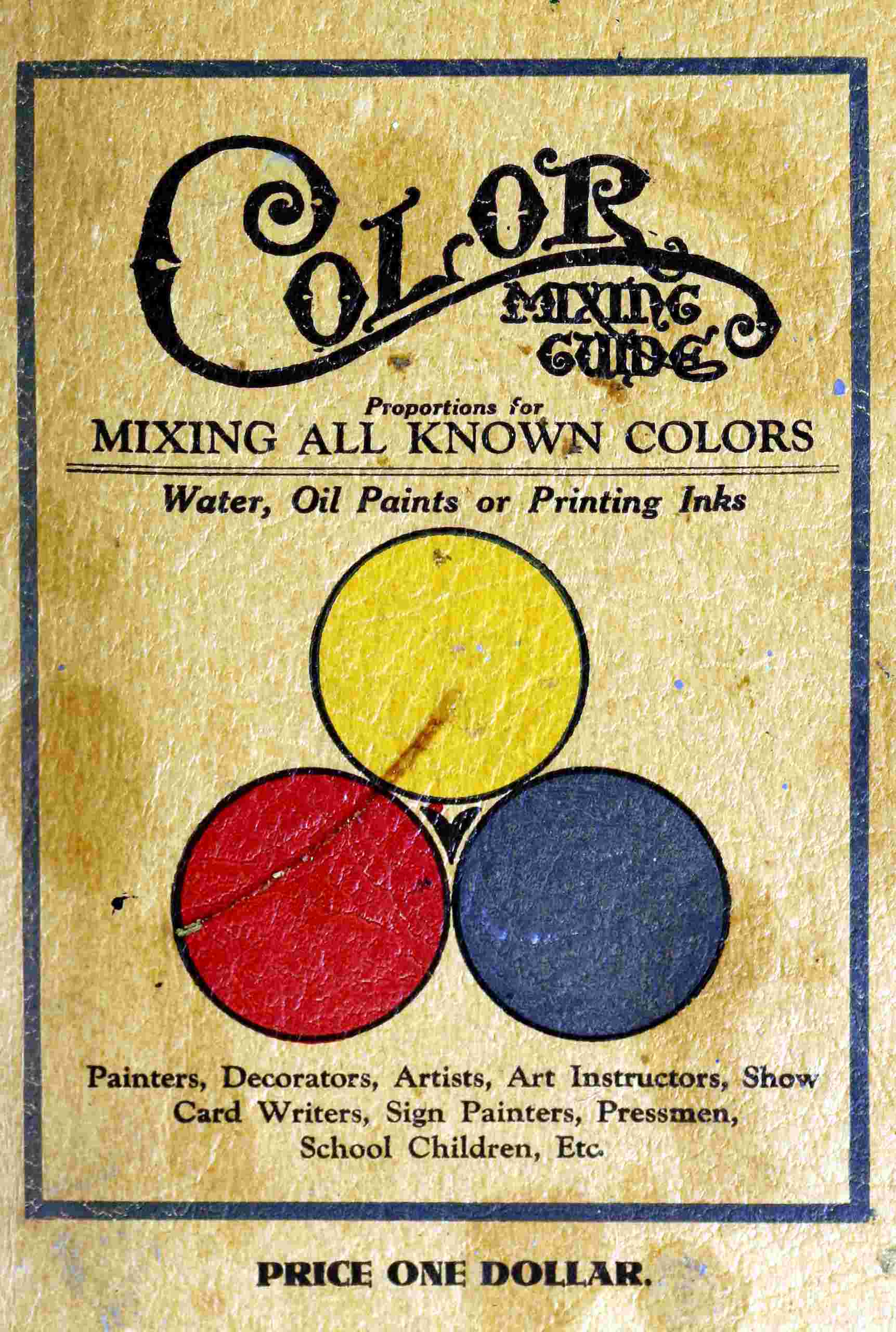
Color mixing guide / For artists, painters, decorators, printing pressmen, show card writers, sign painters, color mixers. Gives color mixtures by parts cover

Color mixing guide / For artists, painters, decorators, printing pressmen, show card writers, sign painters, color mixers. Gives color mixtures by parts

Chapter 10: NATURE’S COLOR CHART OF HARMONIOUS COMBINATIONS
Open in WeRead

Explore more books like this:

About This Book

The manual explains color as an effect of light and presents yellow, red and blue as primary pigments from which secondary and tertiary hues are produced. It provides practical mixing rules and proportions for obtaining tints, shades, warm and cool variations, and advises how to lighten, deepen or neutralize colors using white, black and complementary tones. The text distinguishes organic and inorganic pigments, discusses sources and the role of mordants, and offers selection guidance for applied trades. It notes color-blindness as an occupational consideration and highlights color harmony, recommending nature as a model for balanced combinations.

NATURE’S COLOR CHART OF HARMONIOUS COMBINATIONS

Nature has given us a wonderful color chart, of harmonious colors mingled together.

Flowers furnish countless color combinations which are perfect in every detail. Colors ranging from soft, delicate tints to deep, rich solids, are found in great variety.

Observe also the birds, whose plumage range from the most gorgeous to the so-called jet black raven or black birds; even they when viewed in sun or strong light reveal a picture of dazzling beauty. Beautiful tones and semi-tones of purple, green and blue blending perfectly with the black.

It is unnecessary to mention in detail, the fields, woods and forest, the seas, the lofty, stately mountain peaks of somber hues silhouetted against an azure sky or viewed in the setting sun.