
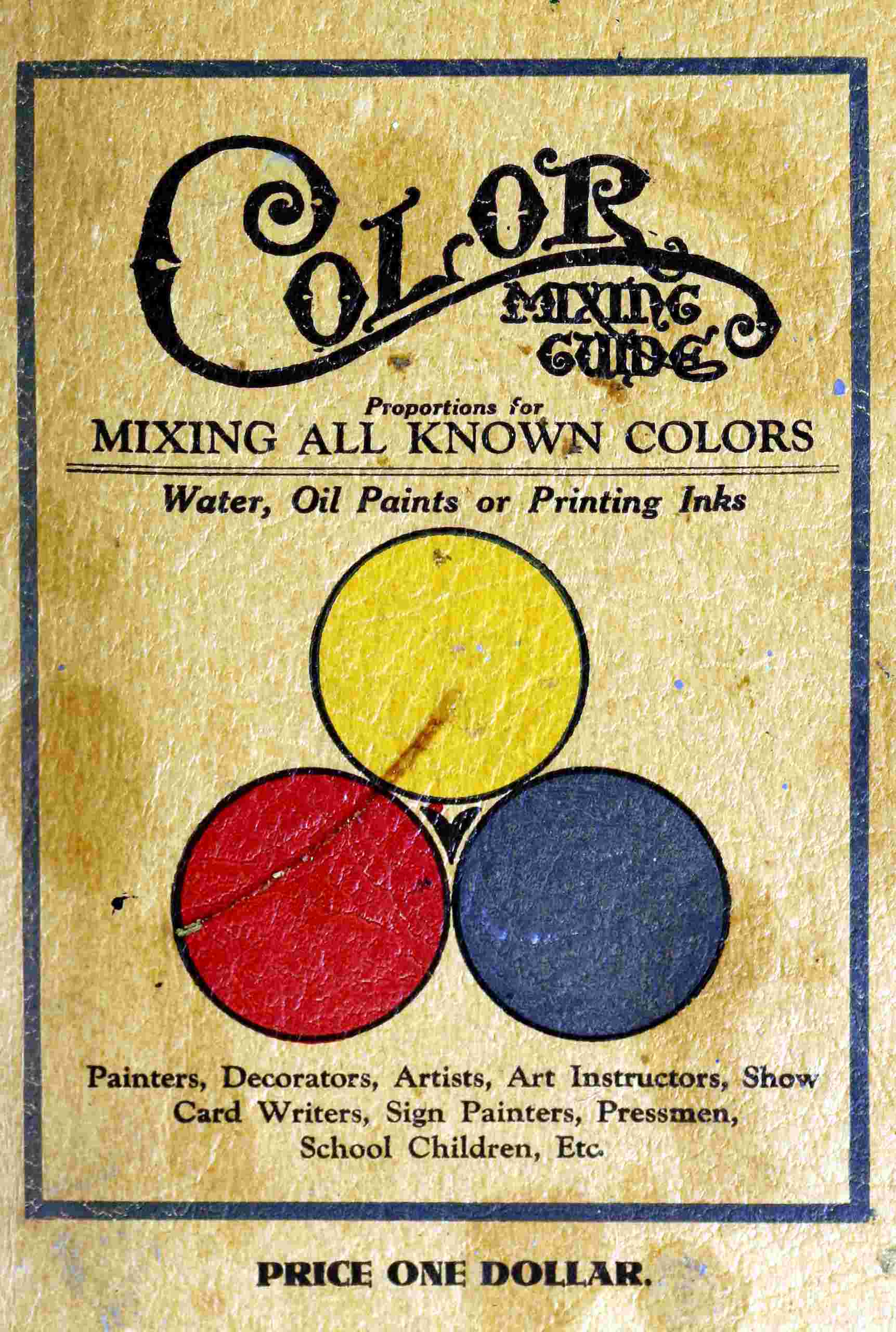
ART OF COLOR MIXING
Mixing colors is an art in itself. With a combination of the chief colors—red, yellow, blue (and black and white), thousands of shades and hues may be produced.
Mixed in various proportions, either in twos, or all three together, these three colors produce every hue in nature or in art, every tint that is physically possible.
The primary colors are yellow, red and blue.
The secondary colors are orange, violet and green.
The tertiary colors are citron, russet and olive.
The secondary colors are made as follows: Yellow and red make orange, red and blue make violet, yellow and blue make green.
The tertiary colors are mixed from the secondary colors as follows: Orange and violet make russet, violet and green make olive, orange and green make citron.
Black, white and gray are natural tones in which no color is apparent: White pales but does not brighten any color. Yellow is the brightening color and always stands out strong and advancing; to deepen a color, use its complementary color; to deepen yellow add purple; to deepen red add blue; to deepen blue add burnt sienna, then you will have purity of color.