
Composite Family
Thistle, Circium undulatum, SPRENG.
Flower heads, 1½ to 2 inches broad, are solitary at the ends of stems and branches, and made up of numerous (100 or more) rose-colored, tubular florets fluffing out widely at their tops and grouped tightly together at their bases into an involucre made of many little, overlapping green bracts. Plant is about 3 feet tall with gray-green deeply cut leaves; stem and leaf ribs armed with prickles. Grows on plains, extending into foothills. Blooms May-September.
Thistles of some sort are found in all parts of Colorado. Above timberline they take on grotesque shapes. In one, high-altitude thistle, Circium hookerianum, the whole woolly top of the plant, formed of compressed leaves and inconspicuous flower heads, bends over to resemble the head and neck of some shaggy animal. In our sub-alpine hay meadows a different species, Circium drummondii, may spread flat on the ground with no main stem and keep its flower heads so low that the mowing machine goes right over it catching only tops of a few leaves. On the plains are other species with shaving-brush-like flower heads. In spite of the prickles on their leaves and stems, horses nip off the flower heads and eat them with relish. Donkeys and mules seem to like them even better.
CLASSIFICATION OF PLANTS
All plants are related to each other in the sense that every one of them is descended from a common primitive uni-cellular life form which came into existence on this planet millions of years ago. As the remote progeny of that ancestral cell, or group of cells, became scattered over the earth and faced diverse conditions, which in turn changed with the ages, these millions of related organisms exhibited profound changes such that the differences in form, size and structure have become more noticeable than are the badges of common inheritance. This is the process called Evolution. Changes are established so slowly, however, that the immediate descendants of any particular plant, or the offspring from cross-pollination within a closely related group, will continue for many generations to be substantially identical in structure with the parents. As long as substantial identity in structure exists, all of these individual plants form a single “species.” As these species are discovered, botanists give each of them a Latin name. Within Colorado over 2000 such separate species of flowering plants are known. Minute variations such as color of petals or degree of hairiness of leaf or stem are treated as “varieties” within the species.
Many thousands of these substantially identical plants may be found scattered over parts of a state, or over several states, or even throughout a life zone area comprising parts of several continents. Within the life zone favorable to them, the only geographical limits seem to be those affecting distribution of live seed.
In the search for plants, many different species are found, either in the same or more often in different localities, in which the resemblances are close; in fact many parts are almost identical, but persistent differences are also present. A common ancestor several hundred or several thousand years back may have existed, but evolutionary changes have brought noticeable differences in the respective descendant groups. If the changes are not too great, especially if the mechanisms of reproduction have not been so greatly changed as to make cross-pollination totally impossible between plants of the several species, these related species, wherever they may have been found, are said to comprise a “genus.” To this, also, a Latin name is given. Lillium, for example, is the generic name of all true lilies everywhere; umbellatum, however, is the specific name of the group to which our Colorado mountain lily belongs; and “Lillium umbellatum” is the full name of the plant shown on page 10.
Still greater differences in plant and flower structure are found, coupled, however, with strong resemblances in significant parts of the structure. This has led to grouping a considerable number of genera together into a “family.” Latin names also are given to the families. For these names there are, in most cases, well established English equivalents which we have used here without repeating the more technical family name. Within each family all genera and each species of every genus will exhibit strong resemblances in the mechanism of seed production, and the general pattern of the organs of reproduction will be recognizably similar. For example, all species in the rose family (with very few exceptions) have numerous stamens arranged in whorls; they also have a calyx formed of five sepals joined together at the base.
Other groupings, such as “Orders” comprised of several families, or “tribes” composed of several genera within a family, are used by botanists, but for the purposes of this booklet we have used only the names of families, genera and species.
To the amateur one of the most interesting phases of plant classification is the way in which, as we pass from one life zone to another, or from one part of the state to another part within the same life zone, we find that a plant species which we have observed at one spot, is replaced, at another, by a different species within the same genus. We find our white mariposa, Calochortus gunnisonii, on the east side of the mountains, then, in flat clay plains in southwestern Colorado, we find the sego lily, Calochortus nuttallii, which is a similar, but quite distinct mariposa with cream-colored petals and a crooked, much shorter stem. Beyond the boundaries of Colorado numerous other species of Calochortus are found, all of them different from ours, but all of them quite obviously mariposas.
HOW PLANT POPULATIONS MAINTAIN THEMSELVES AND SPREAD
Infant mortality is high and life expectancy short among the flowering plants. They not only struggle against extremes of climate, but they are the primary food of the animal kingdom, and so pursued by creatures that have the advantages of sight and locomotion. It is only by marvelous fecundity and by ingenious devices for seed dispersal that plants maintain their position on the earth.
The first objective of every plant is to produce fertile seed in as large a quantity as the supplies of food and moisture and the length of season will permit. Pollination, which brings about the merging of the male and female cells, is essential to seed production. The majority of plants combine in a single flower stamens which carry in anthers on their tips the male element pollen and one or more pistils which hold at their base ovaries containing the female cells. These ovaries are reached by the pollen through the style and the stigma at its tip. The flower may thus fertilize itself in most species, but cross-pollination from other plants of the same species makes for more vigorous stock. The showy petals and petal-like sepals, which draw our eyes to flowers, make the flower conspicuous also to bees, moths, and even birds which act as pollen bearers. Other lures to this same end are fragrances and nectar. The detailed mechanisms by which the various plants increase the likelihood of cross-fertilization, within the brief period that any given set of cells is capable of fertilization, are numerous indeed and a fascinating study.
In most plants, seed develops and becomes fully ripe in a matter of weeks after fertilization has occurred. It is also commonplace for a single flower to produce a seed pod or other fruit which may contain hundreds of separate perfect seeds.
The next step is to scatter this seed over an area wide enough to reduce the risk of all of them perishing at once, and also wide enough to keep the survivors from competing too closely with each other for soil, moisture and sunlight. Here again fascinating devices come into play. Building each seed with a plume or bit of fluff at its tip so that it can be carried far by wind, is one of the commonest tricks. Other seeds float easily on water and so reach new sites. Other seeds invite being eaten by birds or beasts, and depend upon a fraction of them either being carelessly dropped before being swallowed, or having tough enough shells to resist digestion. Quite a number of plants produce seed pods which, when they become thoroughly dry split open with a jerk flipping seeds over distances of several feet. Finally there are the various burs and barbed seeds that are carried for miles by animals and by man.
Seeds thus become scattered over the earth, and so numerous and efficient are the devices of dispersion that in the course of years the seeds from a single plant colony, and from the successive new outlying colonies it founds, may become spread over miles of distance. Only a few barriers completely stop such spreading. Oceans, high mountains and broad deserts are the most effective barriers, but even they do not always stop every seed of every plant.
This spread of seeds pays little attention to life zone limits, or to such interference as rivers, hills or local barren areas may present. Over and past all of such minor obstacles the flow of seed rolls.
The final problem for the seed is how to germinate and become established in the place it lands. If that place is totally unsuitable for the particular species, the answer there is failure. Many seeds may invade a locality too dry for their development. In such a case, even if germination occurs, all such seedlings will die before a single plant matures. Heavy frost may act as a like absolute veto to other seedlings that venture too high in altitude or too far north in latitude for their own limitations. By forces such as these, each species of plant stays contained within limits beyond which it cannot become established, even though individual seeds may in great numbers invade impossible localities.
Mature plants may tolerate conditions which wipe out all tender seedlings of the same species. This leads to interesting patterns of plant distribution in semi-desert areas, such as occur in parts of Colorado. Once or twice in a century a series of two, three, or even five successive years may occur when the soil is moist and extraordinarily favorable to plant growth throughout weeks or months of the spring and summer. In these special times seeds that have invaded a usually hostile area may, if they have retained fertility, germinate, push their roots deep, and become so vigorous that when normal dry years follow these particular plants live on and thrive for the remainder of their lives, even though their own seeds fall on barren ground and the species maintains only a precarious or temporary foothold in the area.
Governed by forces such as these, and limited by competition with each other, plant species have for ages taken their places in the global economy and carried out their part of the commandment to be fruitful and multiply. Otherwise we and the animals we prey upon could not exist.
FLOWER FORMS
The four flowers sketched below with supplementary drawings of their separate parts, give only a small sample of the infinite structural variety found among flowering plants.
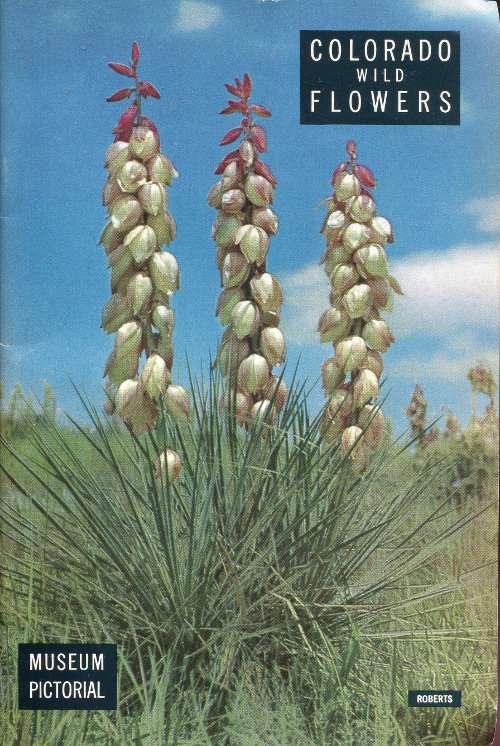
A Yucca, illustrating features which are found in several other lilies.
- perianth segment
- stigma
- anther
- style
- ovary
- pedical
- stem
- Detail of stamen
- pollen
- anther
- filament
A Buttercup. This particular one has showy sepals but no petals.
- group of styles
- sepal
- group of
- stamens
- ovary
- pedical
- single sepal
- Detail of stamen
A Penstemon. Here a calyx is present formed of 5 sepals united at their base, the petal parts are fully united into a tubular corolla terminating at its throat in 5 unequal lobes.
- lobe of corolla
- sterile stamen
- anther
- stigma
- style
- sepal
- ovary
- calyx
- pedicel
- Details
- beard
- filament
- anther
- filament
A Composite flower head, made up of numerous complete and separate flowers, enclosed at their bases in an involucre made up of many overlapping bracts.
- (right half cut away and all other florets removed)
- bracts of involucre
- tubular floret
- receptacle
- ray floret
- stigma
- style
- stamen
- corolla tube
- ovary
- receptacle
PLANT PARTS
This sort of inflorescence is known as a raceme. Larkspurs and many other plants arrange their flowers in this way.
- pedicel
- stem
When the flowers are clustered at ends of radiating pedicels as shown here the inflorescence is an umbel. All the parsleys follow this general pattern.
- pedicel
- bract
- scape
Onions and some other lilies grow in this pattern.
- stem
- bulb
Many plants, including penstemons, grow this way.
- stem
- root crown or caudex
Prickly Poppy has this sort of root and stem system.
- main stem
- tap root
- root
Shooting Star grows this way.
- scape
LEAF FORMS
Simple
- linear
- lanceolate
- ovate
- cordate
Compound
- pinnate
- pinnately
- cleft
- bipinnate
- palmate
Leaf Arrangements
- opposite
- alternate
- whorls
Attachment Parts
- stem
- petiole
- stipule
BOOKS DEALING WITH COLORADO WILDFLOWERS
- Field Book of Western Wild Flowers—Margaret Armstrong
- C. P. Putnam’s Sons, N. Y., 1915
- Plants of Rocky Mountain National Park—Ruth E. Ashton
- Government Printing Office, 1933
- Revised edition under same title—Ruth Ashton Nelson in press, 1953
- Colorado Cacti—Chas. H. Boissevain and Carol Davidson
- Abbey Garden Press, San Marino, 1940
- Rocky Mountain Flowers—Frederic E. and Edith S. Clements
- H. W. Wilson Co., N. Y., 1920
- New Manual of Botany of the Central Rocky Mountains—John
- Coulter and Aven Nelson
- American Book Co., Chicago, 1909
- Manual of the Plants of Colorado—H. D. Harrington
- Sage Press, Ft. Collins, Colorado—in press, 1953
- American Wild Flowers—Harold N. Moldenke
- D. Van Nostrand Company, Inc., N. Y., 1949
- Meet the Natives—M. Walter Pesman
- Denver, Colorado, 1943
- Flora of Colorado—P. A. Rydberg
- Ft. Collins, Colorado, 1906
- Flora of Rocky Mountains and Adjacent Plains—P. A. Rydberg
- New York, 1917
- The Flora of Boulder County, Colorado—William A. Weber
- University of Colorado Museum
OTHER MUSEUM PICTORIALS
1. Nature Photography with Miniature Cameras—Alfred M. Bailey
2. The Story of Pueblo Pottery—H. M. Wormington and Arminta Neal
3. Stepping Stones Across the Pacific—Alfred M. Bailey and Robert J. Niedrach
4. Fossil Mammals—Harvey C. Markman
5. Nature Photography with High-Speed Flash—Walker Van Riper, Robert J. Niedrach and Alfred M. Bailey
6. Laysan and Black-footed Albatrosses—Alfred M. Bailey
7. The Hawaiian Monk Seal—Alfred M. Bailey
INDEX
A B C D E F G H I J K L M N O P Q R S T U V W X Y Z
- A
- Page
- Abronia fragrans 14
- Alpine forget-me-not 46
- Alpine sunflower 55
- Anemone globosa 20
- Aquilegia coerulea 24
- Argemone intermedia 25
- Asclepias speciosa 43
- C
- Cactus 35-36
- Calochortus gunnisonii 11
- Castilleja integra 49
- Cattail Back Cover
- Chimaphila umbellata 39
- Chrysothamnus nauseosus 52
- Cirsium undulatum 56
- Claytonia lanceolata 17
- Columbine 24
- Cypripedium calceolus 13
- E
- Easter daisy 53
- Echinocereus triglochidiatus 35
- Epilobium angustifolium 38
- Erigeron speciosus 54
- Eriogonum umbellatum 15
- Eritrichium elongatum 46
- Erysimum asperum 26
- Erythronium grandiflorum 12
- Evening primrose 37
- G
- Gaillardia aristata 51
- Gentiana elegans 42
- Gilia aggregata 48
- Glacier lily 12
- Globe anemone 20
- Globe flower 23
- Golden banner 33
- H
- Hymenoxys grandiflora 55
- L
- Lady’s slipper 13
- Lambert’s loco 32
- Larkspur 21
- Lathyrus stipulaceus 30
- Leucocrinum montanum 9
- Lilium umbellatum 10
- Loco 32
- N
- Nelson’s larkspur 21
- P
- Paintbrush 49
- Pasque flower 19
- Penstemon unilateralis 50
- Phacelia sericea 45
- Pipsissewa 39
- Polemonium viscosum 47
- Potentilla fruticosa 29
- Prairie pea 30
- Prairie snowball 14
- Prickly pear 36
- Prickly poppy 25
- Primula parryi 40
- Pulsatilla ludoviciana 19
- Purple fringe 45
- Q
- Queen’s crown 28
- S
- Sand begonia 16
- Sand lily 9
- Saxifraga rhomboidea 27
- Scarlet gilia 48
- Sedum rhodanthum 28
- Shooting star 41
- Showy fleabane 54
- Silene acaulis 18
- Sky pilot 47
- Snowball saxifrage 27
- Snow buttercup 22
- Spanish bayonet front cover
- Spring beauty 17
- Stickweed 34
- Strawberry cactus 35
- Sulphur flower 15
- T
- Thermopsis divaricarpa 33
- Thistle 56
- Townsendia sericea 53
- Trifolium nanum 31
- Trollius laxus 23
- Typha latifolia Back Cover
- Y
- Yellow evening primrose 37
- Yellow lady’s slipper 13
- Yucca glauca front cover
Cattail Family
Cattail, Typha latifolia, L.
The flower spike forms the top 6 to 10 inches of a stiff rush-like stem which rises from a sheath of long, narrow, flat leaves to a total height of about 4 feet, the leaves rising slightly higher than the stem. The top 3 or 4 inches of the flower spike is composed of numerous male flowers producing only pollen and early dropping off to leave a bare, rather sharp, stem tip; the lower 4 or 5 inches of the flower spike is composed of thousands of female flowers packed so tightly together as to give the appearance of a smooth, rich-brown cylinder, more than an inch in diameter, which finally breaks up into fluffy seeds. Forms solid colonies in marshy places in plains, foothills and lower montane zones. Blooms first appear about July, and become mature in September-October.
The Museum
Transcriber’s Notes
- Silently corrected a few typos.
- Retained publication information from the printed edition: this eBook is public-domain in the country of publication.
- In the text versions only, text in italics is delimited by _underscores_.