
About This Book
The book examines mechanisms and consequences of financial corruption worldwide, surveying slush funds, money laundering, informal transfer systems like Hawala, and frauds in post-Communist states; it analyzes high-profile cases such as missing central-bank reserves and corporate scandals, outlines typologies of financial scandals and shadow banking, and discusses methods used by states, banks, and criminal networks to hide and move illicit assets; chapters explore maritime piracy, offshore vehicles, and the roles of intelligence services and political patronage, combining case studies, investigative reporting, and policy-oriented reflections on transparency, accountability, and regulatory challenges.
About the Author

More Books by This Author
6 picks
 Abuse, Torture, and Trauma and their Consequences and Effects
by Samuel Vaknin
Abuse, Torture, and Trauma and their Consequences and Effects
by Samuel Vaknin
 After the Rain : how the West lost the East
by Samuel Vaknin
After the Rain : how the West lost the East
by Samuel Vaknin
 Capitalistic Musings
by Samuel Vaknin
Capitalistic Musings
by Samuel Vaknin
 Cyclopedia of Economics
by Samuel Vaknin
Cyclopedia of Economics
by Samuel Vaknin
 Cyclopedia of Philosophy
by Samuel Vaknin
Cyclopedia of Philosophy
by Samuel Vaknin
 Essays on God and Freud
by Samuel Vaknin
Essays on God and Freud
by Samuel Vaknin
You May Also Like
6 picks
 "'Tis Sixty Years Since" / Address of Charles Francis Adams; Founders' Day, January 16, 1913
by Charles Francis Adams
"'Tis Sixty Years Since" / Address of Charles Francis Adams; Founders' Day, January 16, 1913
by Charles Francis Adams
 "1683-1920" / The Fourteen Points and What Became of Them—Foreign Propaganda in the Public Schools—Rewriting the History of the United States—The Espionage Act and How It Worked—"Illegal and Indefensible Blockade" of the Central Powers—1,000,000 Victims of Starvation—Our Debt to France and to Germany—The War Vote in Congress—Truth About the Belgian Atrocities—Our Treaty with Germany and How Observed—The Alien Property Custodianship—Secret Will of Cecil Rhodes—Racial Strains in American Life—Germantown Settlement of 1683 and a Thousand Other Topics
by Frederick Franklin Schrader
"1683-1920" / The Fourteen Points and What Became of Them—Foreign Propaganda in the Public Schools—Rewriting the History of the United States—The Espionage Act and How It Worked—"Illegal and Indefensible Blockade" of the Central Powers—1,000,000 Victims of Starvation—Our Debt to France and to Germany—The War Vote in Congress—Truth About the Belgian Atrocities—Our Treaty with Germany and How Observed—The Alien Property Custodianship—Secret Will of Cecil Rhodes—Racial Strains in American Life—Germantown Settlement of 1683 and a Thousand Other Topics
by Frederick Franklin Schrader
 "1812"
by Vasilïĭ Vasilʹevich Vereshchagin
"1812"
by Vasilïĭ Vasilʹevich Vereshchagin
 "Barbarous Soviet Russia"
by Isaac McBride
"Barbarous Soviet Russia"
by Isaac McBride
 "Brother Bosch", an Airman's Escape from Germany
by Gerald Featherstone Knight
"Brother Bosch", an Airman's Escape from Germany
by Gerald Featherstone Knight
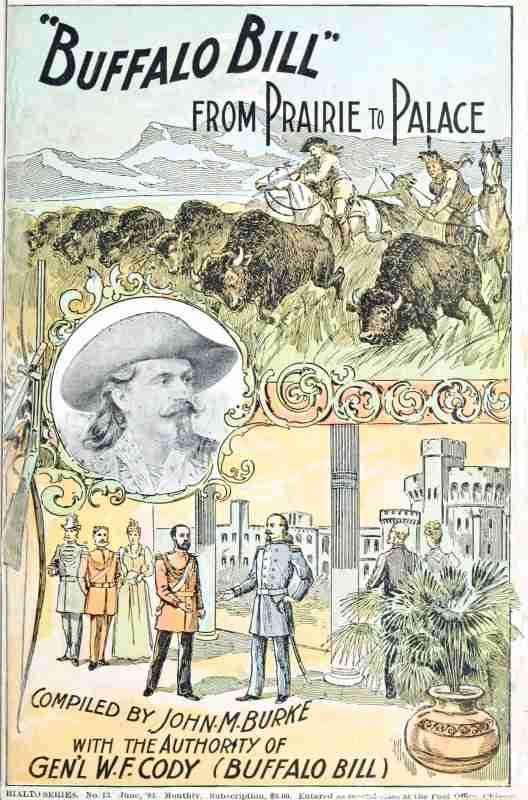 "Buffalo Bill" from Prairie to Palace: An Authentic History of the Wild West
by John M. Burke
"Buffalo Bill" from Prairie to Palace: An Authentic History of the Wild West
by John M. Burke