
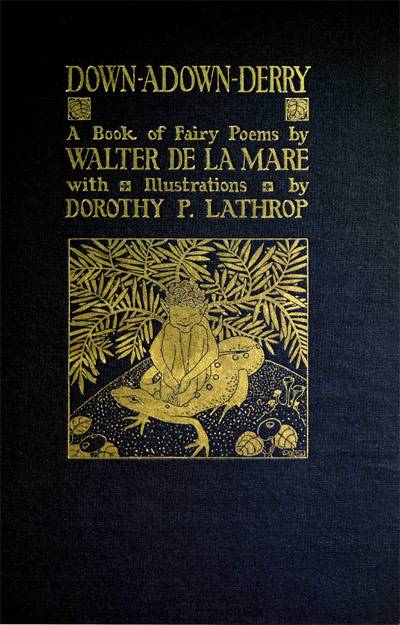
From his cradle in the glamourie
They have stolen my wee brother,
Roused a changeling in his swaddlings
For to fret mine own poor mother.
Pules it in the candle light
Wi' a cheek so lean and white,
Chinkling up its eyne so wee,
Wailing shrill at her an' me.
It we'll neither rock nor tend
Till the Silent Silent send,
Lapping in their waesome arms
Him they stole with spells and charms,
Till they take this changeling creature
Back to its own fairy nature—
Cry! Cry! as long as may be,
Ye shall ne'er be woman's baby!
They have stolen my wee brother,
Roused a changeling in his swaddlings
For to fret mine own poor mother.
Pules it in the candle light
Wi' a cheek so lean and white,
Chinkling up its eyne so wee,
Wailing shrill at her an' me.
It we'll neither rock nor tend
Till the Silent Silent send,
Lapping in their waesome arms
Him they stole with spells and charms,
Till they take this changeling creature
Back to its own fairy nature—
Cry! Cry! as long as may be,
Ye shall ne'er be woman's baby!
THE CHANGELING
"Ahoy, and ahoy!"
'Twixt mocking and merry—
"Ahoy and ahoy, there,
Young man of the ferry!"
She stood on the steps
In the watery gloom—
That Changeling—"Ahoy, there!"
She called him to come.
He came on the green wave,
He came on the grey,
Where stooped that sweet lady
That still summer's day.
He fell in a dream
Of her beautiful face,
As she sat on the thwart
And smiled in her place.
No echo his oar woke,
Float silent did they,
Past low-grazing cattle
In the sweet of the hay.
And still in a dream
At her beauty sat he,
Drifting stern foremost
Down—down to the sea.
Come you, then: call,
When the twilight apace
Brings shadow to brood
On the loveliest face;
You shall hear o'er the water
Ring faint in the grey—
"Ahoy, and ahoy, there!"
And tremble away;
"Ahoy, and ahoy!..."
And tremble away.
'Twixt mocking and merry—
"Ahoy and ahoy, there,
Young man of the ferry!"
She stood on the steps
In the watery gloom—
That Changeling—"Ahoy, there!"
She called him to come.
He came on the green wave,
He came on the grey,
Where stooped that sweet lady
That still summer's day.
He fell in a dream
Of her beautiful face,
As she sat on the thwart
And smiled in her place.
No echo his oar woke,
Float silent did they,
Past low-grazing cattle
In the sweet of the hay.
And still in a dream
At her beauty sat he,
Drifting stern foremost
Down—down to the sea.
Come you, then: call,
When the twilight apace
Brings shadow to brood
On the loveliest face;
You shall hear o'er the water
Ring faint in the grey—
"Ahoy, and ahoy, there!"
And tremble away;
"Ahoy, and ahoy!..."
And tremble away.
LOB LIE BY THE FIRE
And he warms his great hands,
Hanging loose from each knee.
And he whistles as soft
As the night wind at sea.
Hanging loose from each knee.
And he whistles as soft
As the night wind at sea.
For his work now is done;
All the water is sweet;
He has turned each brown loaf,
And breathed magic on it.
All the water is sweet;
He has turned each brown loaf,
And breathed magic on it.
The milk in the pan,
And the bacon on beam
He has "spelled" with his thumb,
And bewitched has the dream.
And the bacon on beam
He has "spelled" with his thumb,
And bewitched has the dream.
Not a mouse, not a moth,
Not a spider but sat,
And quaked as it wondered
What next he'd be at.
Not a spider but sat,
And quaked as it wondered
What next he'd be at.
But his heart, O, his heart—
It belies his great nose;
And at gleam of his eye
Not a soul would suppose
It belies his great nose;
And at gleam of his eye
Not a soul would suppose
He had stooped with great thumbs,
And big thatched head,
To tuck his small mistress
More snugly in bed.
And big thatched head,
To tuck his small mistress
More snugly in bed.
Who would think, now, a throat
So lank and so thin
Might make birds seem to warble
In the dream she is in!
So lank and so thin
Might make birds seem to warble
In the dream she is in!
Now hunched by the fire,
While the embers burn low,
He nods until daybreak,
And at daybreak he'll go.
While the embers burn low,
He nods until daybreak,
And at daybreak he'll go.
Soon the first cock will 'light
From his perch and point high
His beak at the Ploughboy
Grown pale in the sky;
From his perch and point high
His beak at the Ploughboy
Grown pale in the sky;
And crow will he shrill;
Then, meek as a mouse,
Lob will rouse up and shuffle
Straight out of the house.
Then, meek as a mouse,
Lob will rouse up and shuffle
Straight out of the house.
His supper for breakfast;
For wages his work;
And to warm his great hands
Just an hour in the mirk.
For wages his work;
And to warm his great hands
Just an hour in the mirk.
BLUEBELLS
Where the bluebells and the wind are,
Fairies in a ring I spied,
And I heard a little linnet
Singing near beside.
Fairies in a ring I spied,
And I heard a little linnet
Singing near beside.
Where the primrose and the dew are—
Soon were sped the fairies all:
Only now the green turf freshens,
And the linnets call.
Soon were sped the fairies all:
Only now the green turf freshens,
And the linnets call.
THE HONEY ROBBERS
There were two Fairies, Gimmul and Mel,
Loved Earth Man's honey passing well;
Oft at the hives of his tame bees
They would their sugary thirst appease.
When even began to darken to night,
They would hie along in the fading light,
With elf-locked hair and scarlet lips,
And small stone knives to slit the skeps,
So softly not a bee inside
Should hear the woven straw divide.
And then with sly and greedy thumbs
Would rifle the sweet honeycombs.
And drowsily drone to drone would say,
"A cold, cold wind blows in this way";
And the great Queen would turn her head
From face to face, astonishèd,
And, though her maids with comb and brush
Would comb and soothe and whisper, "Hush!"
About the hive would shrilly go
A keening—keening, to and fro;
At which those robbers 'neath the trees
Would taunt and mock the honey-bees,
And through their sticky teeth would buzz
Just as an angry hornet does.
And when this Gimmul and this Mel
Had munched and sucked and swilled their fill,
Or ever Man's first cock could crow
Back to their Faërie Mounds they'd go.
Edging across the twilight air,
Thieves of a guise remotely fair.
Loved Earth Man's honey passing well;
Oft at the hives of his tame bees
They would their sugary thirst appease.
When even began to darken to night,
They would hie along in the fading light,
With elf-locked hair and scarlet lips,
And small stone knives to slit the skeps,
So softly not a bee inside
Should hear the woven straw divide.
And then with sly and greedy thumbs
Would rifle the sweet honeycombs.
And drowsily drone to drone would say,
"A cold, cold wind blows in this way";
And the great Queen would turn her head
From face to face, astonishèd,
And, though her maids with comb and brush
Would comb and soothe and whisper, "Hush!"
About the hive would shrilly go
A keening—keening, to and fro;
At which those robbers 'neath the trees
Would taunt and mock the honey-bees,
And through their sticky teeth would buzz
Just as an angry hornet does.
And when this Gimmul and this Mel
Had munched and sucked and swilled their fill,
Or ever Man's first cock could crow
Back to their Faërie Mounds they'd go.
Edging across the twilight air,
Thieves of a guise remotely fair.
BERRIES
There was an old woman
Went blackberry picking
Along the hedges
From Weep to Wicking.
Half a pottle—
No more she had got,
When out steps a Fairy
From her green grot;
And says, "Well, Jill,
Would 'ee pick 'ee mo?"
And Jill, she curtseys,
And looks just so.
"Be off," says the Fairy,
"As quick as you can,
Over the meadows
To the little green lane,
That dips to the hayfields
Of Farmer Grimes:
I've berried those hedges
A score of times;
Bushel on bushel
I'll promise 'ee, Jill,
This side of supper
If 'ee pick with a will."
She glints very bright,
And speaks her fair;
Then lo, and behold!
She has faded in air.
Went blackberry picking
Along the hedges
From Weep to Wicking.
Half a pottle—
No more she had got,
When out steps a Fairy
From her green grot;
And says, "Well, Jill,
Would 'ee pick 'ee mo?"
And Jill, she curtseys,
And looks just so.
"Be off," says the Fairy,
"As quick as you can,
Over the meadows
To the little green lane,
That dips to the hayfields
Of Farmer Grimes:
I've berried those hedges
A score of times;
Bushel on bushel
I'll promise 'ee, Jill,
This side of supper
If 'ee pick with a will."
She glints very bright,
And speaks her fair;
Then lo, and behold!
She has faded in air.
Be sure old Goodie
She trots betimes
Over the meadows
To Farmer Grimes.
And never was queen
With jewellry rich
As those same hedges
From twig to ditch;
Like Dutchmen's coffers,
Fruit, thorn, and flower—
They shone like William
And Mary's bower.
And be sure Old Goodie
Went back to Weep,
So tired with her basket
She scarce could creep.
When she comes in the dusk
To her cottage door,
There's Towser wagging
As never before,
To see his Missus
So glad to be
Come from her fruit-picking
Back to he.
As soon as next morning
Dawn was grey,
The pot on the hob
Was simmering away;
And all in a stew
And a hugger-mugger
Towser and Jill
A-boiling of sugar,
And the dark clear fruit
That from Faërie came,
For syrup and jelly
And blackberry jam.
She trots betimes
Over the meadows
To Farmer Grimes.
And never was queen
With jewellry rich
As those same hedges
From twig to ditch;
Like Dutchmen's coffers,
Fruit, thorn, and flower—
They shone like William
And Mary's bower.
And be sure Old Goodie
Went back to Weep,
So tired with her basket
She scarce could creep.
When she comes in the dusk
To her cottage door,
There's Towser wagging
As never before,
To see his Missus
So glad to be
Come from her fruit-picking
Back to he.
As soon as next morning
Dawn was grey,
The pot on the hob
Was simmering away;
And all in a stew
And a hugger-mugger
Towser and Jill
A-boiling of sugar,
And the dark clear fruit
That from Faërie came,
For syrup and jelly
And blackberry jam.
Twelve jolly gallipots
Jill put by;
And one little teeny one,
One inch high;
And that she's hidden
A good thumb deep,
Half way over
From Wicking to Weep.
Jill put by;
And one little teeny one,
One inch high;
And that she's hidden
A good thumb deep,
Half way over
From Wicking to Weep.
HAPPY, HAPPY IT IS TO BE
"Happy, happy it is to be
Where the greenwood hangs o'er the dark blue sea;
To roam in the moonbeams clear and still
And dance with the elves
Over dale and hill;
To taste their cups, and with them roam
The field for dewdrops and honeycomb.
Climb then, and come, as quick as you can,
And dwell with the fairies, Elizabeth Ann!
Where the greenwood hangs o'er the dark blue sea;
To roam in the moonbeams clear and still
And dance with the elves
Over dale and hill;
To taste their cups, and with them roam
The field for dewdrops and honeycomb.
Climb then, and come, as quick as you can,
And dwell with the fairies, Elizabeth Ann!
"Never, never, comes tear or sorrow,
In the mansions old where the fairies dwell;
But only the harping of their sweet harp-strings,
And the lonesome stroke of a distant bell,
Where upon hills of thyme and heather,
The shepherd sits with his wandering sheep;
And the curlew wails, and the skylark hovers
Over the sand where the conies creep;
Climb then, and come, as quick as you can,
And dwell with the fairies, Elizabeth Ann!"
In the mansions old where the fairies dwell;
But only the harping of their sweet harp-strings,
And the lonesome stroke of a distant bell,
Where upon hills of thyme and heather,
The shepherd sits with his wandering sheep;
And the curlew wails, and the skylark hovers
Over the sand where the conies creep;
Climb then, and come, as quick as you can,
And dwell with the fairies, Elizabeth Ann!"
THE MIDDEN'S SONG
"Bubble, Bubble,
Swim to see
Oh, how beautiful
I be.
Swim to see
Oh, how beautiful
I be.
"Fishes, Fishes,
Finned and fine,
What's your gold
Compared with mine?
Finned and fine,
What's your gold
Compared with mine?
"Why, then, has
Wise Tishnar made
One so lovely,
Yet so sad?
Wise Tishnar made
One so lovely,
Yet so sad?
"Lone am I,
And can but make
A little song,
For singing's sake."
And can but make
A little song,
For singing's sake."
ALL BUT BLIND
All but blind
In his chambered hole
Gropes for worms
The four-clawed Mole.
In his chambered hole
Gropes for worms
The four-clawed Mole.
All but blind
In the evening sky
The hooded Bat
Twirls softly by.
In the evening sky
The hooded Bat
Twirls softly by.
All but blind
In the burning day
The Barn-Owl blunders
On her way.
In the burning day
The Barn-Owl blunders
On her way.
And blind as are
These three to me,
So, blind to Some-one
I must be.
These three to me,
So, blind to Some-one
I must be.
THE MOCKING FAIRY
"Won't you look out of your window, Mrs. Gill?"
Quoth the Fairy, nidding, nodding in the garden;
"Can't you look out of your window, Mrs. Gill?"
Quoth the Fairy, laughing softly in the garden;
But the air was still, the cherry boughs were still,
And the ivy-tod 'neath the empty sill,
And never from her window looked out Mrs. Gill
On the Fairy shrilly mocking in the garden.
Quoth the Fairy, nidding, nodding in the garden;
"Can't you look out of your window, Mrs. Gill?"
Quoth the Fairy, laughing softly in the garden;
But the air was still, the cherry boughs were still,
And the ivy-tod 'neath the empty sill,
And never from her window looked out Mrs. Gill
On the Fairy shrilly mocking in the garden.
"What have they done with you, you poor Mrs. Gill?"
Quoth the Fairy, brightly glancing in the garden;
"Where have they hidden you, you poor old Mrs. Gill?"
Quoth the Fairy dancing lightly in the garden;
But night's faint veil now wrapped the hill,
Stark 'neath the stars stood the dead-still Mill,
And out of her cold cottage never answered Mrs. Gill
The Fairy mimbling mambling in the garden.
Quoth the Fairy, brightly glancing in the garden;
"Where have they hidden you, you poor old Mrs. Gill?"
Quoth the Fairy dancing lightly in the garden;
But night's faint veil now wrapped the hill,
Stark 'neath the stars stood the dead-still Mill,
And out of her cold cottage never answered Mrs. Gill
The Fairy mimbling mambling in the garden.
DOWN-ADOWN-DERRY
Down-adown-derry,
Sweet Annie Maroon,
Gathering daisies
In the meadows of Doone,
Hears a shrill piping,
Elflike and free,
Where the waters go brawling
In rills to the sea;
Singing down-adown-derry.
Sweet Annie Maroon,
Gathering daisies
In the meadows of Doone,
Hears a shrill piping,
Elflike and free,
Where the waters go brawling
In rills to the sea;
Singing down-adown-derry.
Down-adown-derry,
Sweet Annie Maroon,
Through the green grasses
Peeps softly; and soon
Spies under green willows
A fairy whose song
Like the smallest of bubbles
Floats bobbing along;
Singing down-adown-derry.
Sweet Annie Maroon,
Through the green grasses
Peeps softly; and soon
Spies under green willows
A fairy whose song
Like the smallest of bubbles
Floats bobbing along;
Singing down-adown-derry.
Down-adown-derry,
Her cheeks were like wine,
Her eyes in her wee face
Like water-sparks shine,
Her niminy fingers
Her sleek tresses preen,
The which in the combing
She peeps out between;
Singing down-adown-derry.
Her cheeks were like wine,
Her eyes in her wee face
Like water-sparks shine,
Her niminy fingers
Her sleek tresses preen,
The which in the combing
She peeps out between;
Singing down-adown-derry.
Down-adown-derry,
Shrill, shrill was her tune:—
"Come to my water-house,
Annie Maroon:
Come in your dimity,
Ribbon on head,
To wear siller seaweed
And coral instead";
Singing down-adown-derry.
Shrill, shrill was her tune:—
"Come to my water-house,
Annie Maroon:
Come in your dimity,
Ribbon on head,
To wear siller seaweed
And coral instead";
Singing down-adown-derry.
"Down-adown-derry,
Lean fish of the sea,
Bring lanthorns for feasting
The gay Faërie;
'Tis sand for the dancing,
A music all sweet
In the water-green gloaming
For thistledown feet";
Singing down-adown-derry.
Lean fish of the sea,
Bring lanthorns for feasting
The gay Faërie;
'Tis sand for the dancing,
A music all sweet
In the water-green gloaming
For thistledown feet";
Singing down-adown-derry.
Down-adown-derry,
Sweet Annie Maroon
Looked large on the fairy
Curled wan as the moon
And all the grey ripples
To the Mill racing by,
With harps and with timbrels
Did ringing reply;
Singing down-adown-derry.
Sweet Annie Maroon
Looked large on the fairy
Curled wan as the moon
And all the grey ripples
To the Mill racing by,
With harps and with timbrels
Did ringing reply;
Singing down-adown-derry.
"Down-adown-derry,"
Sang the Fairy of Doone,
Piercing the heart
Of Sweet Annie Maroon;
And lo! when like roses
The clouds of the sun
Faded at dusk, gone
Was Annie Maroon;
Singing down-adown-derry.
Sang the Fairy of Doone,
Piercing the heart
Of Sweet Annie Maroon;
And lo! when like roses
The clouds of the sun
Faded at dusk, gone
Was Annie Maroon;
Singing down-adown-derry.
Down-adown-derry,
The daisies are few;
Frost twinkles powdery
In haunts of the dew;
And only the robin
Perched on a thorn,
Can comfort the heart
Of a father forlorn;
Singing down-adown-derry.
The daisies are few;
Frost twinkles powdery
In haunts of the dew;
And only the robin
Perched on a thorn,
Can comfort the heart
Of a father forlorn;
Singing down-adown-derry.
WITCHES AND WITCHCRAFT
THE HARE
In the black furrow of a field
I saw an old witch-hare this night;
And she cocked a lissome ear,
And she eyed the moon so bright,
And she nibbled of the green;
And I whispered "Wh-s-st! witch-hare,"
Away like a ghostie o'er the field
She fled, and left the moonlight there.
I saw an old witch-hare this night;
And she cocked a lissome ear,
And she eyed the moon so bright,
And she nibbled of the green;
And I whispered "Wh-s-st! witch-hare,"
Away like a ghostie o'er the field
She fled, and left the moonlight there.
I SAW THREE WITCHES
I saw three witches
That bowed down like barley,
And straddled their brooms 'neath a louring sky,
And, mounting a storm-cloud,
Aloft on its margin,
Stood black in the silver as up they did fly.
That bowed down like barley,
And straddled their brooms 'neath a louring sky,
And, mounting a storm-cloud,
Aloft on its margin,
Stood black in the silver as up they did fly.
I saw three witches
That mocked the poor sparrows
They carried in cages of wicker along,
Till a hawk from his eyrie
Swooped down like an arrow,
Smote on the cages, and ended their song.
That mocked the poor sparrows
They carried in cages of wicker along,
Till a hawk from his eyrie
Swooped down like an arrow,
Smote on the cages, and ended their song.
I saw three witches
That sailed in a shallop,
All turning their heads with a snickering smile,
Till a bank of green osiers
Concealed their grim faces,
Though I heard them lamenting for many a mile.
That sailed in a shallop,
All turning their heads with a snickering smile,
Till a bank of green osiers
Concealed their grim faces,
Though I heard them lamenting for many a mile.
I saw three witches
Asleep in a valley,
Their heads in a row, like stones in a flood,
Till the moon, creeping upward,
Looked white through the valley,
And turned them to bushes in bright scarlet bud.
Asleep in a valley,
Their heads in a row, like stones in a flood,
Till the moon, creeping upward,
Looked white through the valley,
And turned them to bushes in bright scarlet bud.
THE ISLE OF LONE
Three dwarfs there were which lived in an isle,
And the name of that Isle was Lone,
And the names of the dwarfs were Alliolyle,
Lallerie, Muziomone.
And the name of that Isle was Lone,
And the names of the dwarfs were Alliolyle,
Lallerie, Muziomone.
Alliolyle was green of een,
Lallerie light of locks,
Muziomone was mild of mien,
As ewes in April flocks.
Lallerie light of locks,
Muziomone was mild of mien,
As ewes in April flocks.
Their house was small and sweet of the sea,
And pale as the Malmsey wine;
Their bowls were three, and their beds were three,
And their nightcaps white were nine.
And pale as the Malmsey wine;
Their bowls were three, and their beds were three,
And their nightcaps white were nine.
Their beds they were made of the holly-wood,
Their combs of the tortoise's shell,
Three basins of silver in corners there stood,
And three little ewers as well.
Their combs of the tortoise's shell,
Three basins of silver in corners there stood,
And three little ewers as well.
Green rushes, green rushes lay thick on the floor,
For light beamed a gobbet of wax;
There were three wooden stools for whatever they wore
On their humpity-dumpity backs.
For light beamed a gobbet of wax;
There were three wooden stools for whatever they wore
On their humpity-dumpity backs.
So each would lie on a drowsy pillow
And watch the moon in the sky—
And hear the parrot scream to the billow,
The billow roar reply:
And watch the moon in the sky—
And hear the parrot scream to the billow,
The billow roar reply:
Parrots of sapphire and sulphur and amber,
Scarlet, and flame, and green,
While five-foot apes did scramble and clamber,
In the feathery-tufted treen.
Scarlet, and flame, and green,
While five-foot apes did scramble and clamber,
In the feathery-tufted treen.
All night long with bubbles a-glisten
The ocean cried under the moon,
Till ape and parrot, too sleepy to listen,
To sleep and slumber were gone.
The ocean cried under the moon,
Till ape and parrot, too sleepy to listen,
To sleep and slumber were gone.
Then from three small beds the dark hours' while
In a house in the Island of Lone
Rose the snoring of Lallerie, Alliolyle,
The snoring of Muziomone.
In a house in the Island of Lone
Rose the snoring of Lallerie, Alliolyle,
The snoring of Muziomone.
But soon as ever came peep of sun
On coral and feathery tree,
Three nightcapped dwarfs to the surf would run
And soon were a-bob in the sea.
On coral and feathery tree,
Three nightcapped dwarfs to the surf would run
And soon were a-bob in the sea.
At six they went fishing, at nine they snared
Young foxes in the dells,
At noon on sweet berries and honey they fared,
And blew in their twisted shells.
Young foxes in the dells,
At noon on sweet berries and honey they fared,
And blew in their twisted shells.
Dark was the sea they gambolled in,
And thick with silver fish,
Dark as green glass blown clear and thin
To be a monarch's dish.
And thick with silver fish,
Dark as green glass blown clear and thin
To be a monarch's dish.
They sate to sup in a jasmine bower,
Lit pale with flies of fire,
Their bowls the hue of the iris-flower,
And lemon their attire.
Lit pale with flies of fire,
Their bowls the hue of the iris-flower,
And lemon their attire.
Sweet wine in little cups they sipped,
And golden honeycomb
Into their bowls of cream they dipped,
Whipt light and white as foam.
And golden honeycomb
Into their bowls of cream they dipped,
Whipt light and white as foam.
Now Alliolyle, where the sand-flower blows,
Taught three old apes to sing—
Taught three old apes to dance on their toes
And caper around in a ring.
Taught three old apes to sing—
Taught three old apes to dance on their toes
And caper around in a ring.
They yelled them hoarse and they croaked them sweet,
They twirled them about and around,
To the noise of their voices they danced with their feet,
They stamped with their feet on the ground.
They twirled them about and around,
To the noise of their voices they danced with their feet,
They stamped with their feet on the ground.
But down to the shore skipped Lallerie,
His parrot on his thumb,
And the twain they scritched in mockery,
While the dancers go and come.
His parrot on his thumb,
And the twain they scritched in mockery,
While the dancers go and come.
And, alas! in the evening, rosy and still,
Light-haired Lallerie
Bitterly quarrelled with Alliolyle
By the yellow-sanded sea.
Light-haired Lallerie
Bitterly quarrelled with Alliolyle
By the yellow-sanded sea.
The rising moon swam sweet and large
Before their furious eyes,
And they rolled and rolled to the coral marge
Where the surf for ever cries.
Before their furious eyes,
And they rolled and rolled to the coral marge
Where the surf for ever cries.
Too late, too late, comes Muziomone:
Clear in the clear green sea
Alliolyle lies not alone,
But clasped with Lallerie.
Clear in the clear green sea
Alliolyle lies not alone,
But clasped with Lallerie.
He blows on his shell plaintive notes;
Ape, parraquito, bee
Flock where a shoe on the salt wave floats,—
The shoe of Lallerie.
Ape, parraquito, bee
Flock where a shoe on the salt wave floats,—
The shoe of Lallerie.
He fetches nightcaps, one and nine,
Grey apes he dowers three,
His house as fair as the Malmsey wine
Seems sad as cypress-tree.
Grey apes he dowers three,
His house as fair as the Malmsey wine
Seems sad as cypress-tree.
Three bowls he brims with sweet honeycomb
To feast the bumble bees,
Saying, "O bees, be this your home,
For grief is on the seas!"
To feast the bumble bees,
Saying, "O bees, be this your home,
For grief is on the seas!"
He sate him lone in a coral grot,
At the flowing in of the tide;
When ebbed the billow, there was not,
Save coral, aught beside.
At the flowing in of the tide;
When ebbed the billow, there was not,
Save coral, aught beside.
So hairy apes in three white beds,
And nightcaps, one and nine,
On moonlit pillows lay three heads
Bemused with dwarfish wine.
And nightcaps, one and nine,
On moonlit pillows lay three heads
Bemused with dwarfish wine.
A tomb of coral, the dirge of bee,
The grey apes' guttural groan
For Alliolyle, for Lallerie,
For thee, O Muziomone!
The grey apes' guttural groan
For Alliolyle, for Lallerie,
For thee, O Muziomone!
SUNK LYONESSE
In sea-cold Lyonesse,
When the Sabbath eve shafts down
On the roofs, walls, belfries
Of the foundered town,
The Nereids pluck their lyres
Where the green translucency beats,
And with motionless eyes at gaze
Make minstrelsy in the streets.
When the Sabbath eve shafts down
On the roofs, walls, belfries
Of the foundered town,
The Nereids pluck their lyres
Where the green translucency beats,
And with motionless eyes at gaze
Make minstrelsy in the streets.
The ocean water stirs
In salt-worn casemate and porch
Plies the blunt-snouted fish
With fire in his skull for torch.
And the ringing wires resound;
And the unearthly lovely weep,
In lament of the music they make
In the sullen courts of sleep.
In salt-worn casemate and porch
Plies the blunt-snouted fish
With fire in his skull for torch.
And the ringing wires resound;
And the unearthly lovely weep,
In lament of the music they make
In the sullen courts of sleep.
Whose marble flowers bloom for aye,
And—lapped by the moon-guiled tide—
Mock their carver with heart of stone,
Caged in his stone-ribbed side.
And—lapped by the moon-guiled tide—
Mock their carver with heart of stone,
Caged in his stone-ribbed side.
SLEEPING BEAUTY
The scent of bramble fills the air,
Amid her folded sheets she lies,
The gold of evening in her hair,
The blue of morn shut in her eyes.
Amid her folded sheets she lies,
The gold of evening in her hair,
The blue of morn shut in her eyes.
How many a changing moon hath lit
The unchanging roses of her face!
Her mirror ever broods on it
In silver stillness of the days.
The unchanging roses of her face!
Her mirror ever broods on it
In silver stillness of the days.
Oft flits the moth on filmy wings
Into his solitary lair;
Shrill evensong the cricket sings
From some still shadow in her hair.
Into his solitary lair;
Shrill evensong the cricket sings
From some still shadow in her hair.
In heat, in snow, in wind, in flood,
She sleeps in lovely loneliness,
Half-folded like an April bud
On winter-haunted trees.
She sleeps in lovely loneliness,
Half-folded like an April bud
On winter-haunted trees.
BEWITCHED
I have heard a lady this night,
Lissom and jimp and slim,
Calling me—calling me over the heather,
'Neath the beech boughs dusk and dim.
Lissom and jimp and slim,
Calling me—calling me over the heather,
'Neath the beech boughs dusk and dim.
I have followed a lady this night,
Followed her far and lone,
Fox and adder and weasel know
The ways that we have gone.
Followed her far and lone,
Fox and adder and weasel know
The ways that we have gone.
I sit at my supper 'mid honest faces,
And crumble my crust and say
Nought in the long-drawn drawl of the voices
Talking the hours away.
And crumble my crust and say
Nought in the long-drawn drawl of the voices
Talking the hours away.
I'll go to my chamber under the gable,
And the moon will lift her light
In at my lattice from over the moorland
Hollow and still and bright.
And the moon will lift her light
In at my lattice from over the moorland
Hollow and still and bright.
And I know she will shine on a lady of witchcraft,
Gladness and grief to see,
Who has taken my heart with her nimble fingers,
Calls in my dreams to me:
Gladness and grief to see,
Who has taken my heart with her nimble fingers,
Calls in my dreams to me:
Who has led me a dance by dell and dingle
My human soul to win,
Made me a changeling to my own, own mother,
A stranger to my kin.
My human soul to win,
Made me a changeling to my own, own mother,
A stranger to my kin.
THE ENCHANTED HILL
From height of noon, remote and still,
The sun shines on the empty hill.
No mist, no wind, above, below;
No living thing strays to and fro.
No bird replies to bird on high,
Cleaving the skies with echoing cry.
Like dreaming water, green and wan,
Glassing the snow of mantling swan,
Like a clear jewel encharactered
With secret symbol of line and word,
Asheen, unruffled, slumbrous, still,
The sunlight streams on the empty hill.
The sun shines on the empty hill.
No mist, no wind, above, below;
No living thing strays to and fro.
No bird replies to bird on high,
Cleaving the skies with echoing cry.
Like dreaming water, green and wan,
Glassing the snow of mantling swan,
Like a clear jewel encharactered
With secret symbol of line and word,
Asheen, unruffled, slumbrous, still,
The sunlight streams on the empty hill.
But soon as Night's dark shadows ride
Across its shrouded Eastern side,
When at her kindling, clear and full,
Star beyond star stands visible;
Then course pale phantoms, fleet-foot deer
Lap of its waters icy-clear;
Mounts the large moon, and pours her beams
On bright-fish-flashing, singing streams;
Voices re-echo; coursing by,
Horsemen, like clouds, wheel silently.
Glide then from out their pitch-black lair
Beneath the dark's ensilvered arch,
Witches becowled into the air;
And iron pine and emerald larch,
Tents of delight for ravished bird,
Are by loud music thrilled and stirred.
Winging the light, with silver feet,
Beneath their bowers of fragrance met,
In dells of rose and meadowsweet,
In mazed dance the fairies flit;
While drives his share the Ploughman high
Athwart the daisy-powdered sky:
Till far away, in thickening dew,
Piercing the Eastern shadows through
Rilling in crystal clear and still,
Light 'gins to tremble on the hill.
And like a mist on faint winds borne,
Silent, forlorn, wells up the morn.
Then the broad sun with burning beams
Steeps slope and peak and gilded streams.
Then no foot stirs; the brake shakes not;
Soundless and wet in its green grot
As if asleep, the leaf hangs limp;
The white dews drip untrembling down,
From bough to bough, orblike, unblown;
And in strange quiet, shimmering and still,
Morning enshrines the empty hill.
Across its shrouded Eastern side,
When at her kindling, clear and full,
Star beyond star stands visible;
Then course pale phantoms, fleet-foot deer
Lap of its waters icy-clear;
Mounts the large moon, and pours her beams
On bright-fish-flashing, singing streams;
Voices re-echo; coursing by,
Horsemen, like clouds, wheel silently.
Glide then from out their pitch-black lair
Beneath the dark's ensilvered arch,
Witches becowled into the air;
And iron pine and emerald larch,
Tents of delight for ravished bird,
Are by loud music thrilled and stirred.
Winging the light, with silver feet,
Beneath their bowers of fragrance met,
In dells of rose and meadowsweet,
In mazed dance the fairies flit;
While drives his share the Ploughman high
Athwart the daisy-powdered sky:
Till far away, in thickening dew,
Piercing the Eastern shadows through
Rilling in crystal clear and still,
Light 'gins to tremble on the hill.
And like a mist on faint winds borne,
Silent, forlorn, wells up the morn.
Then the broad sun with burning beams
Steeps slope and peak and gilded streams.
Then no foot stirs; the brake shakes not;
Soundless and wet in its green grot
As if asleep, the leaf hangs limp;
The white dews drip untrembling down,
From bough to bough, orblike, unblown;
And in strange quiet, shimmering and still,
Morning enshrines the empty hill.