
CHAPTER XIX
The Model’s Pay
IT was not till lessons were well off her mind that Elizabeth asked her mother’s permission to go to the studio. “Don’t stay too long,” said her mother as she gave her leave.
“I will try not,” answered Elizabeth, “but I shall have such loads to talk about that I may forget. If I am a little wee, wee bit late for supper, shall you mind very much, mother?”
“Not if the bit is very wee. I think you’d better ask Mr. Kemp to take supper with us and then there will be no danger of your being detained.”
“That will be very nice,” agreed Elizabeth, “for what we don’t finish saying we can keep on with as we walk along. Please have waffles, mother; he does like them so much and it will celebrate his coming back.”
“I will see,” returned Mrs. Hollins, and Elizabeth was satisfied. She found Mr. Kemp busy in his studio, the door of which was opened wide to let in the soft June air. The room was in a state of confusion, sketches everywhere, and all sorts of odds and ends lying about.
“Hello, Elfie,” he cried, as she appeared in the doorway. “You are just in time to see my new sketches before I put them away. I have done a lot, haven’t I?”
Elizabeth looked around. “All these?” She gave a comprehensive wave of the hand. “You surely have been busy. I have been very busy, too. Oh, Mr. Titian, I have so much to tell you that I don’t know where to begin.”
“Then suppose you go and sit over there on the model stand while I am sorting over these things, and you can reel off all the yarns you like. Your obedient servant will listen with both ears.”
Elizabeth went over and stepped up on the stand. It was a rude affair which Mr. Kemp had made himself. On it stood an antique chair, over the back of which hung some draperies. It was a very familiar seat to Elizabeth, for she had spent many an hour in it. She established herself comfortably and began to talk about the sketches, but Mr. Kemp interrupted her. “You aren’t telling me anything I don’t know,” he said. “I want your news, not comments on my work. That will keep.”
Elizabeth laughed, and launched forth upon an account of all the happenings which had taken place during the few weeks of her friend’s absence. Aunt Eunice came in for her share of comment, so did Miss Jewett’s wedding, but the paramount subject was the scholarship.
After awhile she drew a long breath. Mr. Kemp stopped in his task of stacking up canvases and said: “Well, you have had stirring times. I certainly hope you will get that scholarship, Elfie, and if there is anything I can do to help just speak the word.”
“Oh, I suppose it is all in my eternal self,” returned Elizabeth.
“Do you by any chance mean internal?” inquired Mr. Kemp, squinting up his eyes as he held off a canvas at arm’s length.
“I suppose I do mean that,” responded Elizabeth. “I am afraid that is where my rock of destruction lies. Kathie is trying to help me and make me use right words instead of wrong ones, but once in awhile I do make a slip, although I am really making a superhuman effort to speak correctly.”
Mr. Kemp laughed. “I rather prefer the incorrectness, myself,” he remarked. “It makes you a much more original young person to have your own special vocabulary.”
“But if it should interfere with my getting the scholarship,” answered Elizabeth soberly.
“Oh, then, of course we must not encourage it. I tell you what, though, Elfie; when the strain becomes too great you come down here and let off your sky-rocketty speech; in that way you will be easing yourself and entertaining me.”
“I might do that,” agreed Elizabeth, rather glad that she could relax from her watchfulness over her speech. “Mr. Kemp, are you going to the wedding?”
“Why, I don’t know. I haven’t thought much about it, to confess the truth. Are you going?”
“I don’t know yet. It is the ardent desire of my heart, and if both Betsy and Bess are there I shall feel a maiden all forlorn to be left at home. Not to have a proper gift and to be deprived of such a boon as attending the happy event is almost too much for my equaliberum.”
Mr. Kemp looked up with a merry chuckle. “It does me good to hear your old familiar manner of speech, Elfie,” he said. “Why haven’t you a proper gift for your beloved Miss Jewett?”
“Don’t cause me to enclose the state of the family finances, Mr. Titian. I haven’t anything to buy with; that is the whole truth.”
“I can sympathize with you because I have often been in that condition myself.”
“Oh, but you never need be without a beautiful present to give when you have all these fine pictures.”
“That is what I always have to fall back upon, my dear Elfie.”
“Are you going to give one to Miss Jewett?” Elizabeth made bold to ask.
“Why, I don’t know her so very well, and I really had not thought of giving her anything. I have made her acquaintance only very recently, you see, and Mr. Tyson I have met very seldom.”
“But you have known her as long, almost as long, as you have me, and I am sure we are very intimate friends,” returned Elizabeth, with the thought of how well one of the pictures would look in the new house.
“Oh, that cannot be so. Why, we have known one another for ages. I can scarcely remember the time when I didn’t know you, Elfie.”
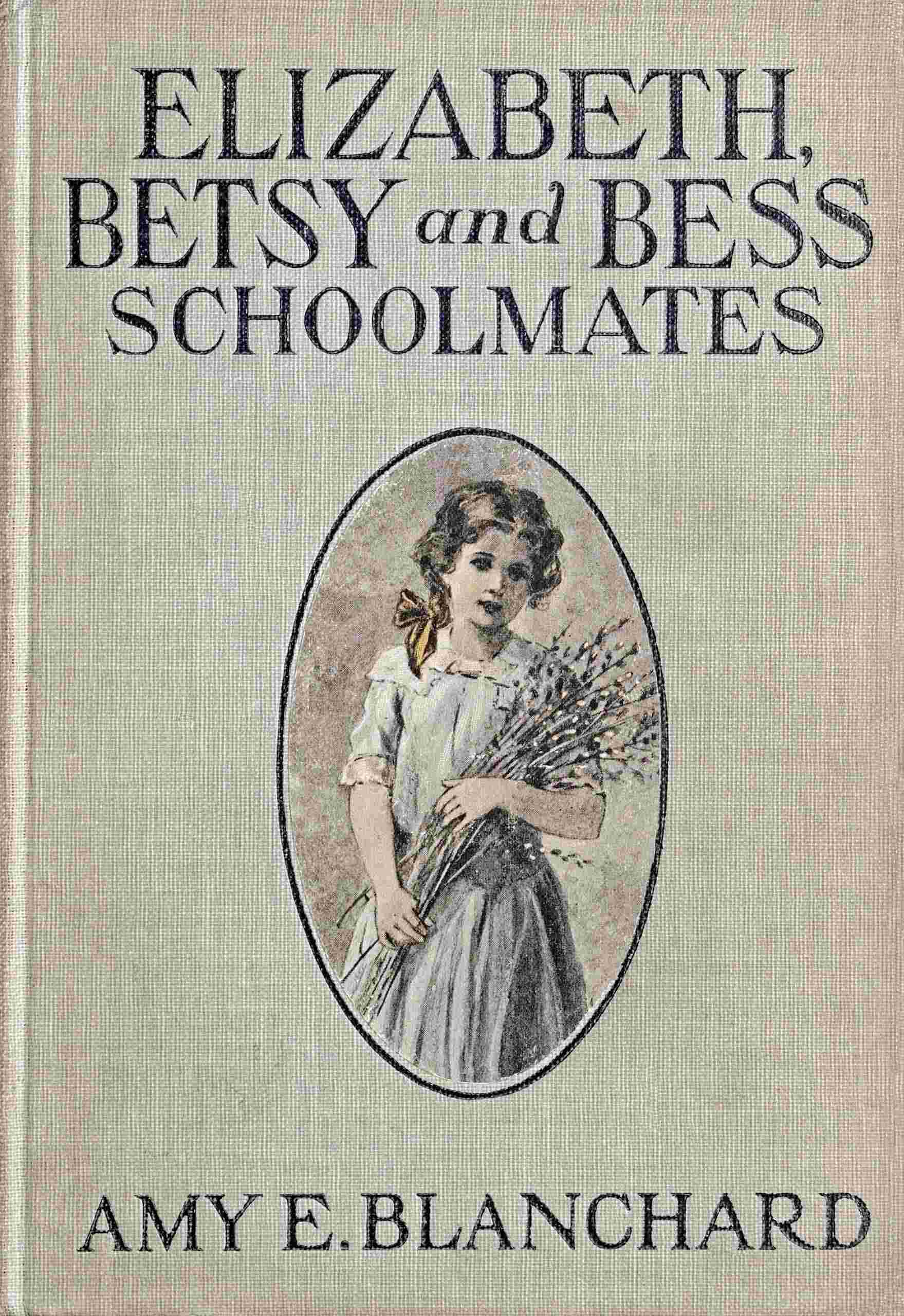
“It was that day when I was getting the pussywillows, that we met,” said Elizabeth reminiscently, “and you were painting in the field.”
Mr. Kemp turned and began to rummage behind some portfolios. Presently he brought out a canvas. “And here it is,” he said. “It is better than I thought, although I like that first real study I made of you later on. I say, Elfie, how do you think this would do for Miss Jewett’s wedding present?”
“Oh, I am sure she would love it,” cried Elizabeth, well pleased at the suggestion. “She was so delighted with the pussywillows, and kept them on her desk as long as they lasted.”
“And she wouldn’t object to the presence in the picture of the one who gathered them, you think?” Mr. Kemp looked up with a little half smile.
“Oh Mr. Titian, what a tease you are. I am sure she would not mind, and as for myself it would make me ecstatic to think that I was there and that every time she looked at the picture she would see me.”
“Then, my dear Elfie, consider the picture yours.”
“What? You don’t mean that you are going to give it to me to give to her?” Elizabeth jumped up in sheer delight.
“Why, what else?”
“I thought you meant you, yourself, were going to give it. Oh Mr. Titian, I think it is too much for you to do. I don’t think I ought to take it.”
“You don’t? Well, my dear child, let me tell you that I certainly think I owe you something for sitting for me so patiently and often. A model costs something, you know, and if you will take this in payment for sitting, why, we’ll call it quits.” He picked up the picture again and advancing toward the model stand dropped on one knee and held it out. “May it please your Majesty to accept this poor offering from you leal knight,” he said.
Elizabeth snatched up a piece of dull brocade from the chair, held it around her so that it made a trailing drapery and swept to the edge of the stand. “We are pleased to accept your offering, Sir Knight,” she said, “and you may kiss our hand.”
This ceremony accomplished, she flung aside the drapery and jumped down. “Oh Mr. Titian,” she said, “I think you are the darlingest artist man that was ever born. Do you really, really think I have earned this? It is so much, so very much nicer to feel that I have.”
“I consider that you surely have earned it,” replied Mr. Kemp. “Let us see if we can find some sort of simple frame for it. You don’t know how much better it will look in a frame.”
“Oh, but that would be too much.”
“Not a bit of it. I have worked over this a little since that first day, and I may give it one or two more touches. You can leave it here and I will see what sort of frame I can find.”
This Elizabeth was ready to do. “If I had searched the world over I couldn’t have found anything I would rather give,” she said, then asked, “Are you very sure, Mr. Titian, that you might not be able to sell it for a great deal of money and that you will not be sorry tomorrow that you gave it to me?”
“Far be it from me to have any such feeling. I have been paid for it in better coin than gold of the realm, my lady. Your gracious appreciation of my poor gift is worth more than pearls and diamonds.”
Mr. Kemp knew that this sort of talk delighted Elizabeth and that it would reassure her as ordinary language might not. She fairly bubbled over with delight as she said: “There isn’t anyone, I don’t care who, that will have anything finer to give. Who cares for silver when they can have pictures?”
“Elfie, my sweet child, you voice my ideas exactly,” Mr. Kemp assured her. “Have I any silver? Not an ounce. I bought my spoons at the Five-and-Ten-cent store and they serve me well. I enjoy my simple fare quite as much while partaking it from—shall we say near-silver, or shall we speak the truth and call it tin?—I repeat: I spurn your gold, and hug my pictures to my heart.” He suited the action to the word.
Elizabeth nodded wisely. “I think I am happier than Bess or Corinne,” she said thoughtfully, “and yet I haven’t half so much.”
“We are philosophers, Elfie. We belong to that happy class who have riches the world wots not of. But, I say, speaking of things to eat, didn’t you say something about waffles?”
“I said that I thought we might be going to have them. Is it time? It can’t be.”
Mr. Kemp consulted his watch. “It is so near that there isn’t any fun in it. I don’t want to miss anything that is coming to me. Waffles and honey, is it?”
“Oh yes, honey, of course, and maybe chicken. I am not sure.”
“Yum-yum!” exclaimed her friend. “We cannot waste another moment. Come along, Elfie.”
They went forth and reached the house just as Electra was bringing in the first plate of waffles. “I was a wee, wee bit late,” acknowledged Elizabeth, when all had welcomed back Mr. Kemp, “but if you knew, mother, what a joyous thing has happened you would not be grudging of the extra minutes.”
“Hush, hush!” warned Mr. Kemp; “wait till after supper, please, Elfie. You will spoil my appetite if you bring up embarrassing subjects.”
So Elizabeth did not tell her news till she had her mother all to herself. “Isn’t it the most joyful present that could be?” she said. “Oh mother, I am so happy about it that even if I can’t go to the wedding I shall not mind so much.”
“But you are going,” replied her mother with a smile.
“Oh mother, tell me.”
“Betsy came over awhile ago and said her uncle wanted her to say that he specially wanted you to go with Betsy as her guest, and he added that he would not feel himself really married unless you were there to see that the contract was carried out properly.”
“Isn’t that just like him?” Elizabeth laughed. “I do love Mr. Robert, although he will never get done teasing me about contracts. I love so many people, mother. Everyone is so perfectly lovely to me; I mean everyone except aunt Eunice. I am so happy, that I could even love her if she would let me.”
“Bless your heart, child, I believe you could,” replied her mother, kissing her.
“May I wear my yellow dress to the wedding?” inquired Elizabeth. “Will it be suitable, mother?”
“I was thinking of a new white one, but if you would rather wear the yellow I have no objection.”
“I think I would rather,” agreed Elizabeth. “I suppose there is no chance of my being so favored as to have a new hat,” she added wistfully.
“Why, my dear, I don’t know. I will do my best. What would you like?”
“Oh, if I could have a yellowish one with nasturtiums on it I would love it.”
“Well, dear, I cannot promise, but I will do my best. I realize that it is an important occasion, but you see there are so many things to get for Kathie’s bridesmaid dress, that I am afraid you must come out at the little end of the horn.”
“Oh well, never mind,” said Elizabeth cheerfully. “Maybe I would be too happy if I had everything I want. Could I go down and see Betsy just a little while? I want to thank her for coming up and I want to thank her for inviting me; Mr. Robert, too, I want to thank him, too, and I want to tell Betsy about the picture. I don’t see how I can wait till morning, mother.”
Her mother laughed. “I don’t see how you can either. I never saw such an excited little body. At this rate what will you be by the time all these unusual things are over?”
Elizabeth gave a long sigh. “Now you remind me of that fearsome examination. It stares me in the face like a sheeted ghost.”
“Don’t think about it, dear child. Run along to Betsy and I will let Electra stop and bring you home; she is going down into the village.”
So Elizabeth danced away to Betsy, and if their tongues did not run it was not because they had nothing to talk about.