
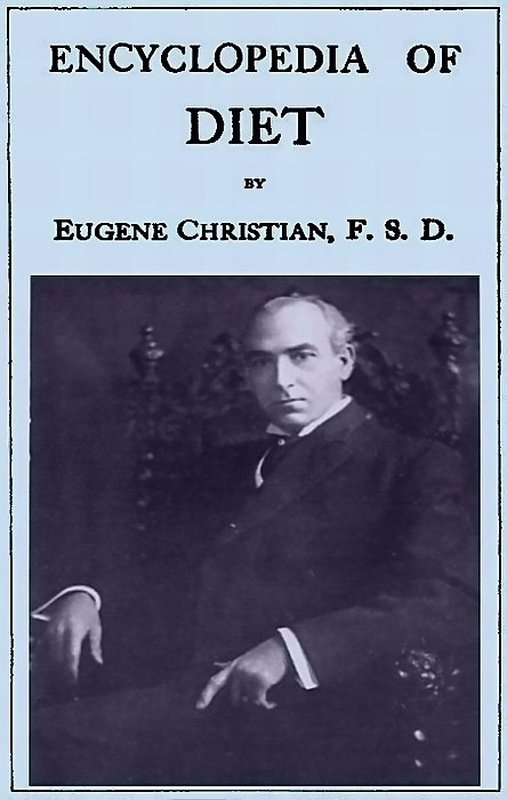
The Project Gutenberg eBook of Encyclopedia of Diet: A Treatise on the Food Question, Vol. 4
Title: Encyclopedia of Diet: A Treatise on the Food Question, Vol. 4
Author: Eugene Christian
Release date: December 19, 2014 [eBook #47701]
Most recently updated: October 24, 2024
Language: English
Credits: Produced by Jane Robins, Reiner Ruf, and the Online
Distributed Proofreading Team at http://www.pgdp.net (This
file was produced from images generously made available
by The Internet Archive)
The cover image was created by the transcriber, based on the cover image of Volume I, and is placed in the public domain.
ENCYCLOPEDIA OF DIET
ENCYCLOPEDIA OF
DIET
A Treatise on the Food Question
IN FIVE VOLUMES
Explaining, in Plain Language, the
Chemistry of Food and the Chemistry of
the Human Body, together with the Art of
Uniting these Two Branches of Science in the
Process of Eating, so as to Establish Normal
Digestion and Assimilation of Food and
Normal Elimination of Waste, thereby
Removing the Causes of Stomach,
Intestinal, and All Other
Digestive Disorders
BY
Eugene Christian, F. S. D.
Volume IV
NEW YORK
THE CHRISTIAN DIETETIC SOCIETY
1914
Copyright, 1914
BY
EUGENE CHRISTIAN
ALL RIGHTS RESERVED
Published August, 1914
CONTENTS
VOLUME IV
| Lesson XV (Continued) | Page |
| Low Vitality (continued) | 863 |
| Obesity | 870 |
| Neurasthenia | 897 |
| Malnutrition | 901 |
| Anemia | 905 |
| Locomotor Ataxia | 911 |
| Colds | 915 |
| Nasal Catarrh | 925 |
| Hay Fever | 931 |
| Asthma | 935 |
| Influenza | 939 |
| Insomnia | 940 |
| Rheumatism and Gout | 947 |
| Bright’s Dis-ease | 979 |
| Diabetes | 983 |
| Consumption | 989 |
| Dis-eases of the Skin | 1013 |
| Appendicitis | 1029 |
| Menus for the Pregnant Woman | 1033 |
| Importance of Food during Pregnancy | 1033 |
| The Nursing Mother | 1040 |
| Menus for the Nursing Mother | 1042 |
| Miscellaneous Menus: | |
| Weak Digestion | 1046 |
| Building up Nervous System | 1053 |
| For Aged Person | 1061 |
| Strength and Endurance | 1069 |
| Malassimilation and Autointoxication | 1074 |
| No appetite | 1081 |
| Athletic Diet | 1088 |
| For Invalid Child | 1098 |
| For Mental Worker | 1106 |
| For School Teacher | 1115 |
| For Laboring Man | 1122 |
| For Cold Weather | 1133 |
| For Hot Weather | 1134 |
| To Build Up Sexual Vitality | 1138 |
LESSON XV
CURATIVE
AND
REMEDIAL MENUS
CONCLUDED
Low Vitality (continued)
Take a cool sponge or a shower bath, a few minutes’ vigorous exercise, and a cup of hot water just after rising.
BREAKFAST
Strained orange juice, diluted—one-half water
One egg whipped five or six minutes with a rotary egg beater, to which add a spoonful of sugar, a flavor of pineapple juice, and a glass of milk
Half-cup of wheat bran, cooked, and a spoonful or two of steamed wheat
LUNCHEON
Three eggs prepared as for breakfast, adding two glasses of milk. Drink slowly
DINNER
A two-egg omelet rolled in cream and grated nuts
Puree of peas or beans
A small baked potato
Take sufficient wheat bran night and morning to keep the bowels in normal action.
A very ripe peach or plum, a cup of cool water, exercise and deep breathing on rising.
BREAKFAST
Cantaloup, peaches, cherries, or any very ripe sweet fruit
Buttermilk or egg, prepared choice
A baked sweet potato
LUNCHEON
Three glasses of milk, taking one-half glass every five or six minutes
A small portion of wheat bran, cooked
DINNER
A green salad
An ear of tender corn
One or two fresh vegetables such as onions, beans, spinach, beets
BREAKFAST
A small portion of wheat bran, well cooked
A cup of warm milk
One egg, whipped very fine, to which add a very little sugar and lemon juice. Take this uncooked
A few baked chestnuts eaten with butter
LUNCHEON
String beans or carrots—masticate very thoroughly
A large Spanish onion, boiled
A baked potato
Wheat bran
DINNER
Choice of tender fish or chicken
A portion of spinach
A baked potato
Onions, en casserole
A small portion of wheat bran
First Day: Drink two glasses of water immediately after rising. Eat one-fourth pound of grapes or some juicy fruit. Devote from three to four minutes to deep breathing exercises.
BREAKFAST
(Half hour later)
Whole wheat, cooked; serve with cream or butter
A baked sweet potato
A cup of milk
A small portion of wheat bran eaten with thin cream
LUNCHEON
A large, boiled Spanish or Bermuda onion
A small portion of carrots, thoroughly cooked
A spoonful or two of wheat bran
DINNER
A cream soup made from celery or onions
Rice made into a thick purée, or a baked potato, carrots, onions, or turnips
A spoonful or two of wheat bran
Just before retiring, take a spoonful or two of wheat bran, uncooked, in a little water, and devote as much time as possible to deep breathing exercises.
From one to two glasses of water should be drunk at each of the above meals. It may be taken hot if preferred. If something hot is desired, as a beverage, take a cup of sassafras tea with a little cream and sugar.
Second Day: The same as the first.
Third Day: The same as the second, slightly increasing the quantity of food if demanded by normal hunger.
Fourth Day: Exercises, water-drinking, and fruit as prescribed for the first day.
BREAKFAST
Two extremely ripe bananas, eaten with thin cream and nut butter or nuts masticated very fine. (They should be baked if not exceedingly ripe)
A cup of sassafras tea or chocolate
LUNCHEON
Three glasses of buttermilk
Two beaten egg whites with three teaspoonfuls of sugar
A tablespoonful of wheat bran
DINNER
A portion of boiled onions and tender carrots, cooked until very soft
Two baked white potatoes eaten with a little butter
Two egg whites prepared any way they are most appetizing
A cup of water, hot or cold
Fifth Day: The same as the fourth.
Sixth Day: The same as the first, repeating the menus for a week or two.
Such vegetables as sweet potatoes, parsnips, baked beans and pumpkin may be added as digestion and assimilation improve.
For recipe for baked bananas, see p. 677; for cooking vegetables, see p. 670.
MENUS FOR OBESITY
Fruit-juice, a glass of water, and ten minutes devoted to vigorous exercise and deep breathing just after rising.
BREAKFAST
Choice of fruit
A cup of hot water
Two or three exceedingly ripe bananas (red variety preferred), eaten with raisins, nuts, and cream
LUNCHEON
A portion of fresh fish and a new baked potato
DINNER
A green salad with dressing and nuts
Peas or asparagus
A rare omelet with a dash of grated nuts
A bit of crisp corn bread or a bran meal gem
Most people afflicted with obesity are also afflicted with abnormal appetite, therefore at the outset they may undergo some deprivation, but if this is not yielded to, hunger will soon become normal.
The appetite for an excessive quantity of food is very much like the appetite for coffee, intoxicants, or tobacco, and when the appetite once becomes abnormal and is not held under control, either obesity or chronic autointoxication will be the result.
Luncheon should be omitted unless very hungry.
BREAKFAST
Melon, peaches, or berries
Tender fish, broiled
A new potato or a bran muffin
LUNCHEON
Corn or beans
A salad—lettuce or celery
DINNER
A light soup—vegetable
Eggplant, okra, beans, or squash
Bran gems or a potato
Nuts, with a lettuce salad
First Day: Immediately on rising, drink a cup of hot water, followed by a cup of cool water. Devote as much time as possible (from three to ten minutes) to such exercises as can be endured. (See Vol. V, pp. 1343 to 1346.) Inflate lungs to their utmost capacity every third or fourth movement.
Secure a spirometer and increase the lung capacity until it registers about two hundred and fifty cubic inches. This is exceedingly important.
BREAKFAST
A cantaloup or soaked, evaporated peaches
Baked chestnuts
Bananas with cream
Bran meal gems
LUNCHEON
A salad
Carrots, squash, beets, parsnips, or turnips
A potato or lima beans
SUPPLEMENTARY LUNCHEON
(To be taken in office)
Two exceedingly ripe bananas, with nut butter and raisins
Two glasses of water
(Or the following at a restaurant or cafe)
Choice of the following vegetables—boiled onions, carrots, parsnips, squash, or tender corn
A baked potato
A glass of water
DINNER
Choice of two vegetables from the selection given for luncheon
A green salad
A baked sweet or a white potato
Two egg whites and one yolk very lightly poached
Two glasses of water
Devote about ten minutes to exercising and deep breathing just before retiring.
Second Day: The same as the first, slightly increasing or decreasing the quantity of food according to normal hunger. It will probably be necessary to draw a very sharp distinction between appetite and hunger. (See Spring Menu, “No Appetite,” p. 1081.)
Third Day: The same as the first, if entirely agreeable.
If the bowels should become too lax, a small portion of rice, cooked in milk, might be taken with both the morning and the evening meal, omitting a similar quantity of other foods.
Fourth Day:
BREAKFAST
Two eggs, whipped from five to eight minutes, into which whip a rounded teaspoonful of sugar, and a dessert-spoonful of lemon juice
Half a glass of water
LUNCHEON
A vegetable salad, with a few nuts
A baked sweet potato
(These two articles should compose the entire meal)
DINNER
Spinach (cooked), or a salad of lettuce and celery with English walnuts, masticated infinitely fine
Choice of one or two fresh vegetables, including
a small, baked white potato
Fifth Day: The same as the fourth.
Sixth Day: The same as the first, repeating the diet for about two weeks.
First Day: Immediately after rising, drink a glass of cool water, and the juice of a sweet orange. Devote as much time as possible (five to ten minutes) to vigorous exercises.
BREAKFAST
A cup of hot water
One banana
Two egg whites and one yolk very lightly poached
A small, baked white potato, with butter; eat
skins and all
A small portion of wheat bran cooked five minutes
Note: If the quantity seems insufficient, a corn-meal muffin may be eaten.
LUNCHEON
Boiled onions, carrots, or turnips
A baked potato—eat skins and all
One egg boiled two minutes
DINNER
Celery, endive, or lettuce, with nuts or a simple dressing
Turnips, carrots, spinach, boiled onions—any two of these
A baked white potato, served hot with butter and salt
A portion of wheat bran cooked five minutes
A portion of gelatin, with thin cream
Just before retiring, devote from three to five minutes to exercising. Drink a glass of water, take a spoonful or two of wheat bran, and either a few California grapes or the juice of an orange.
Second Day: The same as the first, slightly varying the meals by choosing different vegetables from the following selections:
| Beans | Potatoes |
| Beets | Pumpkin |
| Cabbage | Spinach |
| Carrots | Squash |
| Onions | Turnips |
| Parsnips |
Third Day: The same as the second, adding one very ripe banana, eaten with thin cream and raisins, to the morning meal, and a few nuts, if desired.
Banana, nut butter, raisins, and cream make a delicious combination. The entire breakfast could be made of these with good results.
Fourth Day: Exercise, water-drinking, and deep breathing just before retiring and just after rising, as prescribed for the first day.
BREAKFAST
A few Malaga grapes or a sweet orange
Two exceedingly ripe bananas, eaten with thin cream and nut butter
A cup of junket, or a small portion of gelatin with a very little sugar and thin cream
One egg prepared as per recipe in “Introduction to Menus” if the appetite will accept it.
(See p. 678.)
LUNCHEON
A green salad
A small portion of fish or chicken
A baked potato
A cup of hot water
DINNER
One or two fresh vegetables—choice
A glass of buttermilk with a small piece of corn bread
A small portion of gelatin with thin cream
If the bowels are not normal, a portion of wheat bran should be taken at the morning and the evening meal.
Both digestion and assimilation of food can be largely increased by daily taking exercise No. 3 (see Vol. V, p. 1344), vigorously, for ten or fifteen minutes just after rising and just before retiring.
Fifth Day: Same as the fourth, slightly increasing or decreasing the quantity of food according to hunger.
Sixth Day: Same as the first, repeating, for a period of two or three weeks, the menus as given, varying the meals by choosing different vegetables in the same class as those prescribed.
| MENU I | MENU II |
| BREAKFAST | |
|
The juice of a sweet orange, or a dish of very ripe berries, with sugar only Two very ripe bananas eaten with thin cream, dates, and nuts, masticated exceedingly fine Two glasses of water or a cup of thin cocoa |
Fruit—choice One whole egg A bran meal gem or a small portion of corn bread One extremely ripe banana with figs, thin cream, and nuts |
| LUNCHEON | |
|
A lettuce and tomato salad, with nuts One vegetable—fresh peas, beans, spinach, or onions One very small, baked potato One glass of water |
One very ripe banana A spoonful or two of nuts One or two figs, or two dates One glass of water |
| DINNER | |
|
A salad of lettuce and tomatoes Choice of two vegetables—asparagus, beans, beets, onions, peas A small, baked potato A very small portion of fish, or white meat of chicken |
A salad Asparagus, or peas cooked and served in the pod A baked white potato |
Menus No. 1 are slightly heavier than Menus No. 2. Choice may be exercised between them, according to hunger, or according to activity or amount of work done.
One glass of water should be drunk at each of the dinner meals.
Two or three tablespoonfuls of wheat bran should be taken twice a week with both the morning and the evening meal. The bran should be cooked five minutes, and eaten with a spoonful of cream.
| MENU I | MENU II |
| BREAKFAST | |
|
A cantaloup One exceedingly ripe red banana, eaten with nut butter; masticate very fine Three egg whites and one yolk, poached lightly, eaten with corn or a small potato |
Two or three very ripe peaches with sugar and cream A cantaloup A bran meal gem or a small portion of corn bread Bran gems or whole wheat |
| LUNCHEON | |
|
A lettuce and tomato salad, eaten with nuts Carrots, peas, or beans |
Two glasses of buttermilk Onions, en casserole |
| DINNER | |
|
A very small portion of fresh fish A small, baked potato Green corn Spinach and corn, cooked |
Two ears of tender corn An egg, with cooked spinach, or a small portion of green salad |
From one to two glasses of water should be drunk at each of these meals.
The accumulation of gas after meals can be largely controlled by extreme mastication, very slow, deliberate eating, and copious water-drinking at meals.
If constipated, take, immediately on rising and just before retiring, a half pound of grapes, swallowing the skins, seeds and pulp. Do not masticate the seeds or pulp. If preferred, half a cup of coarse wheat bran may be taken twice daily instead of grapes.
If the bowels should become slightly lax, the seeds of the grapes should be omitted at night.
Health is Nature’s gift to the young; after that, it is a thing that must be earned.
First Day:
BREAKFAST
One glass of water
A melon
Two or three extremely ripe peaches
Three egg whites, poached very lightly
A bran meal gem
One exceedingly ripe red banana (must be black spotted), with nut butter and thin cream
LUNCHEON
One egg, whipped, mixed with a large glass of milk (A half hour later, eat two or three exceedingly ripe peaches)
DINNER
Half a glass of water
Half a cantaloup
A lettuce and tomato salad
Two medium ears of tender corn
A small portion of tender fish
Note: I would advise a spirometer for measuring the capacity of the lungs. The normal lung capacity for a man 5 feet 7 to 10 inches in height should be about 300 cubic inches, and for a woman 5 feet 3 inches, 180 to 200 cubic inches. The ability to use surplus food, which the appetite will continue to demand for some time, will depend upon the amount of exercise and deep breathing taken, and the consequent lung capacity.
Second Day: Same as the first, slightly increasing the quantity of food taken at each meal, if demanded by Normal Hunger.
Third Day:
BREAKFAST
One glass of water
Choice of melon, peaches, or plums
An exceedingly ripe banana, eaten with thin cream
One whole egg, or a small piece of broiled fish
A very small baked potato—sweet or white
LUNCHEON
One or two glasses of buttermilk
An ear of corn
DINNER
One glass of water
A small ear of tender corn—boiled
Choice of fresh green beans or tender lima beans
Spinach, or a salad or anything green
A very small portion of broiled fish (If preferred, chicken may be eaten at this meal)
A baked potato
Just before retiring, eat a few peaches or some grapes.
If sleepy or drowsy after meals, devote from one to two minutes to exercises Nos. 3 and 5 (see Vol. V, pp. 1344 and 1345), together with deep breathing, before an open window or in the fresh air.
Fourth Day: Same as the third.
Fifth Day: Same as the first, repeating these menus for about thirty days, making such variations in vegetables and fruits as demanded by normal hunger.
These menus will seem insufficient in quantity measured by appetite, but appetite, which comes from irritation of the mucous surface of the stomach, is not a safe guide.
See menus for “No Appetite,” p. 1081.
The greatest difficulty will be experienced the first week. After that, nature will begin her process of adjustment, and the patient will begin to reduce in weight and gain in strength; sleep will become more restful and the sleepy and drowsy feeling after meals will gradually disappear.
The following natural laws should be rigidly observed:
| 1 | Limit the quantity of food to the actual needs of the body |
| 2 | Thorough and complete mastication |
| 3 | An abundance of deep breathing |
| 4 | A given amount of vigorous exercise every day |
| MENU I | MENU II |
| BREAKFAST | |
|
Bananas, very ripe, baked, eaten with thin cream A spoonful or two of wheat bran One egg, whipped, to which add a very little sugar and a few drops of lemon juice |
Boiled wheat, eaten with thin cream A spoonful of nuts, with anything green in the way of a
salad—celery, lettuce, or romaine |
A cup of hot water, chocolate, cocoa, or sassafras tea may be taken after either one of these meals.
| LUNCHEON | |
|
Carrots, squash, pumpkin, beets, or turnips Sweet or white potatoes |
Same selection as Menu I (luncheon); select one vegetable, or omit vegetables entirely, and take two eggs, whipped with a little sugar and lemon juice; add a glass or two of milk |
| DINNER | |
|
A bit of anything green—celery, spinach, or lettuce eaten with oil, salt and nuts Choice of any fresh vegetable named for luncheon A baked sweet or a white potato A few nuts, and one extremely ripe banana as a dessert |
One or two of the same vegetables as in Menu I (dinner) Anything green, as a salad One egg, or a bit of fish, if desired |
For recipe for baked bananas and whipped eggs, see pp. 677 and 678, Vol. III.
BREAKFAST