
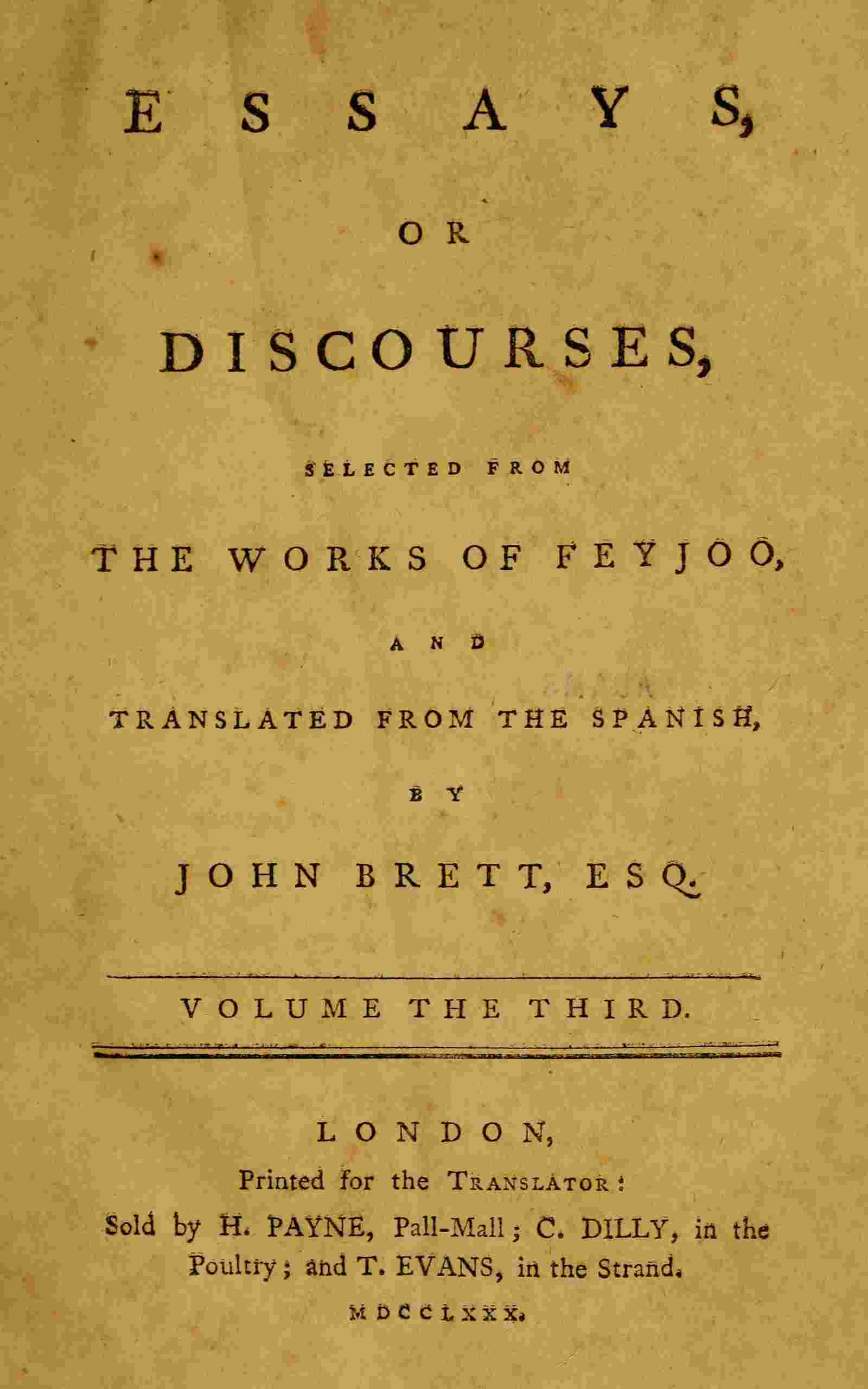
REFLEXIONS
UPON
HISTORY.
SECT. I.
I. There is the same common error prevalent among the vulgar, with respect to History, that there is with regard to Jurisprudence. I mean, that they suppose the attainment of those two faculties depends solely upon application and memory. It is commonly thought, that a man is made a great lawyer, by treasuring up in his remembrance great numbers of law texts and maxims; and a great historian, by reading and retaining many historical relations. I won’t dispute, if we speak only of men learned in conversation, and historians for table talk, that any thing more is necessary. But to become a historian of the pen, good Lord! nothing less than the pens of the Phœnix are equal to the undertaking. The most prudent and learned bishop of Cambray, in his letter on this subject to the French Academy, said very justly, that an excellent historian is perhaps more rare than a great poet.
II. In fact, the critics have not been so difficult to please on the part of poetry as on the part of history; for, with the exception of one or two exquisitely nice ones, they all agree, that Homer, Virgil, and Horace, were most excellent poets, and in whom there could be found no striking defect; and they would not have scrupled to concede the same honour to Ovid, Catullus, and Propertius, if the lascivious impurity of their expressions had not tarnished the lustre of their verses. But how difficult and severe have they shewn themselves with the historians, even when they have criticised the works of the most eminent of them! The same prelate we have just quoted, observes a want of unity and order in Herodotus, and thinks Xenophon more of a novelist than a historian; and it is a general received opinion, that in his history of Cyrus he did not so much attend to relating the true actions of that prince, as to painting his own idea of a perfect king. He admits, that Polybius reasons admirably on political and military matters; but observes, that he reasons too much. He celebrates the fine harangues of Thucydides and Titus Livius, but objects to their being too numerous, and seeming more like the works of their own invention, than the speeches of those, in whose mouths they put them. He blames Sallust, for having in two very short histories entered into too large a description of persons and customs. He censures Tacitus for an affected brevity, and for having had the audacity to pretend to discern and point out the political springs and causes of all kinds of events; which is also a defect he reprehends in Henricus Catherinus.
III. In these same great historians, other critics find out other faults. Plutarch observes, that Herodotus is inviduous and spiteful against Greece. It is a general opinion, that he mixed many fables with his history, which he carried to such a length, that there have been some, who, instead of bestowing on him the magnificent epithet of the Father of History, have called him the inventor of fable. Dionysius Halicarnassus denies the language of Xenophon to be splendid or majestic, adding, that whenever he attempts to elevate his stile, he instantly falls off, and shews himself unable to support it. Vossius remarks, that the stile of Polybius is inaccurate; and Father Rapin, that he frequently interrupts the thread of his narration with moral reflections. The same Vossius arraigns the stile of Thucydides, as harsh and full of hyperboles. Erasmus points out some contradictions in Titus Livius; and Asinius Pollio remarks some Patavinian or provincial expressions in his Latin. Many, and with great reason, blame him as a multiplier of prodigies. Aulus Gellius called Sallust a coiner of words[1]; and the illustrious Cæno blames him for suffering himself to be warped by his prejudices and dislikes, and for having concealed many of the glorious actions of Cicero, because he was upon ill terms with him. Charles Sigonius thinks the language of Tacitus was trite; and father Causinus says the same thing in other words; father Bayle also detects Henricus Catherinus, in giving certain relations that were contrary to truth.
IV. Who, upon the sight of all this, would, without a trembling hand, take up the pen to write a history? Who, upon seeing all these celebrated historians so arraigned, could think himself qualified to escape censure?
SECT. II.
V. But what happened to Quintus Curtius is more extraordinary than any thing we have hitherto mentioned. This author’s history of Alexander made its first appearance about three centuries ago; the manuscript having been found in the library of Saint Victor. It is not yet known with any certainty who Quintus Curtius was, nor in what time he lived. Some believe he was contemporary with Augustus, others with Claudius, others with Vespasian, and others with Trajan; according as his stile appears to them to approach nearer to, or differ more from, the antient purity of the Latin idiom; and there are not wanting those, who think that such a man as Quintus Curtius never existed, and that this was a fictitious name, under which some modern author had concealed himself, in hopes that his history would be better received by annexing to it a name resembling that of an antient writer; and some again have attributed this work to Petrarch. One of the strongest foundations on which they build this conjecture, is, that you cannot find Quintus Curtius quoted by any author, who has wrote within the fourteen hundred years immediately posterior to the reign of Augustus. Notwithstanding this, the purity of the stile has such weight with others, as to make them judge that it is full that time since any one could write so pure Latin as is contained in the language of that book; and therefore they suppose the author of this history was contemporary with some of the first Cæsars. But be this as it may, the history, which goes under the title of Quintus Curtius, continued to be universally applauded for the space of three centuries; when at length a modern critic set himself to scrutinize and examine it attentively, and found it to be full of substantial defects.
VI. This was the famous John Le Clerc, who weaves into the end of his second volume on the Art of Criticism, a long examination of Quintus Curtius, and arraigns and charges him, proving the accusation at the same time, with having been deficient in the following requisites: that he was very ignorant of astronomy and geography: that, for the sake of accumulating in his history many marvellous relations, he wrote many fables: that he described some things ill, and fell into manifest contradictions: that he inserted useless accounts, and omitted necessary ones: that, in order to display his eloquence, he incurred the impropriety of putting excellent harangues into the mouths of men, who had but little pretensions to oratory: that he gave Greek names to the most remote rivers of Asia: that he omitted the circumstance of dates or time in his relations of events: that he had chosen a stile which was better suited to a declaimer or an orator than an historian: that, finally, he had been more the panegyrist than the historian of Alexander, and had celebrated his damnable ambition, as if it had been an heroic virtue.
VII. Truly, these are many and grave defects, to be imputed to a man of the supreme credit of Curtius, and would even be thought such, if they were charged on a writer of the middle class. But all that we can infer from hence is, that either the critics have been very severe in their censure, or else, that the task of writing a history free from defects is an exceeding arduous one. But it appearing to me, that the accusation of Le Clerc is well supported, and just in every part of it, I am inclined to think, that the most elevated genius who applies himself to the occupation of an historian, can never be secure from falling into considerable defects; and to confirm this sentiment, I have quoted the example of Quintus Curtius.
SECT. III.
VIII. I believe, that it fares with the most excellent writings, as it happens to the greatest men, that they appear much less upon nearer and more frequent intercourse with them. There is no entity in nature totally perfect; but at first sight, or at certain distances, and in certain points of view, the splendor of excellencies conceal some defects, which, by approaching nearer to the objects, and upon closer examination, are discovered.
IX. It is also certain, that elevated geniuses are more exposed and liable to some particular defects than middling ones. The first, carried away either by the vivacity of their imaginations, or the force and impetuosity of their spirit, are addicted not to attend to some of those requisites and regulations which people of inferior capacities scrupulously observe; and, for that reason, these last are much more likely to compile a work that is strictly conformable to rule, than the others; for, as they never attempt to rise to any considerable height, their fall cannot be great. They always pursue an humble path, never lose sight of the precepts, and are content to move on, controlled by, and in subjection to, the rules. The others, suffering themselves to be transported by a generous flight to a greater degree of altitude, are apt not to discern things below, they being at a considerable distance from them. The departing sometimes from rules, in order to pursue a course superior to ordinary precepts, has this effect, that it makes a work appear with a better grace.
X. But this is not the predicament in which we at present find ourselves, either with respect to the defects of Quintus Curtius, or with regard to the dangers of writing history. I should esteem as a phœnix, not only him who could steer clear of every kind of fault, for this appears to me next to impossible, but the person who should avoid falling into one or other of the most remarkable ones; and he, who adverts with attention to the multitude of difficulties which present themselves in the course of writing a history, will not hesitate to be of my opinion.
SECT. IV.
XI. Let us begin with the stile, which at first sight seems the most easy part of all: how difficult and arduous is it, to hit upon that precise medium which is suitable to, and required for history? It should neither be vulgar nor poetic, although if a writer will content himself with only avoiding those two extremes, he may without much difficulty hit upon one, (especially if he is of the numerous set which nature has limited, and does not permit to go beyond a middling stile) that neither borders on the vulgar, nor is tinged with the poetic, and is equally distant from the croaking of the raven, and the chant of the swan. But by being contented with this, the narrative would be left without grace, and the history without attraction. This medium is not reprehensible, but it is insipid. Some of those who undertake to write histories are incapable of arriving so far as this degree of excellence; and they are very few, who can go beyond it. These few have many dangerous rocks and shoals in their way; and it is extremely difficult now and then to avoid striking upon one or other of them. Affectation is the most common fault that is incurred, and also the worst; for a barbarous expression is less disgusting to me than an affected one; as a clown cloathed in his ordinary habit, set off with rustic trappings, is less unpleasing in my eye, than a person finely dressed in a gay suit, bedecked with jewels, which are ill chosen, and aukwardly disposed. The first dresses himself humbly and in character; the second is adorned fantastically and ridiculously. All in the stile, which is not natural, is contemptible; and although a natural colour gives beauty to the face; whenever we perceive it is imitated with artificial ingredients, it appears disgusting to us.
XII. To the danger of running into an affected stile, there is annexed another, which is, the hazard of that appearing affectation to the reader, which is not so. Some judge so grossly in this matter, as to think, that whatever does not appear natural to them, seems unnatural to every body else. Sometimes envy excites an illiberal censurer to call a stile affected, when he does not think it so; and occasions him, like an ill-tempered woman, who has a bad skin, to exclaim that all those who have better complexions have created them by means of artificial paints and washes. But, after all, the hazards that an author is exposed to from the quarter of ignorance, and the envy of readers, are unavoidable; and, if he was to be discouraged by this, there are none but ignorant and dull writers who would venture to take pen in hand. Let him who deserves some applause content himself with having deserved it; and make himself happy with this reflection, that there will not be wanting those who will do justice to his merit. Nor should he attempt any punishment of an envious man, but leave the execution of that business to himself; for nobody could impose on him a more cruel one than that which is inflicted by his own furious rancour, that is incessantly gnawing his heart.
SECT. V.
XIII. The second danger of a lofty stile is, that the pen, instead of taking a flight to the top of Olympus, may wing its course to that of Parnassus; I mean, that, instead of arriving at the degree of sublimity which is proper for history, it may soar to that which is adapted to poetry. Every species of undertaking has its correspondent language; but I do not assent to the distribution which is commonly made of different stiles to different undertakings, and which assigns to history the medium between the sublime and the humble. There is a sublimity requisite for history, although it is different from that which is required for poetry; and also from that which is necessary in oratory. Who entertains a doubt of the stile of Livy, of Sallust, and of Tacitus, being sublime? But they are all three very different, not only from that of Virgil, of Claudian, and the other heroic poets, but even very different from each other. They are much mistaken, who confine sublimity of stile to an indivisible and fixed point. Elocution has many different graces and ornaments, and the pen may be elevated by various ways. I do not think it so difficult to hit upon the sublime which is proper for oratory and poetry, as it is upon that which is suited to history; because, in the two first, the frequency of tropes and figures give of themselves a magnificence to the stile; in the last, all the elevation must consist in the liveliness of the expressions, the natural energy of the phrases, the depth of the conceptions, and the keenness of the sentences; nor must they presume to take the liberties which are practised by the orators and poets; because hyperbole is apt to disfigure the truth, and because integrity and judgement suit but ill with the raptures of imagination; and because also elevations of the pen make it in some measure difficult for ignorant people to comprehend the relation. That tedious, hyperbolic, and pompous description, which Claudian gives of the avarice of Rufinus, does not appear so admirable to me as the short, energic, lively, and natural phrases, with which Tacitus characterizes in its full extent the misery and meaness of Galba: Pecuniæ alienæ non cupidus, suæ parcus, publicæ avarus. Nor does the elegant colouring, with which Ovid has painted the triumphs of vice in the iron age, appear to me equal to the profundity of that sentence, with which Livy laments the compleat and ultimate corruption of the Roman people: Ad hæc tempora perventum est, quibus nec vitia nostra possumus pati, nec remedia.
SECT. VI.
XIV. The last danger of elevation of stile consists in the difficulty of supporting it. But it appears to me, that the censure which is commonly passed in this respect is unjust. I have known many, who have been very scrupulous in examining whether the stile was equal, and have been very liberal in the praises of those who preserved this quality, and very free of their abuse of those who have been deficient in it. They are very exact in noting, whether an author falls, or rises it; when they ought rather to attend to the thing the pen is describing. It would be very wonderful if he should fall, who is always creeping close to the ground; and, indeed, whence can he fall from, if he is never elevated? It should be considered, on the other hand, that descending and falling are two very different things. He who takes a flight is not obliged to pursue his course at the same height or on the same level to which he rose; for he may descend at his pleasure, as even the eagles do the same. And of what consequence is his descending a little, since he always continues much superior to him who never rises off the ground? The very caution of those, who are so careful about not falling, proves, that they never will attempt rising to any dangerous height, for this scrupulous vigilance is not natural to sublime spirits, as they are apt to mount on the wings of the wind, and leave to imagination the route they shall pursue. They do not strive to support themselves at the point of altitude to which they rose, as the appearance of such an endeavour would give a distasteful air to the stile; for a becoming negligence is less disgusting than a forced elevation. It ought also to be considered, that the same happy manner of expressing himself does not occur to a man at all times alike; and what is he to do in such a case? give a loose to the pen, till it happens to fall upon phrases equally energic, and delicate with the antecedent? What labour can be supposed more ridiculous than that of an author, who with an instrument in his hand is always taking the height to which he has raised his stile above the humble level, for the purpose of avoiding suffering it to descend below that fixed point of altitude? I therefore think the neglecting to do this is not a defect in a writer, but rather argues that he is mistaken who censures him for the omission. But the want of judgment or candour in him who criticises, is always dangerous to him who writes.
XV. Besides this, the difference of objects produces of itself, and makes necessary, such an inequality as we have just hinted. There are some which naturally inflame the idea, and hurry on, or give a spring to the pen. There are others, which do not agitate the imagination, and should be described in plain words expressive of sound judgment. Some require majestic language, and there are others in which it would appear ridiculous. In my opinion, he would be guilty of the greatest abuse of stile, who did not attend more to nature than the rules of art.
XVI. I am well aware, that the essential part of history does not consist in the excellence of stile; but that this is an accidental quality, which adorns and makes it more useful. Many read it when they find the stile engaging, who would not read it, if it wanted that requisite. The matter also makes a better impression on the mind, as the memory retains better what is read with delight, in the same manner that the stomach does what is eat with an appetite. An infinite number of people are acquainted with the history of the conquest of Mexico, who would have remained totally ignorant of the circumstances of it, if they had not been written by the sublime and delicate pen of Don Antonio de Solis. Finally, Lucian lays down excellent rules for writing history; and, in a little treatise he compiled on purpose, prescribes that the stile should be clear, and so far elevated as to approach nearly to the loftiness of speech made use of in poetry.
SECT. VII.
XVII. But let us have done with the stile, and relieve the historian from his care on this head; but when he is freed from this anxiety, how many shoals and dangers will still remain for him to encounter in his navigation of this sea? What strength of judgment does it require to separate the useful from the frivolous? If he relates every minute particular, he will fatigue the eyes and memories of his readers with superfluities. If he selects, he will run the hazard of rejecting with the superfluous part of the important; and prolixity, and excessive curtailing, are two extremes which he should equally avoid. If he leans to the first of these two sides, he will be censured as tiresome; if to the last, for having left the narrative confused; and but few men are capable of fixing on the just medium. Digressions are an ornament to history, and a relief to the reader; but, if they are too frequent, very long, impertinent, or injudiciously introduced, they convert the ornament into a deformity. It is a nice matter, and requires great penetration and judgment, to avoid inserting too much, or leaving out something material; and it is more difficult for an historian to hit upon a right method of proceeding, than any other author. If he is very attentive about preserving the series of dates and time, he will be apt to interrupt the thread of his relation; and, if he endeavours to keep his narration of these things connected, he will be liable to lose the æras and dates when they happened. It is a most arduous and difficult task to weave the threads of history and chronology together in such a manner, as that neither of them shall interrupt or obscure each other. Sometimes it also happens, that events croud in upon, and embarras one another, because it may fall out, that when you come to the middle of a narration, which till then had gone on smooth and uninterrupted, you find it necessary to postpone the remainder, and insert some other distinct account, the circumstances of which happened posterior to the beginning, and prior to the end, of the first relation. The worst is, that it is not possible to give rules for surmounting these difficulties; for this is a matter which must be left intirely to the perspicuity and discretion of the writer. On these depend the choice where to place things, and the manner of inserting them. If genius is wanting to effect this, the author must have recourse to the method fallen upon by many others of these times, which is composing a history after the manner of a news paper, where all the relations are promiscuously thrown together, in the same way that ingredients are mixed for making minced pyes.
XVIII. For the purpose of preserving nice order in a history (says the before-quoted Archbishop of Cambray), it would be necessary that the writer, before he takes pen in hand, should have the whole scope of the undertaking collected together in his imagination; that he should be able to discern the whole extension of it at a glance; and that he should turn it over and over in his mind, till he can fix on the just point of view in which to exhibit it. All this, to the end that he may preserve its unity, and derive, as from one source only, all the principal events of which it is composed. And a little lower he says: A historian of genius, out of twenty stations, will chuse the most opportune wherein to introduce a fact, so that by being placed in that situation, it will throw a light upon many others. Sometimes, by anticipating the relation of an event, you will facilitate the understanding of others, which preceded it in point of date; and at other times, another will appear to better advantage, by the account of it being postponed. This is all very well observed, and all tends to shew the great difficulties there are in writing a history with propriety.
SECT. VIII.
XIX. But the most arduous part lies in ascertaining what is of the most importance of all, which is the truth. A great modern critic said, very justly, that it is very frequent for historical truth to be as impenetrable as philosophical. The last lies hid in the well of Democritus; the first is either buried in the sepulchre of oblivion, is obscured by the clouds of doubt, or has retired behind the shoulders of fable. I believe we may apply to history the remark of Virgil upon fame, for they are nearly allied, and the first, very frequently, the child of the latter.
XX. From hence, some have taken occasion to distrust the best attested histories, and others have had the audacity to doubt the most certain informations. That famous philosopher Campanela said, he doubted whether there ever was such an emperor in the world as Charles the fifth; and Charles Sorrel not only denied that Pharamond conquered the kingdom of France, but also doubted his existence. In the republic of letters, they give an account of a man who had assured Vossius, that he had wrote a treatise, in which he had proved with invincible arguments, that all Cæsar said in his Commentaries, relating to his wars in Gaul, was false; for that he had incontestably demonstrated, that Cæsar never passed the Alps. An anonymous writer, before a hundred years had elapsed after the death of Henry the third of France, had the rashness to affirm, in a book, intitled “la Fatilité de Saint Cloud,” that Jacob Clement did not put that prince to death. Such monstrous instances of distrust, and audacity, does the uncertainty of history produce.
SECT. IX.
XXI. Seneca reduces the want of truth in history, to three principles or causes, which are credulity, negligence, and a propensity to lying in historians: Quidam creduli, quidam negligentes sunt: quibusdam mendacium obrepit, quibusdam placet: illi non evitant, hi appetunt. (lib. 7. Natur. Quæst. cap. 16.) He omitted to point out two other principles, which are sometimes the impossibility of coming at the truth, and at others the want of critical judgment to discern it.
XXII. Lying historians occasion others who are not lyars to relate many fables. It seems as if the greatest diligence of an historian, who relates the event of remote ages, can enable him to do no more than examine carefully the authors who lived at that time, or immediately after it, and to give the sum of their relations faithfully. But how often has flattery or resentment been known to warp the pens of those very authors? The first of these faults was remarked by Tacitus, in those writers, who related the affairs of Tiberius, Cayus, Claudius, and Nero, in the life-time of those Cæsars; and the second, in those who gave an account of them a short time after their deaths: Tiberii, Caiique, Claudii, ac Neronis, res florentibus ipsis, ob metum falsæ, postquam occiderant, recentibus odiis compositæ sunt. By so much the nearer historians are to the circumstances they relate, in so much a nearer point of view do they see the truth, and are so much the better enabled to distinguish it; but in proportion to these opportunities of their knowing it, are the suspicions that various affections induce them to conceal it. Fear, hope, love, and hatred, are four strong winds which violently agitate the pen, and will not permit the nib of it to rest or dwell on the point of truth. We shall select two examples, out of a great number of others, that might be produced to prove this assertion, which are Procopius a Greek historian, and Velleius Paterculus a Roman one. The last of these, after having given an excellent account of the things appertaining to Rome, in the anterior ages, when he came to relate those of his own times, fouled the page of his history with gross adulations of Tiberius, and his favourite Sejanus; and heaped the highest eulogiums, on the heads, of two of the most perfidious and flagitious men that were known in that corrupt age. Procopius, in his Secret History, describes the Emperor Justinian, and the Empress Theodosia, as the most abominable prince and princess upon earth. Paterculus lived under Tiberius, and Procopius under Justinian; and, as they were both men of rank, and filled considerable employments, could not be ignorant of the reality of things. But envy in one, and dependence in the other, caused them both, equally to deviate from the truth.
XXIII. This was the reason why Mons. du Haillan, a noble French historian, terminated his general history of France with the reign of Charles the seventh; nor have we a trace of his pen, respecting the monarchs who succeeded immediately after that time. But let us hear what Mons. du Haillan says in the prologue to his history, because it is admirably suited to the subject we are upon. He says, although we must admit Francis the first was a great and an excellent king, nevertheless, because all the histories which speak of him were written in his own time, or in that of his son Henry, the authors of them were more lavish of their eulogiums of him than his merit deserved, or than were consistent with the obligations they owed to truth as historians; and that this is a vice which all those are apt to fall into who write histories of their own times, or of the princes of whom they are the immediate subjects. Thus we see, those who write the history of their own times, are agitated by many passions which seduce them to lie openly, either to favour or blazon their own prince and nation, or to misrepresent and blacken their enemies.
XXIV. The saying of Pescenius Niger, to a man who wanted to repeat to him a panegyric which he had written in his praise, is very applicable to this matter: “Compose,” says he, “panegyrics upon Marius, Hannibal, and other great captains who are dead; for blazoning living emperors, from whom you entertain hopes and expectations, or of whom you stand in fear, favours more of banter than encomium.”
SECT. X.
XXV. What we have said of those who write the history of their own times, may be applied equally to them who relate the affairs of their own country. These are generally believed to be the best informed, but at the same time their impartiality is the most suspected. So that truth navigates the sea of history, always surrounded by the dangerous rocks of ignorance and prejudice. With respect to many things which are of great importance, and incumbent on an historian to relate, he may want information; with regard to those which he takes an interest in, and looks upon as his own, his prejudices induce him to speak against his conviction. Polybius remarks, that Fabius, a Roman historian, and Philenus a Carthaginian one, are so opposite in their accounts of the Punic war, that, according to the first, all is glorious for the Romans, and ignominious to the Carthaginians; and according to the other directly the contrary.
XXVI. From hence arises the embarrassment, which is ever occurring in the comparison of different histories, with respect to one and the same fact. Who, for example, could know better what passed in the wars between France and Spain, than the French and Spaniards themselves? But if we set ourselves to examine the authors of the different nations, we shall find them as opposite in their accounts of the motives which led to the facts, as in their relation of the facts themselves. Whom should we give credit to? Why that is not so easy to determine; but we know for certain, who believes who. The Spaniards believe the Spanish authors, and the French the French ones. The same passion, which causes writers to describe things favourably to their own country, induces readers to believe what they write.
XXVII. It is not one enemy only which militates against the truth in national authors. I mean that it is not only love, but fear also, which makes them depart from the line of right; for, when they are not blinded by their own passions, they are warped and impeded by those of other people. They well know, that a history of their own nation, written with frankness and candour, will be but ill received by their fellow citizens; and who has so stout a heart as to resolve upon exposing himself to the hatred of his countrymen? Even where the attainment of eternal happiness is the object of a man’s contemplation, we find very few martyrs to the truth.
XXVIII. The example of our great historian Father John Mariana, will afford but little encouragement for others to imitate him; or to speak more properly, it will rather deter them from doing it. That Jesuit was a great lover of the truth, and adopted it as the sole or ultimate object of his history; but his not being partial, which is the greatest glory of a historian, was imputed to him by many national people for ignominy; and because he disdained to lie or flatter, they calumniate him for being disaffected to his country. They go still further, and by accusing him of having an affection or partiality for France, impute the motive of their own conduct to the author; this they do with such confidence, that I should be apt to believe them, if I did not see that he was equally ill treated by both Frenchmen and Spaniards. It is an established fact, that his book, intitled, de Rege & Regis institutione, was condemned by authority, to be burnt by the hands of the common hangman, at Paris; and for what? why because he arraigned in it the conduct of Henry the third, king of France. Thus, in both the nations, they did injury and injustice to Father Mariana, for having been sincere and candid. In Spain they would have him write nothing but what was glorious to their own nation; in France, they would not permit him to touch the hem of the garment of king Henry. In this manner is the world continually laying stumbling blocks, to obstruct truth in history; and those few who have been disposed to write it, from pure motives of integrity, have always found themselves trammelled and embarrassed by the prejudices of others.
XXIX. Not only the natural dispositions of historians to favour their own country, but sometimes the hope of reward, or the fear of resentment, have occasioned their being partial to foreign ones. No man was more lavish in his applauses of the Venetians than Marcus Sabellicus, who was not a Venetian himself. He wrote the history of Venice, more in the stile and character of a panegyrist than a historian. This might seem strange; but Julius Cæsar Scaliger informs us, that the gold of the republic made him consider that country as his own. By way of contrast to this, these same Venetians were much offended with John de Capriara, a noble Genoese historian, for some relations he had given, which were unfavourable to their arms; but the answer this author made to the expressions of their resentment is worthy the imitation of all other authors in the like cases. He replied, the Venetians should be angry with Fortune and not with me; for as the events of the war were unhappy for them, I could not represent them fortunate, for the sake of making them grateful and pleasing to their palates.
SECT. XI.
XXX. The bias of religion is not less forcible, but has rather more power than the national to warp truth from the line of right in history. The impositions which some protestant historians have palmed on the world, in order to calumniate the characters of many popes, are shocking; their fictions of adulteries, simonies, and homicides, have been insufficient to satisfy their envy, or satiate their resentment against the supreme head of the church; for they have extended their rage to charging popes, who were extremely venerable for their virtue, with committing crimes of the blackest die. What wickedness did they not impute to that most venerable pope, Gregory the seventh? They not only accused him of intruding himself into the papal chair, of simony, and of a criminal correspondence with the virtuous Countess Matilda, but also of heresy and magic; inventing many ridiculous tales, to prove him guilty of this last crime. It was not against the popes alone, that they forged these monstrous extravagancies, but extended them to many of those, who by their learning and ardent zeal had signalized themselves in defence of the catholic religion. Father Theophilus Rainauld tells us, there appeared a libel against the most pious and learned Cardinal Belarmino, accusing him of having murdered many new-born infants, in order to conceal his lewd practices from the world; adding, that, touched afterwards with remorse, and a disposition to repent of his sins, he made a pilgrimage to Loretto, in order to expiate them; where the priest, to whom he confessed, struck with horror at so much wickedness, refused to give him absolution, which occasioned him in a little while after to die with despair. The best is, that Belarmino was alive when the libel was published, which he read and despised. What infamous things did Buchanan write, which even the protestants of this day believe, against the admirable Mary Queen of Scots? I am not surprized, that the unanimous testimony of all the catholic authors in her favour does not convince them, because they look upon them as partial; but I am amazed that the relation of Camden, an excellent English historian, and whom nothing but his love of the truth could induce to vindicate her, does not persuade them; and one would suppose, the great difference of character and manners between Buchanan and Camden would have weight in deciding the question. The first, a drunken, spiteful, debauched, man; the second, continent, modest, and a lover of historical truth; and one in whose morals you could not find the least fault; but when we see party prejudice prevail over all the persuasions of reason, it is a strong proof of its force.
XXXI. But, as the true religion does not exempt the professors of it from manifesting an indiscreet zeal against its enemies, there are not a few catholic historians who have fallen into this very vice. From hence arose the suppositions, that Luther was born of a devil incubate; that the false prophet Mahomed was of mean extraction; that Anna Bolene was the daughter of Harry the eighth; that this unhappy woman, hurried away by an unbridled lust in her tender years, and long before she became the object of that prince’s love, committed a thousand turpitudes; with other fables of the same kind. The worst is, that as every infamous libel against those of an opposite religion is easily believed; it soon, from the most improbable and scandalous satyr, comes to be translated into history. In consequence of this, five hundred authors are afterwards cited in support of a fable, the whole of whose authority, when the thing comes to be examined, originates in the libel from whence the tale was derived.
SECT. XII.
XXXII. If only the interest of the prince of the state, or of religion, attracted the pen of the historian, and caused it to deviate from the truth; we should at least have the satisfaction to suppose, that with respect to those facts which have no relation to the party he follows, or the power he obeys, an historian would not wish to deceive us. But the private or particular motives which may excite him to deception are so numerous, that even with respect to these facts, we can seldom say we are secure. Who can form an idea of the affections which possess the heart of an author, whom he does not know, nor has had any intercourse with? Who can determine to how many objects his love or hatred extend? Even with regard to those facts which seem the most remote, either from his affections or his interest, he may be swayed by his prejudices or his convenience; and sometimes historians lie, when their motives for doing it are incomprehensible, of which we will proceed to give an example.
XXXIII. Peter Mathé, a famous French historian, tells us, that one la Brosse, a physician and mathematician at Paris, had foretold the death of Henry the fourth, and had communicated his prediction in confidence to the Duke de Vendome. Peter Petit, another historian, who was much celebrated for his knowledge of human nature, assures us, that such a prediction never existed. These two men were both contemporaries, both resided at Paris, were both there at the death of Henry the fourth, and both knew the physician la Brosse; but with all this, as they give diametrically opposite testimonies, it is very clear that one or other of them must lie. If it should be urged, that one of them might be deceived by some sinister information, I answer, that could not be the case, for they both quote the Duke de Vendome as their author. Peter Mathé says, he had the thing just as he relates it from the duke himself: Peter Petit says, he asked the Duke de Vendome if what Peter Mathé had related was true; and that the duke replied, it was false.
XXXIV. This is a contradiction, capable of exciting many reflexions on the uncertainty of history. If it had not happened, that an author in the situation and circumstances of Peter Petit had contradicted Peter Mathé, who would have ventured to question the prediction of la Brosse? In what author could concur superior requisites to establish a fact? A historian of reputation, who was contemporary with the event, lived in the same city with the astrologer where the tragical death of Henry happened, and who heard the prediction from the only witness who could possibly give testimony to the truth of it; and this was a man of the rank and quality of the Duke de Vendome. What further evidence could the most rigid critic demand, to engage his assent to an historical fact? With all this, unless we transfer the deception to Peter Petit, we are under a necessity of declaring, that Peter Mathé advanced a falshood; for the same circumstances equally concurred, to induce giving credit to the first as the last of them. Thus are we reduced to a necessity of acknowledging, in spite of all the critical aid we can call in to our assistance, that we are unable to ascertain the truth of this relation. Nor will transferring the deception to the Duke de Vendome, and saying, that he told one person one thing, and another another, remove the historical difficulty; for, as historians seldom relate events of which they were eye witnesses, and as the most they can do, is to make use of the testimony of credible evidences, your calling in question whether they were so or not, would, by extending to them the danger of propagating falshoods, be adding a new difficulty to the certainty of history; for at this rate, it would not suffice that an historian himself is a man of veracity; but it would be also requisite, that those from whom he had his information should be men of veracity likewise; and sometimes the intelligence passes through so many different channels, from the æra of the fact to its arrival at the pen of the historian, that it seems exceedingly improbable to suppose, that in its passage through one or other of these channels, there shall not be something added or diminished; nor can it be insured, that it shall not come to him totally changed and disfigured; for the same thing happens in this case as in morality, malum ex quocumque defectu. If, from one to another, a relation goes through the mouths of ten different individuals, by its passage through the mouth of one of them, who is not a scrupulous observer of the truth, it will be vitiated, and occasion its appearing corrupted in the page of history. Who, upon contemplation of this, will not be astonished at those, who believe every thing to be true as the Gospel, which they read in an author who writes the history of his own times?
XXXV. We may with great probability, and without any violent or strained supposition, conclude, that the facility with which the verification of astrological predictions has been imposed on the world, was owing solely to their not having in their origin met with the contradiction which that of Peter Mathé did. If the refutation of a fable does not immediately follow its invention, there is afterwards no remedy.
XXXVI. But leaving it for the present undetermined at whose door the deception lay, what can we suppose could be the motive of either of these historians, to quote the Duke de Vendome falsely as his author? It might, in Peter Mathé, be his friendship for the astrologer, whose fame he wanted to raise as a foreteller of events: it might proceed also, from a desire of adorning his history with a curious and pleasing anecdote. On the part of Peter Petit, might intervene his dislike to astrologers; or he might also deny the truth of the prediction, because it clashed with the system of his dissertation upon comets, which is the book in which he denies it. According to this mode of reasoning, it is easy to assign other motives of inducement; but it is not quite so easy to hit upon the true one.
SECT. XIII.
XXXVII. Thus, you see, we on all sides are beset with hazards. The authors who are remote from the time when, and the places where events happened, are very much exposed to be deceived in one or other of the various ways, by which informations descend to them; and those who were contemporaries with the events, and lived in the places where they fell out, are frequently interested by a variety of circumstances and combinations to disfigure them.
XXXVIII. We have said, that perhaps Peter Mathé, without any foundation, and without any other motive than that of adorning his history with a curious tale, related the prediction of la Brosse; and to a desire of doing this, we have also imputed the cause of an infinite number of other historical errors, for there is no other author whatever, who does not interest himself in making his history appear pleasant and delightsome to his readers; and there is nothing tends more to produce this effect, than inserting in them many particulars, in which are contained something of the curious, the exquisite, and the admirable. It may be generally said, that there are no histories more pleasant to read, than those which approach nearest to novels. From whence it happens, that truth is often dispensed with, for the sake of edulcorating the narrative with fiction.
XXXIX. Upon what other principle than the foregoing, can we account for authors relating many things as the events of very remote ages, without ever having read them in any antient author, or found any traces of them in an antient monument? or for their having, to events which they found related at large, in order to make the account more entertaining, added a variety of circumstances of their own invention? I therefore say, whenever the fiction appears grateful to the reader, and he cannot assign any other motive for the author’s inserting it, he may reasonably conclude, it was done with no other view, than that of making his history more pleasing to those who read it; and how much of this, do we meet with in numbers of authors!
XL. The account of the great battle, in which Charles Martel and the Duke of Acquitain routed the numerous army of Saracens, that, under the command of Abdarramen, had made an irruption into France, we find related in a very concise and summary way by the authors of that day, and the times which immediately followed it. Notwithstanding this, some modern authors give so prolix and circumstantial a relation of it, that it seems as if they themselves had been present at, and personally engaged in it. This is an observation of Cordemoi’s, whose words I shall insert here, because they are very remarkable. He says, the particulars of this battle were worthy of being recorded, and the antient authors are exceedingly reprehensible for not having given a circumstantial account of so memorable an action; but in the eyes of all those who are lovers of truth, some modern authors also, whose merit in other respects is great, are inexcusable, for having given relations of this event, which are so minute and circumstantial, that one might be led to think they had assisted at all the councils of war preceding it, and had seen all the motions of the two armies; for they not only describe how the French and Saracens were armed, but how they disposed and arranged their troops; give us the harangues of the chiefs on each side; tell us the stratagems which Abdarramen made use of, and the measures Charles Martel took to frustrate them; and finally, they proceed to describe the particular positions in which the dead bodies lay on the field, the groans and lamentations of the dying, together with all the circumstances of the congratulations which passed between the French chiefs after the battle. The moderns which Cordemoi censures in this place, are Paulus Emilius, and Fauchet, for he points them out in the margin.
XLI. There is nothing more doubtful, than the motives which induced Constantine to put to death his wife the empress Fausta, and his son Crispin whom he had by the concubine Helen. Authors disagree so much respecting this point, that they represent the circumstances of this double tragedy in more than twenty different ways; one of which is, that Fausta, being in love with Crispin, solicited him to a criminal intercourse with her; but that, finding him firm in refusing to comply with her desires, she, irritated with the refusal, transferred her own crime to Crispin, and accused him to Constantine of having made lewd advances to her, for which Constantine caused him to be put to death; and that coming afterwards to the true knowledge of the fact, he ordered her to be put to death also. This is the way Simeon Metaphraste relates the case, who is not one of the most exact authors, and of whom cardinal Belarmine said, that he was addicted to write things, not as they were, but as they ought to be. Father Causinus, in the second volume of his work, intitled la Corte Santa, not only adopts the relation of Metaphraste as true, but paraphrases it according to his own fancy, decorating the tragedy with all the circumstances which he thought would suit well with, and were applicable to an event of this nature. He paints the beauty of Crispin, describes the origin and progress of the love of Fausta, the manner in which she disclosed it to him; her mortification at finding her offers rejected, and the artifice she made use of to be revenged; and adds at last, what had never been suggested by Metaphraste, nor any other writer, that, stung with piercing remorse and grief upon hearing of the death of Crispin, she became her own accuser to Constantine, and declared her criminality, and the innocence of the unhappy youth.
XLII. I should be sorry if what I have just now said, should induce in my readers, a disesteem for two such respectable writers, as Paulus Emilius, and father Nicholas Causinus. I know the great merit of both the one and the other of them, and I venerate more in the second, the candour of his mind, and the integrity of his heart, than his great wisdom and learning. He, in a particular instance of his life, gave a striking proof of his virtue; which was, that, in order to guide in a right train the conscience of a monarch, who, by making him his confessor, had confided to him the direction of his religious conduct, he had voluntarily exposed himself to, and felt the effects of the resentment of a furious and vindictive minister, who governed every thing. But the greatest men, sometimes give tokens of their being no more than men; and I have purposely noted these defects in two authors, so celebrated as Paulus Emilius and father Causinus; in order to shew, how strong the temptation is in a writer, to ornament his history with something of his own invention, if authors of the especial credit of those I have just mentioned, are now and then liable to fall into this mistake.
XLIII. Our eloquent countryman, the illustrious Guevara, has been very much taken notice of for having used this licence, not only by foreign authors, but those of our own nation also; which freedom he has exercised to such a degree, that Nicholas Antonio says, he took the liberty of ascribing to antient authors his own fictions, and sported and made as free with all history, as a man would do with the fables of Esop, or the fictitious tales of Lucian. His life of Marcus Aurelius, with respect to the veracity of it, is not held in better estimation among the critics, than the Cyrus of Xenophon. It certainly cannot be denied, that he did not scruple to introduce circumstances of fancy and imagination into his writings, when he thought they would contribute strikingly to the entertainment of the reader: such for example (in order to point out the cause or origin of the extraordinary cruelty of Caligula) as that of attributing it to the conduct or disposition of the nurse that suckled him, who was a masculine fierce woman, and had for some slight offence killed another woman, whose blood she bathed her nipples with; and, while they were wet with it, applied the lips of the infant Caligula to them. He quotes Dion Cassius as his author for this tale, although in Dion Cassius there is no such relation to be found.
SECT. XIV.
XLIV. We have not as yet said any thing of the fictitious chronicles, and supposititious Histories imputed to various authors, such as Dictys of Crete, Abdias of Babylon, the many fabricated by Annias of Viterbo, Bervosus, Manethon, Megasthenes, and Fabius Pictor; the Cave of Magdeburgh, cited by Ruxnerus, the Encolpio inverted by Thomas Elliot; together with the Chronicles of Flavius Dexter, Marcus Maximus, Aubertus, and many others, of which in Spain there has been so much talk. These supposititious histories were the fountains, from whence were derived innumerable errors, for before the imposture of them was discovered, many writers, who were men of veracity, deduced accounts from them, which they afterwards came to be named as the authors of; nor was the circumstance of their having imbibed them at those vitiated fountains, ever adverted to. This species of writings, may be compared to the doblons, which they say are put into peoples hands by the Devil; they at first have the appearance of gold, but are afterwards found to be charcoal. How great was the transport of Wolfangus Lacy, a man in other respects very learned, when he fancied that in a corner of Corinthia, he had met with the manuscript of Abdias of Babylon. Great numbers of editions of this book were published in a short space of time, it being universally thought, that the world had found in it a most precious treasure. It may be easily conceived, that a work of an author of such eminence as one of the seventy-two disciples of our Lord Christ, and the Bishop of Babylon, established by the apostles themselves, would have been thought of inestimable value, provided it had been genuine. But the deception was afterwards discovered, by the very context of the relation; and Pope Paul the Fourth, condemned the book as apocryphal.
SECT. XV.
XLV. With all the principles and causes hitherto pointed out, of error in history, co-operates that of little reading. He who reads little, frequently mistakes the doubtful for the certain, and sometimes the false also. Generally speaking, in all the human theoretic faculties, much study produces an effect different from that produced by mathematical study. In this last science, the more a man studies, the more he knows; in the others, the more he reads, the more he doubts. In the mathematics, the study proceeds to remove doubts; in the others, it goes on to increase them. For instance, he who studies philosophy only under one master, all that master says, provided he is one of those who speak positively and decidedly, he takes for granted. If he afterwards extends his inquiries, and has recourse to others, although they should be of the same school, the Aristotelic for example, he will begin to entertain doubts, which will be occasioned by the nature of their disputes among themselves; but he will still retain a firm assent to the principles in which they are all agreed. If he afterwards reads with reflexion, and free from all prejudice or pre-occupation, the works of authors of other sects, he will begin to entertain doubts of even the principles themselves.
XLVI. The same thing happens with respect to history. He who reads a general history of the world, a kingdom, or a century, in one author only, takes for granted all that is advanced by that author; and when, in any future time, it occurs to him to speak or to write on the subject, he asserts with confidence all he has read in that author. If, afterwards, he applies himself to read books written by other authors on the same subject, he will begin to entertain doubts of what he read in the first, and the further he extends his reading, the more he will increase his doubts; it being infallible, that the new contradictions which he will ever find in authors, must beget in his mind a succession of fresh doubts, till at last he will perceive many relations to be either false or doubtful, which, in the beginning, he looked upon as absolutely certain.
XLVII. In order to give a palpable demonstration of this truth, and to point out some of the common errors of history, which is the principal object I always have in view; I will introduce in this place, a catalogue of many and various events of different ages; which already in the general run of books, and the opinion of the vulgar, pass for indisputable, and will, at the same time, state together with them, the reasons for placing them in a doubtful point of view, or the evidence which convicts them of falsehood.
SECT. XVI.
The beautiful Helen.
XLVIII. Let us begin to clear up these mistakes and contradictions, where profane history begins. It is generally assented to, that the rape of Helen, executed by Paris the son of Priam, and the refusal of the Trojans to deliver her up to her husband Menelaus, was the cause of the Trojan war. The common opinion supposes, that, after this transaction, Helen lived in Troy with Paris during the whole time of the war.
XLIX. This fact, which is taken for granted, is not so certain as not to admit of serious doubts respecting the truth of it. Herodotus, although he allows of her having been carried away forcibly by Paris, denies that she ever was in Troy. He says, that from Greece Paris carried his beautiful prize to a port in Egypt, where king Protheus took her away from him; and says likewise, it is true the Greeks commenced the war against Troy, upon a supposition that Helen was confined there; and that although the Trojans, with great positiveness and truth, denied the fact, the Greeks could never be prevailed on to believe them; but that, after the war was concluded, and they were convinced of their mistake, Menelaus sailed to Egypt, and recovered his wife out of the hands of Protheus. I know very well, that Herodotus is not reputed an historian of the greatest veracity; but who of equal antiquity to Herodotus, favours the common opinion? I believe none but poets; and these deserve much less credit than Herodotus in the case of an historical event. Servius likewise, not only denies that Helen ever was in Troy, but asserts also, she was not the occasion of the war, for that it arose from the ill treatment of the Trojans to Hercules, in refusing him entrance into their city, when he went in search of his beloved Hylas.
SECT. XVII.
Dido queen of Carthage.
L. The loves of Dido and Eneas, did not originate in the city of Carthage, but in the poem of Virgil, into which the author introduced the tale, with a view of ornamenting his work with this partly tragical, and partly festive fiction. The most learned chronologers, after exact enquiry into the matter, find, that the loss of Troy, and the voyage of Eneas, were two, some say three hundred years prior to the founding of Carthage by queen Dido.
SECT. XVIII.
Penelope, the wife of Ulysses.
LI. As the beforenamed queen was so unhappy as to have imputed to her some gross amours, which she never was guilty of; Penelope, the wife of Ulysses, has been so fortunate as to have nobody at this time dispute her honesty, because of late days it has been much the fashion to celebrate it; but this was not the case formerly. Franciscus Floridus Sabinus says, “that Homer’s representing Penelope chaste was no less a fiction, than Virgil’s representing Dido lewd.” In opposition to the pretended virtue of Penelope, he quotes the poet Lycrophon, and the historian Duris of Samos: which second describes Penelope to have been a most vile prostitute; and Thomas Dempster adds, to corroborate this, the authority of an ancient historian, called Lysander, who says the same with Duris of Samos.
SECT. XIX.
The labyrinth of Crete.
LII. Pliny gives an account of four famous labyrinths, that of Egypt, that of Crete, that of Lemnos, and that of Italy. The first was esteemed the most compleat as well as the most ancient and magnificent. That of Crete, although exceedingly inferior in grandeur to that of Egypt (for it was only so diminutive an imitation of the Egyptian one, that, according to the author before quoted, it was not a hundredth part so big), had the lot to make more noise in the world than the eminent original. This, without doubt, proceeded from the fanciful imaginations and loquacity of the Greeks, who, as it was nearer their neighbourhood, talked more of it than they did of the others; and, according to their genius and custom, transformed the truth of some immaterial facts into portentous fables: the amour of Pasiphaë with Taurus, for example, who according to some was general of Minos’s army, and according to others his secretary, they converted into a lascivious bestiality with a bull, and they metamorphosed the first of the two sons that were the offspring of this princess, who was begotten by the adulterer Taurus, into a monster, which was half man and half ox, which they called a minotaur; for whose confinement the labyrinth of Crete was destined, where, with the threads of Ariadne, he was enjoined to weave in tapestry the adventures of Theseus. I say, that these fictions, promulged to all the world by the loquacity of the Greeks, made that labyrinth so famous and so much talked of, that the name of it is familiar to people of the lowest class, although they never mention, nor have the least idea of any other.
LIII. Notwithstanding this, it is probable, that such a labyrinth never existed. The most learned prelate, Peter Daniel Huet, upon the faith of some authors he quotes, whose testimony he enforces with probable conjectures of his own, firmly denies that it ever was in being; and says, the fiction was derived from two great winding caverns at the foot of Mount Idas, which were made by king Minos in digging stones at that place, wherewith to build the city of Cnoso, and other large towns. He adds, that these caverns are still remaining, and that Peter Belonius, a famous traveller of the sixteenth century, testifies his having seen them. What Pliny says, is not unfavourable to this opinion, who declares, that although in his time there remained vestigies of the labyrinth of Egypt, which was the most antient, there were not the least traces to be found of that of Crete.
SECT. XX.
Of Eneas, and his coming into Italy.
LIV. The coming of Eneas into Italy, his wars, and marriages with the daughter of king Latinus, have, besides the relation of the facts being opposite and contradictory, some testimonies of antiquity to controvert them. Leseches, a very ancient poet of Lesbos, is quoted, who affirms, that Eneas was given up for a slave to Pyrrhus, the son of Achilles. Demetrius, of Scepsis, says, that Eneas, after the destruction of Troy, retired to the city of Scepsis, which was situated within the Trojan dominions, and that both he and his son Ascanius reigned there. According to Hegesippus, Eneas died in retirement at Thrace. Others relate, that after the departure of the Greeks, he rebuilt the city of Troy, and reigned there. These, and many other opinions respecting Eneas, may be found in the Dictionary of Moreri.
SECT. XXI.
Romulus.
LV. The foundation of Rome by Romulus is contested also. Jacob Hugo, in his book entitled Vera Historia Romana, denies his having been the founder of it. Jacob Gronovius, in a dissertation on the origin of Romulus, which is quoted in the Republic of Letters, acknowledges that he founded Rome, but says, he was a stranger, and consequently considers as fabulous all that is said of his birth, parents, and ancestors. And although these opinions are founded in mere conjectures, the doubt that arises out of them is greatly fortified by the confession of Livy, who declares the antiquities of Rome are very doubtful and obscure.
SECT. XXII.
The cruel Busiris.
LVI. The cruelty of Busiris, king of Egypt, who is said to have put to death all strangers that came, or rather were brought into his dominions, has been so trumpeted by the voice of fame, as to become a proverb. Apolodorus was the first broacher of the rumour of this barbarity; and the poets, whose votes in establishing the truth of events are of little weight, have concurred with him in propagating it. Diodorus Siculus condemns this story for fabulous, and declares the origin of it sprung from a barbarous custom which was practised in that country, of sacrificing to the manes of Osiris all the fair-haired people that came in their way; and, as almost all the Egyptians had black-hair, the lot most commonly fell upon strangers. He adds, that Busiris, in the Egyptian language, signifies the tomb of Osiris; and the name which was meant to express the place where the sacrifice was made, by equivocation, was brought to signify the author of the cruelty. Strabo, who cites Eratosthenes for his author, who was a person very famous for his knowledge of Egyptian antiquities, and who had the care of the great library at Alexandria in the reign of Ptolemy Evergetes, asserts, that there never was in Egypt either king or tyrant of the name of Busiris, and, with regard to the origin of the fable, says just as Diodorus does.