

Everybody's Business Is Nobody's Business / Or, Private Abuses, Public Grievances; Exemplified in the Pride, Insolence, and Exorbitant Wages of Our Women, Servants, Footmen, &c.
Explore more books like this:
About This Book
The pamphlet presents a sustained civic complaint about domestic servants and street trades whose rising wages, fashionable pretensions, and casual mobility are blamed for petty theft, prostitution, and household impoverishment. It catalogs common abuses—collusion to inflate pay, cribbing of provisions, retail pilfering, and transient employment—and connects them to broader public disorder and the burden on pauper relief. Interspersing anecdotes and observations, the author advances concrete remedies: stricter enforcement of vagrancy laws, reorganized night watchmen, use of workhouses, and regulation or replacement of street shoe-cleaners with organized employment for the deserving poor.
About the Author

More Books by This Author
6 picks
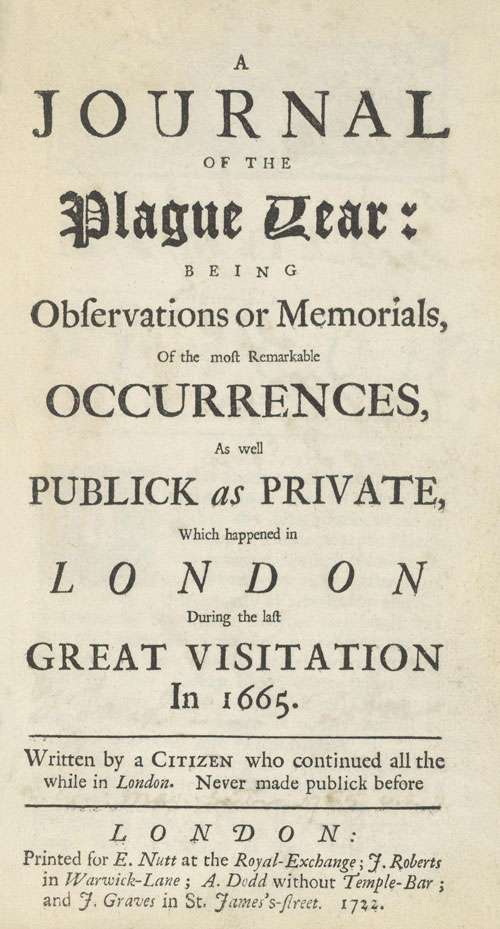 A Journal of the Plague Year / Being Observations or Memorials of the Most Remarkable Occurrences, as Well Public as Private, Which Happened in London During the Last Great Visitation in 1665. Written by a Citizen Who Continued All the While in London
by Daniel Defoe
A Journal of the Plague Year / Being Observations or Memorials of the Most Remarkable Occurrences, as Well Public as Private, Which Happened in London During the Last Great Visitation in 1665. Written by a Citizen Who Continued All the While in London
by Daniel Defoe
 A New Voyage Round the World by a Course Never Sailed Before
by Daniel Defoe
A New Voyage Round the World by a Course Never Sailed Before
by Daniel Defoe
 A Seasonable Warning and Caution against the Insinuations of Papists and Jacobites in favour of the Pretender / Being a Letter from an Englishman at the Court of Hanover
by Daniel Defoe
A Seasonable Warning and Caution against the Insinuations of Papists and Jacobites in favour of the Pretender / Being a Letter from an Englishman at the Court of Hanover
by Daniel Defoe
 A Short Narrative of the Life and Actions of His Grace John, D. of Marlborogh
by Daniel Defoe
A Short Narrative of the Life and Actions of His Grace John, D. of Marlborogh
by Daniel Defoe
 A True Relation of the Apparition of one Mrs. Veal / The Next Day after Her Death, to one Mrs. Bargrave, at Canterbury, the 8th of September, 1705; which Apparition Recommends the Perusal of Drelincourt's Book of Consolations against the Fears of Death
by Daniel Defoe
A True Relation of the Apparition of one Mrs. Veal / The Next Day after Her Death, to one Mrs. Bargrave, at Canterbury, the 8th of September, 1705; which Apparition Recommends the Perusal of Drelincourt's Book of Consolations against the Fears of Death
by Daniel Defoe
 A Vindication of the Press
by Daniel Defoe
A Vindication of the Press
by Daniel Defoe
You May Also Like
6 picks
 "'Tis Sixty Years Since" / Address of Charles Francis Adams; Founders' Day, January 16, 1913
by Charles Francis Adams
"'Tis Sixty Years Since" / Address of Charles Francis Adams; Founders' Day, January 16, 1913
by Charles Francis Adams
 "... és a felelősségtől való rettegés"
by Émile Faguet
"... és a felelősségtől való rettegés"
by Émile Faguet
 "A Most Unholy Trade," Being Letters on the Drama by Henry James
by Henry James
"A Most Unholy Trade," Being Letters on the Drama by Henry James
by Henry James
 "About My Father's Business": Work Amidst the Sick, the Sad, and the Sorrowing
by Thomas Archer
"About My Father's Business": Work Amidst the Sick, the Sad, and the Sorrowing
by Thomas Archer
 "America for Americans!" / The Typical American, Thanksgiving Sermon
by John Philip Newman
"America for Americans!" / The Typical American, Thanksgiving Sermon
by John Philip Newman
 "Bethink Yourselves!"
by graf Leo Tolstoy
"Bethink Yourselves!"
by graf Leo Tolstoy