
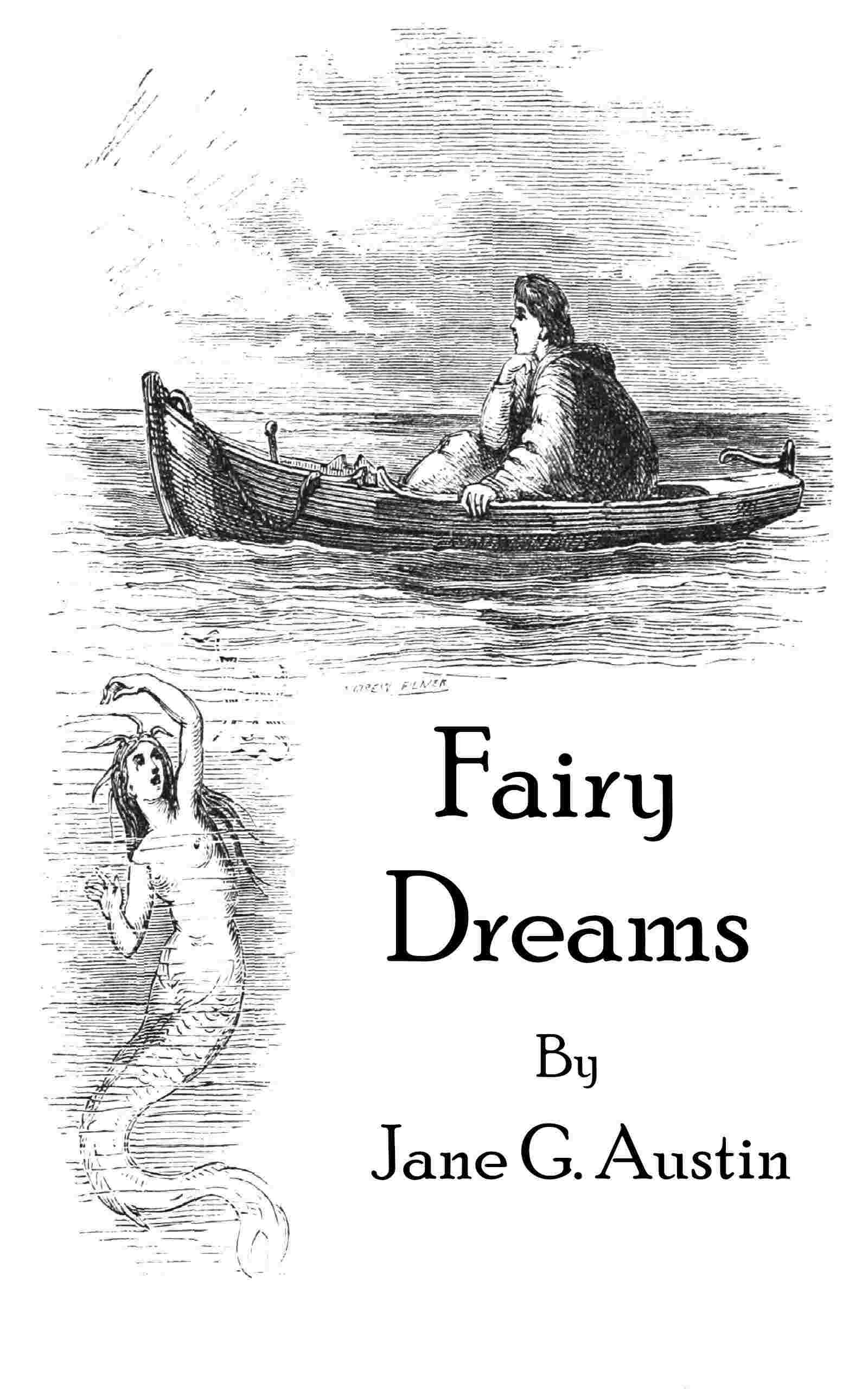
KÖNIG TOLV’S BRIDE
Far in the depths of the wild and gloomy forests of the Hartz mountains stood a little hut, where dwelt the charcoal-burner, Karl Gatz and his daughter Mabel.
Alone they dwelt for years before Mabel’s gentle mother had faded from earth, chilled to death perhaps by the stern, morose husband, to whom her parents had given her. She died, and one summer morning Gatz made a grave for her, beneath the huge blasted pine which towered above his cabin, and then returned to his charcoal burning with no difference except, perhaps, an added gloom and silence in his wayward manner.
Little Mabel was never a joyous child; how should she be, when the tall blasted pine brooded over her home, and her father, who seemed the embodied spirit of the tree, threw as gloomy and baleful a shade over her young heart.
From whence rose the cloud which shadowed all the life of these two, no one knew; but the few poor peasants and mountain dwellers, who alone had heard or cared to talk of so obscure a person, whispered strange stories of a man with whom Karl Gatz had quarrelled, and who had gone up the mountain to claim some money which the charcoal-burner owed him, and never returned. There were no friends or relatives to make inquiries into his fate, and the few who knew of the circumstance shrugged their shoulders and said, “It is no concern of ours. If a fool puts his head under the bear’s paw, must we run to pull him away?” So no one ever asked what had become of Johan Brenner, but all agreed that from that day the black and never lifting cloud had settled close and thick upon the brow and heart of Karl Gatz.
One would have thought that under this dark and poison-dripping shade all pure and lovely things must have withered and died as had the charcoal-burner’s wife, but never in sunniest parterre or most lovingly cared for flower plot had bloomed a fairer, sweeter, more sky-like flower than the dreamy Mabel. Light and gracefully moulded as the fawn, fair and delicate as the wild anemone, her blue eyes had gazed at heaven until they had caught its purest light, and the sun had given his own rays to sparkle in her wavy tresses.
Between the father and daughter there could be but little sympathy or love. The eyes of the silent man bent earthward, and had never marked the wondrous beauty which the slow, sad years were unfolding in his dark and lonely hut, nor had he once met the sad, appealing looks, which, in the gloomy days since her mother died, the heart of the love-longing maiden cast toward the only parent left her. He never looked up, and the thirsty, fainting heart sadly turned away and lived thereafter in its own loneliness.
Mabel had often been with her mother to the convent in the valley, where the poor woman went to confess her fancied sins, and to comfort her yearning heart by hearing of the love which is for all mankind, but is seldom truly valued save by such as, like her, are stimulated by earthly affliction.
While the mother prayed and wept, the little Mabel wandered, like a gleam of summer through the vaulted corridors, and shone by turns into all the narrow, tomblike cells.
The poor nuns, shut out from life and love, gladly welcomed this sweet, fresh presence, beaming with joy and freedom; and many a sister did penance on aching knees, for cherishing, through one wild moment, the wish that she had been an earthly bride, and clasped a child like this to a mother’s heart.
Finding how much the little maiden longed to be able to read and write, good old sister Ursula offered to teach her, and found herself amply rewarded by the warm, tearful smile with which the glad child kissed her withered hand.
An apt and eager scholar did Mabel prove; and in the year which followed, she learned to read and write with fluency and ease, and was able to repay her kind old instructress for her pains by reading in a sweet, hushed voice, those tender, loving promises and solemn, thrilling aspirations, which filled the volumes of the scanty library, and which the dim and fading eyes of sister Ursula could no longer distinguish but with pain and uncertainty.
Little Mabel took great delight in these readings, and she longed to have a book of her own, that she might pursue her studies at home. Expressing this wish one day at the convent, sister Benedicta, with the consent of the Lady Superior, gave her a copy of the mangled and corrupted edition of the Holy Book, prepared for convents and the Catholic use, while the Fraulein von Rosenberg, one of the noble young ladies who boarded and were educated at the convent, called her to the dormitory, and, producing from her trunk a little worn volume, she gave it to her saying,
“So much religion and so many pious works are truly very edifying, dear little one, but I think, for my part, it will do you no harm to read a little of something more amusing; so take this volume of fairy tales, which I have all by heart, and put it into the bosom of your frock.”
Mabel’s eyes sparkled like stars, with delight and gratitude, but pausing as she was concealing the little book as directed, she said,
“But why shall I hide your gift, dear Fraulein? If it is right that I should have it, all may see it.”
“Nonsense, little saint!” said the young lady angrily; but pausing a moment, she kissed the child’s pure brow, and said, “you are right, little one, and I am wrong,—go show the book to your mother and do as she says about keeping it.”
Mabel’s mother did not object to the child’s receiving the little book, nor did she think it necessary to mention it to any of the sisterhood, knowing that she should thereby bring the gay young Fraulein into disgrace; so Mabel kept the book, and while the sad and silent mother spun or sewed in the summer sunshine or by the winter’s fire, the child sat on a low stool by her side, reading in her clear, sweet voice, stories of the graceful little fairies, who dance through the long, bright summer nights; of the crooked, swarthy gnomes who forever pile up riches which they can never enjoy, in the gloomy mountain caverns; of the fair and graceful Undines who frolic in the mountain streams and broad, rolling rivers; of the wood-nymphs, whose slender, supple figures animate the graceful, waving trees, and whisper to each other in the evening breezes.
But chief among all these wonders was the dreamy child impressed with the story of King Tolv, who, every midsummer night, rides, at speed, with all his gallant retinue, through lonely woods and mountain gorges, and if in his wild career he should meet a pure and spotless maiden, her he seizes for his bride and queen, in his glowing, golden palace, deep in the green hill-side.
Many an hour did Mabel peer about in the wild thickets and among the grotesquely piled rocks which lay about her home, to find the entrance to that fairy palace, for the story said that it was in the Hartz Mountains that he always disappeared, and the mountain of Köningsberg, on which the charcoal-burner lived, was the highest, the wildest, and the most goblin-haunted of all the pine-clad peaks.
Either, however, Mabel did not look in the right spot, or King Tolv had so cunningly concealed the entrance to his abode that she passed without noticing it, for she never could find it; and before she had done looking for it the deep snows of winter, and then her mother’s long, fading illness and death, chased such things from her mind, and filled her heart with such deep sorrow and hopeless loneliness that she thought no more of König Tolv or her other goblin friends, but turned, with a heart thankful to the kind old nun, who had put the key of consolation in her hand, to the sublime promises and comforting words of Holy Writ, the living beauty of which not even the garbled and imperfect form in which the Catholic Church presents it to her children can wholly disguise.
Mabel read and prayed, and wept the long winter months away, making from time to time vain efforts to find the way to her father’s heart, more securely hidden than even the hill-side door to König Tolv’s golden palace.
At last she gave up the search, and contented herself with providing for her father’s comfort, as well as she could, and praying, night and morning, to the Holy Virgin and all the saints to turn toward her that stony heart, and show her the way to gain the love of the only one left on earth to whom she could turn for affection and comfort.
So passed the long, chill winter; but when the cold, deep snow had turned to fresh young grass, and trees which all winter had clashed their bare brown arms against each other as in the vain attempt to keep warm, had put on their new green dresses, and the wood-nymphs had begun to whisper again among their leaves, then Mabel once more wandered forth and found among the spring flowers her own old sadly joyous dreams and fancies. Again she took the book of fairy tales from the shelf, where it had lain undisturbed ever since the last time she had read to her mother, sitting on the little footstool by her side. Again she read, and now with a deeper and more thrilling interest than ever, the legend of König Tolv.
“To be loved,” murmured she, sitting by the leaping, laughing mountain stream, the book upon her knees, and her soft, dreamy eyes fixed upon the distant turrets of the old gray castle of Wolfsmarchen, which rose on the far horizon, “To be loved even by König Tolv—ah, what joy! Truly it would not be so hard a fate to meet him beneath the midsummer moon, and be borne away to dance and laugh and love within his golden halls! Who is there but my father for me to love on earth? and were I König Tolv’s bride I could come at night and leave gifts of gold and jewels on his pillow, which would more than make up to him for all that he would lose in me;” and as she admitted to her heart the dreary truth that gold was fairer and dearer to her father’s heart than his own child, great pearly drops rose slowly to her thoughtful eyes, and fell plashing upon the open book.
Mabel rose, and went slowly home to prepare the evening meal. That over, and the hut restored to what order was possible with its extreme poverty, the maiden bid a timid good-night to her father, who sat, as usual, smoking his evening pipe in morose silence. She received no answer, and though she expected none, she sighed heavily as she closed the door of the little closet which her mother had persuaded Karl, years before, to partition off from the common room, that her daughter might not, for want of privacy, lose the sensitive modesty which is to a woman what the dew-drop is to the rose, the bloom to the grape, as great a charm while it remains as impossible to replace, once carelessly brushed off.
Mabel dreamed that she was the loved and loving bride of King Tolv. She sat with him upon a bank thickly set with new and beautiful flowers, as is the sky with stars upon a frosty night. Before them wheeled and glided elves and fairies dancing to music which made glad the hearts of all who heard it; in her ear whispered her fairy lover words whose intoxicating sweetness still thrilled the maiden’s heart as she slowly awoke, with a vague sense of regret to find herself alone in the smoky little mountain cabin.
That day she renewed her old search for the hidden door, which should open to her that joyous scene which filled her heart with such wild longing, but still the mystic gate evaded her most earnest search. The next night and the next her dream was renewed, and as she awoke on the third morning the thought flashed across her mind that midsummer night was fast approaching, and that by meeting King Tolv on his midnight ride she could learn the way to his palace home without further trouble of her own. “And if I should not like him,” whispered she to herself, “I can easily steal away and come home, and all will be as before.”
This wild thought dwelt in Mabel’s mind day after day; her father, to whom added years brought but added gloom, evidently cared nothing for her presence or absence. The only notice he had taken of her since her mother’s death was to forbid her visits to the convent since she had delivered a message from the Mother, warning him that unless he attended mass and confession his soul stood in imminent peril. When Mabel tremblingly repeated these unwelcome words, Karl Gatz turned for a moment his gloomy eyes upon her, and bid her, if she would ever see his face again, to cease from that day her visits to the good sisters, whom he designated by a word that puzzled, while it instinctively shocked, the pure and unsullied mind of his daughter.
The dreamy, balmy summer days swept on all too fast for the hesitating, irresolute girl. One day she renounced her scheme, the next it again filled all her heart. So midsummer day came, and through the long, sunny hours Mabel could not trust herself to the soft influences of her favorite haunts, but in the intervals of unaccustomed labor she knelt and wept and prayed beside her little bed.
As daylight faded, she threw herself, without undressing, upon her rude pillow, and soon slept soundly.
As her eyelids fell, the old dream sunk down on her spirit more vivid, more sweet and tempting, than ever before. She woke, and, gliding to her little window, looked out. The night had not yet reached its noon, although the round-orbed moon rode high in the heavens.
The stillness in the outer room was proof that Karl Gatz had, as was often his wont, stayed all night in the forest, where lay his employment.
Murmuring a fervent prayer, Mabel threw her mother’s bridal veil over her head and glided out into the moonlight, looking like one of the fair and gentle spirits of whom she loved to read.
Rapidly, yet with trembling steps, the maiden pursued her way to the spot where, two roads crossing each other upon the mountain side, a cross had been erected, that the devout might pause to pray and rest upon the bench at its foot.
Arriving here, the trembling girl sunk upon her knees at the foot of the cross, half resolved to fly while yet there was time, and half reluctant to lose forever the fulfilment of that fair dream.
While still she lingered, her light form swayed by each contending impulse as sways the bird upon the waving tree-top, her fate was deciding the question, for suddenly the clatter of horses’ feet, descending the mountain road, smote upon her ear, and, making a convulsive effort to rise and fly, she sunk senseless at the foot of the cross, and lay in the moonlight still and white as a wreath of new-fallen snow.
When Mabel again opened her eyes a few moments after, she at first thought that she was dreaming of the beloved and familiar scene, for over her bent the earnest, handsome face of a young man, who, as her eyes opened, launched into them the look of admiration, love, and respect which had so often filled her heart.
As Mabel’s eyes fell, however, upon the horses standing beside her and the old stone cross above her head, she remembered her position, and recollected that the last sound which had met her ears was the approaching clatter of horses’ feet.
With a blush deep as guilt, she sprang to her feet, and covering her glowing face with her hands she murmured,
“Take pity, O King Tolv! Pardon and suffer me to leave you!”
She did not look up as she spoke to see the puzzled expression in the face of the fairy king giving place, suddenly, to a look of enlightenment and merry joy. He did not speak, and Mabel, her eyes still cast down, turned to depart.
“Hold, maiden!” exclaimed a rich and sonorous voice, “where wouldst thou go?”
“To my father’s hut, most noble king.”
“Thy name, child?”
“I am Mabel, the daughter of Karl Gatz the charcoal-burner; and my father will, e’er now, be wondering at my absence.”
“Nay, maiden,” returned the stranger, gently taking her slender hand in his, “thou art no longer his daughter, but the bride of King Tolv. Didst thou not know, fairest, that when he meets beneath the midsummer moon a maiden fair and pure as thou, carries her to his own home, to reign for ever queen of him and his?”
“But heaven? My soul?” murmured the trembling girl.
“Thou shalt be wedded by a man of God (thou seest I can pronounce that sacred name), and the benediction of heaven shall rest upon our heads. Thou knowest, dear Mabel, the hermit who makes his dwelling in a mountain cave near by?”
“Father Franz—I know and love him,” murmured Mabel in a half reassured voice.
“Then, if he will bless our union, wilt thou be content, sweet one?” asked the lover, in a voice sweet and low as the dream-voice of King Tolv.
“Yes,” faltered the maiden, and in another moment found herself borne swiftly upon the back of the goblin horse up the mountain road. Arrived at the nearest point of the path to the hermit’s cave, King Tolv checked the fiery steed, and, lifting Mabel from his back, led her tenderly along the rugged and barely discernible footpath which led up to the mountain summit. Weary and breathless they reached the cave, where Mabel had often been to carry the aged hermit little delicacies for his table, and to hear his words of holy cheer.
Placing her upon the rude stone seat just without the grotto, the majestic lover once more took the maiden’s hand and said solemnly,
“Mabel, wilt thou promise, as thou art a pure and stainless maiden, to be my bride?”
Unfalteringly Mabel raised her clear eyes to the noble face which bent toward her with a heart-searching gaze.
“I will, if the holy man says it is no sin,” said she.
“Wait here then, liebe, till I bring him,” said the lover in a lighter and more joyous tone.
Mabel sat many minutes on the stone bench, and heard the round, manly tones of her bridegroom alternating with the more feeble, solemn voice of the aged priest in an earnest conversation, of which, however, no distinct words reached her ear.
At last, priest and king stepped out into the rich, full moonlight, and Mabel, even at that moment of anxiety and agitation, felt a thrill of admiration as she noted the tall, manly figure and open, handsome face of her lover. Then her eye fell upon the mild, benign face of Father Franz, and her heart leaped for joy as she saw by his calm, benevolent smile and serene expression, as he laid his hand upon her head, in silent benediction that he was not displeased at the proposed union.
“And may I be King Tolv’s bride, and yet remain a daughter of the Church?” whispered she falteringly.
“You may wed your noble suitor without sin or fear, daughter,” responded the priest, with a smile more nearly approaching humor than Mabel had ever seen before on his calm and thoughtful face; “and,” he added, “thy power of serving holy Mother Church will be far greater as his wife than it could be in thy present estate.”
The Latin ceremony was solemnly performed, the nuptial benediction spoken; and Mabel, half bewildered, felt a warm kiss pressed upon her lips, never touched before save by her mother’s mild caress.
“It is not fitting, dearest love,” said the young husband, “that thou shouldst enter thy future home thus alone and unattended. Return for a few hours to thy father’s house, and when the day which now is dawning has reached its noon, stand there by the cross where first I saw thee, and King Tolv will come with his retinue to carry his fair and gentle queen to her new home.”
“I myself will leave thy wife at her father’s door, most noble king,” said the hermit, with a half smile. “Business takes me to the monastery in the valley, and I shall not reach there before sunrise if I set forth now.”
As Father Franz went into his cave to make his simple preparations, the bridegroom followed him. A whispered conversation ensued, and as they again issued forth Mabel heard the holy father say,—
“I will surely be there, mein Herr.”
King Tolv tenderly supported his trembling bride down the steep mountain path, and then, with one more fond kiss upon her quivering lips, he sprang upon his fiery steed and was gone.
When next the mid-day sun looked down upon the old oak shading the lonely cross, his rays, struggling through the envious leaves, fell in flecks of ardent light upon the white clad figure of the maiden bride, supplying with their golden sheen the lack of those ornaments which indeed, had they been formed of aught less pure than the eternal radiance of the sun, would have rather dimmed than added to the wondrous loveliness of the expectant bride.
Again, as Mabel listened, the sound of horses’ feet came thrilling upon her ear; but now the horses were many, and the sound of wheels mingled with their tread. They came, too, up the road from the valley; but ere Mabel had time to doubt, a glad burst of music fell upon her ear, and a number of horsemen, riding two and two, each with a bridal favor upon his arm, appeared surrounding a carriage, which, to the timid eyes of the bride, far outshone all that she had read of in fairy land. A band of music followed playing a joyful bridal march, and within the carriage, radiant and smiling, sat King Tolv, clad in a rich dress, whose sparkling jewels and heavy embroidery gave him a still more noble and commanding air than he had worn the night before in his simple hunting suit of russet brown.
As the carriage stopped, the bridegroom sprang to the ground, and taking the cold and trembling fingers of Mabel in his own, he turned to the retainers who stood about them, saying:
“Behold my bride, and your future mistress.”
One by one the horsemen passed before the shrinking yet graceful girl, making a low obeisance and saying:
“Hail to our noble Mistress!”
When all had passed, King Tolv led his bride to the carriage, and, placing her in it, seated himself by her side. So ardent were his whispered promises of love and tender praises of her beauty, that the blushing, agitated girl did not once raise her eyes from the floor at her feet till the carriage suddenly stopped, and, glancing hastily up, Mabel found herself in the court-yard of a castle, in whose open door stood a beautiful and magnificently dressed lady. A servant opened the door of the carriage, and the bridegroom descending, handed out his bride, and led her up the steps to where the fair lady stood, then exchanging his soft, lover-like tones for a voice clear, sonorous, and grave, he said:
“My dear sister, and you my faithful retainers. I have brought home to you my wife whom you now see; beautiful and good she is already; and that she may be as happy as she deserves shall henceforth be my aim, and I trust yours also.”
The crowd which filled the court-yard shouted, with willing zeal, “Joy to our noble Graff and his lovely Graffin.”
The fair and noble lady who stood on the threshold clasped Mabel in a warm embrace, while she whispered,
“Ah, little one! you studied well the little book I gave you years ago.”
Looking up with a startled look, Mabel recognized the Fraulein von Rosenberg who had in the cloister given her the little volume where first she read of König Tolv, and who now stood watching her with laughing eyes.
Mabel turned to her husband, but he silenced her with a grave smile, and, turning again to his people, said,
“My wife and I have already been married in a private manner; but that you, my children, may be witnesses of my happiness, the same priest will now perform a more public ceremony, and then we will sit down to the marriage feast.”
Then, taking Mabel by the hand, while his noble sister walked by the side of the bride, the Graff von Rosenberg led the way to the great hall of the castle, where stood Father Franz in his solemn robes of office, and by his side, as assistant, one of the brethren of the neighboring monastery.
The solemn ordinance proceeded, and the simple Mabel found herself the wife of Fredrich von Rosenberg, Count of Wolfsmarchen.
“But König Tolv?” whispered she, as her husband sat beside her, at the head of the long table.
“Shall never have my Mabel for his bride,” was the whispered response.
Karl Gatz was informed, the same day, of his daughter’s marriage, by the hermit, who was also charged to inquire in what way his son-in-law could serve him.
“By keeping out of my way,” was his only reply; and when Mabel, a few days after, went with her husband to renew their offers, they found the hut deserted, the charcoal pit extinguished, and no trace remaining of the late owner, nor from that day were tidings ever heard of Karl Gatz, although the mountaineers scrupled not to say, that, being deserted by his guardian angel, Mabel, the devil had claimed his own.
No such scandal, however, reached the ear of Mabel, who, in the warmth and light of her love-crowned life, bloomed into such exuberance of loveliness as astonished those who had thought her perfect before.