
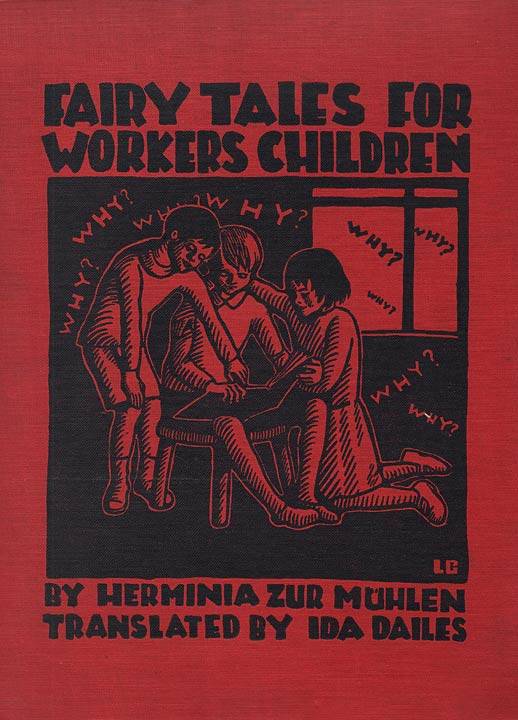
The Project Gutenberg eBook of Fairy Tales for Workers' Children
Title: Fairy Tales for Workers' Children
Author: Hermynia Zur Mühlen
Illustrator: Lydia Gibson
Translator: Ida Dailes
Release date: November 7, 2021 [eBook #66687]
Most recently updated: October 18, 2024
Language: English
Credits: Jeroen Hellingman and the Online Distributed Proofreading Team at https://www.pgdp.net/ for Project Gutenberg (This file was produced from images generously made available by The Internet Archive)
for
WORKERS’ CHILDREN
DAILY WORKER PUBLISHING CO.
1113 West Washington Boulevard Chicago, Ill.
Copyright by the
DAILY WORKER PUBLISHING CO.
May, 1925
Printed in the United States of America by the Daily Worker Publishing Co.
FOREWORD
Dear Little Comrades:
The work of translating this little book of fairy tales for workers’ children is very small in comparison to the joy I get from the knowledge that you, my beloved young comrades, are going to enjoy it.
You have read many fairy tales, some of them very beautiful and some that frightened you with their horrible giants and goblins. But never, I am sure, have you read such lovely stories about real everyday things. You see poor people suffering around you every day; some of you have yourselves felt how hard it is to be poor. You know that there are rich people in the world, that they do not work and have all the good things of life. You also know that your fathers work hard and then worry about what will happen if they lose their jobs.
Comrade zur Mühlen, who wrote these fairy tales, tells us in a beautiful way how these things can be stopped. All of us who work must learn that we can make the world a better place for workers and their children to live in if we will help one another. She shows us that the rich people who do not work but keep us enslaved are our enemies; we must join together, we workers of the world, and stop these wrongs.
Even the pretty, delicate Rose-bush knew how to use her thorns when the rich lady came near her. The little Sparrow died while seeking a better land for the Sparrow brothers, but he did not die in vain. The faithful little grey dog gave his life for the Negro boy who had saved him from being drowned; and the Crocodile proved that even an ugly, hungry beast can be more kind than a rich slave-owner. And our little lonely friend Paul learned that he must not stop asking why things were wrong in the world, but that he must make comrades of all the workers and teach them also to ask why, until millions would be asking that question and seeking to find the answer to it.
When you read these stories, I am sure you will want to lend the book to all your friends, so that they too may spend some happy hours with the new friends you have found in the book.
Your loving comrade,
Ida Dailes. [1]