
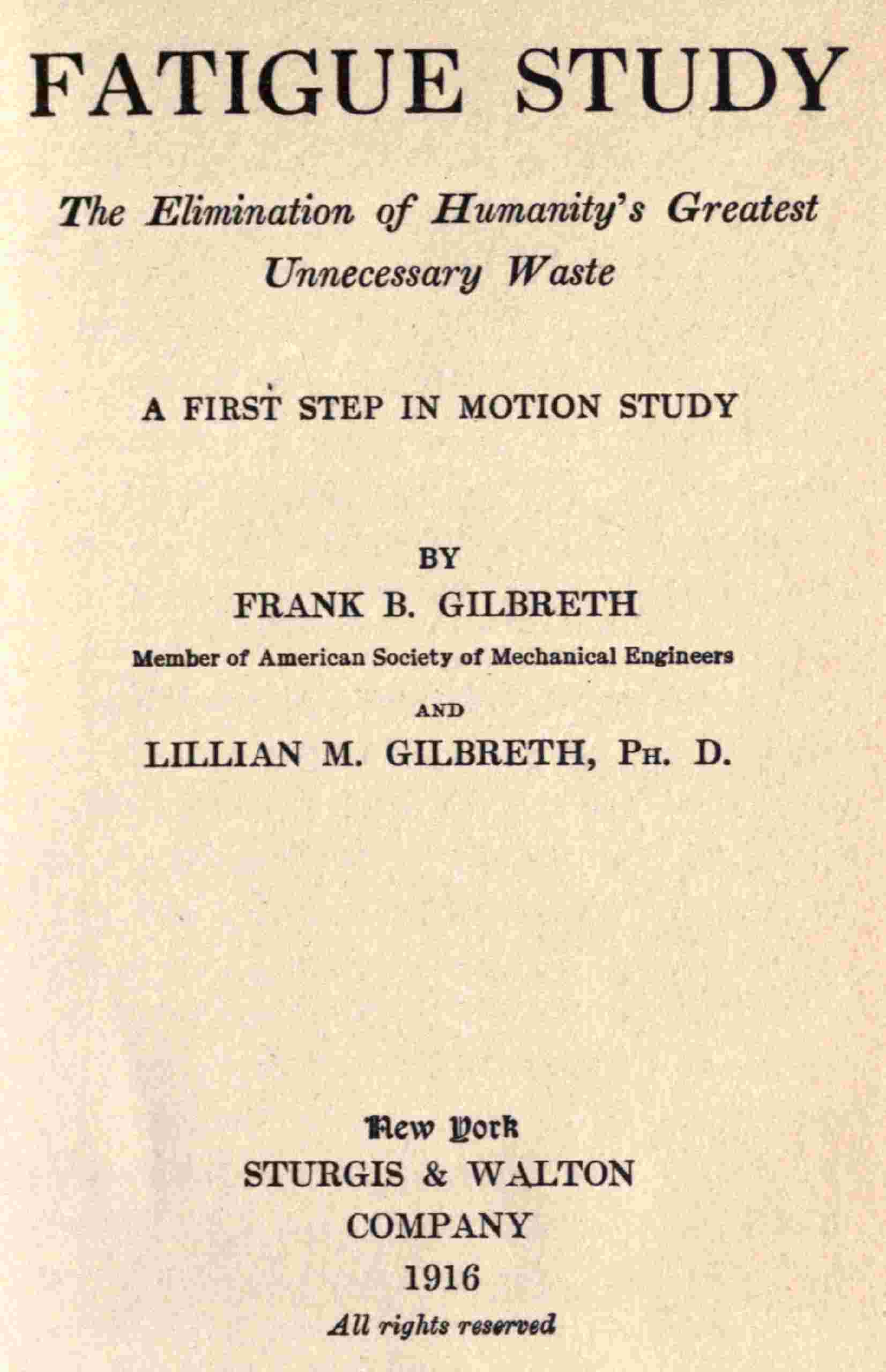
About This Book
The authors define fatigue as the after-effect of work that reduces capacity and generates waste, then set out practical and scientific methods to identify, measure, and eliminate unnecessary fatigue. They describe how to conduct fatigue surveys, introduce immediate provisions for rest and better chairs, and present a Home Reading Box movement as an illustration of welfare practice. Guidance covers lighting, ventilation, safety, tools, workbench and clothing arrangements, while a fatigue museum gathers examples of devices. Measurement approaches include motion and micromotion study with cyclegraph and chronocyclegraph tools, and the text explains standardizing work, testing adjustments, and implementing improved practices.
About the Author

You May Also Like
6 picks
 A History of Advertising from the Earliest Times.
by Henry Sampson
A History of Advertising from the Earliest Times.
by Henry Sampson
 A New Banking System / The Needful Capital for Rebuilding the Burnt District
by Lysander Spooner
A New Banking System / The Needful Capital for Rebuilding the Burnt District
by Lysander Spooner
 A rational wages system
by Henry Atkinson
A rational wages system
by Henry Atkinson
 A Simple Explanation of Modern Banking Customs
by Humphrey Robinson
A Simple Explanation of Modern Banking Customs
by Humphrey Robinson
 A Unique Story of a Marvellous Career: Life of Hon. Phineas T. Barnum
by Joel Benton
A Unique Story of a Marvellous Career: Life of Hon. Phineas T. Barnum
by Joel Benton
 About sugar buying for jobbers / How you can lessen business risks by trading in refined sugar futures
by B. W. Dyer
About sugar buying for jobbers / How you can lessen business risks by trading in refined sugar futures
by B. W. Dyer