
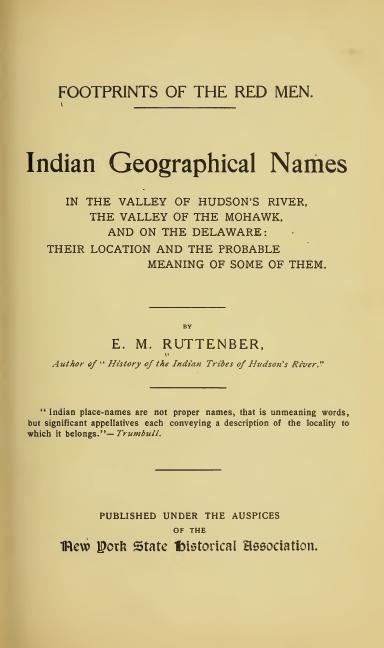
Footprints of the Red Men / Indian geographical names in the valley of Hudson's river, the valley of the Mohawk, and on the Delaware: their location and the probable meaning of some of them.
Explore more books like this:
About This Book
The work compiles and analyzes Indigenous place-names across the Hudson, Mohawk, and Delaware valleys, identifying original locations, mapping them, and proposing probable meanings based on local physical features. It explains methodological issues in transmission and orthography, compares Algonquian and Iroquoian dialect forms (including Unami, Minsi and Mohawk), and notes how names were sometimes extended or transferred by settlers. Entries translate root elements for common landscape features—hills, streams, stones, meadows—and discuss locative suffixes, polysynthetic structure, and the limits of certainty while citing documentary locatives, missionary vocabularies, and comparative linguistic evidence.
About the Author

You May Also Like
6 picks
 "Five-Head" Creek; and Fish Drugging in the Pacific / 1901
by Louis Becke
"Five-Head" Creek; and Fish Drugging in the Pacific / 1901
by Louis Becke
 "Pennsylvania Dutch," and other essays
by Phebe Earle Gibbons
"Pennsylvania Dutch," and other essays
by Phebe Earle Gibbons
 "Sterminator Vesevo" (Vesuvius the great exterminator) / Diary of the Eruption of April 1906
by Matilde Serao
"Sterminator Vesevo" (Vesuvius the great exterminator) / Diary of the Eruption of April 1906
by Matilde Serao
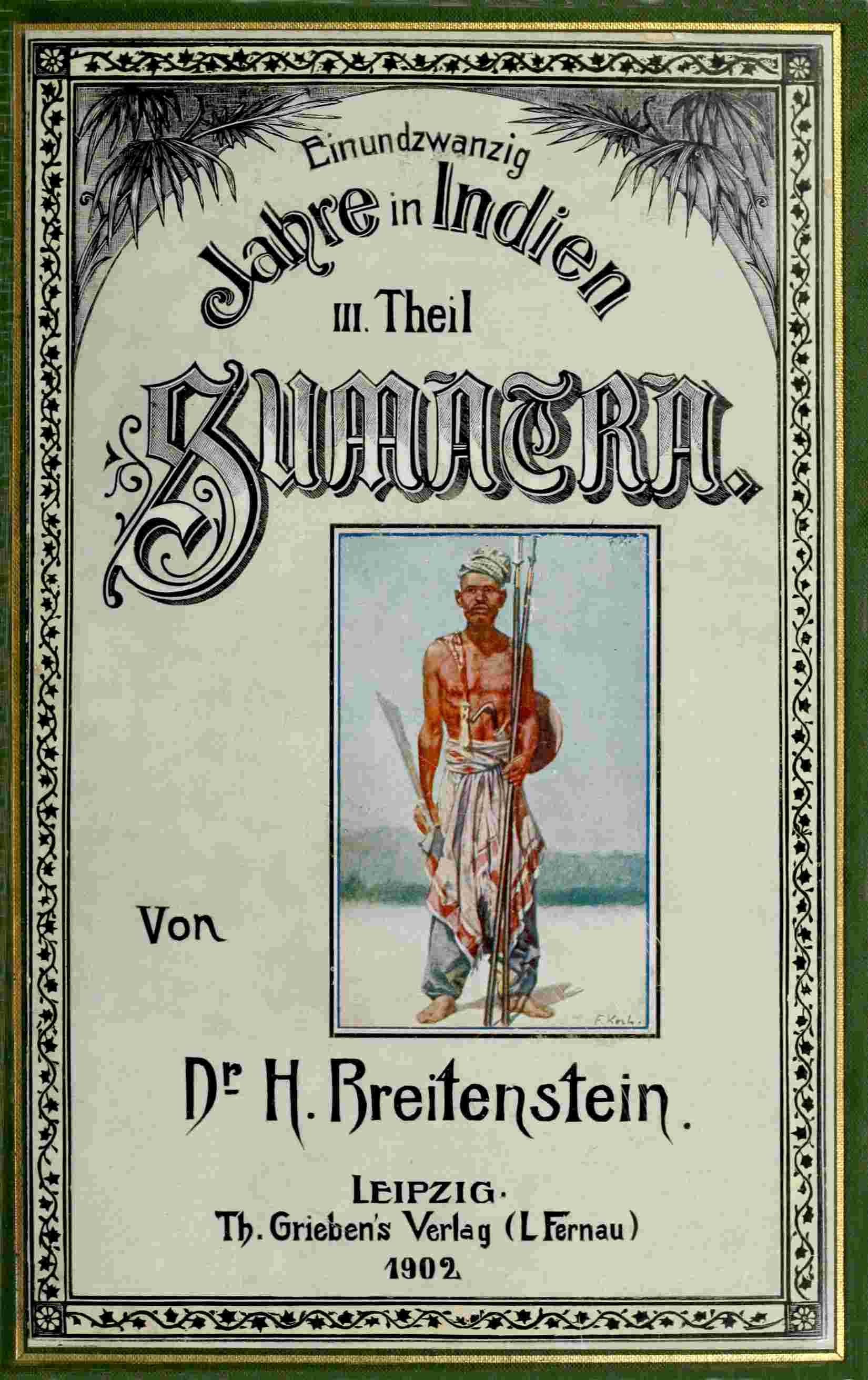 21 Jahre in Indien. Dritter Theil: Sumatra.
by Heinrich Breitenstein
21 Jahre in Indien. Dritter Theil: Sumatra.
by Heinrich Breitenstein
 21 Jahre in Indien. Erster Theil: Borneo.
by Heinrich Breitenstein
21 Jahre in Indien. Erster Theil: Borneo.
by Heinrich Breitenstein
 A Bakony (1. kötet)
by Károly Eötvös
A Bakony (1. kötet)
by Károly Eötvös