
WeRead Powered by ReaderPub
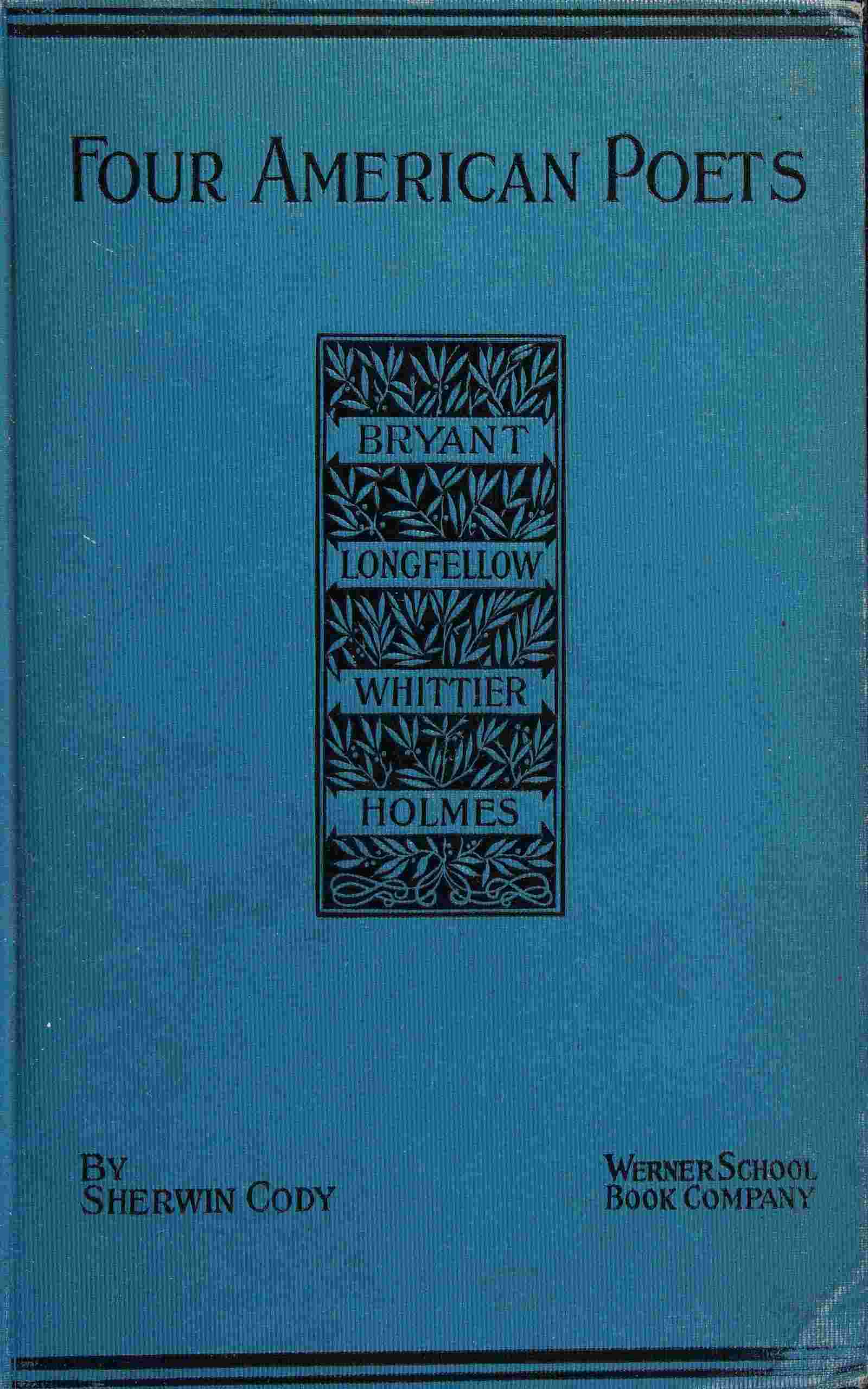
Four American poets cover

Four American poets

Chapter 27: CHAPTER VII THE “BEING BEAUTEOUS”
Open in WeRead

Explore more books like this:

About This Book

Aimed at young readers, this compact collection presents four readable biographical sketches of notable poets, following childhood influences, schooling, early experiments in verse, and the circumstances behind key works. Each section pairs narrative anecdotes with explanations of themes such as nature, moral conviction, and public engagement, and includes episodes about professional life, honors, and later years. Organized into short chapters that highlight formative scenes, poetic methods, and memorable incidents, the book uses plain language and illustrative detail to make poetic craft and imagery accessible while encouraging appreciation of differing temperaments and literary approaches.

CHAPTER VII
THE “BEING BEAUTEOUS”

When he had been a professor at Bowdoin College but little over a year, Longfellow married a young lady named Mary Storer Potter. She was the daughter of a well-known judge who lived in Portland, and was something of a scholar too. It is said she was especially fond of mathematics, and had been taught to calculate eclipses. In those days girls were sent to school very little, and none of them ever went to college. The old Puritan fathers thought girls were better off at home doing housework. But Longfellow’s wife was more fortunate.

She was at the same time good-looking and very pleasant to every one, and so the young professor and his young wife were invited about a great deal, and everybody thought them a very happy pair.

They were very happy together for two or three years; then Longfellow was asked to go to Harvard College to be professor of modern languages there. To prepare for this new and more prominent position he went to Europe again. Of course his wife went with him. They traveled about for some time; but she was not well, and finally she died.

Most of the poem entitled “Footsteps of Angels” is about her, and it shows just what he thought of her. It is worth remembering that this is the poet’s own real wife who died when they were both quite young. Here is a part of the poem. The last stanzas refer to her.

When the hours of day are numbered,
And the voices of the Night
Wake the better soul, that slumbered,
To a holy, calm delight;
Ere the evening lamps are lighted,
And, like phantoms grim and tall,
Shadows from the fitful firelight
Dance upon the parlor wall;
Then the forms of the departed
Enter at the open door;
The beloved, the true-hearted,
Come to visit me once more;
...
And with them the Being Beauteous,
Who unto my youth was given,
More than all things else to love me,
And is now a saint in heaven.
With a slow and noiseless footstep
Comes that messenger divine,
Takes the vacant chair beside me,
Lays her gentle hand in mine.
And she sits and gazes at me,
With those deep and tender eyes,
Like the stars, so still and saint-like,
Looking downward from the skies.
Uttered not, yet comprehended,
Is the spirit’s voiceless prayer,
Soft rebukes, in blessings ended,
Breathing from her lips of air.
Oh, though oft depressed and lonely,
All my fears are laid aside,
If I but remember only
Such as these have lived and died!