
XX.
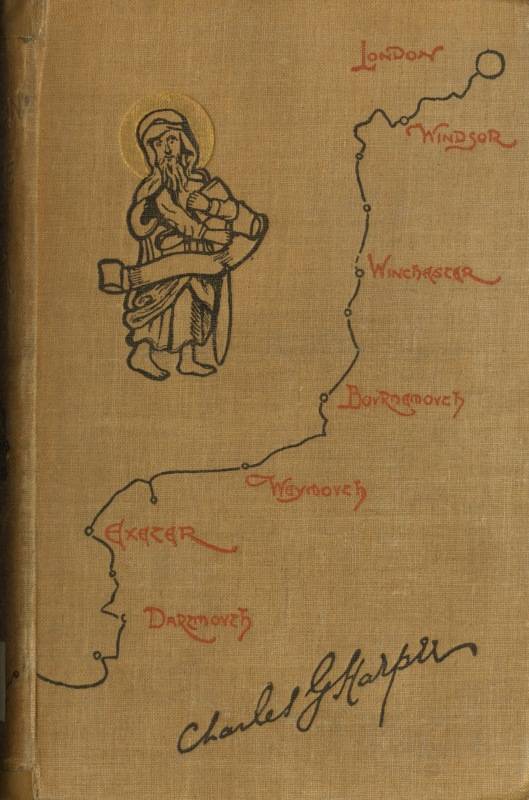
It was evening ere we had taken our fill of Bournemouth’s joys and departed from those crowded sands to walk by the sea-shore to North Haven, where the entrance to Poole Harbour bars further progress. Bournemouth’s lights began to glitter in the gloaming, and made this lonely edge of land more cheerless by comparison.
An extortionate boatman (as we subsequently learned) rowed us in the darkness across the ferry to South Haven, and left us, pilgrims in a strange land, upon the sands of the Dorset shore. We groped an unconscionable time amid sand-wreaths and hummocks, coming at length, by favour of Providence, to a low cliff covered with brambles, which we climbed, and then found ourselves by sense of touch in a narrow drong, dark as Erebus, by reason (it should seem) of tall elms whose branches met overhead. This we traversed with outstretched arms and came to Studland church, whose tower was dimly visible where the lane broadened, and the trees drew back their sullen plumes. To church succeeded village, thus to dignify the few houses we discovered, Only one illuminated pane bore testimony to the neighbourhood of human beings: the one inn of the place was close-shuttered, lifeless. We thumped upon the door of that unchristian sot-house, and nothing answered our summons, only the sough of the wind in the trees. We knocked and kicked upon that door with such right good will that the churl between the sheets in an upstairs chamber (who must have heard our earliest tapping) was beset by fears for his door panels, and rising, unlatched the lattice overhead, and querulously inquired what we would of him.
“Why, a bed,” we shouted, in chorus.
“Ye’ll get no bed here to-night,” said that licensed victualler; “the missus ain’t at hand, an’ I don’t know nothen about it. Good night t’ye.”
He slammed the casement, and we were left alone. We were consulting our map by the light of matches when a kindly villager took compassion upon us, and suggested that we should set out for Swanage. He guided us to the top of a soaring hill called Ballard Down, and showed us Swanage lights glistening far below.
Here, at the Ship Hotel, we found our rest at 12.30, upon an impromptu bed, contrived upon the coffee-room floor, and slept the sleep that only strenuous tourists can know.