
XXXII.
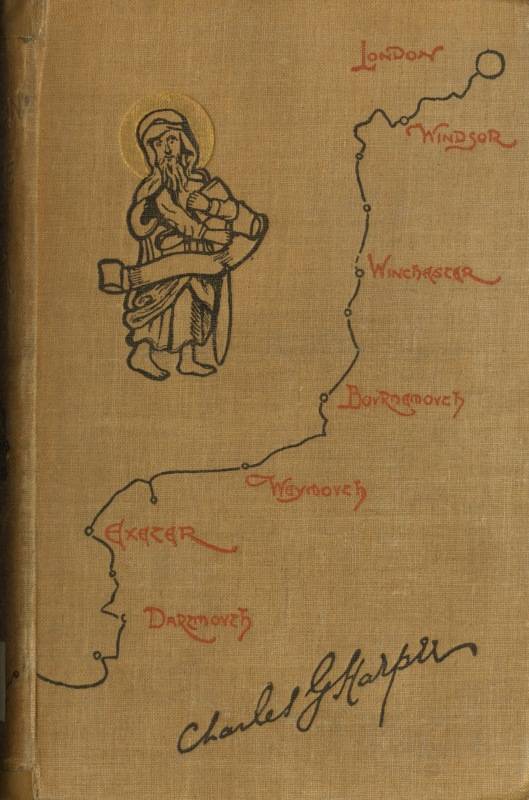
I think him a very charming saint indeed, with a happy lack of anything like a priggish austerity: one might be happy in the society of such a saint as this—if only he wore boots. Pity is that the average run of saints one hears or reads of are very gorgons for grimness: they look not upon the wine when it is red (nor white, either, for that matter). They are not like this old fellow, who is my beau idéal of the jovial anchorite. The first editor of my acquaintance (he was the editor of a pseudo-religious magazine—it is solemn food for reflection that nearly all young fellows of literary-artistical tastes start with magazines of this stamp), my first editor, I was saying, would not, some years syne, print this, my pet saint, “for,” said he, “he is irreverent, and”—with a fine disregard of grammar—“the proprietors would not like it.”
I argued that he might tickle the readers’ fancy; but the proprietors came between the readers and myself, and the article went to press without St. James the Less.
“I assure you,” said the editor, defending himself from the charge of “unco’ guidness,” “I would not object to him in the least, but” (sighing) “you don’t know our proprietors.”
I murmured gently that I had no wish to make their acquaintance.
“Do you know,” resumed the editor, “that I am not allowed to mention the name of Shakespeare in our pages?”
“Great Bacon!” quoth I, astonished; “why not?”
“Well,” said he, “you may laugh at the idea; but our people consider him immoral. If we find any particularly devout sentiment that makes an apt quotation, we may use it, but must, under no circumstances, ascribe it to Shakespeare.”
(I may remark, en parenthèse, that the magazine in question is defunct: it was too pure for this wicked world.)
For such good folk, prone to see evil in everything, pruriently pure, even to the wrappaging of piano-legs, even the name of the Andaman Islands must have a suspicious sound; and the Teutonic “Twilight of the Gods,” unenglished, would savour of the rankest blasphemy.