
Fundamental ideas and problems of the theory of relativity
About This Book
The lecture explains core conceptual foundations of relativity, distinguishing the physical relativity problem — whether nature admits preferred states of motion — from an epistemological requirement that concepts must correspond unambiguously to observable facts. It examines classical mechanics’ reliance on inertial frames, rigid bodies, and absolute time, critiques their empirical and logical shortcomings, and traces how special relativity reconciles the relativity principle with Maxwell-Lorentz electrodynamics by abandoning absolute time and defining simultaneity via light propagation. It sketches how these issues motivate the general theory and notes later efforts to base geometry and physical laws on more logically coherent formulations by Levi-Civita, Weyl, and Eddington.
About the Author
More Books by This Author
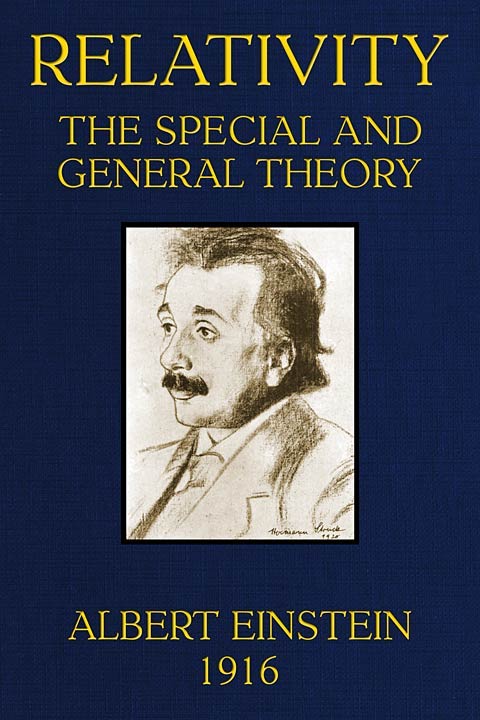 Relativity : the Special and General Theory
by Albert Einstein
Relativity : the Special and General Theory
by Albert Einstein
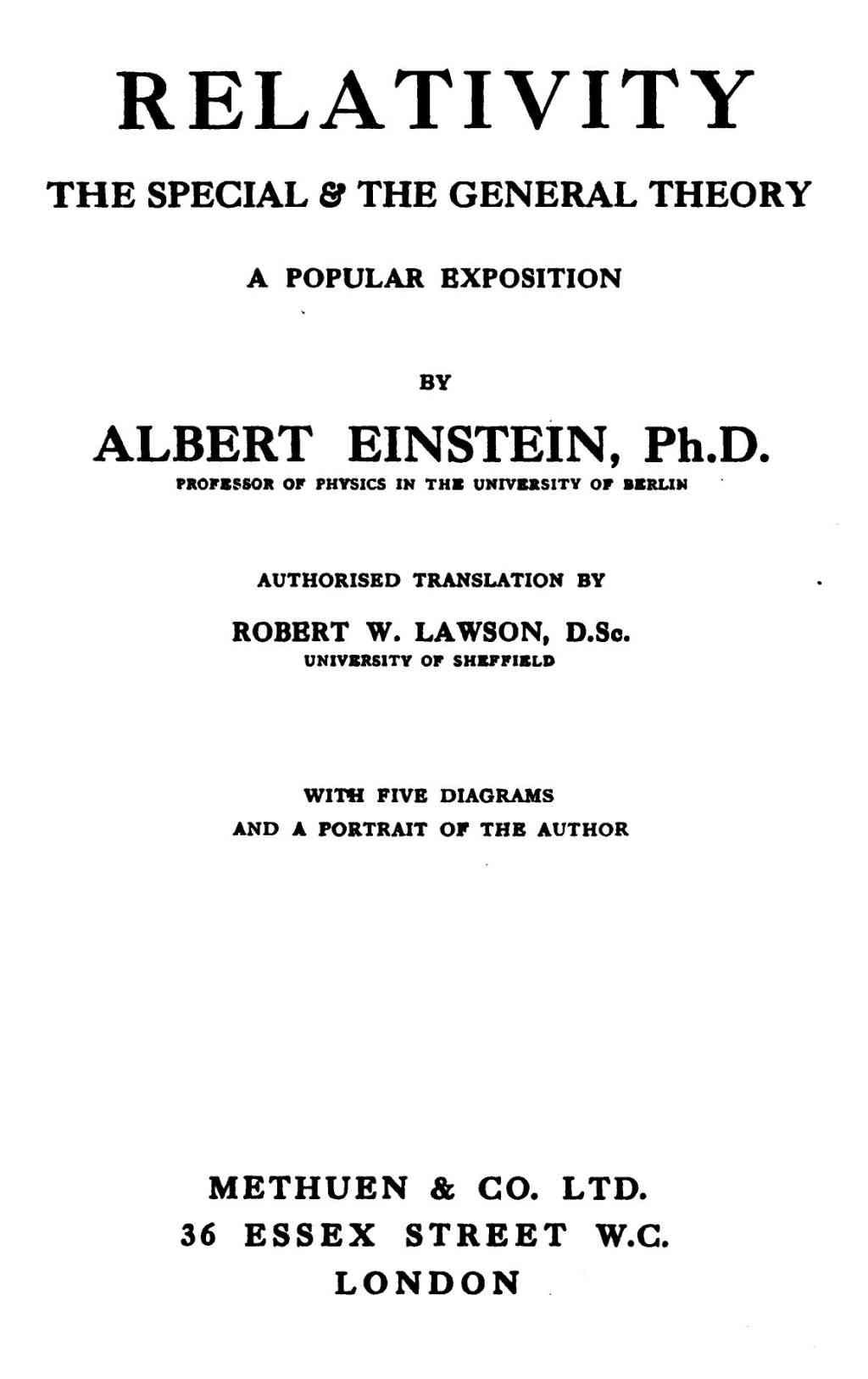 Relativity: The Special & the General Theory / A Popular Exposition, 3rd ed.
by Albert Einstein
Relativity: The Special & the General Theory / A Popular Exposition, 3rd ed.
by Albert Einstein
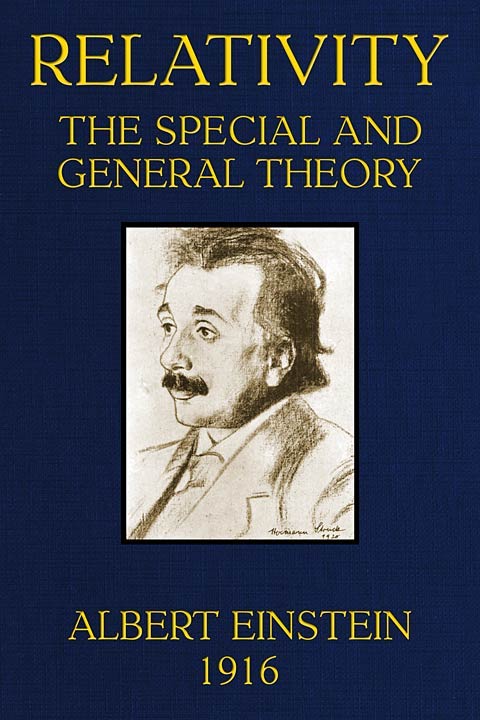 Relativity: The Special and General Theory
by Albert Einstein
Relativity: The Special and General Theory
by Albert Einstein
 Sidelights on Relativity
by Albert Einstein
Sidelights on Relativity
by Albert Einstein
 The Meaning of Relativity / Four lectures delivered at Princeton University, May, 1921
by Albert Einstein
The Meaning of Relativity / Four lectures delivered at Princeton University, May, 1921
by Albert Einstein
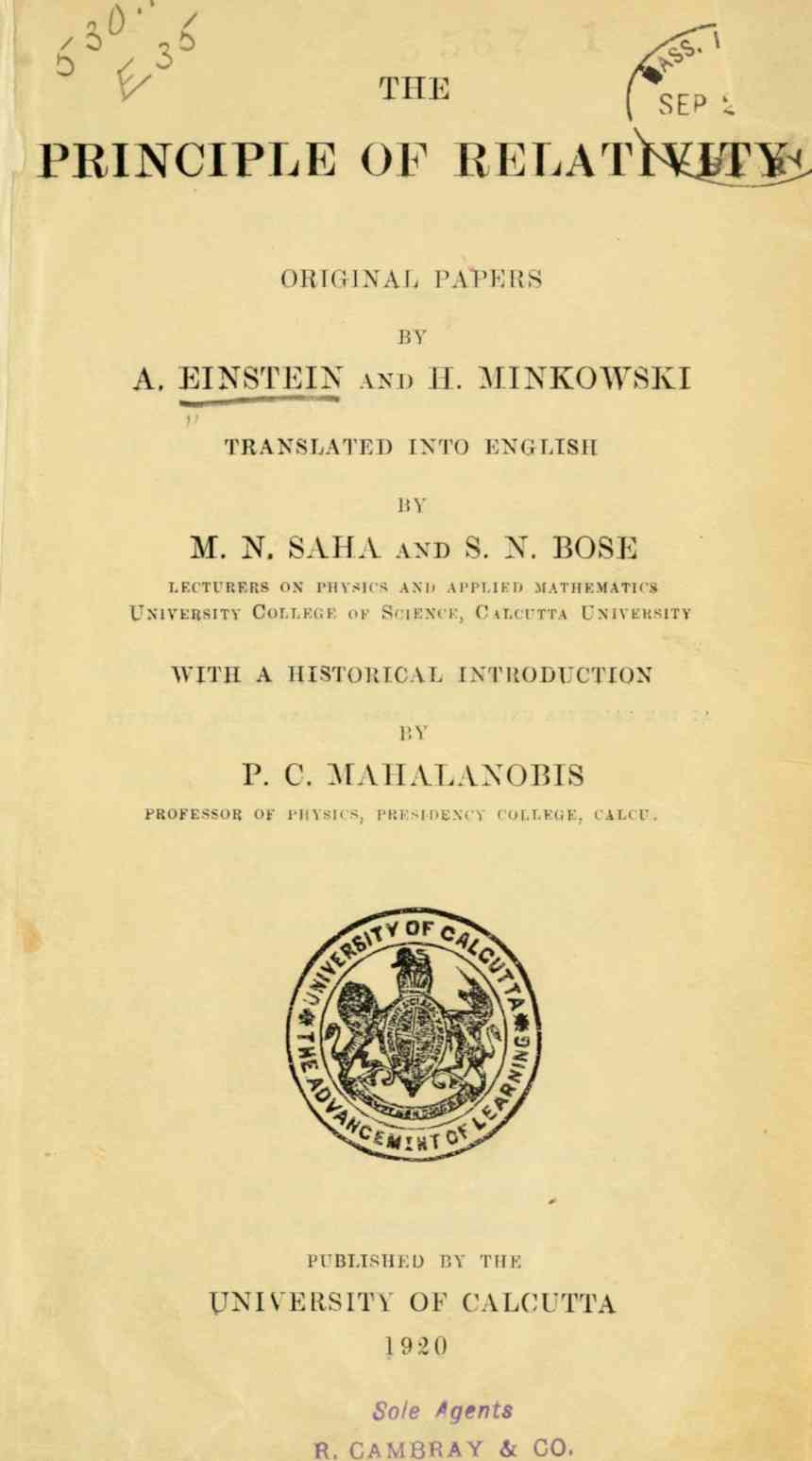 The Principle of Relativity
by Albert Einstein
The Principle of Relativity
by Albert Einstein