
XXII
I was posted to the Second Battalion again. I found it near Bouchavesnes on the Somme. It was a very different Second Battalion. No riding-school, no battalion-mess, no Quetta manners. I was more warmly welcomed this time; my suspected spying activities were forgotten. But the day before I arrived, the colonel had been wounded while out in front of the battalion inspecting the wire. He had been shot in the thigh by one of the ‘rotten crowd’ of his letter, who mistook him for a German and fired without challenging; he has been in and out of nursing homes ever since. Doctor Dunn asked me with kindly disapproval what I meant by coming back so soon. I said that I could not stand England any longer. He told the acting C.O. that I was, in his opinion, unfit for trench service, so I was put in command of the headquarter company. I went to live with the transport back at Frises, where the Somme made a bend. My company consisted of regimental clerks, cooks, tailors, shoemakers, pioneers, transport men, and so on, who in an emergency could become riflemen and used as a combatant force. We were in dug-outs close to the river, which was frozen completely over except for a narrow stretch of fast water in the middle. I had never been so cold in my life; it made me shudder to think what the trenches must be like. I used to go up to them every night with the rations, the quartermaster being sick; it was about a twelve-mile walk there and back. The general commanding the Thirty-third Division had teetotal convictions on behalf of his men and stopped their issue of rum except for emergencies; the immediate result was a much heavier sick-list than the battalion had ever had. The men had always looked forward to their tot of rum at the dawn stand-to as the one bright moment of the twenty-four hours. When this was denied them, their resistance weakened. I took the rations up through Cléry, which had been a wattle and daub village of some hundreds of inhabitants. The highest part of it now standing was a short course of brick wall about three feet high; the rest was enormous overlapping shell-craters. A broken-down steam-roller by the roadside had the name of the village chalked on it as a guide to travellers. We often lost a horse or two at Cléry, which the Germans continued to shell from habit.
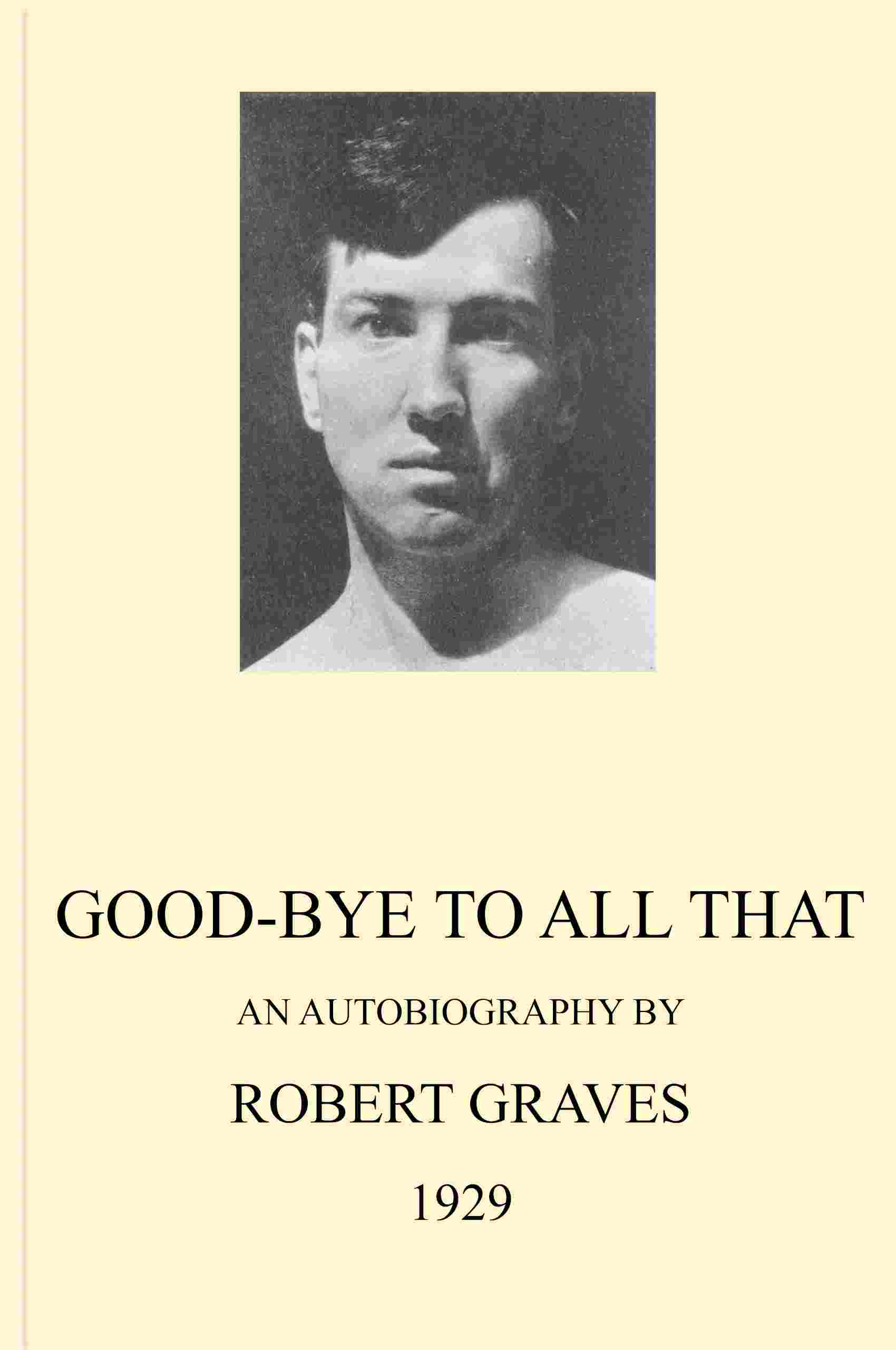
from a pastel by Eric Kennington
Our reserve billets for these Bouchavesnes trenches were at Suzanne. They were not really billets, but dug-outs and shelters. Suzanne was also in ruins. The winter was the hardest since 1894–5. The men played inter-company football matches on the river, which was now frozen two feet thick. I remember a meal here in a shelter-billet; stew and tinned tomato on metal plates. Though the food came in hot from the kitchen next door, before we had finished it there was ice on the edge of the plate. In all this area there were no French civilians, no unshelled houses, no signs of cultivation. The only living creatures that I saw except soldiers and horses and mules were a few moorhen and duck in the narrow unfrozen part of the river. There was a shortage of fodder for the horses, many of which were sick; the ration was down to three pounds a day, and they had only open standings. I have kept few records of this time, but the memory of its misery survives.
Then I had bad toothache, and there was nothing for it but to take a horse and ride twenty miles to the nearest army dental station. The dentist who attended me was under the weather like everyone else. He would do nothing at first but grumble what a fool he had been to offer his services to his country at such a low salary. ‘When I think,’ he said, ‘of the terrible destruction to the nation’s teeth that is being done by unqualified men at home, and the huge fees that they are exacting for their wicked work, it makes me boil with rage.’ There followed further complaints against the way he was treated and the unwillingness of the Royal Army Medical Corps to give dentists any promotion beyond lieutenant’s rank. Later he began work on my tooth. ‘An abscess,’ he said, ‘no good tinkering about with this; must pull it out.’ So he yanked at it irritably and the tooth broke off. He tried again; there was very little purchase and it broke off again. He damned the ineffective type of forceps that the Government supplied. After about half an hour he got the tooth out in sections. I rode home with lacerated gums.
I was appointed a member of a field general court-martial on an Irish sergeant charged with ‘shamefully casting away his arms in the presence of the enemy.’ I had heard about the case unofficially. He had been maddened by an intense bombardment, thrown down his rifle, and run with the rest of his platoon. An army order, secret and confidential, had recently instructed me that, in the case of men tried for their life on other charges, sentence might be mitigated if conduct in the field had been exemplary; but cowardice was only punishable with death and no medical excuses could be accepted. But I knew that there was nothing between sentencing the man to death and refusing to take part in the proceedings. If I chose the second course I would be court-martialled myself, and a reconstituted court would bring in the death verdict anyhow. Yet I would not sentence a man to death for an offence which I might have committed myself in the same circumstances. I was in a dilemma. I met the situation by evading it. There was one other officer in the battalion with the year’s service, as a captain, which entitled him to sit on a field general court-martial. I found him willing to take my place. He was hard-boiled and glad of a trip to Amiens, and I took over his duties for him.
Executions were frequent in France. My first direct experience of official lying was when I was at the base at Havre in May 1915 and read the back-files of army orders in the officers’ mess at the rest-camp. There were something like twenty reports of men shot for cowardice or desertion; yet not a week later the responsible Minister in the House of Commons, answering a question from a pacifist member, had denied that sentence of death for a military offence had been carried out in France on any member of His Majesty’s forces.
The acting commanding-officer was sick and irritable; he felt the strain badly and took a lot of whisky. One spell he was too sick to be in the trenches, and came down to Frises, where he shared a dug-out with Yates the quartermaster and myself. I was sitting in my arm-chair reading the Bible and came on the text: ‘The bed is too narrow to lie down therein and the coverlet too small to wrap myself therewith.’ ‘I say, James,’ I said, ‘that’s pretty appropriate for this place.’ He raised himself on an elbow, genuinely furious. ‘Look here, von Runicke,’ he said, ‘I am not a religious man. I’ve cracked a good many of the commandments since I’ve been in France; but while I am in command here I refuse to hear you or anyone bloody else blaspheme Holy Writ.’ I liked James a lot. I had met him first on the day I arrived at Wrexham to join the regiment. He was just back from Canada and hilariously throwing chairs about in the junior ante-room of the mess. He had been driving a plough through virgin soil, he told us, and reciting Kipling to the prairie-dogs. His favourite piece was (I may be misquoting):
He had been with the Special Reserve a year or two before he emigrated. He cared for nobody, was most courageous, inclined to be sentimental, and probably saw longer service with the Second Battalion in the war than any officer except Yates.
A day or two later, because he was still sick and I was the senior officer of the battalion, I attended the Commanding Officers’ Conference at brigade headquarters. Opposite our trenches was a German salient and the brigadier wanted to ‘bite it off’ as a proof of the offensive spirit of his command. Trench soldiers could never understand the Staff’s desire to bite off an enemy salient. It was not a desirable thing to be exposed to fire from both flanks; if the Germans were in a salient, our obvious duty was to keep them there as long as they could be persuaded to stay. We concluded that it was the passion for straight lines for which headquarters were well known, and that it had no strategic or tactical significance. The attack had been twice proposed and twice cancelled because of the weather. This was towards the end of February, in the thaw. I have a field-message referring to it, dated the 21st:
| Please | cancel | Form 4 | of | my |
| AA 202 | units | will | draw | from |
| 19th | brigade | B. Echelon | the | following |
| issue | of | rum | which | will |
| be | issued | to | troops | taking |
| part | in | the | forth | coming |
| operations | at | the | discretion | of |
| O.C. | units | 2nd R.W.F. | 7½ | gallons. |
Even this promise of special rum could not encourage the battalion. Every one agreed that the attack was unnecessary, foolish, and impossible. The company commanders assured me that to cross the three hundred yards of No Man’s Land, which because of constant shelling and the thaw was a morass of mud more than knee-deep, would take even lightly-armed troops four or five minutes. It would be impossible for anyone to reach the German lines while there was a single section of Germans with rifles to defend them. The general, when I arrived, inquired in a fatherly way how old I was, and whether I was not proud to be attending a Commanding Officers’ Conference at the age of twenty-one. I said that I had not examined my feelings, but that I was an old enough soldier to realize the impossibility of the attack. The colonel of the Cameronians, who were also to be engaged, took the same line. So the attack was finally called off. That night I went up with rations as usual; the battalion was much relieved to hear the decision.
We had been heavily shelled on the way up, and while I was at battalion headquarters having a drink a message came to say that D Company limber had been hit by a shell. As I went to inspect the damage I passed the chaplain, who had come up with me from Frises bend, and a group of three or four men. He was gabbling the burial service over a dead man lying on the ground covered with a waterproof sheet. It was a suicide case. The misery of the weather and the knowledge of the impending attack had been too much for him. This was the last dead man I was to see in France, and like the first, a suicide.
I found that the limber, which contained petrol tins of water for the company, had had a direct hit. There was no sign of the horses; they were highly prized horses, having won a prize at a divisional horse-show some months back for the best-matched pair of the division. So the transport sergeant and I sent the transport back and went looking for the horses in the dark. We stumbled through miles of morass that night but could not find them or get any news of them. We used to boast that our transport animals were the best in France. Our transport men were famous horse-thieves, and no less than eighteen of our stable had been stolen from other units at one time or another, for their good looks. There were even two which we had ‘borrowed’ from the Scots Greys. The horse I rode to the dentist came from the French police; its only fault was that it was the left-hand horse of the police squadron, and so had a tendency to pull to the wrong side of the road. We had never lost a horse to any other battalion, so naturally Sergeant Meredith and I, who had started out with the rations at about four o’clock in the afternoon, kept on with the search until long after midnight. When we reached Frises at about three o’clock in the morning I was completely exhausted. I collapsed on my bunk.
The next day it was found that I had bronchitis and I went back in an ambulance to Rouen, once more to No. 8 Red Cross hospital. The major of the R.A.M.C. recognized me and said: ‘What on earth are you doing out in France, young man? If I find you in my hospital again with those lungs of yours I’ll have you court-martialled.’
The quartermaster wrote to me there that the horses had been found shortly after I had gone; they were unhurt except for grazes on their bellies and were in the possession of the machine-gun company of the Fourth Division; the machine-gunners were found disguising them with stain and trying to remove the regimental marks.
At Rouen I was asked to say where in England I would like to go to hospital. I said, at random, ‘Oxford.’