
About This Book
A series of lectures traces how Greek city-states, with their strong municipal identities and limited capacity for territorial growth, confronted and gradually transformed into wider political structures; it explains the origins and characteristics of the polis, how hegemonies like Athens and Sparta attempted and failed to convert alliances into lasting empires, and how later solutions—federal systems and the deification or dynastic rule of leaders—produced quasi-territorial Hellenistic states under Macedonian dominance. The work analyzes institutions, naval power, and constitutional continuity across the classical to Hellenistic transition, arguing that Greek political evolution favored cohesion without erasing civic particularism.
About the Author

You May Also Like
6 picks
 "De Bello Gallico" and Other Commentaries
by Julius Caesar
"De Bello Gallico" and Other Commentaries
by Julius Caesar
 A Beginner's History of Philosophy, Vol. 1: Ancient and Mediæval Philosophy
by Herbert Ernest Cushman
A Beginner's History of Philosophy, Vol. 1: Ancient and Mediæval Philosophy
by Herbert Ernest Cushman
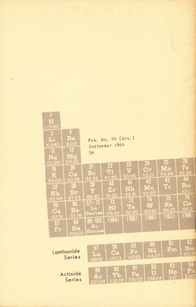 A Brief History of Element Discovery, Synthesis, and Analysis
by Glen W. Watson
A Brief History of Element Discovery, Synthesis, and Analysis
by Glen W. Watson
 A Burial Cave in Baja California / The Palmer Collection, 1887
by William C. Massey
A Burial Cave in Baja California / The Palmer Collection, 1887
by William C. Massey
 A century of excavation in the land of the Pharaohs
by James Baikie
A century of excavation in the land of the Pharaohs
by James Baikie
 A classical dictionary / containing a copious account of all the proper names mentioned in ancient authors with tables of coins, weights, and measures used among the Greeks and Romans and a chronological table
by John Lemprière
A classical dictionary / containing a copious account of all the proper names mentioned in ancient authors with tables of coins, weights, and measures used among the Greeks and Romans and a chronological table
by John Lemprière