
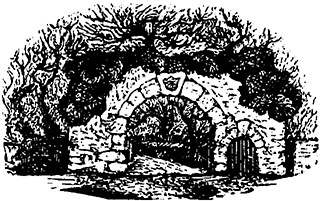
Beau Séjour.
Newspapers—
Are, two in English and one in French. The English are the Star and Comet, published on Mondays and Thursdays. The French, the Gazette de Guernesey, published every Saturday. The former are 2d. each, the latter 1½d.
Omnibuses—
Are four: the Defiance, Favourite, Victoria, and Nelson. One starts from the Town Church for St Sampson's every morning at 8, 9, and 12 o'clock, and in summer to St Saviour's and different part of the island every Saturday afternoon. Pic-nic parties are taken to any part of the island.
Oxen—
Arrive to considerable size, and in the country are employed at the plough and in drawing carts. After a certain servitude, or when they are seven or eight years old, they are fattened and sold to the butcher. Their size and weight are of such importance as to have attracted the notice of Quail; for in his report he says: "Those of 1200 lbs. or 60 score, appear not unfrequently, and from the evidence of the clerk of the market, there was one which attained the weight of 1500 lbs."
Parsnips—
Are the best farming crop in the island, and are cultivated to some extent. They are chiefly used for fattening cattle and hogs, from which the pork and ox beef derive a superior flavour. They are also given in small quantities to milch cows during the winter, thereby imparting to the milk and butter a richness which would not be obtained were the animal fed entirely upon dry fodder.
No. 1, is the original Guernsey Parsnip, No. 2, the Jersey Parsnip.
Passports.—
Persons about to take their departure for France must provide themselves with passports, which are obtained gratis at the Secretary's Office, Government-House, between the hours of ten and twelve o'clock.
Peat—
In the Northern parts of the island is found in great abundance, and a load, which will go much further than a ton of coals, is sold at about 1l.[A] It is dug up on the sea shore and the adjacent marshes in the neighbourhood of Grande Roque, and is used by the English in that part of the island, the natives preferring vraic on account of the superior ashes which it yields. It is not so good as the Welsh peat; and is called in the vernacular tongue of the island gorban, or a god-send, a name given it by one of the ancestors of the present Baillif, who first discovered it as being a valuable article of fuel. At the Amballes, a place near town, and situated considerably above the level of the sea, peat was found when digging for the foundation of the gas-works, June 12, 1830, at about forty-five feet from the surface, under a block of granite.
[A] A correspondent of the Horticultural Chronicle advises its being mixed with coal, when it makes a fine cheerful fire, useful in certain cookery, and were it not for the gas of the latter, would be much more pleasant than wood.
Peat-heaps, with a View of Roc-du-Guet, or Watch Rock.
Peter-Port Church, St;—
Or, the Town Church, consists of a chancel, nave, North and South aisles, and North and South transepts, with a square tower at their intersection. It is of the later gothic style of France, termed the Flamboyant, and many of its portions are richly decorated within and without. An old stone pulpit, which was removed from its extremely mutilated state, was once one of the antique ornaments of the South pier of the chancel; and in the East end of the North aisle is a slab on which are three figures, the right and left being apparently ecclesiastics; but as the stone is so much worn by the attrition of time, it is difficult to decipher. In the East walls of the North and South ailes are most elegant piscing, the canopies of which are crocketed, finialed, and pinnacled, and the interior moulding of the arch and sides formed of crumpled leaves and creeping animals. The shelves consist of brackets of leaves, above which are two niches, square-headed and trefoiled. The mouldings and canopies of the North porch and West door are crocketed, finialed and pinnacled, and are deserving of considerable notice. In the South transept are octagonal pillars without capitals, so that the mouldings of the archivolt run into them, and in the East wall is a piscina cut in granite, ogee-headed and trefoiled with a shelf across it. The tower, which has a window in each side, is square and embattled, and is surmounted by a short octagonal spire, that was erected in the year 1721. At the angles of the tower and elsewhere, are line-course gurgoyles representing human figures, scutcheons and lions' heads and shoulders.
This church was consecrated on the 1st of August, 1312; and was the last of the ancient churches consecrated by a Roman Catholic Bishop in the island. It has a very handsome pulpit and reading-desk, and of late years the whole building has been renovated. It also contains a fine deep-toned organ, which originally cost between seven and eight hundred pounds, and which has since been removed to the North aisle, where it appears to considerable advantage. The tower has a clock, and a merry peal of eight bells, and its height from the vane to the ground is 132 feet, being the highest in the island. There are two French services and one in English every Sunday, and there are sittings for 1400 persons.
East View of the Town Church.
Peter-in-the-Wood Church, St—
Has undergone less change than any other in the island, as the tracery of the windows still remain untouched, and the ornamental parts almost perfect. It has many Norman portions, and the windows in the North and South walls of the chancel are in that style, the inside walls being splayed and quite plain. It is built on the West side of a hill, which causes the chancel to rise several feet higher than the West end of the nave, insomuch that walking from the tower to the chancel is not unlike going up hill. The nave once contained a monumental brass plate representing a respectable personage or merchant, which from the cut of the stone appears to be about the year 1560. The consecration of this church took place in the year 1167.
St Peter-in-the-Wood's Church.
Pools—
At present, are few, and are chiefly in the marshy districts of the vale, and on Lancresse common; but as they are formed or rather considerably enlarged by the winter rains, are consequently void of fish. Heylin, chaplain to the Earl of Danby, says, in 1629: "Is a lake on the North-West part of the island, near unto the sea, of about a mile or more in compasse, exceedingly well stored with carpes, the best that ever mortal eye beheld, for taste and bignesse." This lake still assumes something of its original form throughout November, in spite of the innumerable and expensive efforts to drain it off. In summer it is dried up, but during the height of the inland water, it is still a great attraction for a variety of sea-fowl.[A]
[A] In my "Adversaria et Notitiæ Herbarum," for autumn, 1841, speaking of this pool, I have:—"Waded through the water, and shot six purres; ... in the middle of the pool, and on a large solitary stone, covered with moss, picked up a Sandwich tern that had been struck by a hawk." Memorandums about the same date record, that my friend and relation Mr John Bellamy Henderson, surgeon, shot many curious birds there, amongst which were dunlins, a lesser stint, and a large sandpiper. In the winter season curlews show a great preference for this inland water.
Mare de Carteret.
Porters.—
By an act of the Royal Court, for the better regulations of boatmen and porters, each passenger's effects are to be carried to the hotels and lodging houses in the lower town for six pence; any other imposition is fined by a penalty of 10 livres tournois. Every porter is to wear a brass badge on his left arm, and he is forbidden to touch the passengers' luggage or effects without their leave. He is to stand behind or along the walls of the pier until called for; under the penalty of suspension of his badge. No porter is to carry a second load of luggage until all the others present at the landing have each carried one in their turn, under a penalty of 10 livres tournois.
Poultry—
Is almost wholly French, very little of native produce being brought to market. Turkeys sell from 3s. to 5s. each, fowls 2s. 6d. to 3s. per couple, geese 2s. to 2s. 6d. each, ducks nearly the same as fowls.
Religions.—
The Church of England is predominant; there being upwards of six places of worship in town, besides the country churches. The next are the Wesleyan Methodists, who have upwards of 1827 sittings. Ebenezer chapel, Saumarez-street, in English, is open on Sundays at half-past ten in the morning, and six in the evening; on Wednesdays and Fridays at seven in the evening. Le Marchant-street chapel in French, on Sundays at nine in the morning, and six in the evening; on Tuesdays and Thursdays at seven in the evening. Wesley chapel, Bouet, in French on Sundays at nine in the morning and six in the evening; on Tuesdays and Thursdays at seven in the evening. In English on Sundays at half-past two in the afternoon, and on Mondays at seven in the evening.
The Independents have three chapels, Eldad, Union-street; one in New-street, and another called Clifton Chapel; the whole of which contain sittings for about 1726 people. The service of the New-street chapel is in French, and on Sundays begins at half-past ten in the morning, and six in the evening; also on Wednesdays at seven in the evening. The service of Clifton Chapel is in English, and commences at half-past ten in the morning and at six in the evening on Sundays; on Tuesdays at seven in the evening. The Eldad Chapel, Union-street, is in English, and on Sundays commences at half-past ten in the morning, and half-past six in the evening; on Thursdays at seven in the evening.
Clifton Chapel.
The New Connexion have two chapels, Zion, in Clifton, and Hospital-lane preaching room. The service at Zion is in English, at half-past ten in the morning and six in the evening on Sundays; on Wednesdays and Fridays at seven in the evening. Preaching room in French on Sundays at ten in the morning and six in the evening, and on Thursdays at seven in the evening. These chapels contain sittings for about 748 people.
The Bryanites have a chapel called Salem, in Vauvert-road, which contains upwards of 380 sittings. The service is in English at half-past ten in the morning and six in the evening on Sundays. On Tuesdays and Thursdays at seven in the evening.
The Society of the original Foxonian Quakers have a meeting-house at Clifton. Friends meet on seventh days at ten in the morning and three in the afternoon throughout the winter, and at six in the summer. On fourth days at ten in the morning. There are about 120 sittings; but Friends are few, there being only about thirty members.
Friends' Meeting-house.
The Primitive Methodists, Catholics, Baptists and Unitarians have one each, and unitedly contain 930 sittings.
At the Roman Catholic chapel, Burnt-lane, high mass at half-past ten in the morning on Sundays;—preaching in English. Vespers, six in the evening.
Primitive Methodists. In Pollet-street in English on Sundays at half-past ten in the morning and six in the evening. On Tuesdays and Thursdays at seven in the evening.
Unitarians. Allez-street, New-Town, on Sundays at ten in the morning and six in the evening, in English.
Bethel Union. At the preaching room on the Quay, near the North Pier, at half-past ten in the morning, half-past two in the afternoon, and half-past six in the evening, in English;—on Thursdays at seven in the evening.
Reptiles and Snakes—
Are not known in the island, neither will they exist on being introduced. Heylin, of old, speaking of Guernsey, says:—"The aire hereof is very healthfull, as may be well seen in the long lives both of men and women; and the earth said to be of the same nature with Crete and Ireland, not apt to foster any venomous creature in it." The only reptile of the snake genus is the slow-worm, and even that exceedingly rare.
Rivers and Brooks.—
Being confined to small streams, the student of good old Isaac Walton is denied the pleasure of fly-fishing. Night-lining in the pools and deep holes for eels is very frequent.
Roads—
Are reckoned equal to any on the Continent, and are entirely exempt from turnpike tolls. It is only within the last half century good roads have been established, for which the public are indebted to the exertions and ingenuity of the late Sir John Doyle, while Governor of the island, notwithstanding he met with the most ignorant opposition from the country people or farmers, whose real interest it chiefly served; and which they now acknowledge to be the veins of the island, whereby they circulate the wealth and produce of their soil. In this excellent undertaking, which was the era of civilization in Guernsey, Government lent a hand, by allowing the money derived from the sale of the Braye du Valle to be applied for the same. At present, the roads are kept in repair by a rate on land proprietors bordering the main roads, and by grants of money from the States. The lanes that here and there intersect the island, may be said to be the old roads, and furnish the green-lane botanist with delightful, cooling, and shady walks throughout the heat of summer.
Ruins—
Are not numerous, the chief being the old chapel of St Apoline, and the priory in the island of Lihou. The former is in the parish of St Saviour, amid a solitary and woody district, which has all the appearance of monastic seclusion. It is about seven and twenty feet long, by thirteen across, having a narrow square headed opening at the East end, and a rude segmental doorway, and a narrow window divided into two parts on the South side. The whole is covered with a ponderous vaulted roof of stones, and is the most ancient ruin in the island, being supposed to be built about the year 900. The sides of the walls and roof appear to have been once adorned with fresco paintings, as several figures of saints and the Virgin Mary are still discernible on the South ceiling. The silver-gilt chalice, belonging to this chapel, is one of the few relics of Romish times which the island possesses, and it is now in the custody of the present Baillif, John Guille, Esq., of St George. Round the bowl are the words "Sancte Paule ora pro nobis." From this it is supposed the chapel was originally called St Paul's, which by the attrition of time has worn itself into Apoline.
The priory on the little isle of Lihou, belonging to Mr James Priaulx, consists of little more than a few broken walls. Sufficient however remains to enable one to determine its different compartments, of which the chapel forms the principal portion.[A]
[A] During the last war, the Lieutenant-Governor supposing this chapel might be turned into some use by the enemy, issued orders for its complete demolition, which was effected by a barrel of gunpowder. Lately a pavement of small green and red glazed Norman tiles have been discovered, as also some silver monastic medals, and silver pennies of Edward I.
St Sampson's Church.
Sampson's Church, St—
Is evidently the most ancient structure in the island, being consecrated in the year 1111. It has been so affected by modern innovation and addition, that its original character is scarcely identified. The interior is plain and massive, and not a single ornamental moulding can be discovered. For some unknown purpose a squinch has been thrown over the North-East angle, of an arched arcade in the North wall of the North aisle. The tower is of the early English style, plain, roofed with stone, and situated over the North side of the nave, which appears to be an additional structure.
St Saviour's Church.
Saviour's Church, St—
Consists of a nave, chancel, South aisle, and transept, and a lofty square tower, which rises at the West end of the nave. The East window of the South aisle is large and pointed, without mouldings, whilst those on the South side are small and segmental. The aisle has a buttress supporting one of its walls, which being united with that of the chancel, gives it the appearance of being built prior to it. The South transept is small, and the window considerably modernized. The piers of the nave are without capitals, some round and others octagonal. The tower is embattled, having pointed and square headed windows, and is surmounted by a short octagonal spire. The corner buttresses have flowers on their tops, and are two stages high. Besides this church, there is in St Saviour's parish two Methodists chapels built in 1820, an Independent one, opened in 1817, and one for Baptists.
Servants.—As several shops keep a register of these, their characters and wages are easily obtained. Good maid servants get 9l. per annum; others from 5l. to 6l. do. Butlers, coachmen, &c., vary according to situation and character.
Shells.—
The conchologist has an ample field before him, and the little isle of Herm is so replete with them, as to be considered the first spot in the kingdom both as regards beauty and quantity.
Shoes.—
Notwithstanding leather is entirely exempt from duty, shoes cannot be said to be cheap, as they are from 8s. 6d. to 9s. per pair. At the shoe marts some of an inferior quality may be had from 3s. to 6s. Boots are in proportion.
Shops, French Toy and Fancy.—
One in High-street is exceedingly gaudy, being replete with the best fancy articles of Paris, and rich with specimens from "l'Industrie Nationale," &c. Many useful things can be procured there remarkably cheap, especially paper, perfumes, and ornaments.
Shooting.—
Heretofore, every person was allowed to carry a gun, and no protection granted for game; but now the Royal Court have enacted certain restrictions respecting guns, dogs and ferrets; but as they are exceedingly mild, it will not be amiss to mention there is excellent sport in snipe,[A] woodcock, plover,[B] fieldfare, and blackbird shooting; as during the winter months there is a great influx of these birds. So lenient indeed are the laws respecting shooting, that an informer cannot gratify any malicious view, unless he resign all damages awarded by the Court towards some charitable institution or purpose; moreover, it is believed shooting is encouraged for the purpose of initiating youth for the service of the rising militia. Shooting in an orchard is under a penalty of 20l., as it destroys the bud.
[A] In a memorandum dated October 31, 1842—"Went down to Grande Rocque with my gun;—observed flocks of the red-legged crow at an immeasurable height in the air. On alighting, they eagerly sought small shells that covered the plains by myriads. Returning home late in the evening, I heard, for the first time, at some altitude, the cacephata attagenarum, or harsh sounds of a number of snipes. A similar thing occurred in Jersey, therefore I take it for granted that snipes generally visit these islands about this time." Again, for June 9th of the present year, I have:—"Fair, but windy day.—Went out to Woodlands, to fetch some arbutus wood for engraving, where I was informed a bittern was shot in an adjoining garden, by a man named Abraham Machon; also, that in severe winters, among other birds driven here, are wild swans; that a few years since, several of these birds lodged on some rocks in the Valle, and were so exhausted as to suffer themselves to be taken by the hand, of which two were exhibited in the Market and fetched 10 shillings each.
[B] Besides the plover, we have the occasional influx of a a number of pewits, and as proof that the flocks are not small, Mr Henry Le Lacheur, jun., of the Forest, killed nine at one shot, during the severe frost of 1837.
Societies, Bible.—
The British and Foreign Bible Society, established 1812—contributions 420l. Guernsey Auxiliary to the Trinitarian Bible Society, established 1836—contributions 48l. Ladies' Association to ditto, established 1831—contributions 85l.
Spirits, Wines, and Cordials.—
The best Cognac brandy is always imported from France, and is never less than 6s. or more than 7s. per gallon. Inferior brandies distilled from beet-root, potatoes, or apples, may be obtained from 2s. 6d. to 4s. per gallon, and rises in quality according to price. The best hollands is 3s. 4d. and the best Jamaica rum 4s. 4d. per gallon. Liqueurs and cordials are equally moderate; crême de noyau, noyau rouge, crême de fine orange, ditto de citron, ditto de framboise, ditto des Barbades, ditto de canelle, &c., are all 3s. per bottle, and we may add as somewhat less, parfait amour, Jamaica shrub, ratafia de cinq fruits, and curaçoa double, which latter article may be had for 1s. 8d.
The prices of wines are as follow: best port, 25s. per dozen; best sherry, 22s. ditto; fine malmsey, 28s.; ampurdam, 8s.; benicarlo, 8s.; hock, 15s. to 38s.; mountain, 8s. 6d. to 12s.; Teneriffe, 11s.; Syracuse, 24s.; Constantia (pints), 12s.; Calcavala, 12s.; Bucellas, 10s.; Vidonia, 18s.; Grenache, 8s. 6d.
French red wines (clarets)—Château Margaux (pints), 18s.; La Fitte, 36s.; Léoville, 28s.; La Tour de Carnet, 24s.; St Julien, 18s.; St Emilion, 15s.; Medoc, 12s. French white wines—Champaign (white and pink), 50s.; in pints, 26s.; burgundy (sparkling), 24s.; hermitage, 36s.; château grillé, 18s.; haut sauterne, 24s.; Barsac, 24s.; grave, 10s. to 15s.; roussillon sec, 8s. 6d.; rancio, 12s.; picardan (sec), 18s.; cornas, 15s.; crosse, 18s.; tavel, 10s., together with numerous others. There is 1s. 6d. per dozen allowed on the above when the bottles are returned, as they have been included.
States—
Are of two kinds, the administrative and elective. The administrative States are composed of the Baillif and twelve Jurats, eight Rectors from the parishes, the Attorney-General, six deputies from the town parish, and nine from the rural parishes, in all thirty-seven members. The States of election are composed as above, with the addition of the Constables and Douzeniers of each parish. The town parish alone sends forty-eight members; formerly it only returned twenty-four. This body corporate is the little parliament of the island, and every inhabitant is supposed to be represented therein. They are convened by a printed notice, called a Billet d'Etat, issued by the Baillif, and communicated to every and each of the members at least a week before the time of meeting.
Taxes—
Are not levied on strangers, unless they become proprietors of land or enter into some business. The tax or rate on the native is about one-ninth that of England; for a more curious detail of which, the reader is referred to the History of Guernsey, by Jonathan Duncan.
Thieves—
Until of late years were totally unknown here, and but for the continued vigilance of the present constabulary force would be considerably on the increase. Strange to relate, hardly ever a native is caught committing the slightest depredation on his neighbours; convicted rogues and thieves being, for the most part, from Somerset and Dorset,[A] especially the latter. Formerly, from the leniency of the law, they were merely banished to the place from whence they came; but now, from a better understanding of the rights of society, they are sent to the hulks of their own country, waiting a further removal to Van Dieman's Land.
[A] It appears that starvation, want of food, raiment, and depression of wages are the chief causes that drive these labourers and wretched mendicants to the Channel Isles; for, according to an article—"The Labourers of Dorsetshire"—in Lloyd's weekly London newspaper for March 19th of the present year, it appears by a respectable reporter of the Corn League, that for starvation, abject want, total ignorance, depravity, and lowness of wages and raiment, that that county exceeded every thing on record. According to a letter in the "Morning Chronicle," the reporter of the League was strictly enjoined to keep at some distance within the base of truth, that there might be no room for contradiction, and to that rule he rigidly adhered; nevertheless, it appears the poor people never taste tea, coffee, nor sugar;—animal food five or six times in the year, and beer the same. Those who live near the sea, chiefly exist upon turnip tops, and because they have no money to procure salt, boil them in sea water.
Tithes—
Yield but a slender income to the Clergy, in consequence of the great breadth of potatoes under cultivation, on which the farmer is exempt; but the rectors have had, of late years, an increase of income taken from the revenues belonging to the Crown in this island, so that all the livings of the country parishes are not less than 101l. nor more than 166l. per annum. St Peter-Port, on account of its casualities, yields 480l. per annum. Tithes are fixed on the twelfth and ninth portion of corn and apples.
Tonnage Dues.—
English vessels not registered in Guernsey, pay 6d. per ton on all goods landed and loaded; but when from a French port 6d. per ton on the tonnage of the vessel. Foreign vessels pay the same, measured as British tonnage. Fishing vessels and yachts are exempt, but pay the pass on leaving the harbour. Vessels exporting coals are exempt; but those landing wines, whether for the inhabitants or on strangers' account, pay a duty of fifteen sous per ton.
New Torteval Church.
Torteval Church—
Is comparatively new, the old one having been pulled down in the year 1815. The tower and spire of this church are round, like a sugar-loaf, and of considerable height; and the ascent to the top by a kind of cork-screw flight of steps. The interior affords room for a much larger congregation than the parish now produces. The pulpit is erected under a dome or arch in the centre of the chancel, immediately opposite the communion table, and is said to impart a strange tone to the clergyman's voice.
The old church of which the engraving at page 85, represents, had a nave, chancel, South aisle, porch, and low, square tower, pinnacled and surmounted by an octagonal spire at the West end of the nave. It was built by Sir Phillip De Carteret, in the year 1140, in consequence of a vow made at sea. Sir Phillip was the son of Sir William De Carteret, co-Lord with the King of France of the barony of Carteret in Normandy.
Trees—
Most commonly met with are, the Guernsey elm, oak, ash, and poplar, with a sprinkling here and there of Turkey oak. The Guernsey elm, which is a tall, poplar-like tree, is peculiar to the soil, and may be seen beautifying almost every sylvan district. The New Ground or parade, is almost wholly circumgirt with this fine forest tree, which, in connexion with Carey Castle, is an object of much attraction when seen from the roads; insomuch that the latter has the appearance of a noble mansion in the midst of a large and thickly wooded park. Contrary to England and most other countries, the trees in various districts are stunted down to pollard fashion, of which the annexed engraving is a faithful representation, after the first year.
Old Torteval Church.
Valle Church, the—
For antiquity, is the second church in the island, and is dedicated to St Michael the Archangel. It has undergone a complete modernization, and a new roof has just now been put up. A monumental brass was once inlaid in a stone situate in the East end of the North aisle, which was supposed to represent the Abbot of St Michael. The chancel which forms the original church, is said to be of a later Norman style than that of St Sampson's, and there is still preserved its consecration, which happened in the year 1117. The pillars are round, and the supporters of the fabricated roof are wrought with a kind of zig-zag moulding. The East window of the North aisle, if examined narrowly, exhibits a kind of fret-work, and is divided into three lights.
The Valle Church.
Vergée.—
A measure of ground, two and a half of which complete an English acre. A vergée lets from 1l. to 6l. per annum, and may be purchased from 20l. to 100l.; but the purchaser may either pay the whole or in part, when the remainder stands over as mortgage, which is divided into quarters and called "rents."
Vraic—
Is sea-weed, and is eagerly sought after by the farmers, both as fuel and manure for their grounds, than which, they uphold nothing can be better. The ashes, as a manure, are certainly unrivalled, and so appreciated are their value, that "no sea-weed, no corn," has passed into a proverb. They are sold at about 1s. 6d. the Guernsey bushel.
Weights and Measures.—
The pound is two ounces more than the English; thus, twenty-eight ounces Guernsey, are thirty and a half avoirdupois. The weights at the meat-market are under the direction of the States. They are of solid brass, beautifully bright, with their numbers engraved on them, and are locked up every night by the clerk of the market. Defalcations of weight in meat, butter, or bread, is punished with a heavy penalty, and if among the butter women, the whole of their stock is seized by the constable whose duty it is to investigate the matter, and confiscate it for the benefit of the town hospital.
Wheat, Oats, and Barley.—
The red wheat is preferred on account of its producing heavier crops, and being less subject to the ravages of small birds, which are very numerous here, especially sparrows. Wheat, during the last twenty years, has been about two-thirds of the price at which it has been sold in England. In the summer of 1830, wheat was twenty shillings per quarter, Guernsey measure; whilst the price in England at the same time was sixty or seventy shillings per quarter. At one time, the rigorous corn-law was about to be extended here; but the inhabitants bestired themselves, and succeeded in warding off the terrible blow, for which they were greatly indebted to the exertions of the late venerable Baillif.
Barley generally follows wheat, and is considered by agriculturists of an excellent quality, so much so, that when Quail wrote, one would have thought that it was chiefly used for bread. It is sold to the brewers for malting, at 3s. the Guernsey bushel, (56 lbs. English.)
Oats and rye are not much grown, as they are obtained on the Continent much cheaper than they can be raised, and in respect to the keeping of a horse are much more reasonable than in England.
Wood for firing.—
In the country, may be obtained at the following prices: liberal sized faggots, consisting of ash, elm, or apple tree, fetch from 18s. to 1l. per hundred. Should a still greater moderation of price be regarded, old ship planks in the neighbourhood of the pier may be had. Norwegian and Swedish deals, twelve feet long, nine inches broad, and three inches thick, are sold for 2s. and 2s. 6d. each, or 15l. per 120, as there is no duty on them, or any other kind of timber.
THE STRANGER'S GUIDE;
OR,
WALK ROUND THE ISLAND.
The first thing that a stranger, on landing, seeks, is rest and quietude; for which purpose, he generally locates himself at one or other of the hotels. Ordering dinner, he prepares an appetite by a walk in and about the town, which he will find to be a quiet, though thriving place, with good handsome shops. He may be arrested by the town church, which is as handsome a structure as any in England; and in many of its portions displays some cunning specimens of the ancient chisel. Should he be thinking of becoming a resident, he may probably stroll into the shambles, the fruit and poultry markets, and from thence to that splendid area the fish-market, where doubtless, if the slabs are in the same condition as in the earlier part of the morning, he will exclaim: "Well, this beats any thing of the kind I have ever seen!" On deliberating on the building and its vast supply, he will put us down as a fish-eating people, unless by enquiry he finds that vast quantities are exported. Having communed within himself on the various markets, he will not be a little amused with the fantastic head-dresses of the Norman women.
Proceeding through the town, he may visit the Grange, Rohais and St Andrew's roads, where he will find handsome, uniform buildings, much after the style of his own country; and having as it were by necessity passed the College, he will stop short to give it an extra consideration best known to himself. By the bye, he may fall in with the New Ground or parade, with which he can scarce fail to be pleased, as it is the admiration of every one.
Having procured a tolerable appetite, he will, in all probability, sit down to a dinner of John dorey or turbot, which, with the addition of a piece of roast beef as good as that of old England, and a good supply of delicious vegetables and fruit, may be a further proof of the qualities of Guernsey. After dinner being generally considered an interlude for good feelings and a kindly impression, the visitor no doubt will be anxious to chat with his neighbour on the economy of living in Guernsey and so on, or in his absence may skim the pages of a Guide or Almanack. Such being the case, he retires to bed to dream of the morrow's excursion, which, in all probability, will be towards the outskirts of the town; in which case, should he select the Rohais, he had better drop into Luff's nursery, as he will find in it much to interest the florist and the horticulturist. Taking a circuitous bend to the left through the fields adjoining Mr Martin's, he will fall in with Havilland Hall, the present residence of the Governor, which from over the hill has a fine appearance, and is seen to its best advantage. It is remarkable for its altitude, and an entrance of four lofty Doric columns, which but for a gentle swell in the middle, would be somewhat grand. The rest can scarce fail to be admired, as it consists of a deep ravine, babbling brooks, hanging woods, sheltered vale and cultivated farm.
Leaving the secluded quietude of Havilland Hall, you again fall in with one or the other of the public roads in the suburbs, wherein may be marked the growing importance of the town in the newly cut roads, and the handsome houses on either side. From the English tourist's knowledge of affairs so far, methinks I hear him exclaim: "What, from housekeeping, rent, and taxes in England, I am persuaded I can live here for about one half of my income. Indeed I can save one fourth owing to the entire absence of duty on excisable articles in England; not only can I live cheaper, but with much comfort and satisfaction to my wife and family. Here are no taxes, toll-bars, or any other kind of imposition, consequently can keep my horse and carriage at an average rate of 20l. per annum."
Keeping on he will arrive at Fort George, which is an elevation from whence he can see many objects of attraction, such as Doyle's Monument, on the right, and the small adjacent isles of Sark, Herm, and Jethou in the distance; and with a telescope, if the day is clear, the houses and trees of St Peter's, in Jersey, and not unfrequently a clear out-line of the coast of France over the main. In other positions he will also make a tolerable discovery of the craggy line of coast scenery from the precipitous crags and ravines of Fermain Bay, to the little point of Jerbourgh. Amongst some of these are pretty little retreats begirt with trees and underwood, which from their neatness may be pictured into the abodes of peace and contentment. Fort George is a brick building, and is surrounded by a deep trench over which is a draw-bridge at the entrance. The interior is well supplied with ammunition, and the ramparts are surmounted with plenty of guns which are kept in excellent repair. The adjoining grounds are spacious and open, part of which is reserved for an exercising arena to the garrison; the remainder is let for grazing and general cultivation.
Having taken an excursory glance of the town and its suburbs, the visitor will probably return home, satisfied that if what he has already seen is sufficient to demand his attention, the country scenery will, in a greater or lesser degree the same. Devoting the afternoon to reading and conversation, he will find in the "Directory" all necessary information for making a tour of the island, which, together with the aid of the "Guide," will occasionally introduce him to the chief places worthy of notice, particularly antique ruins, Druids' altars, pools and churches, which latter, in a measure, have been made station posts. The rich fertile plains, the upland woods, and the indented and irregular coast, will also come in for their full share of observation; indeed every thing that may be found to interest the agriculturist, horticulturist, artist, botanist, and tourist, will be carefully noticed, and if possible brought within the range of his own natural observation. Should he be only desirous of an out-line or broad cast view of the island, he had better take a horse, as he can be satisfied in a few hours. However, presuming the contrary, he will arise invigorated from rest and change of air to a substantial breakfast, when tapping his egg, he will propound over the coffee-pot the shortest and most rural cut to St Sampson.
FIRST DAY's EXCURSION
The road from town to St Sampson, winds through a low and flat country, occasionally interrupted by marshes, and in the winter oftentimes by inland water. The soil is sandy, and in some places boggy, consequently yielding but indifferent crops in contrast with the other districts of the island. The farms are but indifferent, and the gardens, from having a Southern aspect, produce abundance of flowers. A little while ago, at Glatney, at a house called La Piette, was a beautiful aloe upwards of fourteen feet in height, which the year before last was in full bloom. Lining the road are a few genteel cottages, evidently built for strangers and families visiting the Island. To the left is Ivy Castle, which from being situated in a marsh is hardly to be approached unless in summer and the weather remarkably dry. It is a Saxon building and is surrounded with trees, which give it a novelty of appearance. At present the interior is laid out in a kind of garden, and belongs to the Governor.
On the top of Delancey Hill, were once barracks sufficiently capacious for 5000 troops. They are now pulled down and the land let out by Government, upon conditions of being re-entered upon, as occasion may require, &c. From this height may be seen a variety of views, such as Sark, Herm, and Jethou, and on the other hand the sloping meads of the Valle, losing themselves in the gentle uplands of the Câtel. Underneath are the Salt Pans, or shallow pools laid out for the purpose of making bay-salt. In this neighbourhood the botanist may discover specimens of orobanche major, ruscus aculeatus and spartium scoparium, the former of which is by no means uncommon on Delancey Hill and the adjacent furze fields.
The sea coast abounds in shells and curious pebbles, and is defended from the encroachment of the sea by grey and blue granite, which more or less is the usual belt of the Island.
At La Grosse Hougue is a small demi-dolmen which stands on the brow of a hill, so that it may be seen on either side. A small quantity of pottery was found under it, and it is said the late proprietor found human bones when breaking up an adjoining field. Several celts or stone wedges were picked up on this Hougue, and at a short distance from the hill is a stone pulpit, or as it is called "La Chaire du Prêtre." It appears to be on its natural bed, and to be shaped with some design, of which the purpose may be well conjectured. Some suppose it to have belonged to the chapel of St Clair which once stood on an estate of that name, situate at a short distance. Near this spot are three upright stones, which probably belonged to a cromlech, as at several times various remains have been found. In the vicinity the botanist can basket a few specimens of osmunda regalis, the leaves of which are rather bluer than the English, and the protuberances more numerous.
On entering St Sampson's church, the whole of the interior will be remarked to be exceedingly rude, plain and massive in its architecture, and the walls partially deepened with the dark green tints of age and antiquity. Most of its original character is lost and buried beneath the continued alterations of modern art, and the observer of ancient tracery and sculptorship will find but little to amuse him beyond a mutilated piscina or circular door-way. A squinch thrown across an arcade may be conjectured for strength were it not confuted by two buttresses on the outside.
St Sampson's Harbour is almost the attraction of every one, as it is one of those excellent inland waters formed by nature, which by a comparatively low expenditure may be converted to an excellent purpose, and the mechanical genius will readily declare the feasibility. The Valle Castle is apparently situated on an abrupt mound, and as it were overlooking the sea, that gives it a truly picturesque effect meriting the attention of the artist. On entering one is pleasingly disappointed to find its interior far superior to what may be expected, as it is kept in good order, and is replete with every necessary preparation of barracks, which purpose it represents. The area within is spacious and open, and will afford room for the exercise of some hundred troops; the apartments are numerous, and the ramparts above well worthy the attention of the visitor.
It is said a late Lord Mayor of London was formerly a stone-cutter at this harbour, and that he subsequently acquired great wealth. It appears that having left England for a youthful frolic, he came to Guernsey in great distress, where he was employed as a journeyman stone-cutter by a respectable farmer in the Valle. Returning to London, he fell in with a street paved with Guernsey stone, and from his knowledge of the island was hired by the contractor as a foreman, when by his industry he amassed a fortune, was elected Alderman, and finally elevated to the civic dignity of Lord Mayor of London. Strange to remark it remained unknown to the island until Sir John Doyle, then Lieutenant-Governor of Guernsey, dining one day at the Mansion-House, was asked by the Alderman next to him how his old master was at the Valle? "Your master!" replied the General, somewhat surprised. "Yes," said the Alderman, "the master for whom I worked as a journeyman stone-cutter at St Sampson's harbour, when I was a wild young man; pray remember me kindly to him as William Staines, and say that I shall be most happy to receive him in London."
Pursuing the road, you arrive at the entrance of Lancresse Common, where there is a small public-house called the Valle Tavern, which from the encouragement given it on race days and annual reviews, affords every comfort for the traveller. Here he can unload his basket, and call for a pint of good wine, or if he likes can order a beef-steak whilst he takes a peep in and about the adjoining church. Such being the case, he will find it an antiquated building, but which, from many modern alterations, smacks of deformity, especially the vaulted roof. The chancel is the earliest part, but of a much later Norman style than that of St Sampson's. The tracery on an East window in the North aisle is wrought up to a considerable effect by the chisel, and somewhat represents a lyre. The aisle is altogether of the decorative style, and in the East end is a stone, in which was once a monumental brass containing effigies of a man, his wife, and children, and which for some time was given out as the Abbot of St Michael.