
THE WAR OF THE TITANS
Fragment #1—Photius, Epitome of the Chrestomathy of Proclus: The Epic Cycle begins with the fabled union of Heaven and Earth, by which they make three hundred-handed sons and three Cyclopes to be born to him.
Fragment #2—Anecdota Oxon. (Cramer) i. 75: According to the writer of the War of the Titans Heaven was the son of Aether.
Fragment #3—Scholiast on Apollonius Rhodius, Arg. i. 1165: Eumelus says that Aegaeon was the son of Earth and Sea and, having his dwelling in the sea, was an ally of the Titans.
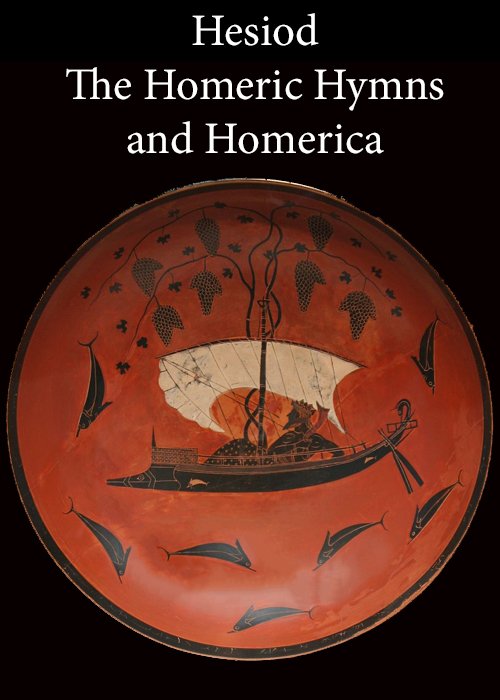
Fragment #4—Athenaeus, vii. 277 D: The poet of the War of the Titans, whether Eumelus of Corinth or Arctinus, writes thus in his second book: ‘Upon the shield were dumb fish afloat, with golden faces, swimming and sporting through the heavenly water.’
Fragment #5—Athenaeus, i. 22 C: Eumelus somewhere introduces Zeus dancing: he says—‘In the midst of them danced the Father of men and gods.’
Fragment #6—Scholiast on Apollonius Rhodius, Arg. i. 554: The author of the War of the Giants says that Cronos took the shape of a horse and lay with Philyra, the daughter of Ocean. Through this cause Cheiron was born a centaur: his wife was Chariclo.
Fragment #7—Athenaeus, xi. 470 B: Theolytus says that he (Heracles) sailed across the sea in a cauldron 2701; but the first to give this story is the author of the War of the Titans.
Fragment #8—Philodemus, On Piety: The author of the War of the Titans says that the apples (of the Hesperides) were guarded.