
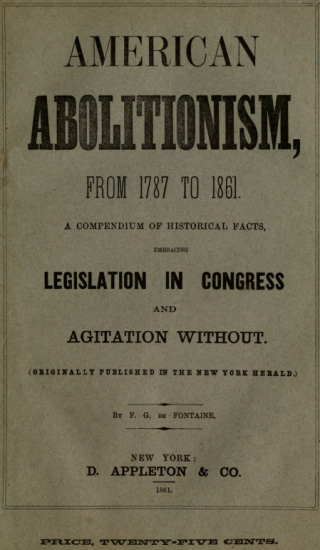
History of American Abolitionism / Its four great epochs, embracing narratives of the ordinance of 1787, compromise of 1820, annexation of Texas, Mexican war, Wilmot proviso, negro insurrections, abolition riots, slave rescues, compromise of 1850, Kansas bill of 1854, John Brown insurrection, 1859, valuable statistics, &c., &c., &c., together with a history of the Southern Confederacy.
Explore more books like this:
About This Book
The work offers a chronological survey of American anti-slavery agitation, distinguishing moderate humanitarian opponents from radical abolitionists, and tracing key legislative and political milestones — the Northwest Ordinance, Missouri Compromise, annexation debates, the Mexican War, the Compromise of 1850, the Kansas-Nebraska controversy, and the Wilmot Proviso. It recounts episodes of slave rescues, riots, insurrections such as John Brown's raid, assembles relevant statistics, and presents an accompanying account of the emergence and organization of the Southern Confederacy, assessing how abolitionist activity shaped sectional tensions and governance.
About the Author

You May Also Like
6 picks
 "'Tis Sixty Years Since" / Address of Charles Francis Adams; Founders' Day, January 16, 1913
by Charles Francis Adams
"'Tis Sixty Years Since" / Address of Charles Francis Adams; Founders' Day, January 16, 1913
by Charles Francis Adams
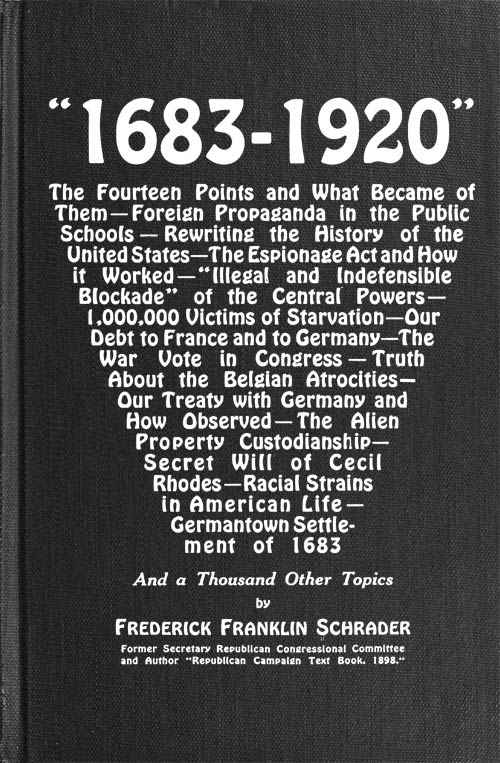 "1683-1920" / The Fourteen Points and What Became of Them—Foreign Propaganda in the Public Schools—Rewriting the History of the United States—The Espionage Act and How It Worked—"Illegal and Indefensible Blockade" of the Central Powers—1,000,000 Victims of Starvation—Our Debt to France and to Germany—The War Vote in Congress—Truth About the Belgian Atrocities—Our Treaty with Germany and How Observed—The Alien Property Custodianship—Secret Will of Cecil Rhodes—Racial Strains in American Life—Germantown Settlement of 1683 and a Thousand Other Topics
by Frederick Franklin Schrader
"1683-1920" / The Fourteen Points and What Became of Them—Foreign Propaganda in the Public Schools—Rewriting the History of the United States—The Espionage Act and How It Worked—"Illegal and Indefensible Blockade" of the Central Powers—1,000,000 Victims of Starvation—Our Debt to France and to Germany—The War Vote in Congress—Truth About the Belgian Atrocities—Our Treaty with Germany and How Observed—The Alien Property Custodianship—Secret Will of Cecil Rhodes—Racial Strains in American Life—Germantown Settlement of 1683 and a Thousand Other Topics
by Frederick Franklin Schrader
 "America for Americans!" / The Typical American, Thanksgiving Sermon
by John Philip Newman
"America for Americans!" / The Typical American, Thanksgiving Sermon
by John Philip Newman
 "Billy" Sunday, the Man and His Message / With his own words which have won thousands for Christ
by William T. Ellis
"Billy" Sunday, the Man and His Message / With his own words which have won thousands for Christ
by William T. Ellis
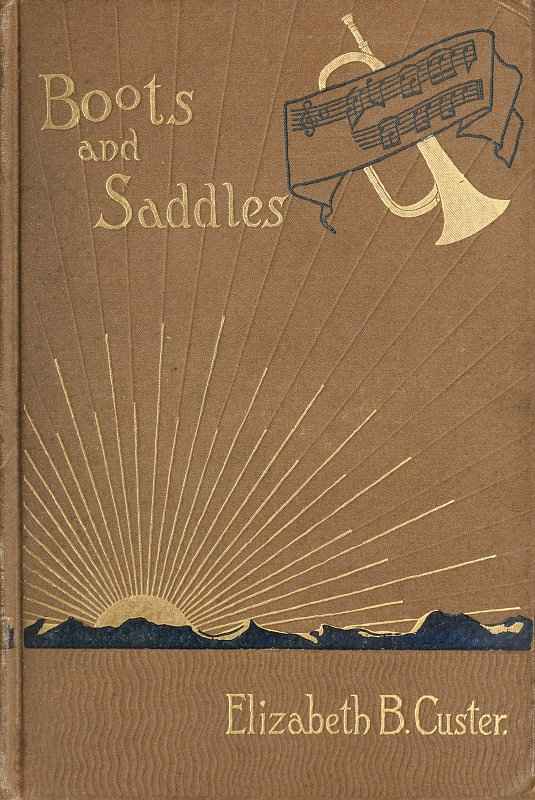 "Boots and Saddles"; Or, Life in Dakota with General Custer
by Elizabeth Bacon Custer
"Boots and Saddles"; Or, Life in Dakota with General Custer
by Elizabeth Bacon Custer
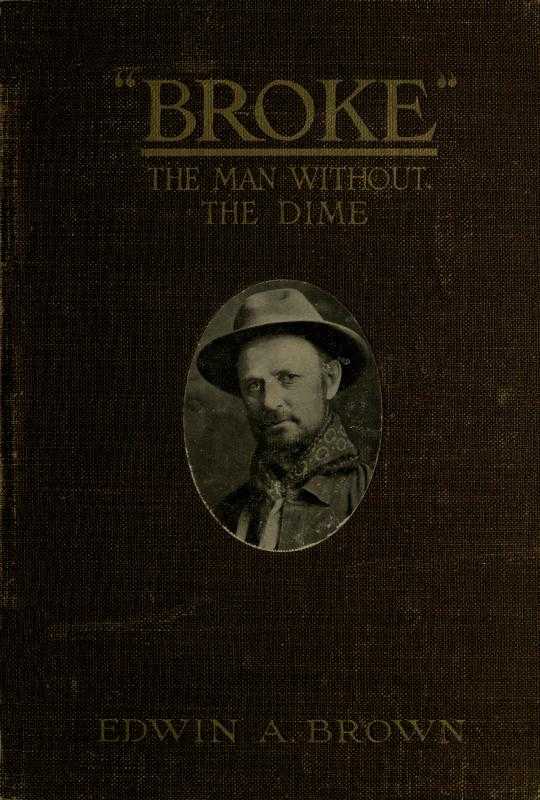 "Broke," The Man Without the Dime
by Edwin A. Brown
"Broke," The Man Without the Dime
by Edwin A. Brown