
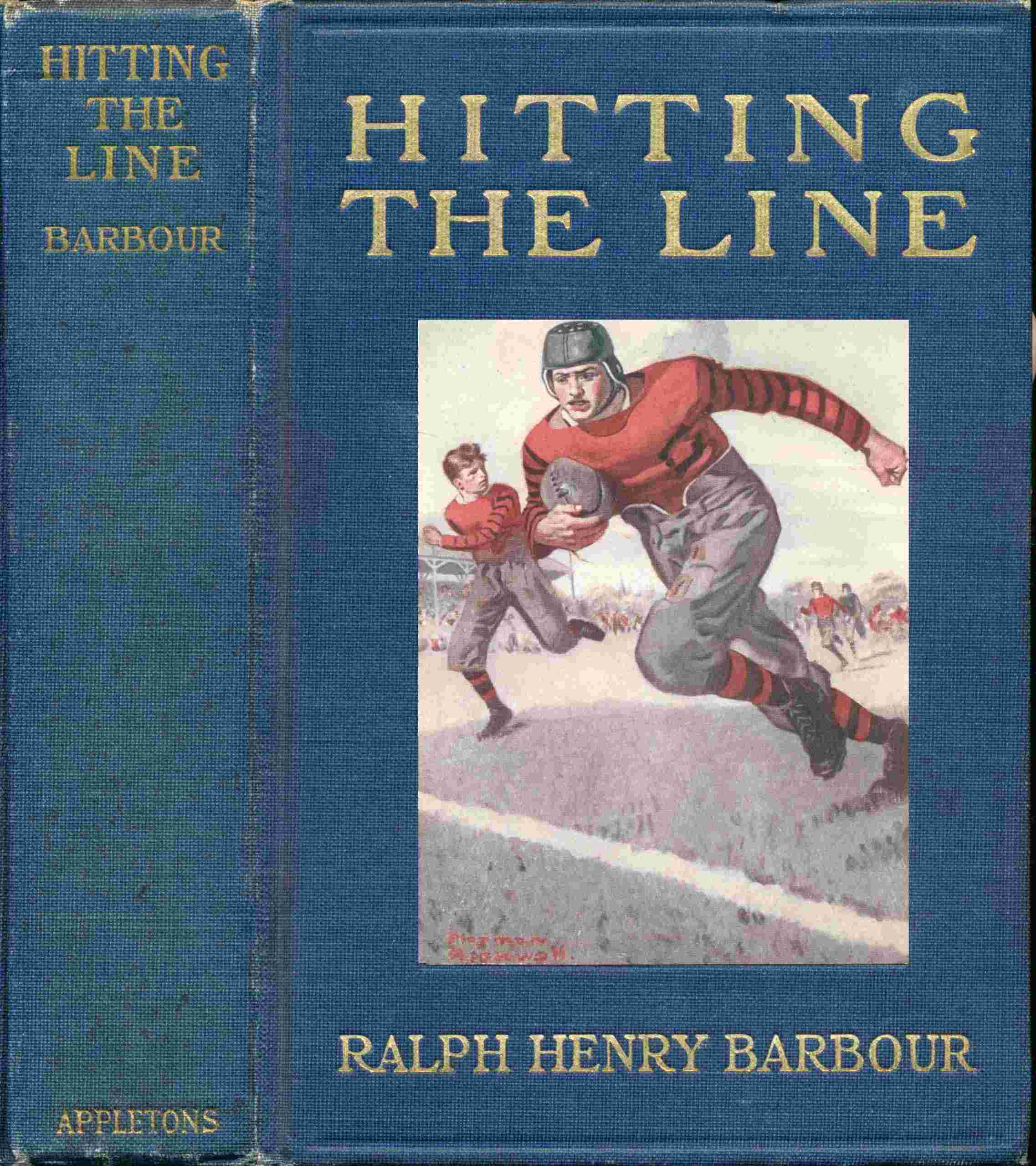
Two boys alighted from a surface car in front of the big Terminal in New York and dodged their way between dashing taxicabs, honking motor cars and plunging horses to the safety of the broad sidewalk. Each boy carried a suitcase, and each suitcase held, amongst the more or less obliterated labels adorning it, a lozenge-shaped paster of gray paper, bearing, in scarlet, the letters “G. S.,” cunningly angulated to fit the space of the rhombus.
If I were Mr. Sherlock Holmes I should write, as a companion work to the famous monograph on tobacco ashes, a Treatise on the Deduction of Evidence from Hand Luggage. For one can learn a great deal from a careful scrutiny of, say, a suitcase or kit bag. As for example. Here is one bearing the initials “D. H. B.” on its end. It is quite an ordinary affair, costing when new in the neighborhood of six dollars perhaps. Its color has deepened to a light shade of mahogany, from which we deduce that its age is about three years. While it is still in good usable condition, it is not a bit “swagger,” and we reach the conclusion that its owner is in moderate circumstances. There are no signs of abuse and so it is apparent that the boy is of a careful as well as a frugal turn of mind. A baggage tag tied to the handle presumably bears name and address. Therefore he possesses forethought. The letters “D. H. B.” probably stand for David H. Brown. Or possibly Daniel may be the first name. We select David as being more common. As to the last name, we frankly own that we may be mistaken, but Brown is as likely as any other. The letters “G. S.” on the label indicate that he belongs to some Society, but the G puzzles us. It might stand for Gaelic or Gallic—or Garlic—but we’ll let that go for the moment and look at the other bag.
This bears the initials “J. T. L.,” not in plain block letters but in Old English characters. It is of approximately the same age as the first one, but cost nearly twice as much, and has seen twice as much use and more than twice as much abuse. The handle is nearly off and those spots suggest rain. There is no tag on it. The initials probably stand for John T. Long. The gray label with the scarlet letters indicate that the owner of the suitcase is also a member of the mysterious Society. Other facts show that he is wealthy, careless, not over-neat, fond of show and lacks forethought. There!
And just at this moment “J. T. L.” lays a detaining hand on his companion’s arm and exclaims: “Wait a shake, Dud!” And we begin to lose faith in our powers of deduction and to fear that we will never rival Mr. Holmes after all!
Dud—his full name, not to make a secret of it any longer, was Dudley Henry Baker—paused as requested, thereby bringing down upon him the ire of a stout gentleman colliding with the suitcase, and followed his friend’s gaze. A few yards away, in a corner of the station entrance, two newsboys were quarreling. Or so it seemed at first glance. A second look showed that one boy, much larger and older than his opponent, was quarreling and that the other was trying vainly to escape. The larger boy had the smaller youth’s arm in a merciless grip and was twisting it brutally, eliciting sharp cries of pain from his victim. The passing throng looked, smiled or frowned and hurried by.
“The brute!” cried Dud indignantly, and started across the pavement, his companion following with the light of battle in his eyes. But the pleasure of intercession was not to be theirs, for before they had covered half the distance a third actor entered the little drama. He was a sizable youth of about their own age, and he set the bag he carried down on the ledge of the step beside him, stuffed a morning paper in his pocket, seized hold of the larger boy with his left hand, placed his right palm under the boy’s chin and pushed abruptly backward.
Needless to say, the smaller boy found himself free instantly. The bully, staggering away, glared at his new adversary and rushed for him, uttering an uncomplimentary remark. The new actor in the drama waited, ducked, closed, crooked a leg behind the bully and heaved. The bully shot across the sidewalk until his flight was interrupted by the nearest pedestrian and then, his fall slightly broken by that startled and indignant passer, measured his length on the ground. At the same instant a commotion ensued near the curb and the rescued newsboy sensing the reason for it, exclaimed: “Beat it, feller! The cop’s coming!” and slid through the nearest door. His benefactor acted almost as quickly, and when the policeman finally pushed his way to the scene he found only a dazed bully and an irate pedestrian as a nucleus for the quickly-forming crowd.
Dud and his companion, grinning delightedly, followed the youth with the bag. The newsboy had utterly vanished, but his rescuer was a few yards away, crossing the waiting-room. On the impulse Dud and his companion hurried their steps and drew alongside him, the latter exclaiming admiringly: “Good for you, old man! That was a peach of a fall!”
The other turned, showing no surprise, and smiled slowly and genially. “Hello,” he responded. “What did you remark, Harold?”
“I said that was a peach of a fall.”
“Oh! Were you there? I guess we’d have had some real fun if the cops hadn’t butted in. Is this the way to the trains, Harold?”
“Yes, but my name isn’t Harold,” answered the other, slightly exasperated. “What train do you want?”
The boy observed the questioner reflectively for a moment. Then: “What trains have you got?” he inquired politely.
“Come on, Jimmy,” said Dud, tugging at his friend’s sleeve. “He’s too fresh.”
“Thought you might be a stranger, and I was trying to help you,” said James Townsend Logan stiffly. “You find your own train, will you?”
They had emerged into the concourse now and the stranger stopped and put his bag down, facing Jimmy with a quizzical smile. “I guess you’re an artist,” he said. “Making believe to get mad would fool most any fellow. What is it now? Eskimo Twins? Or——”
“That’ll be about all for you!” said Jimmy hotly. “If I’m an Eskimo you’re——”
“Back up, Harold! You don’t savvy. Far be it from me to take a chance on your nationality——”
“Oh, dry up!” growled Jimmy, turning away.
“Well, but you’re not going, are you?” called the stranger in surprised tones. Jimmy was going, and Dud was going with him. And on the way to the gate they exchanged short but succinct verdicts on the youth behind.
“Flip kid!” sputtered Jimmy.
“Crazy!” said Dud, disgustedly.
The subject of the uncomplimentary remarks had watched them amusedly as long as they were in sight. Outraged dignity spoke eloquently from Jimmy Townsend’s back. When the two boys were hidden by the throng about the gate the stranger chuckled softly, took up his bag again and moved toward a ticket window. He had a long, easy stride, and the upper part of his body, in spite of the heavy kit-bag he carried, swung freely, giving the idea that he was used to much walking and in less crowded spaces.
“One of your very best tickets to Greenbank, please,” he said to the man behind the window.
“Any special Greenbank?” asked the latter, faintly sarcastic.
“Which one would you advise?”
The man shot an appraising look at the boy, smiled, pulled a slip of cardboard from a rack, stamped it and pushed it across the ledge. “Two-sixty-eight, please.”
“Thank you. You think I’ll like this one?”
“If you don’t, bring it back and I’ll change it.”
“That’s fair. Good-morning.”
At the news-stand he selected two magazines, paid for them and then glanced at the clock. Twenty minutes past eleven exactly. He drew a watch from his pocket and compared it with the clock. “Is that clock about right?” he asked the youth behind the counter.
“Just right,” was the crisp reply.
“Honest? I make it three minutes slow.” He held his own timepiece up in evidence. The youth smiled ironically.
“Better speak to the President about it,” he advised. “He just set that clock this morning.”
“Wouldn’t he be too busy to see me?” asked the other doubtfully.
“Naw, he never does nothin’! He’d be glad to know about it.”
“Well, I’m sure I think he ought to know. I guess he wouldn’t want folks to be too early and miss their trains!” He smiled politely and moved away, leaving the news-stand youth to smile derisively and murmur: “Dippy Dick!”
The sign “Information” above a booth in the center of the concourse met his gaze and he turned his steps toward it. “Will you please give me a timetable showing the train service between New York and Greenbank?” he asked gently.
“Greenbank, where?” demanded the official bruskly.
“Yes, sir.”
“Come on! Greenbank, Connecticut? Greenbank, Rhode Island? Greenbank——”
“Which do you consider the nicest?” asked the boy anxiously.
“Now, look here! I haven’t got time to fool away. Find out where you want to go first.”
“I’m so sorry! I saw it said ‘Information’ here and thought I’d get a little. If I’m at the wrong window——”
“This is the Information Bureau, son, but I’m no mind reader. If you don’t know which Greenbank you want—Yes, Madam, eleven-thirty-two: Track 12!”
“Maybe this ticket will tell,” hazarded the boy, laying it on the ledge. The man seized it impatiently.
“Of course it tells! Here you are!” He tossed a folder across. “You oughtn’t to travel alone, son,” he added pityingly.
“No, sir, I hope I shan’t have to. There’ll be other people on the train, won’t there?”
“If there aren’t—Yes, sir, Stamford at twelve, sir—you’d better put yourself in charge of the conductor!”
“I shall,” the other assured him earnestly. “Good-morning.”
“Just plain nutty, I guess,” thought the man, looking after him.
Eleven-twenty-four now, and the boy approached the gate, holding his bag in front of him with both hands so that it bumped at every step and fixing his eyes on the announcement board, his mouth open vacuously.
“Look where you’re going!” exclaimed a gentleman with whom the boy collided.
“Huh?”
“Look where you’re going, I said! Stop bumping me with your bag!”
“Uh-huh.”
The gentleman pushed along, muttering angrily, and the boy followed, his bag pressed against the backs of the other’s immaculate gray trousered knees. “Greenbank, Mister?” he inquired of the man at the gate.
“Yes. Ticket, please!”
“Huh?”
“Let me see your ticket.”
“Ticket?”
“Yes, yes, your railway ticket! Come on, come on!”
“I got me one,” said the boy.
“Well, let me see it! Hurry, please! You’re keeping others back.”
“Uh-huh.” The boy set down his bag and began to dig into various pockets. The ticket examiner watched impatiently a moment while protests from those behind became audible. Finally:
“Here, shove that bag aside and let these folks past,” said the man irascibly. “Did you buy your ticket?”
“Huh?”
“I say, did you buy your ticket?”
“Uh-huh, I got me one, Mister.”
“Well, find it then! And you’d better hurry if you want this train!”
“Huh?”
“I say, if you want this—Here, what’s that you’ve got in your hand?”
“This?” The boy looked at the small piece of cardboard in a puzzled manner. “Ain’t that it?” he asked. But the man had already whisked it out of his hand, and now he punched it quickly, thrust it back to the boy and pushed him along through the gate.
“Must be an idiot,” he growled to the next passenger. “Someone ought to look after him.”
“All aboard!” shouted the conductor as the boy with the bag swung his way along the platform. “All aboard!”
“Is this the train for Greenbank?”
The conductor turned impatiently. “Yes. Get aboard!”
“Pardon me?” The boy leaned nearer, a hand cupped behind his ear.
“Yes! Greenbank! Get on!”
“I’m so sorry,” smiled the other. “Would you mind speaking a little louder?”
“Yes, this is the Greenbank train!” vociferated the conductor. “Get aboard!”
“Thank you,” replied the boy with much dignity, “but you needn’t shout at me. I’m not deaf!” Whereupon he climbed leisurely up the steps of the already moving train and entered a car.