
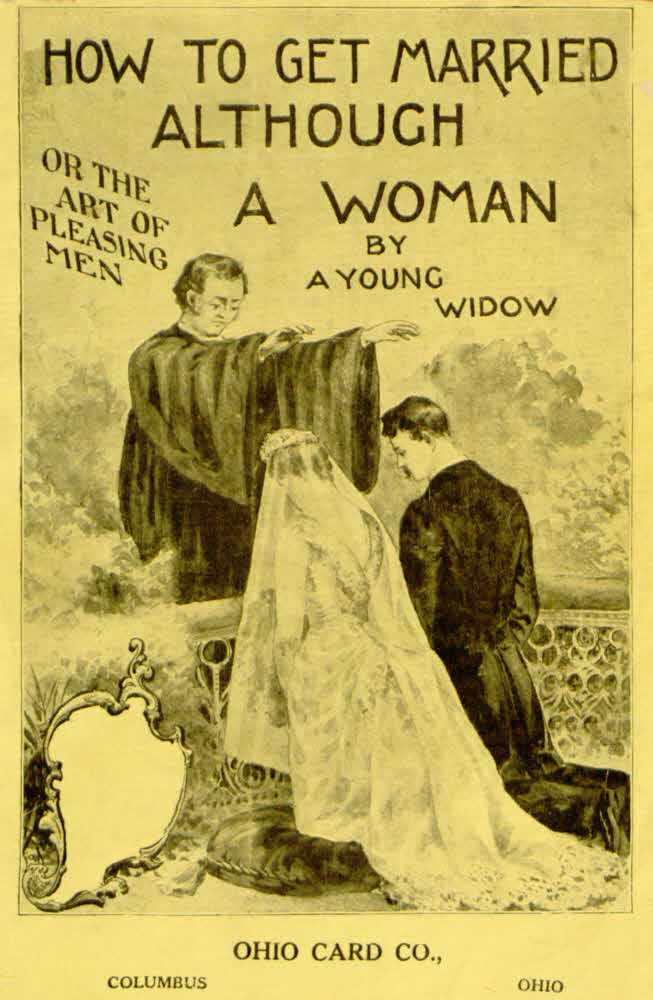
Choice Selections in Poetry and Prose.
Compiled by
RHODUM L. GRIGGS.
INTRODUCTION.
We know that there is an unfortunate tendency in human nature to treat with levity the subject of love, courtship and marriage. But a moment’s consideration should convince you how utterly repugnant it is to all manly feelings to jest in these matters. They are the most serious questions of your life, as your weal or woe, and the weal and woe of those who come after you, depend in great measure, upon the wisdom and virtue with which you conduct your preparations for marriage. The whole tendency of such lightness is to cause the marriage relation to be lightly esteemed, and the true aim of courtship to be lost sight of, for unless you view it in its true light, with that sober earnestness which the subject demands, your courtship will be nothing more than a grand game of hypocrisy, resulting in misery the most deplorable.
LOVE.
Love is an actual need, an urgent requirement of the heart. Every properly constituted human being who entertains an appreciation of loneliness and looks forward to a home of happiness and content, feels the necessity of loving.
Without love, life is unfinished; hope, without aim; nature defective, and man miserable. Love is the ruling element of life; the great instrument of nature; that soft, subduing sun against whose melting beams there is not one human soul in a million, not a thousand men in all earth’s domain, whose hearts are hardened. Love, if pure, unselfish and discreet, constitutes the chief happiness of human life. No man or woman is complete in their experience of life until they have been subdued into union with the world through their affections. The bosom which does not feel love is cold; the mind which does not conceive it is dull; the philosophy which does not accept it is false; the only true religion in the world has pure, undying love for its basis. Look back over your life; if there is a bright spot to be seen, it is where the star of love shed its light; if there is a plant, flower or any beautiful thing visible it is where the smiles and tears of your affections were spent; where some fond eye met your own; where some endearing heart was clasped to yours.
Love, to make your life and home beautiful, must shine on through years, and its radiance linger till the shadows of death darken altogether.
COURTSHIP
Is the first turning point in your life, crowded with perils and temptations. The rose tints of affection dazzle and bewilder your imagination. You should not trust too much to the impulse of the heart, or be too easily captivated by a winning exterior.
Not once in a hundred times do two natures, brought side by side, harmonize in every part. While always bearing in mind that life without love is a wilderness, it should not be overlooked that true affection requires solid support. Your object in courtship should not be to charm, gratify, nor please simply for the present pleasure, but for the selection of a companion who must bear, suffer and enjoy life with you in all its forms; one who will walk pleasantly, willingly and confidingly by your side through all the intricate and changing vicissitudes incident to mortal life; one possessed of a constitution of soul similar to your own; of similar age, opinions, tastes, habits, modes of thought and feeling; one who under any given combination of circumstances would be affected as you would; one who would approve what you approve and condemn what you condemn; not for the purpose of agreeing with you but of her own free will; one who is already united to you by the ties of spiritual harmony. In the selection of a wife, a pure, loving heart and good common sense are many times more valuable than personal beauty or wealth, for once installed in the affections of such a woman, you have a life claim on her good offices, and no sacrifice that she can make is too great, no adversity so strong that it can shake her firmness. True courtship is withal a beautiful sight. Only the coarse and illiterate can see there aught for ridicule or jest. It is the flowing together of two separate lives that have heretofore been divided, now mysteriously brought together, to flow on through all time, and only God in His infinite wisdom knows how far in the shadowy hereafter.
MARRIAGE.
For all professions, trades and callings in life, men and women prepare themselves by previous attention to their principles and duties. They study them, devote time and money to them. Every imaginable case, difficulty or trial is considered and duly disposed of according to the general principles of the trade or profession. But marriage, the most important and holy relation of life, involving the most sacred responsibilities and influences, social, civil and religious, that bear upon men and women, is entered upon in hot haste or blind stupidity by a great majority of the men and women of to-day.
No man has a right to ask a woman to enter matrimonial bonds with him unless he is thoroughly acquainted with the female constitution and character, for he who knows not her nature knows not how to gratify or satisfy that nature. It is ignorance in these matters that causes a great amount of matrimonial infelicity. Marriage, to be a blessing, must be properly entered. It has its fundamental laws, which must be obeyed.
The conditions upon which its joys and advantages are realized may be learned beforehand, and should not be entered in blindness, but in the light of a perfect knowledge of its rules and regulations, its promises, conditions, laws and privileges, so that no uncertainty shall follow a knowledge of its reality. Some are disappointed in marriage because they expect too much from it. Their imagination has pictured a condition of things never experienced on this side of heaven. With the marriage ceremony you enter a new world, if you enter understandingly, and live as becomes thoughtful, considerate human beings, each trying to bear with the other’s infirmities, and to consider the other’s happiness as paramount to their own. Marriage then becomes a delightful scene of domestic happiness, to which all true men and women look forward as the condition of life most consonant to their true happiness.
SELECTION OF A HUSBAND.
To the young woman who is just about to determine her start in life, we would say: Give up your whole mind to this problem of finding a husband whom you can love, and who can love you. It is worthy of your utmost effort. Remember that in selecting the father of your child the qualities which will show in the little one have no relation to his accomplishments, and that even the homeliest features may become beautiful, shining with the light of his noble qualities.
The profession of motherhood stands ready to give you every repayment if you will but devote to fitting yourself for its duties the same patient effort you would give to the study of any science, or the same energy you would throw into social duties.
Unlike social distinction, it will not be disappointing; but as the years go by, loving children will stand ready to enthrone you in their hearts and gratefully recognize your every effort in their behalf.
First—Give perfect truth and exact it.
Second—Use every endeavor to eradicate your own faults, and gently, patiently and lovingly help your companion to do the same.
Third—Do not expect too much from either yourself or your mate. Be humble, with a clear understanding of your own limitations; but be firm in the determination that with each day you will climb together to a higher level.
Fourth—Do not be discouraged at slow progress. Do not doubt that in the end you will be repaid for all effort. So also do not doubt that if you are careless, selfish or deceitful you will be planting seeds for eventual catastrophe.
WHAT PLEASES MEN AND WOMEN.
THE WOMAN.
It pleases her to be told that she is fascinating; to be called well dressed; to be called sensible; to depend on some man and pretend that she is ruling him; to be told that she improves man by her companionship; to be treated courteously and with respect, and to be talked to reasonably.
It pleases her to be treated sensibly and honestly; to be considered and questioned, and not treated as a butterfly with no head or heart. It pleases her to be loved and admired by a man who is strong enough to subdue her and make his way her way; to lead her and take care of her; and it pleases her to find happiness in being ruled by an intellect that she can look up to admiringly, and one to whom her mind bows in reverence.
THE MAN.
It pleases the man to have a woman love him; to have her lead him in the way he wants to go; to have her sometimes treat him as a great big baby, to be cared for, petted and caressed; also to have her think him great, and good, and true, and favor him with her attentions accordingly. It pleases him to have a woman’s bright eyes expressing the approbation, approval and admiration the lips do not speak.
It pleases him to have her hand smooth away the careworn expression and wrinkles from his brow, and to have her strength to help him over the weak places in life. It pleases a worthy man who tries to be good to have a sweet woman lead him in the way called beautiful. A woman can sink a man to the depths of misery or help him to the zenith of happiness; her smile inspires him.
MOODY’S EULOGY ON WOMEN.
“I think that the Almighty intended the work of woman in this world should be, above all, the rearing of a family. He gave into her keeping the souls and characters of the young, to make or mar. And surely there is no nobler or more responsible work than this. From the home—the domain of woman—spring most of the highest impulses of humanity. And to fit woman for her great work the Creator made her of a finer cast than man; there is nothing on earth so noble, so pure, so exalted, so near the ideal of character, as a woman. Woman can rise higher than man, but she can likewise sink lower. The very height which she can attain seems to make her fall the greater when she does fall. There is great strength and great weakness in woman’s character; and it is a vital duty of men, whose greater evenness of temperament gives them greater self-control, and consequently a commanding position, to do everything in their power to enable the woman to be true to her higher nature.
“I believe that, other things being equal, the happiest woman is the woman who is a mother and the maker of a home; but if she cannot fulfil her true destiny, if she must enter the business world, she should be given the greatest consideration, simply because she is a woman. I have heard women say that they ask for nothing on the ground of sex. Perhaps they don’t, but personally I cannot forget their sex. Even in a purely business matter, my attitude and manner toward them are not just what they would be toward men.”—Dwight L. Moody.
“God has made the mind of woman the complement to the mind of man.
“When properly coupled they are a source of strength to each other. As steel and flint strike fire, so the brightest wit and best thought spring from the intellectual union of man and wife. Beginning as a stimulus to research and higher endeavor, each learns to know the mind of the other. A glance often reads thought without the spoken word.”
A MOTHER’S SMILE.
A LOW VOICE IN WOMAN.
Yes, we agree with that old poet, who said that a low, soft voice was an excellent thing in woman. Indeed, we feel inclined to go much farther than he has on the subject, and call it one of her crowning charms. How often the spell of beauty is rudely broken by coarse, loud talking! How often you are irresistibly drawn to a plain, unassuming woman, whose soft, silvery tones render her positively attractive. In the social circle, how pleasant it is to hear a woman talk in that low key which always characterizes the true lady. In the sanctuary of home how such a voice soothes the fretful child and cheers the weary husband.
CONNUBIALITIES.
It is the hardest thing in love to feign it where it is not, or hide it where it is; but it is easier counterfeited than concealed. The face of her we love is the fairest of sights, and her voice the sweetest harmony in the world. A man is more reserved in his friend’s concerns than in his own; a woman, on the contrary, keeps her own concerns better than another’s. A woman will think herself slighted if she is not courted, yet pretends to know herself too well to believe your flattery. Absence is to love what fasting is to the body; a little stimulates it, but a long abstinence is fatal. The greatest pleasure of life is love; the greatest treasure, contentment; the greatest possession, health; the greatest ease is sleep; and the greatest medicine, a true friend.
LOVE.
YOU KISSED ME.
THE MARRIAGE QUESTION.
“Thousands marry and the majority of them live together all their lives. But I think that not more than one couple in ten love each other, continuously, during that time.
“As soon as they have taken the marriage vows they feel an ownership of each other, feel that they are bound so that they cannot get away, and so grow careless about each other’s comforts and pleasures, until, before they realize it, love has flown, and then it depends upon the dispositions of the two whether it is a cat-and-dog life or one of friendship and companionship without love. Remember this: It is nature to love, and if you do not retain the love of your husband or wife, some one else is liable to do so.
“For a while you may bind a person to you by marriage vows, but love can only be bound by love, and it takes the same devotion, the same love after it is won that it takes to win it in the first place.”—Goe Van Hise, Glendale, Cal.
Many boys and girls enter matrimony before they are old enough to realize the responsibility they assume, and they frequently fill their lives with bitterness by acting so rashly. Wait till you are old enough to exercise judgment in the choice of your companion; then choose wisely, and enthrone the goddess of Love upon a heart stamped with eternal fidelity, and be your home a palace or a cottage, it will indeed be a “sweet, sweet home.”
THE AGES OF LOVE.
The Outlook, in the Thorwaldsen Gallery, Copenhagen.
Friend—It reminds me forcibly of the time when “they were both naked and were not ashamed.” Indeed, it gave me a new comprehension of the meaning of that text.
Guide—Which of all Thorwaldsen’s works did you like the best?
Philosopher—How is it possible to tell? There were at least a dozen best.
Friend—The “Ages of Love,” because it suggested a sermon to me which I am going to preach some time.
The “Ages of Love” is a bas-relief consisting essentially of six figures, though so combined as to make, as it were, one tableau. In the first, a covered basket contains a number of imprisoned Cupids, and a child is curiously lifting a corner of the cover to look in and learn what love is like. In the second an attendant female figure—Venus?—has taken a Cupid out of the basket, and a maiden is eagerly and imploringly reaching out both hands to receive it. In the third her prayer has been granted, and the woman clasps the Cupid to her breast. In the fourth the woman is still holding Cupid, but carelessly by the wings, her mind evidently on other things intent. In the fifth a man sits looking upon the ground, while Cupid sits perched upon his back, and he knows not why he is there. In the sixth Cupid has taken his flight and is just beyond the reach of an old man, who stretches out his hands in vain to recover the fugitive.
Guide—And pray, parson, what would your sermon be?
Friend—Just Thorwaldsen’s sermon; nothing more. It would be in five subdivisions. First: Childhood inquiring into love. It is right to inquire. The father and mother should answer the inquiry and not leave the child to learn of this most sacred mystery of life from profane lips. Second: Maidenhood seeking love. She is right to seek it. It is idle to sing, “Love not, love not! the thing you love will die.” Love is “the greatest thing in the world,” above all others best worth seeking. Third: Motherhood possessing. Love is wealth indeed, and the only wealth worth having. The poorest is rich if he have love, and the richest is poor if he have it not. Fourth: Manhood forgetting love. Alas, that so many of us no sooner possess love than we forget it, and are indifferent to it, and put it aside. Love, the most valuable of all knowledge, has been bestowed on us, and we forget it; the most sacred of all possessions has been given us, and we turn our backs upon it. Ambition usurps love’s crown, and the true king is forgotten. And thus, fifth, and last of all: Love, forgotten, flies away, and the unloved old man looks longingly about for some one to love him, and there is none, and he drops into his grave unloved and not missed. It is the tragedy of life: youth inquiring; maidenhood seeking; motherhood possessing; manhood forgetting; old age losing.
Guide—When you preach that sermon, give us notice and we will come to hear it.
Friend—Better, instead, buy a photograph of Thorwaldsen’s bas-relief and study that. The sermon is all there—and more is there besides.
WHICH ONE?
KIND WORDS.
Kind words may prove pearls of the highest price; soften and turn away wrath; make friendship out of enmity, and build a monument of good that the storms of time cannot destroy. Cherish them, dear boys and girls. A kind heart full of love and sympathy and loving words, will spring to your lips to bless, to help and to comfort all around you. “That which the fountain sends forth returns again to the fountain.”
A life of real virtue, of nobleness, of true greatness, is not an accident. It comes, if it comes at all, from lofty aspirations, from incorruptible motives, long cherished, and held sacred as life.
SIN.
“Sin is the most expensive thing possible. It wastes money. It wears the body into decay. But, bad as these things are, there are even worse behind, for it blights the intellect and withers the moral nature of man. It weakens the will; it blunts the conscience; it hardens the heart. It dries up all the finer feelings of the soul, so that ultimately all regard for truth and holiness and purity is gone. But worse yet, sin is an enslaving thing. It becomes the master of the man who indulges in it and sets him to do the hardest drudgery. It hires him out, as it were, to feed swine, leaving him to feed along with them. That which was at first a joy becomes in the end a bondage. That which was first a pleasant companion becomes at length a cruel task-master, which compels him to make bricks without straw, and sometimes even without clay.”—Dr. W. M. Taylor.
Let not sin, therefore, reign in your M-O-R-T-A-L body.—Rom. vi. 12.
A HYMN.
THE SCULPTOR’S DREAM.
BEFORE IT IS TOO LATE.
HOW TO TALK TO MEN.
There are many young girls who complain that they do not know how to talk to men. They have probably been brought up almost exclusively among their own sex, and, therefore, look upon men very much as upon beings of another world, and when they find themselves in masculine society they are at a loss to know how to make themselves agreeable, and what to talk about. Their task would be lightened if they realized that men are, after all, very nearly akin to themselves, and that they have very much the same ideas, feelings and sentiments. The failure to recognize this fact generally earns them the character among their male acquaintances for unamiability or pride; seldom, indeed, are they credited with the timidity of ignorance. The girl who generally is acceptable with men is without self-consciousness, and talks to a man much in the same style as she would to a girl friend.
She is not always thinking of herself and the impression she creates, but she is kind and sympathetic, and she interests herself in him and his affairs, and lets him feel it; always, however, taking care to avoid excess in this respect. When talking with him she shows interest in the matter under discussion, but, while holding to her own opinions, she takes care not to assert them with too great eagerness.
No man was ever really influenced by a self-assertive, dogmatic woman, and the woman who wishes to have men friends must remember that the secret of both her power and her popularity lies in her gentleness, sweetness and good temper. She must be cheery, too, and ready with her smiles; but that is quite another thing, be it remembered, from the senseless giggling which some girls seem to fancy is particularly charming to the other sex.
ABOUT ATTRACTING HUSBANDS.
Men have, since the world began, been angled for deliberately by girls, and times out of count have been caught.
Girls will continue to fish for husbands, and will continue to catch them as long as marriage is a fashion—a state likely to coincide with the length of time the world lasts.
But for all that, it need not be asserted, as it so often is, that all girls angle. Why should the word be used, moreover, with such bitterness? Surely it is not wrong of girls to behave charmingly and make themselves look attractive and pretty, and especially so in the eyes of those men for whose good opinion they are most anxious? If they were to wear sackcloth and go about veritable kill-joys, is it likely that they would succeed in winning what they want?
It is said that love is never evenly distributed, and that in every engaged couple there is more love on one side than on the other. Women fall in love with the opposite sex just as often as the opposite sex does with them. What is to happen if a girl sees a man she believes she could fondly love, and whom she is sure would fondly love her, if she is debarred from angling for him?
A girl may not propose to a man. She may not put to him the anxious question, “Do you love me?” From her lips it would be unpardonable were the tender pleading, “Will you marry me?” to proceed. But she sees one whom she has good reason to think she could wed and be happy with, and the sole step she can rightly take to bring about a declaration of love from him is just this: She can make herself so pleasant and fascinating that he falls in love with her, and asks her that sweet question she has so deeply longed to hear from him.
The feminine angler should be very cautious. Let her declare her purpose—should it be only by a startled word—and a hundred eyes will dart scorn at her, a hundred tongues condemn her. She who is wise, however, is careful—both for the sake of the man she loves and her own reputation—that the little wiles she practices shall appeal only to him, and shall not be observable by those onlookers who are popularly supposed to see most of the game. Women are undoubtedly endowed with a special measure of instinct, and are therefore able to accomplish wonders, apparently never planned or premeditated. Woe be it to the swain who does not want to fall in love, should some fair daughter of Eve will that he shall!
There is this to console him, however: that the said daughter of Eve, should she be discreet and diplomatic, will so work matters that the happy man will never guess that he has been singled out for preference. He will take the bait and greedily swallow it, all the time under the impression that he was the angler, and that it was only after the greatest struggle that he managed to land his prize.
He will be as proud of his achievement as he can be—that is to say, if the girl who has caught him has been very canny during her maneuvers. She need not be deceitful, nor forward, nor unwomanly, nor any of the other plain-spoken and objectionable epithets applied to the feminine angler.
As has been pointed out, she need merely be a tactful, purposeful, clever girl, one who, knowing her own powers to charm, exercises them for the most valuable end and aim life offers—that of forming a home in which two persons may be happy, and from which they may radiate a sufficiency of joy to make the world about it more contented and felicitous than it was before.
Do marriages arranged as an outcome of the angling principle turn out well? Does the fascinating little woman whose bright eyes, pretty ways and dainty dress won her a husband, having secured what she desired, make for the man whose helpmeet she has elected to be a good wife? If she does, a dozen to one he will never find out that he was caught; or if she in some sweet moment should divulge to him the secret, and tell him in whispers and with shy kisses, how she did her best to draw him to her, he will, with further kisses, solemnly declare unto her his delight and gratitude that she so thoughtfully and cleverly made things easy for a blundering idiot like himself.
On the contrary, should she abandon every effort to please directly or soon after the golden circlet is firmly on her finger, how rapidly will his eyes be opened to all the crude and ugly scheming she employed to secure him! How bitterly will he rue the weak moment in which he succumbed to her blandishments. Then will the memory of her charming little speeches and sweet little ways be dust and ashes to him. He will cease to believe in women, taught by his captor to distrust the sex for her sake.
There is all the difference in the world between the girl who angles honestly, so that a happy union may be had with the man she loves, and the girl who angles simply for the achievement of some tribute to her vanity—a wealthy husband, a husband with more money than her friend’s husband possesses, or a husband who will give her a title and position.
There are few women so purely calculating that, once having achieved their object, they can deliberately show themselves in their true colors. Captious, irritable, ill-tempered, untidy—all these distressing characteristics they may reveal to their miserable husbands later, but for the first few weeks of marriage they rarely unmask. It is when the home is settled into, and the regular routine of existence begins, that the test is fairly made.
The admirable angler now shows herself in her true colors. She means to be a good housekeeper, so she studies her husband’s likes and dislikes, and incontestably, though silently, demonstrates to him that since he hates bacon he shall not have it every morning. Above all, she reflects, and recollects, and realizes that what he loved her for in those very early days, when first she taught him to grow fond of her, were her pretty ways. And who shall say, with so glorious a result as this winning woman shall achieve, that she was wrong in her girlhood to be an angler?
If there were more of them! But there are more than is imagined. Only it is the happy country that has no history, and the successful angler that has no historian.
DUTIES OF AN ENGAGED GIRL.
An engaged girl should endeavor to be both a comfort and a help to her lover; not merely a pet and plaything. It is a very bad augury for the future when a man instinctively feels that a wax doll would be of as much use to his worries as she whom he intends making his helpmeet for life. And yet, only the other day, a gentleman was heard to exclaim: “No, no; I would not trouble Lily for the world; why, she is only made for the sunshine and the flowers.”
Again, it is the engaged girl’s duty to be open and candid in all her relations with her lover. The seeds of much future distrust and unhappiness are sown if once he suspects she is keeping a secret from him. It is also her duty to be considerate of his wishes, and if he have a harmless antipathy to any little thing or other, let her humor him in this. No doubt she also has some little “fads” which require consideration.
For instance, that girl was wise who ceased adopting “mannish” ways because her sweetheart disapproved. By doing so she only rendered herself more charming than ever in his eyes. To be punctual is another of the engaged girl’s duties. She has no more business to keep her lover waiting than he has to keep her waiting. Tardiness is not a sign of maidenly indifference, as some damsels seem to think. It is merely an indication of bad manners. Of course, it is her bounden duty to be engaged openly. Her lover should be known to her parents, and, where practicable, should visit her at her own house. In conclusion, I will mention the last and most important duty of all, and that is that she should love her lover with her whole heart, mind and strength. If she does not perform this office thoroughly and well, the others might just as easily be left alone.
PREMATURE MATRIMONY.
Marriage is a divine and beautiful arrangement, as designed in God’s providence. It is the blending of two spirits in one. Man is incomplete without his wife: he has strength, she has beauty. “It is not good that man should be alone.” “Whoso findeth a wife findeth a good thing.”
Premature marriages are among the greatest evils of the times—the result of fancy. The ballroom or evening party never develops real character. Matches made at such places, or made under similar circumstances, are not of the class that originate in heaven. They more generally are conceived in the opposite place, and bring forth only iniquity.
The true way to study and learn one another is to do it at home, in the parlor, in the kitchen, and on occasions that test the temper. We see the result of premature unions in the almost daily divorces that are taking place; in the running away of husbands—leaving their wives and children to starve—and in the elopement of wives. Not only this, but we witness it in broken-spirited men, made old in the prime of life, struggling on for mere food, clothing, and mere shelter; and in woman, cross, sluttish and wrinkled. And the result does not stop with the husband and wife. There are the children; they partake of the feebleness and vices of the parents, both physical and moral, and go out into the world stunted and gnarled. Young friends, beware!
A judicious writer, alluding to the matrimonial state, says: “There is not a city, scarcely a township, which does not number among its inhabitants women who have married on very short acquaintance, only to be abused, deserted, and left a burden and a lifelong sorrow to the families in which they were born and reared, and which they most imprudently and improperly deserted to share the fortunes of relative strangers.”
If young ladies would realize how grossly indelicate, as well as culpably reckless, such marriages appear in the eyes of the observing, they surely would forbear. A year’s thorough acquaintance, with the most circumstantial accounts, from disinterested and reliable witnesses, of the antecedents from childhood, are the very least guarantee which any woman who realizes what marriage is, will require of a stranger.
Even then, if her parents are not fully satisfied, as well as herself, she should still hesitate. Marriage is an undertaking in which no delay can be so hazardous as undue precipitation.
“A prudent man foreseeth the evil and hideth himself; but the simple pass on and are punished.”—Solomon.
In how many instances, of the present day, is marriage merely a union of hands—the affection not being taken into consideration. The question on the one side, “Is she handsome? has she money?” on the other, “Can he support me in style? shall I be able to make an appearance?” How much better would it be to ask, “Has the woman a heart capable of pure affection?” “Will she be willing to share with me adversity as well as prosperity?” “Will she forsake all others and cleave only to me through weal and woe?”
And woman, yes, woman, she whose very nature ought to stimulate her to higher and holier motives for taking upon herself the marriage relation, is too often anxious only as to the length of her husband’s purse, and the amount of his bank stock; the heart, the mind, the intellect, in fact everything really worth marrying for, being non-essentials.
But, oh, the misery which too often follows such marriages! The husband, when it is too late, laments his blindness and his folly. The wife is made to realize that riches take to themselves wings and fly away; and then comes the consciousness of a want of sympathy and congeniality of feelings. Both are thrown back upon themselves, for not a chord in the breast of one vibrates in unison with the other.
Let the young beware how they enter the marriage state from such motives, lest they wake too late from the delusion. Consult the judgment, and hesitate when that says “Beware.” Let the property be in rather than with the companion.
Oh, the loneliness of an unwedded heart! The hands may be united, but to feel that in heart you are separated must be misery indeed. To think of being obliged to associate for life with one who has not a feeling of sympathy with you, and who is, moreover, in sentiment, taste and feeling directly opposed to you—how revolting the thought! Then, let love, not ambition, lead you to form those ties that naught but death can honorably sever.
Weigh well the consequences of one wrong or hasty step in the choice of a companion for life. Walk softly here, lest you fall, to rise no more. Seek wisdom from above. “In all thy ways acknowledge the Lord, and He shall direct thy paths.” “Seek first the kingdom of God and His righteousness” at all times, and you are safe.