
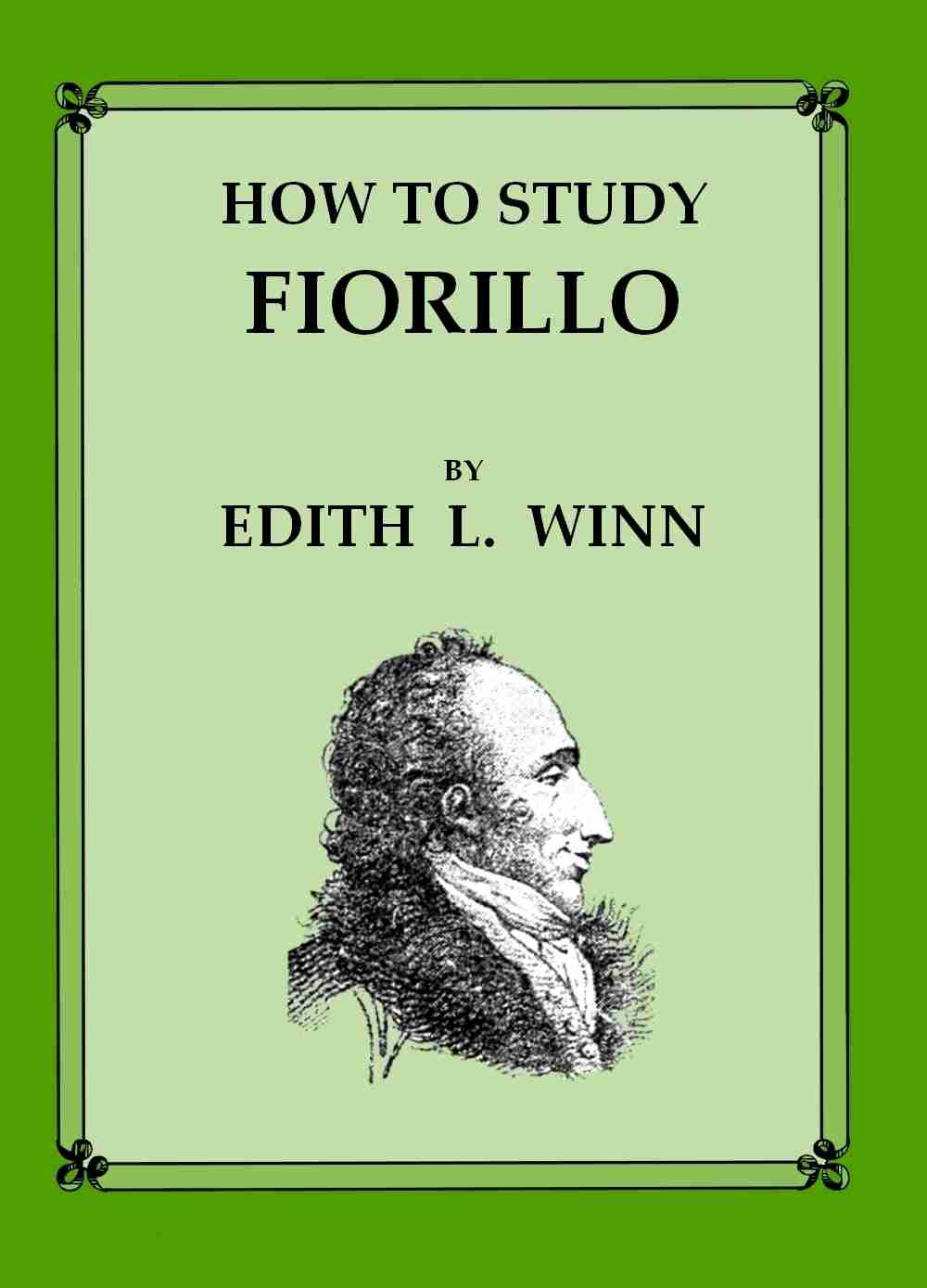
FIORILLO.
FEDERIGO FIORILLO was born in 1753, at Brunswick, where his father, a Neapolitan, lived as conductor of the opera. It seems that at first Fiorillo was a player of the mandolin, and later on became interested in the violin. He went to Poland in 1780, and in 1783 was conductor of the band at Riga, which position he filled for two years. In 1785 he played with great success at the Concerts Spirituels in Paris, and also published some of his compositions, which were received most favorably. Three years later he went to London, where he seems to have met with little success as a violinist, since he only played the violin part in Salomon’s quartet-party. His last public appearance in London was in 1794, when he performed a concerto on the viola. There is very little known about the rest of his life, except that from London he went to Amsterdam, and was in Paris in 1823.
Among his numerous compositions are duos for violins, for piano and violin, and violin and violoncello; trios for flute, violin, and tenor, for two violins and bass; quartets and quintets for stringed instruments; concertos for the violin; concertantes for two violins, etc. These, though somewhat dry and old-fashioned, were favorably received, and show him to have been an earnest musician.
However, there is one particular work, his Thirty-six Caprices, or Études, which is known and valued by every violin player, and which for a long time will probably remain a standard. They rank with the classical studies of Kreutzer and Rode. This work has been edited over and over again,—most recently by Emil Kross. Spohr wrote a second violin part, but he altered the original text to such an extent that his work is hardly authoritative, though decidedly violinistic and interesting.
How to Study Fiorillo.