
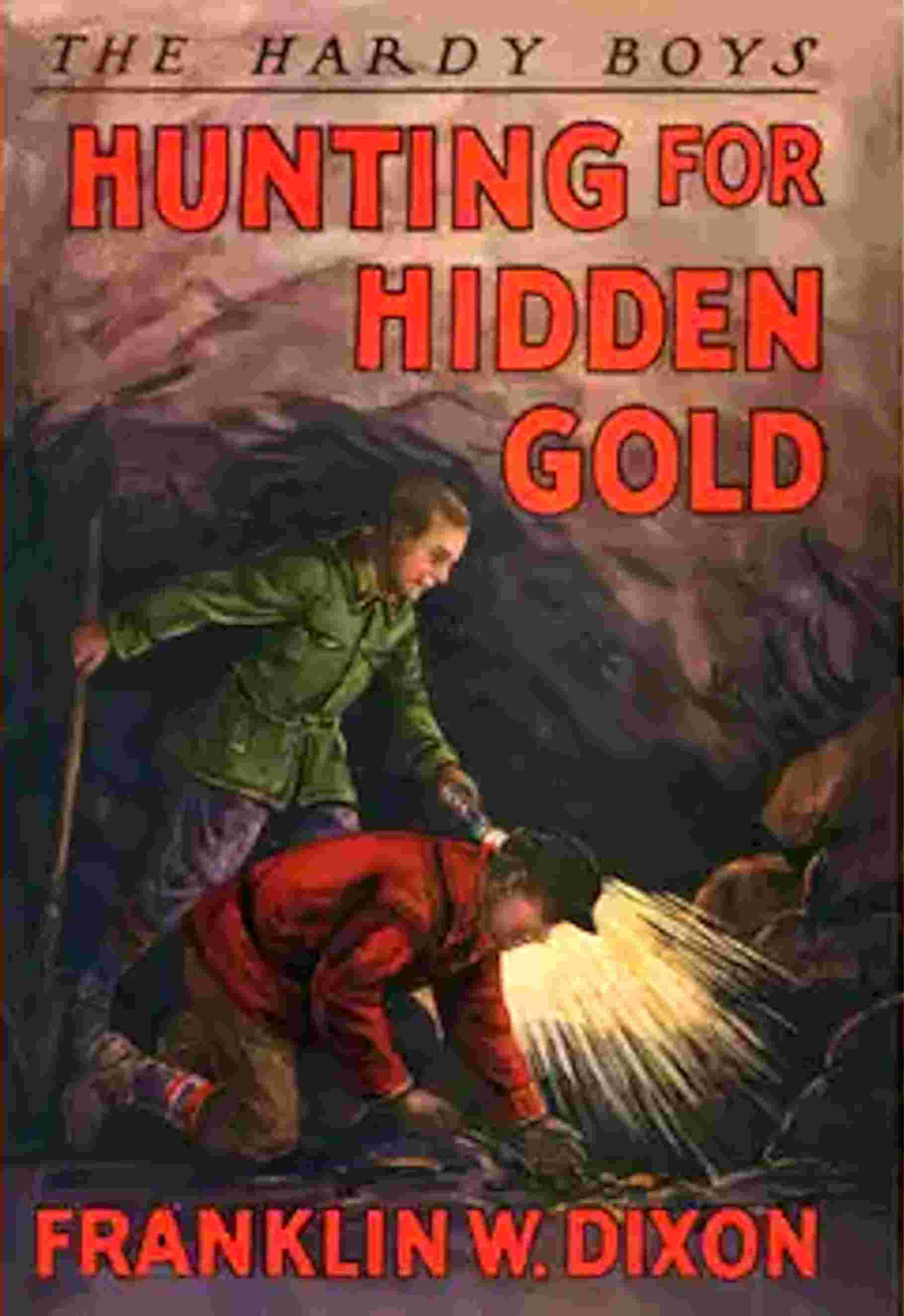
"Telegram?" said Frank.
Mrs. Hardy nodded.
"It's from your father."
"Is he coming back?"
"Not yet. As a matter of fact, he wants you boys to go out to him at once."
Frank and Joe looked at one another incredulously. The news seemed too good to be true. Mrs. Hardy handed over the telegram.
It read:
"Please let Frank and Joe come to me at once. Will send special word and instructions to Majestic Hotel, Chicago.
"Fenton Hardy."
"What on earth can this call mean?" exclaimed Frank, in complete amazement.
"I can't understand it at all," admitted their mother. She was frankly worried.
"I don't care whether I understand it or not," said Joe. "It means he wants us to go out West, and that's enough for me. When can we start?"
"The telegram says 'at once,'" Mrs. Hardy remarked. "It seems very strange. And so sudden, too. I wonder what on earth he can want you for?"
"Perhaps he needs our help on that case he's working on," Frank suggested.
Aunt Gertrude, who had hitherto taken no part in the discussion, sniffed audibly.
The Hardy boys were so excited that they could hardly eat their breakfast. All through the meal they jubilantly discussed details of the proposed trip and when Mrs. Hardy, although admittedly worried at the prospect of letting them go so far by themselves, agreed that they might go immediately, as the telegram suggested, they flung themselves into a feverish orgy of packing.
Jadbury Wilson was highly interested and gave them a number of excellent suggestions as to what they should take with them on the trip.
"Lots of good, heavy underclothes and plenty of woolen socks," he said. "You'll find it plenty colder out there than it is here."
The boys got their reservations on a train that would leave for Chicago late that afternoon. Their packing occupied more time than they had expected because they did not want to be burdened by too much luggage and had a difficult time eliminating the nonessentials. At last, however, they were ready. Aunt Gertrude, who had kept up a running fire of instructions and admonitions concerning their conduct on the journey, and who freely predicted disaster in the shape of train wrecks and robbers, gave them her final instructions. Mrs. Hardy, who merely kissed them good-bye and told them to write to her as soon as they reached Chicago, called a taxi to take them to the station, and Jadbury Wilson, warning them to be on the lookout for "them city slickers in Chicago" and advising them not to talk to strangers, told them not to worry inasmuch as he would look after their mother and Aunt Gertrude.
The taxi arrived. The luggage was tossed in. The boys scrambled into the back seat. Aunt Gertrude shrieked "Good-bye" a dozen times and sobbed audibly. Their mother waved a handkerchief. Jadbury Wilson brandished his cane. Then, with a roar, the taxi sped down the street and headed toward the station. Already the boys could hear the long-drawn whistle of the train.
"Off for Montana!" exclaimed Frank.
"I'm afraid of only one thing," remarked his brother.
"What's that?"
"I'm afraid I'll wake up and find I've been dreaming."
CHAPTER VII
In the Windy City
The Hardy boys had never been on a long train journey before, and the trip, consequently, was replete with interest for them. As the train left Bayport behind and began speeding through the open country with its snow-covered fields, they felt a sense of elation and freedom.
"This is certainly better than school!" declared Joe, settling back in his seat with a sigh of contentment.
"Sure is. Chet Morton and the rest of the gang will be just about sick with envy when they hear where we've gone."
"I wish we could have them with us. When do we reach Chicago?"
"Some time to-morrow. Won't it be dandy to stay on the train all night!"
They watched the scenery that seemed to flash past as though on a moving scroll until gradually twilight fell and the lights in the Pullman were turned on. They went into the dining car, where they were served by a massive negro with an air of elaborate courtesy. The novelty of eating an excellent and perfectly served dinner while speeding swiftly across country appealed to them, and when they had finally risen to their feet and left a tip for the waiter, Joe was of the opinion that he could imagine nothing better than living this way all the time.
"When I grow up, if I have money enough, I'll just live on the trains," he said solemnly.
"You'd soon get tired of it."
"Not me!" And not until the novelty of the long journey began to wear off did Joe admit to himself that possibly such an existence might be wearisome in the long run.
They slept the sound slumber of healthy youth and were up early next morning for the first breakfast call. There, at their table with its immaculate linen and gleaming silverware, they did justice to crisp bacon and golden eggs, the meanwhile looking out the wide windows at the murky chimneys and dark masses of factory buildings as the train entered the outskirts of a large city. The train roared across viaducts and they could see trolleys and automobiles speeding to and fro in the city streets in bewildering confusion. For the first time they began to have some appreciation of the real extent of their country.
"I guess Bayport isn't the only city in the States," said Frank, with a smile.
"It looks pretty small compared to some of these that we've gone through."
But as the morning passed they wearied at last of looking at the scenery, varied as it was, and toward mid-afternoon they began to be impatient for a sight of Chicago. When, at last, the train began to roar through the suburbs of the Windy City, as a friendly porter called it when they had failed to understand his reference to it as "Chi," they felt a mounting excitement. But the train rushed in past seemingly endless rows of houses, then past miles of industrial buildings overhung with a cloud of murky smoke, until they thought the center of the city would never be reached.
The journey came finally to an end. Their porter was on the platform with their grips, they tipped him for his services during the trip and made their way down the crowded pavement, through the gates into the concourse of the enormous station. Here they gazed about in frank wonderment at the bustling hordes of people, all intent on their own affairs, moving to and from the trains. The constant sound of shuffling feet, buzzing voices, clanging bells, all the varied noises of a great railway station, sounded like the roar of the ocean in their ears.
They made their way outside and clambered into a waiting taxi, directing the driver to take them to the hotel their father had mentioned in his telegram. In a short time the car drew up at the entrance, after a brief ride through crowded, noisy streets that made the main street of Bayport seem like a country lane on Sunday afternoon by comparison. A bellboy seized their grips and the boys presented themselves at the desk.
The clerk glanced at their names after they had signed.
"Ah, yes!" he said. "Frank and Joe Hardy. Your room has been reserved for you. And there is also a letter, I believe." He reached into a pigeon-hole in a compartment near by and produced a letter which he tossed over to them. He struck a bell smartly. "Front! Show these gentlemen to 845."
Feeling highly important at being referred to as "gentlemen" and at having a bedroom actually reserved for them in a hotel of such grandeur, the Hardy boys followed a military-looking bellboy to the elevators, whence followed a swift ascent to the eighth floor. Then down wide, silent corridors to their room, a substantial, bright and airy room with bath. It was all a revelation to the lads, who had never been in a big hotel before, and when they looked out the big windows down on the thronging life of the city streets below they were excited beyond measure.
"First of all, we'll read dad's letter," said Frank. "These are the instructions he promised, I suppose."
He opened the envelope and read:
"My Dear Boys:
"I could have given you all the instructions that were necessary in the telegram I sent to your mother, but I thought it best that you come to Chicago first and have a little rest before resuming your journey. This would also give me a chance to tell you more about the mission I have decided to send you on. The truth of the matter is, I have been hurt, and am now laid up in a miner's cabin and have been unable to continue my investigations in the case I have in hand. For this reason I am calling on you to help me, for I think I can trust to your abilities by now by reason of the assistance you have given me in other cases. I did not want to worry your mother needlessly, which is the reason I did not mention my injury. It is not serious but it will be some time before I am able to be on my feet again, and, in the meanwhile, time is precious.
"In my investigations here I have discovered a secret concerning some stolen gold. It is this matter that I wish you to investigate for me. To do so it will be necessary for you to come to Lucky Bottom, Montana, at once. Have a good night's rest at the hotel and then come on here. I am under the care of a miner by the name of Hank Shale, and when you reach Lucky Bottom any one will be able to tell you where to find his place. I shall be expecting you, so do not fail me. I hope you have a pleasant trip. Do not worry about me, as I am in good hands and progressing favorably.
"Your dad,
"Fenton Hardy."
Frank put down the letter, with a low whistle.
"So that's the reason he called for us!" he said. "Dad's been hurt."
"He says it isn't very serious."
"It's serious enough when it means he's not able to be on his feet. Perhaps we ought to start out to him right away."
"Not much use of that," objected Joe. "We wouldn't gain much time and we'd be so tired when we got there that we wouldn't be of much use to him for a day or so. I think we'd better rest here to-night, as he suggests, and go on to-morrow."
Frank considered his brother's advice sound, and, after enjoying a good dinner, the boys went out and wandered about the busy streets for almost an hour, enjoying the sights of the Windy City. But it was a cold, bitter evening, and they soon sought the warmth and comfort of their hotel again, going to bed early, because they were tired after their long hours on the train.
They were told by the information clerk that their train would leave at eleven o'clock the following morning. This gave them plenty of time for a good sleep, a bath and a leisurely breakfast. When all their preparations for the continuation of the journey had been made they presented themselves at the desk in the lobby to check out. Frank paid the bill, and the boys were just about to move away from the desk when a neat, elderly man somewhat below medium height, came up to him.
"Are you the Hardy boys?" he asked, glancing quizzically at them.
"Yes."
"I was told to be on the lookout for you," said the elderly man. "My name is Hopkins."
"Who sent you, Mr. Hopkins?" asked Frank politely.
"I am your father's lawyer—that is, in Chicago," said the neat little man. "He sent me a telegram last night asking me to look you up here and do what I could for you. I have arranged for your transportation as far as Lucky Bottom. That's where you are bound, isn't it?"
"Yes, that's the place."
"Well, then," said Mr. Hopkins, "if you'll come with me I'll see that your accommodations are ready for you. I made the arrangements with the railway this morning."
Reflecting that they were certainly obtaining first-class service on their trip across country, the Hardy boys accompanied Mr. Hopkins across the lobby and out to the street, where a taxi was waiting. The porter put their luggage inside and Mr. Hopkins got in with them, directing the driver to the station.
"Your father is an old friend of mine," said the lawyer, "and I'm only too glad to be of service to his sons. I handle a great deal of his Chicago business for him."
Although the Hardy boys had not been aware that their father had a great deal of Chicago business, they were properly appreciative of Mr. Hopkins' kindness, and when they finally reached the station and he guided them through the gates to the train they expressed their thanks for what he had done for them.
"It's nothing—nothing," he said brusquely.
"We can hardly look at it that way," replied Frank.
Mr. Hopkins, absorbed in the details for the boys' comfort, did not answer. Instead he turned and said:
"Porter—how about Compartment B?"
"All ready, sah! All ready!" the porter assured him, leading them to the compartment. "All ready, sah, jes' as yoh asked."
"We're traveling in style," murmured Frank, nudging his brother.
CHAPTER VIII
The Second Stranger
Mr. Hopkins bustled about the compartment, making everything comfortable for the Hardy boys and chatting affably.
"You'll be looked after right until you reach Montana," he said. "You won't have to change trains. There'll be no bother."
"We're very grateful to you—" began Frank.
The little lawyer dismissed their thanks with a gesture.
"It's no trouble at all," he said. "No trouble at all. Your father would do as much for me any day."
From out on the platform they heard the stentorian cry, "All Aboard!" Mr. Hopkins glanced at his watch.
"I'll have to go," he said quickly. Then, without waiting to say good-bye, he dashed out of the compartment, slamming the door behind him in his haste.
The Hardy boys settled back in the comfortable seats as the train began to move. They looked out the window as they emerged from the great train-shed and then they were occupied gazing at the city streets as the locomotive picked up speed and roared on its way.
In due time the train passed through the outskirts of Chicago, then it rushed on through open stretches of country, past little towns and villages. It was an express that evidently stopped only at the larger cities.
"At this rate it won't take us long to reach Montana," Frank remarked.
"We're sure making good time."
"What do you say to going out and sitting in the observation car for a while?" Frank suggested. "It's roomier than this compartment."
"Suits me."
Frank went to the door. To his surprise he found that it would not open. He tried again, but the door refused to budge.
"That's funny," he remarked. "We're locked in."
Both the boys tried the door, but it was of no avail.
"The catch must have been on when Mr. Hopkins went out," Frank said. Even yet the real truth of the situation had not dawned on them.
They hammered on the door for a while, but no one heard them. At last Frank caught sight of the bell button.
"That's stupid of me," he said, with a smile. "I should have known there'd be a bell to call the porter."
He pressed the button and waited. No one came. There was no sound but the roar of the train as it rushed on its way. He pressed the button again and again.
"That porter must be either dead or asleep," he muttered, settling down to a prolonged ringing of the bell.
After what seemed an interminable length of time they heard a shuffling of feet in the corridor. The sound of the steps ceased, and some one rapped at the door.
"Something foh you, gemmen?"
"Yes—let us out of here!"
The porter tried the handle of the door.
"By golly," he observed, "you done lock yo'selves in."
"We didn't lock ourselves in. Somebody locked us in. Haven't you got a key?"
"Jes' a minute."
They heard the porter shuffling away. After a while he returned with the sleeping car conductor, a key clicked in the lock, and then the door swung open.
"How on earth did that happen?" asked the conductor, mystified. He looked at the porter accusingly. "Did you lock these boys in there?"
"No, sah! No, sah!" protested the porter. "Ah didn't have nuffin to do with it, sah! Dey come on at Chicago wif an older man and I done showed 'em to de compa'tment and dat's all Ah knows about it."
"I don't think the porter had anything to do with our being locked in," explained Frank. "It was an accident. Our friend Mr. Hopkins slammed the door on his way out and the catch must have been on without our knowing it. It's perfectly all right."
"I got their tickets all right," said the conductor.
"Yes, sah. Ah collected dem tickets mahself. De old gen'man wif dese boys give 'em to me. Two tickets to Indianapolis, sah."
"To where?" asked Frank, in amazement.
"Indianapolis."
"But we're not going to Indianapolis."
"Dat's where yoh tickets reads to."
The Hardy boys looked at one another in consternation.
"But we're going to Montana. Didn't Mr. Hopkins give you tickets to Lucky Bottom, Montana?"
The conductor produced some tickets from his pocket and glanced through them. "Even if he did," he remarked, "they wouldn't be any use on this train. We're bound south, not west. No," he concluded, "your tickets are here, Compartment B, and they read Indianapolis."
"We've been tricked!" declared Frank hotly. "Mr. Hopkins said he had been sent to look after us and that this train would take us right through to Montana."
"And then he locked the door on you so you wouldn't go around making inquiries until it was too late," added the conductor. "Your friend certainly put one over on you. But I'm afraid we can't do much for you now. We're quite a distance out of Chicago, and this train doesn't stop for another hour yet."
"Another hour!"
"That's the best we can do."
"Well," said Frank, disgusted, "I guess we'll just have to wait and get off at the first stop, and then take the next train back to Chicago. This will hold us up another day on our trip."
"Sorry," said the conductor sympathetically. "Of course it isn't our fault. We couldn't know you were supposed to be going West."
"No, of course not. It was Hopkins. He planned the whole thing from the start. Oh, well!" Frank shrugged. "We might as well wait."
He and Joe went back into the compartment and sat down again. This unexpected development left them silent and discouraged. Too late now, they saw that the astute Hopkins had deliberately sought to prevent them from joining their father in Montana. He had worked the trick very neatly, and it might easily have happened that the boys would not have discovered the deception until they reached Indianapolis had it not been for the chance remark of the porter. For that, at least, they were thankful.
"Dad's enemies mustn't be very anxious to have us reach Montana, if they'll go to these lengths to sidetrack us," said Joe, at last.
"We'll get there if we have to walk," Frank replied grimly.
They had no further enjoyment of the scenery. Each flitting telegraph pole meant that they were drawing farther away from Chicago and losing so much more time in resuming their journey to the West. At length the train began to slow down and, looking out, they saw that they were approaching a small railway town with an immense water tank.
The porter came to the door of the compartment.
"Heah's de fust stop," he told them. "You kin git a train back to Chicago fum heah!"
He took their luggage and, when the train came to a stop, the boys got out onto the platform.
"Now I wonder how long we'll have to wait before we get a train back," remarked Frank.
His eye caught a bulletin board in front of the little station and he went over to it. At length he found what he sought, a late train bound for Chicago, and he almost groaned as he noted the time.
"There won't be a train along for five hours," he reported to Joe.
"Good-night!"
"That means we've got to cool our heels around here until dark. Five solid hours."
Dolefully, they confronted the bulletin board. A young man in a heavy ulster and tweed cap was also studying it. He glanced toward them.
"What's the trouble?" he asked.
"Isn't there any earlier train to Chicago than that?"
The young man shook his head.
"I'm afraid not," he said. "I guess you're out of luck. In a hurry to get there?"
Frank nodded.
"That's too bad. But say—," the young man reflected a moment. "If you motored over to Greendale you'd be able to catch an earlier train. There's another railroad passes through there."
"If we can catch an earlier train, that's the train we want," said Frank decidedly. "How far away is Greendale and how do we get there?"
"It's about twenty miles across country. I'm motoring over there myself right now. You're welcome to come along with me if you wish. I'm just waiting until the line is clear so I can put through a telephone call."
"Do you think we can make the train at Greendale all right?"
"Oh, yes. I'm sure of it. There's a train leaves for Chicago in about an hour and we'll be there in plenty of time. There's my car beside the platform. Put your grips in it and I'll be along in a few minutes."
The young man went into the waiting room and the Hardy boys saw him go into a telephone booth to put through his call. Frank and Joe, congratulating themselves on this lucky turn of events that had saved them from a dreary five-hour wait, went over to the touring car the young man had indicated and put their grips in the back seat. In about five minutes their new-found friend emerged from the waiting room.
"All set?" he asked. "I made inquiries about your train and you'll be able to make it all right. Hop in."
He insisted that they sit in the front seat with him, as there was plenty of room. "I like company when I'm driving," he said cheerfully, and this removed the last vestige of reluctance in the Hardy boys' minds, as they had been slightly afraid that they might be proving themselves bothersome to the stranger.
He was a skilful driver and the roads were good. The big touring car sped along the highway and they left the village behind, racing out into the open country. The young man at the wheel said little, beyond an occasional remark about the weather or the condition of the roads.
Not until they were at least ten miles from the town did the boys have a suspicion that anything might be wrong. That was when the young man turned the car suddenly off the main highway down a lonely road. The car lurched heavily to and fro in the deep ruts.
"I thought you said the other town was on the main highway," said Frank.
"I know the way," retorted the man at the wheel gruffly.
Something in his tone made the Hardy boys suspicious. Frank glanced at his brother and he could tell by his expression that Joe did not like the situation either.
Some distance ahead they saw an object parked directly across the road. It was an automobile, and it effectually blocked their passage.
"Somebody wrecked, I guess," said their driver carelessly. He began to slow down. Frank, who was on the outside of the seat, groped under the flap in the door until his fingers encountered a heavy wrench. He was not going to be caught altogether unprepared.
The car came to a stop. From around the front of the other automobile came three unsavory individuals, unshaven, with peaked caps pulled low over their foreheads.
"Now," said the young man beside them, suddenly whipping out a pistol, "you'll just come along with us."
He leveled the weapon directly at the Hardy boys.
CHAPTER IX
The Escape
Frank Hardy wasted not a second.
Before the man with the automatic pistol could realize what he was doing, he had flung up his hands sharply, at the same time releasing his grip on the wrench. It spun straight and true, knocking the automatic out of the fellow's grasp and it clattered to the floor of the car.
When Joe saw that their antagonist was unarmed he rose halfway up in the seat and launched himself upon the driver. Frank, in the meantime, reached for the pistol. He was unable to find it, but his fingers closed over the wrench again.
There was a yell of surprise and rage from the three men in the road and they rushed toward the car. One of them came plunging along the side and attempted to grapple with Frank, but a sideways swing of the wrench caught him on the right of the head and he staggered back with a yelp of pain.
Joe was still struggling with the driver of the car. The latter was at a disadvantage in that he had been caught unawares. The loss of his automatic had flustered him and Joe's sudden onslaught had taken him completely by surprise. Penned in by the wheel, he was unable to use his superior weight to advantage, and Joe seemed all over him, pounding him unmercifully.
One of the other toughs leaned over the side and seized Joe by the back of the coat. The man who had been hit with the wrench was dancing about in pain and keeping at a respectful distance. The other fellow was attempting to close in on Frank. He sprang forward, just dodged a sweeping blow of the wrench, and then wrestled with the boy.
They swayed to and fro. The tough was of husky build and his gorilla-like arms were possessed of great strength. The door of the car flew open and the pair staggered from the running board into the roadway. They rolled about, fighting and struggling, while the man who had been hit with the wrench took occasion to deliver a vicious kick at Frank. A sudden twist, however, brought the other man into range at the moment and he received the kick that was intended for the boy.
But the Hardys were outnumbered. Joe was quickly overcome and the other pair would soon have beaten Frank into submission but for a surprising interruption.
Down the roadway came a clattering and roaring, and around the other car came plunging an ancient and decrepit Ford with an enormous negro at the wheel. Beside him sat another colored man, and the pair gazed at the struggle before them, with mouths agape and eyes staring. Then the negro driving the car brought it to a stop and clambered down, picking up the car crank as he went.
"You's the speeders what run oveh mah chickens!" he roared, bearing down on the two toughs who were grappling with Frank. He dealt one of them a hearty rap on the back of the head with the crank, and the fellow bolted forthwith. Reinforcements had arrived, and he judged that the fight would soon be over. He raced for the car parked across the road and scrambled into the front seat.
The two colored men rushed into the battle with enthusiasm. The three toughs in the other car had, it appeared, deliberately driven their automobile into a flock of chickens at the side of the road near the negro's farm farther down the road. Revenge, therefore, was sweet.
In a very short time the fight was at an end. The toughs broke and fled, regained their car, and were soon careering down the road. As for the young man who had brought the Hardy boys into this trap, he managed to get his own car started, shook off his attackers, and the automobile plunged forward.
"Let them go," said Frank, picking himself up out of the ditch.
"Ef dey runs oveh any moah of mah chickens, Ah'll folley 'em fum heah till Doomsday," declared the big negro.
"You certainly showed up in the nick of time," said Joe, brushing off his coat. "They had us beaten two to one."
"White trash!" declared the other colored man. "Ah knows 'em. Dey jes' pool room toughs."
"How come dey lays foh yoh 'way out heah?" asked the big man curiously.
"The chap driving the touring car was going to drive us out to a town called Greendale so we could get a train back to Chicago," Frank explained, and telling the man where they had got into the automobile. "He turned down this road, and then we met the other three waiting for us. They all jumped us at once."
"Dey ain't no trains pass through Greendale!" declared their rescuer. "Ef yoh wait deah foh a train foh Chicago yoh'll wait yeahs and yeahs, and even den yoh won't get no train."
"We'll have to go back to that town then," said Joe.
"Dat's wheah we's gwine. Get in dis yere flivver and we'll drive yoh back to de railway."
Glad to have gotten out of the scrape thus easily, the Hardy boys clambered into the rickety Ford and the two colored men resumed their seats in front.
"Soon's I see dat cah acrost de road I knowed it was de same cah dat run down mah chickens!" declared the driver. "And w'en I sees dem fightin' wid yoh boys Ah knowed dey wasn't up to no good and Ah knowed whut side Ah was gwine to take. And Ah took it."
"Yessah, we sho put de run on dem!" chuckled his companion.
"A mighty good thing for us that you showed up when you did," Frank declared. "That gang were trying to kidnap us."
"How come?"
"They've been trying to keep us from catching a train to the West, and they mighty nearly got away with it that time."
"Well, dey won't ha'm yoh no moah—not so long as yoh is in dis autymobile," the big negro assured them. And, as the car bounded along onto the main highway, the Hardy boys discussed the trap into which they had been so cleverly led.
"It'll teach us to beware of strangers from now on," Frank said. "Evidently one lesson isn't enough."
"If a stranger says so much as 'Hello' to me after this I'll yell for the police."
"Perhaps not that bad," and Frank grinned. "But we know now that there is a plot on foot to keep us from reaching the West, and we'll have to be on our guard."
"I'm more anxious than ever to get to the West now. It looks as if we're heading into some real excitement."
"We've had more than we bargained for already."
In a short time the automobile came within sight of the town the boys had left but a little while before, and after warmly thanking their two rescuers and slipping a five-dollar bill into the hands of the big driver, who beamed with gratification and delight, the Hardy boys settled down to wait for the night train back to Chicago. They were bothered by no more encounters with strangers, and after an almost interminable wait the train arrived.
"One day lost on our journey," remarked Frank, as the train pulled away from the station and headed northward.
"It could have been worse. If those fellows had captured us we'd have likely been held prisoners in some out-of-the-way place for ever so long."
"That's true, too. Well, we won't take any more chances. When we get to Chicago we'd better change our names and our appearance too, if we can manage it. If these chaps are on the lookout for us they won't stop now that we've escaped from them twice. We can't be too careful."
Joe agreed that his brother's idea was a good one, and for the rest of the tedious journey back to Chicago they whiled away the time by discussing ways and means whereby they might journey to the West without being identified readily as the Hardy boys by the mysterious enemies who seemed determined to prevent them from joining their father.
CHAPTER X
On Guard
Back in Chicago, the Hardy boys went to a hotel. They were careful not to go to the place at which they had stayed on their first arrival.
"Hopkins has likely been told of our escape by now and he may be on the lookout for us," said Frank. "We'll just stay under cover."
"That should be easy enough in a big city like Chicago."
"It's not so easy if they know where to look for you, and I don't think they'll give up yet. For some reason, they're evidently mighty anxious to keep us from getting out to Montana."
In their hotel room that night they discussed the problem of changing their appearance. They had already changed their names, registering as Charles Norton and William Hill of Cleveland, Ohio, in case some prowling member of the gang that had evidently been assigned to see that they did not reach Montana should happen to drop into the hotel and glance over the register.
"I think," said Frank, "that the very simplest way for us to disguise ourselves would be to wear spectacles. If they chance to be looking for us they'll never think of looking for two boys wearing glasses."
"Good idea!" approved Joe. "Let's go out and get them now."
"Too late now. Shops will all be closed. We'll get them in the morning."
They left the hotel early and found a shop near by where Frank was fitted with a pair of horn-rimmed glasses that gave him a studious and benevolent expression. Joe bought a pair of cheap spectacles with plain rims. The transformation was remarkable. Instead of a pair of merry, bright-eyed lads, one saw two solemn, near-sighted boys who looked for all the world as though they had never had an unrestrained boyish impulse in all their lives.
"By all rights we ought to carry some books under our arms, too," Joe suggested.
So, to make the transformation complete, they stopped at a bookstore and purchased two weighty volumes. And, when it came time for them to catch their train, no one would have recognized in the two, sad-faced, bespectacled, earnest young students, the irrepressible Hardy boys of Bayport.
To allay suspicion, they decided to board the train separately. Frank went first, while Joe remained in the concourse of the station for a few minutes. Then he followed.
It was just as well that they did this. Near the gate leading to their train loitered a tall, sharp-featured youth who scrutinized every one who passed. He gave Frank but a fleeting glance as he went by and when Joe passed him later his gaze merely rested casually on the boy for a moment.
Had the Hardy boys but known it, the sharp-featured youth had been deputed by the mysterious Hopkins to report if the Hardy boys should attempt to leave Chicago. However, his instructions had been to keep on the lookout for two boys, aged sixteen and fifteen respectively, one dark, the other fair, who would board the train together. So the bespectacled students who had boarded the train separately did not arouse his suspicion and after the train pulled out he reported to Hopkins that the Hardy boys were certainly not on it.
Having left Chicago behind them at last and being assured that they were this time on the right train, Frank and Joe settled down to await with some little impatience their arrival in Lucky Bottom. The novelty of the cross-continent journey had worn off and the scenery had lost some of its earlier fascination. The unforeseen delay they had experienced left them all the more eager to join their father, and they wondered if he would worry because of their failure to arrive in Lucky Bottom at the expected time.
Gradually the scenery changed. The countryside altered in contour. The landscape became rockier and more mountainous, and on the second day they found themselves entering Montana. A suppressed excitement seized them as they realized that before long they would be at the end of their journey.
"I wonder how dad came to be hurt," Joe said, after reading over their father's letter again.
"I've been thinking about that, myself," said his brother. "From what we've gone through, I'd judge that he has enemies working against him in this case he is working on."
"Do you think they may have shot him?"
"They might have disabled him in some way. He was able to write to us, anyway. There's that much to be thankful for."
The Hardy boys realized that if a gang were arrayed against them, as seemed only too evident from their experience in Chicago, they must be very much on their guard from now on, as they drew closer to their destination. This was forcibly impressed upon them by an incident that happened at a small station in the mountains, where the train stopped to take on water.
"I think I'll take a walk up and down the platform," remarked Frank. "Coming?"
Joe looked up from his book.
"No, thanks. I think I'll stay here and read."
Frank left the coach and strode slowly up and down the platform. It was only a small, weatherbeaten station and there were few people in evidence. The town consisted of only one street, and it was built at the base of a huge mountain. The snow came sweeping down from the great crags in shifting sheets.
A rough-looking man in fur hat and mackinaw lounged down the platform, then swung himself up into the train. He appeared to be looking for some one. When Frank saw him next he was descending from one of the coaches far ahead. He came back to the platform again and there he was joined by another man, a villainous looking fellow with a black beard.
"Did you see anything of them Hardy boys?" asked the bearded man in a low tone of voice.
Frank, who was standing close by, could not help but overhear. He was electrified by astonishment.
The man who had gone through the train shook his head.
"Nary a sign of 'em on that train," he said.
"I can't figure out what happened," said the bearded man. "They ain't been on any train that's passed through here—we're sure of that."
"This here is the only way they can get to Lucky Bottom. If they did manage to sneak out of Chicago we'd be sure to see 'em goin' through here."
"Mebby they didn't get out of Chicago. The boys there might have picked up their trail again and caught 'em."
"They would have wired us if they had."
"That's true, too." The bearded man scratched the back of his head in perplexity. "I can't figger it out at all. Well, it ain't our fault. We've done the best we could."
"Yeah, they can't blame us."
"You're sure you went all through the train?"
"Right through. There was no two boys on it. There was one lad sittin' in the Pullman readin' a book, but he wasn't like the description of either one of 'em. Wore glasses. Looked like he was a regular little willy-boy."
"Wore glasses, eh? Well, he wasn't one of the Hardy boys, then. They don't wear glasses."
The pair moved off down the platform.
"You'd better go through the night train when it comes in. We'll keep on the lookout for 'em for a few days more until we get word one way or the other. The boss would be sore if they got through on us."
"Well, they haven't got through yet. That's one thing certain." The two men moved out of earshot.
Frank was tingling with excitement. He stepped toward the train, intending to go to Joe and tell him what he had heard. Then he hesitated. The rough-looking man who had searched the train might conceivably think he had been mistaken and might go through the train again. If he saw the two lads together he might be suspicious, spectacles or no spectacles. So Frank sauntered unobtrusively up and down the platform until it was time for the train to leave. Then he swung himself on board, but not until the train was actually pulling out did he rejoin his brother.
"What kept you?" asked Joe, looking up.
Frank sat down and, in a low voice, recounted the incident of the platform. Joe listened in almost incredulous surprise.
"So it looks as though we've run the gauntlet at last," concluded Frank.
"Boy! it was certainly a bright thought of yours that we wear spectacles on this trip. He would have spotted me in a minute."
"It was luckier still that we weren't together when he walked all through the train. If he had told that black-bearded man that there were two boys sitting together they might both have gone back for a second look at us."
"Well, we got out of it all right. I don't think there's anything more to be feared."
"Not until we reach Lucky Bottom."
"I wonder what we'll bump up against there."
"Plenty—by the looks of things so far."
The train continued on its laborious way through the mountains. It passed through little mining villages, abandoned camps, climbing on up to higher altitudes until, late in the afternoon, the Hardy boys heard the cry for which they had been waiting so long.
"Lucky Bottom! Lucky Bottom!"
CHAPTER XI
Fenton Hardy's Story
Lucky Bottom was a particularly desolate place in the winter time. It was not especially prepossessing at any season, but when the cold winds blew down from the rocky mountainsides and when snow drifted deep in the narrow street Lucky Bottom seemed like a deserted village. It had once been a prosperous mining camp, but one by one the mines had been worked out until now there was but one left. A few prospectors made the village their headquarters still, hanging on in the vain hope of some day making a lucky strike that would restore the town to its former grandeur, but the general impression prevailed that Lucky Bottom's days were numbered.
There were a few gaunt, hard-bitten individuals on the station platform when the Hardy boys got off the train. They were the only passengers that day and evidently it was unusual for any one to alight at Lucky Bottom, because the loungers stared at them as if they were beings from another world.
"Can you tell me where Hank Shale's cabin is?" asked Frank of one of the men leaning against the station.
The native shifted his chew of tobacco, spat into the snow, and reflected.
"Straight down Main Street," he said. "Then you start climbin' the hill. When you get to the top of the hill you'll find Hank's place. You can see it from here."
He conducted them to the end of the platform and pointed to the top of a hill back of the collection of shacks comprising the town. The boys could see a small log cabin, almost hidden by trees and almost buried in the snow. The distance was not great, so Frank and Joe, after thanking the man who had directed them, started off toward the cabin.
They went through Lucky Bottom, which was nothing more than a collection of shacks and cabins ranged on either side of a wide street, and struck out up the hill until the street came to an end. There they followed a narrow path through the snow until at length they reached Hank Shale's place.
Their approach had evidently been seen, because the door opened as they neared the cabin and an elderly man with heavy, drooping mustache stood awaiting them.
"You the Hardy lads?" he inquired, in a piping voice.
"Yes. This is Mr. Shale's place, isn't it?" returned Frank.
"Come in. Come in," invited Hank Shale, standing aside to let them enter. "We've been expecting you this last day."
The boys entered a small, two-roomed cabin, a typical bachelor's residence, which, however, was kept scrupulously neat. They had barely time to look around before Hank Shale led the way to the adjoining room.
"Your father's in here," he said. "Come along."
They followed the man into the bedroom, and there they saw Fenton Hardy lying on a small cot. He sat up in bed as they entered, and held out his hand.
"Hello, sons!" he greeted them, with his cheerful smile. "Glad to see you."
When greetings had been exchanged, Hank Shale took the boys' coats and hats and began setting the table for supper. Soon the cabin was redolent with the fragrant odor of coffee. While Hank was busy in the other room, the boys had a chance to talk with their father.
"But how did you get hurt, Dad?" asked Frank.
Fenton Hardy leaned back on his pillow with a sigh.
"I cracked two of my ribs," he told them. "Tumbled down off a big rock back in the mountains, and now I'm laid up until the ribs mend again. I'm thankful it wasn't a great deal worse."
"We thought perhaps some one had shot you."
"No, it wasn't that bad. I was chasing a fellow at the time, and if it hadn't been for falling off the rock I would have caught him. So my good friend Hank Shale insisted that I come to his cabin until my ribs set again. It isn't very serious, but it will keep me indoors for a while. That's why I sent for you."
"You want us to take up the case where you left off?"
Their father nodded.
"I'll be able to help you considerably, even if I am laid up," he said. "But what delayed you? We expected you here yesterday."
The Hardy boys glanced at one another.
"You must have enemies that knew we were coming, Dad," Frank said. "They tried to sidetrack us in Chicago. We were delayed a whole day there."
"How was that?"
The boys then told their father of their meeting with the man who called himself Hopkins, of being locked in the compartment on the wrong train, of their fight on the road and of their eventual return to Chicago. When they told him of their simple disguise on the trip westward he nodded approval. When they told him of the rough-looking man who had searched the train for them at the mining village he frowned.
"Just as I expected," he remarked. "Some one must have got their hands on a copy of that telegram I sent you."
"The operator wouldn't give it out."
"No. But they may have tapped the wires. They would know that if I sent a message it would be to bring some one out here to help me. And this gang I have been fighting are capable of anything."
"Who are they?"
"It's a long story, boys. But seeing that you're going to be working on the case, I may as well give you all the information I have. This case concerns a quantity of gold that was stolen from three miners. One of these men, called Bart Dawson—"
"Bart Dawson!" exclaimed Frank and Joe simultaneously.
Their father looked at them in surprise.
"Yes. Do you know him?"
"Why, that's the man Jadbury Wilson mentioned!" Frank exclaimed.
"And who, may I ask, is Jadbury Wilson?"
"We'll tell you later, Dad. It may not be the same fellow, but he mentioned a miner named Bart Dawson. Go on with the story, and then we can tell you about Wilson."
"Well, this chap Dawson called me out here on the case and told me that the gold was stolen from them by a gang of outlaws who have been terrorizing this district for years. The outlaws are known as Black Pepper's Gang."
"Black Pepper! And his real name is Jack Pepperill."
"You seem to know as much about these fellows as I do myself," said the detective, in surprise.
"We'll tell you how we happened to hear about him. It's the same man all right. Go ahead."
"Black Pepper's gang stole the gold from these miners. I discovered that before I'd been working on the case two days. We laid a trap for two members of the gang and managed to capture them. Then we threatened them with imprisonment if they didn't tell where the gold had gone to. They declared that one member of the gang had deserted and had taken the gold with him. The gold was in four bags, and although the outlaws gave chase and finally caught this man, the bags had disappeared. Try as they might, they could not get the fellow to admit where he had hidden it. He denied the theft utterly, said he had seen nothing of the gold, and that night he escaped.
"The outlaws were of the opinion that the gold had been hidden somewhere in a deserted mine shaft. That was the story the two rascals told us, and it was while I was checking up on this story that I was attacked by Black Pepper himself. I managed to fight him off and disarmed him, but he got away so I chased him and it was while I was chasing him that I fell off the rock and cracked my ribs."
"And that's how the case stands now?"
"That's how it stands now. I don't know whether to believe the two outlaws we captured or not. They may have been telling the truth. The gold may have really been stolen by the chap who deserted them. They said he later escaped from them and that they thought he had probably gone back to where he had hidden the gold and made away with it."
"In that case there wouldn't be much chance of getting it again."
"It's that circumstance that makes me suspicious of the story. If the deserter had recovered the gold and cleared out, the outlaws would likely give up hunting for it and they would certainly give up bothering me. But they are still in the vicinity and I have an idea they know just where the gold is and are waiting for a chance to get their hands on it. I think this story about the chap deserting from the gang and making away with the loot is false. They just wanted to throw me off the trail and probably thought I'd give up the case and go back East, leaving them a clear field."
"What is your theory about the gold?"
"I think they know where it is, all right. They have it hidden away safely but they don't dare remove it. They'll wait until the affair dies down and then they'll probably separate and leave this district, meeting somewhere else to divide the loot."
"Our problem is—"
"To find that gold." Fenton Hardy looked steadily at his sons as he said this. "I have a lot of confidence in you," he went on. "It just requires a lot of hard work and keeping your eyes open. Mainly, it will keep the gang on the jump. They'll know we haven't given up the case and they'll be afraid to do anything. And now," he said, "you might tell me how you happen to have heard the names of Bart Dawson and Black Pepper before."
Frank and Joe then told their father of their meeting with Jadbury Wilson, the old miner who said he had once lived in Lucky Bottom. They deemed it best not to mention the fact that Jadbury Wilson suspected Bart Dawson of stealing from him. If Bart Dawson were back in Lucky Bottom they felt safer in reserving this bit of information. They merely told their father that Wilson had mentioned the names of Dawson and Black Pepper, among others, as having lived in Lucky Bottom at the time he had been a miner there.
"What kind of chap is Dawson?" asked Frank.
"One of the finest!" declared their father promptly. "He is a real square-shooter, as the miners would say. The loss of the gold has broken him all up. He told me he had had hard luck all his life and now that he had a fortune within his grasp it was heart-breaking to lose it again."
Frank could not help thinking that life had evidently paid back Bart Dawson in his own coin. He had stolen a fortune from Jadbury Wilson after Wilson had endured hard luck for years. Now he was getting a taste of his own medicine. Still, it seemed strange that Fenton Hardy should be so convinced of Dawson's honesty if he were the type of man who would rob his own partners.
"Come and get it!" piped Hank Shale, from the next room.
"That's the supper call," laughed Mr. Hardy. "You must be hungry after your journey. Better go and eat. Hank will bring me mine in here."
Nothing loath, the two boys went into the combination living room and kitchen, where Hank Shale was already dishing out piping hot beans and stew from an enormous pot. What with huge slabs of bread, thickly buttered, and excellent coffee, the boys sat down to their supper with a will. They ate off tin plates and drank from tin cups, but they agreed that no meal could have tasted better. Even the food of the dining car on the train, exquisitely cooked and served though it had been, seemed somehow to lack the flavor of this meal in Hank Shale's mountain cabin.
Hank, like most men who have lived a solitary existence, was a silent man. He said nothing throughout the meal, but as he watched the boys eat and as he responded to their request for second helpings, a slow smile crept over his wrinkled face.
"That's the best meal I ever ate!" declared Frank emphatically, when he had cleared his plate for the second time.
"Me too," agreed Joe.
"Glad ye like it," said Hank Shale, deeply pleased.
CHAPTER XII
The Cave-In
Next day, refreshed by their night's sleep, the Hardy boys set out on a systematic search for the hidden gold.
"There won't be much real detective work about this case," their father told them. "It will be just a plain case of plugging along and searching high and low for that gold. It is hidden somewhere, or the gang wouldn't be staying around. Hunt in all the abandoned mine diggings, in any place where it might possibly be hidden. You may follow that line or you may try to find where the outlaws are camping and possibly pick up some clues there."
With this to go on, Frank and Joe Hardy left the cabin in the morning. They decided to explore some of the abandoned diggings first.
"It's like hunting for a needle in a haystack," said Frank; "but we might have a bit of luck and stumble on the gold."
They did not go down into the town because they knew that their presence in the camp would cause considerable talk and, although they had little doubt but that news of their arrival had reached the outlaws by now, they preferred to remain under cover as much as possible.
Hank Shale had suggested searching the workings of an old mine just over the brow of the hill, and toward this place they went. There was a faint trail through the rocks, although it had long since been snowed over, but the boys managed to find the workings without difficulty. They felt the exhilaration of the clear, cold air and the excitement of at last being at work on the mystery of the hidden gold.
The abandoned mine did not look very much like a mine. It was just a large pocket in the earth, with a shaft that sank down into the darkness. The shaft was but a few yards across and a rickety ladder led down into the hard rock.
"We may as well try this one for a start," suggested Frank. "We can easily tell if any one has been around recently."
They had brought electric flashlights with them, and without further ado Frank began to descend the ladder. Joe followed. Their descent into the abandoned mine was precarious, as at various places the rungs of the ladder were broken, but after descending about forty feet they came to the first and only level. The mine had evidently been a failure.
In the light of the flashlights they saw that they were in a rocky cavern about two hundred feet in length. Not a great deal of work had been done in the mine and it had evidently been abandoned years before. The boys found the cavern extremely cold and damp and they made haste to explore it.
When they had almost completed the circuit of the place, hunting carefully for any sign of recent removal of rock, for any place where the stolen gold might possibly have been hidden, they were of the unanimous opinion that no one had been in the place since it was originally deserted. There was not the vestige of a hiding place. The abandoned working was but one of many in that locality, one lucky strike in the neighborhood having sent other miners into a frenzy of excavation on their respective claims. It had been worked for a short time and then left to its fate.
"I don't think there's anything here," said Joe.
"I'm sure of it. Oh, well, we couldn't expect to find the gold right off the bat. There are lots of other mines to search yet, and most of them plenty deeper than this."
"Think we should go back?"
"Just a minute. There seems to be a passage here."
Frank's light had revealed a narrow opening at the extreme end of the cavern. He bent down and examined it more carefully.
"This seems to lead somewhere," he said. "I think I'll follow it." He crouched down and made his way on hands and knees into the passage. Joe waited until he had disappeared and then called after him.
"I'll wait here."
"If it leads anywhere I'll call you."
Joe could hear his brother scrambling along through the little corridor in the rocks. After a while the sounds died away. It was dark and lonely in the cavern in which he stood. He waited for Frank's summons to follow.
After five minutes there was still not a sound from the opening into which his brother had disappeared. Joe began to get anxious. He knelt down and flashed his light into the interior of the passage. There was no sign of Frank.
"I wonder if anything has happened to him," he muttered.
When another five minutes passed and there was still no sign of his brother, Joe decided to invade the passage himself. Anything might have happened. Frank might have been overcome by poisonous gases in the depth of the mine. He might have tumbled down some unseen pit and hurt himself. Flashing the light ahead of him, Joe crawled into the narrow corridor in the face of the rock.
For several yards the passage extended directly ahead; then there was a turning. Examining the corridor, Joe saw that it was not a natural opening in the rock, but had been constructed by human hands, for the marks of pick and shovel were plainly visible. It had been blasted out of the rock, and for a short distance the dimensions of the passage were of good size, but gradually they narrowed.
He had just gone past the turn in the tunnel when he heard a faint shout.
"Joe! Joe!"
It seemed to come from a long distance, and there was a note of appeal in it that told the boy his brother was in danger.
Scrambling on through the tunnel that seemed to open before him in the vivid circle of light, he made his way toward Frank. He heard the cry again, and this time it was louder. He shouted back:
"I'm coming. What's the matter?"
"I'm trapped here. My foot is caught."
On through the gloomy tunnel Joe went.
At last the light revealed the form of his brother some distance ahead. Frank was lying flat on the rocky floor of the passage, with his foot caught in a crevice between two heavy boulders. He had tried to climb over them, and one rock had evidently become dislodged, pinning his foot against the other.
"Are you hurt?" asked Joe anxiously, as he reached Frank's side.
"No. I'm all right. But I can't move my foot."
Joe put down the flashlight so that its glare clearly illuminated the scene. Then he went over to the boulder and exerted all his strength to move it. But the boulder was heavy. Had it struck Frank's foot directly it would have shattered it to a pulp. Fortunately, it had merely slid into position above the other rock, pressing against the boy's ankle and imprisoning his foot in the crevice between.
Frank was unable to lend his brother any assistance. He was lying face downward and was unable to rise to a sitting position.
"It's—mighty—heavy!" panted Joe, as he strove to move the heavy boulder. It refused to budge.
"Rest a bit and then try it again."
Joe sat down, breathing heavily.
"How did it happen?" he asked.
"I was crawling along through the tunnel when I saw this pile of boulders ahead. At first I was going to turn back, but I thought that when I had come this far it was foolish to turn around, so I started to climb over the boulders. Just as I was almost over, that big boulder slid down against the other one—and there I was. Lucky I didn't break my leg."
"I'm afraid to move that boulder the wrong way, or it might roll over onto you. There's only one way to move it safely and that is to lift it straight up, just enough to release your foot. But I'm afraid I'm not strong enough."
"Try it again, anyway."
Again Joe applied himself to the heavy rock. Although he strained and gasped in his efforts to move it, the boulder defied his efforts and he was unable to budge it an inch. He made attempt after attempt, but it soon became evident that the effort was beyond his strength, and at last he was forced to sink back, exhausted, against the wall. He mopped his brow.
"Too heavy!" he declared, out of breath.
Frank was silent.
"If we only had a crowbar of some kind!" he suggested at last. "It wouldn't be hard to move it then."
Joe looked up.
"Why, I saw a crowbar back in the mine!" he exclaimed. "It will be the very thing."
"Go back and get it. You'll be able to move the boulder away without any trouble. Then we'll clear out of here."
Joe picked up his flashlight and turned to retrace his steps into the main working of the mine.
"I'll only be a few minutes," he promised.
"Don't worry about me. I won't go away," said Frank, with a laugh. He could be cheerful even in the dangerous position in which he found himself.
Back down the narrow tunnel crawled Joe, back toward the cavern into which they had first descended. He remembered having seen a long iron bar lying at the foot of the shaft and he realized that it would be an ideal lever for moving away the boulder that imprisoned his brother. He made haste, not wishing to leave his brother too long imprisoned, and in a few minutes he was back in the great cave.
At first he could not find the iron bar, and he hunted about, flashing the light here and there into dark corners. At last he found it, near the foot of the shaft. It was quite heavy and one end of it lay beneath a heap of rocks.
Joe tugged at the iron bar.
At first it resisted his efforts. He put all his strength into the attempt and the bar slowly moved. A final tug and it came free so suddenly that he staggered backward.
It was this circumstance that saved his life.
For, in extricating the bar, he had dislodged the mass of rocks. With a rush and a roar they came tumbling down across the bottom of the shaft. Had Joe been standing beneath he would have been crushed to death.
Then, before the clattering had died away, came a sullen, hollow roar from higher up in the shaft. Timbers snapped and crackled. The old boards, long since rotting away, suddenly gave beneath the pressure of rocks and earth. An avalanche of stones descended into the shaft on top of the first downfall of rock. More followed, showers of earth came rushing down and a cloud of dust pervaded the cavern.
Joe leaped back.
Then, with a roar like thunder, the entire shaft caved in. Rocks and timbers came tumbling down with a terrific crash. The air was filled with the noise of smashing timbers and falling rock. The faint light from the shaft that had given some vague illumination to the cave, was blotted out. The mine reverberated with echoes and shook with the force of the crash.
Silence reigned. It was broken by the sharp sounds of falling pebbles that descended in the wake of the avalanche. Then those noises too died away. The cavern was filled with a choking cloud of dust.
Joe was almost stupefied by horror. He realized to the full the peril of the situation.
"The shaft has caved in," he thought. "We're trapped in the mine! We'll never get out alive!"
He turned his flashlight on the place where the shaft had been. The light revealed only a high, sloping hill of rocks and shattered timbers. The shaft was completely blocked. It would take an army of men to clear away the débris.
Joe realized that he and Frank would never be able to accomplish the task. And he knew there was no hope of assistance from outside, for no one knew where they were. It might be days before they were traced to the mine.