
UNWIN BROTHERS, THE GRESHAM PRESS, CHILWORTH AND LONDON.
CATALOGUE
OF
NEW AND RECENT
BOOKS
PUBLISHED
BY
MR. T. FISHER UNWIN.
London:
26, PATERNOSTER SQUARE.
1884.
Mr. Unwin takes pleasure in sending herewith a Catalogue of Books published by him.
As each New Edition of it is issued, it will be sent post free to Booksellers, Libraries, Book Societies, and Book Buyers generally—a register being kept for that purpose.
Book Buyers are requested to order any Books they may require from their local Bookseller.
Should any difficulty arise, the Publisher will be happy to forward any Book, Carriage Free, to any Country in the Postal Union, on receipt of the price marked in this list, together with full Postal Address.
Customers wishing to present a book to a friend can send a card containing their name and a dedication or inscription to be enclosed, and it will be forwarded to the address given.
Remittances should be made by Money Order, draft on London, registered letter, or half-penny stamps.
After perusal of this Catalogue, kindly pass it on to some Book-buying friend.
CATALOGUE OF Mr T. FISHER UNWIN’S PUBLICATIONS.
EUPHORION: Studies of the Antique and the Mediæval in the Renaissance. By Vernon Lee, Author of “Ottilie,” &c. In 2 vols. Demy 8vo., cloth extra. £1 1s.
“The book is bold, extensive in scope, and replete with well-defined and unhackneyed ideas, clear impressions, and vigorous and persuasive modes of writing. . . . Large questions have been scrutinized in a comprehensive spirit, and are treated with both breadth and minuteness, according to the scale of the work. This will be apparent from a list of articles in the two volumes. After an introduction comes ‘The Sacrifice,’ ‘The Italy of the Elizabethan Dramatists,’ ‘The Outdoor Poetry,’ and ‘Symmetria Prisca.’ . . . ‘The Portrait Art,’ ‘The School of Boiardo.’ . . . Lastly comes the longest essay of all, ‘Mediæval Love,’ filling nearly one hundred pages. This is certainly a masterly performance, going over a wide field, and showing at every stage abundant discrimination.”—Athenæum.
“It is richly suggestive, stimulating, and helpful. No student can afford to pass it by, and no library of importance should be without it. By the side of Hallam’s volumes and Mr. Addington Symonds’ History it will be handy as a supplement and as a kind of appendix; and as such we very cordially recommend it.”—British Quarterly Review.
“It is a distinct advance on Vernon Lee’s previous work. The impressions it records are as vividly individual as ever, the knowledge which informs it is fuller and riper. It deals with a period incomparably more interesting than the ‘teacup times of hood and hoop,’ through whose mazes her first work led us so pleasantly; and it has more unity and continuity than ‘Belcaro.’ Its title is most happily chosen, since the studies all converge upon that mystic union of the mediæval Faust with the Helen of antiquity from which the Renaissance sprang.”—Pall Mall Gazette.
“Every page of ‘Euphorion’ give evidence of immense reading in Renaissance and in mediæval literature, and the author possesses the sure instinct so needful in a student of old books, which leads her to the passages where intellectual booty is to be found. . . . Deserves a most cordial welcome as a fresh and original contribution to the history of civilization and art; written in graceful and often eloquent English.”—Spectator.
“Careful study, independent thought, and fine writing—this is a book notable and noteworthy in every respect.”—Academy.
ARMINIUS VAMBÉRY; His Life and Adventures. Written by himself. With Portrait and 14 Illustrations. Fourth and Popular Edition. Square Imperial 16mo., cloth extra. 6s.
“A most fascinating work, full of interesting and curious experiences.”—Contemporary Review.
“It is partly an autobiographic sketch of character, partly an account of a singularly daring and successful adventure in the exploration of a practically unknown country. In both aspects it deserves to be spoken of as a work of great interest and of considerable merit.”—Saturday Review.
“This remarkable book is partly an autobiographical sketch of character, partly a record of a singularly bold and successful attempt to explore a country which at the time when Professor Vambéry undertook his journey was practically terra incognita. . . . Professor Vambéry’s Autobiography is omnium consensu a work of very great interest and merit.”—Life.
“We can follow M. Vambéry’s footsteps in Asia with pride and pleasure; we welcome every word he has to tell us about the ethnography and the languages of the East.”—Academy.
“Professor Vambéry, of Pest, has just published a book in England that tells the story of his life; a book that forms, under every aspect, most agreeable reading. It is not only a deeply interesting account of his adventurous career, but it is also written in a light and attractive manner, so that the reader’s attention does not flag for a moment.”—Die Gegenwart.
“The character and temperament of the writer come out well in his quaint and vigorous style. . . . The expressions, too, in English, of modes of thought and reflections cast in a different mould from our own gives additional piquancy to the composition, and, indeed, almost seems to bring out unexpected capacities in the language.”—Athenæum.
“There is something in his travels which reminds us of the wanderings of Oliver Goldsmith. . . . The English public will find their interest in him increased rather than diminished by this graphic account of his life and adventures.”—British Quarterly Review.
“Has all the fascination of a lively romance. It is the confession of an uncommon man; an intensely clever, extraordinarily energetic egotist, well-informed, persuaded that he is in the right and impatient of contradiction.”—Daily Telegraph.
“The work is written in a most captivating manner, and illustrates the qualities that should be possessed by the explorer.”—Novoe Vremya, Moscow.
“We are glad to see a popular edition of a book, which, however it be regarded, must be pronounced unique. The writer, the adventures, and the style are all extraordinary—the last not the least of the three. It is flowing and natural—a far better style than is written by the majority of English travellers.”—St. James’s Gazette.
*** Over Eighty other English and Foreign periodicals have reviewed this work.
THE AMAZON: An Art Novel. By Carl Vosmaer. With Preface by Professor George Ebers, and Frontispiece drawn specially by L. Alma Tadema, R.A. Crown 8vo., cloth. 6s.
“It is a delineation of inner life by the hand of a master. It belongs to the school of Corinne, but is healthier and nobler, and in its thought and style fully equal to Madame de Stäel’s famous work. We do not wonder at the European recognition of its great merits.”—British Quarterly Review.
“Throughout the book there is a fine air of taste, reminding one a little of Longfellow’s ‘Hyperion.’”—The World.
“It is a work full of deep, suggestive thought. M. Vosmaer, in writing it, has added another testimony to his artistic greatness and depth.”—The Academy.
“One meets with delicate and striking views about antique and modern art, about old Rome and Italy. Moreover, the plot is interesting. One cannot but feel interested in the persons. Their characters are drawn with great skill.”—Revue Suisse.
GLADYS FANE: The Story of Two Lives. By T. Wemyss Reid. Fourth and popular edition. In 1 vol. Crown 8vo., cloth extra. 6s.
“One of the most delightful novels it has been our pleasure to read for many a long day.”—Pictorial World.
“‘Gladys Fane’ is a good and clever book, which few readers who begin it are likely to put down unfinished, and which shows considerable powers of telling a story.”—Saturday Review.
“The author of the delightful monograph on ‘Charlotte Bronte’ has given us in these volumes a story as beautiful as life and as sad as death. . . . We could not ‘wear in our heart’s core’ the man who could read aloud with unfaltering voice and undimmed eyes the last pages of this prose story, which is almost a poem, and which
‘Dallies with the innocence of love
Like the old age.’”—Standard.“Mr. T. Wemyss Reid, the talented editor of the Leeds Mercury, has in ‘Gladys Fane’ developed wonderful power as a writer of fiction. ‘Gladys Fane’ is no ordinary tale; the conventionalities of the present-day novel writer are not observed, but Mr. Reid gives us what should be the aim of all who produce light literature, something novel.”—Guardian.
“She is thoroughly original; her portrait is carefully finished; and it may safely be said that if Mr. Reid has a few more characters like this in reserve, his success as a novelist is assured. . . . It is a sound piece of work, and, above all, it is very enjoyable reading.”—Academy.
“The beautiful and terse descriptions of scenery which we find in this story themselves suggest a genuine poetic element in Mr. Wemyss Reid. . . . We heartily welcome his success in this new field.”—Spectator.
SUMMER: From the Journal of Henry D. Thoreau. Edited by H. G. O. Blake. With an Index. Map. Crown 8vo., cloth, 382 pp. 7s. 6d.
This volume will contain passages selected from Thoreau’s Journals, comprising his observations and reflections during the summers of many years. Some of these are descriptive, with that fine photographic accuracy which marks Thoreau’s pictures of natural scenes. Other passages contain those subtle reflections on society, religion, laws, literature, which also characterize whatever Thoreau wrote, and which pique the curiosity and stimulate the minds of his readers. The book has a full index. Thoreau himself seems to have contemplated a work of this kind, for in his Journal he writes of “A book of the seasons, each page of which should be written in its own season and out-of-doors, or in its own locality, wherever it may be.”
HENRY IRVING: in England and America, 1838–1884. By Frederic Daly. With a Vignette Portrait, specially etched from a Private Photograph taken by S. A. Walker, by Ad. Lalauze; printed on hand-made paper by M. Salmon, of Paris. Second thousand. Crown 8vo., cloth extra. 5s.
“Mr. Frederic Daly has brought together an interesting mass of facts which will be acceptable to the admirers of the eminent actor. Mr. Daly writes with judicious moderation, and without excessive adulation, thoroughly appreciates the deservedly high position occupied by the subject of his biography.”—Athenæum.
“Mr. Daly is a strong though by no means undiscriminating admirer of Mr. Irving. This easy and well-written narrative gives a good idea of the popular actor’s career.”—Contemporary Review.
“Conscientiously full, thoughtfully considered, and gracefully written.”—Daily Telegraph.
“It refers succinctly to Mr. Irving’s literary efforts, essays, and addresses, and concludes with a survey of Mr. Irving’s personal characteristics. . . . An interesting and useful volume. . . . A portrait of Mr. Irving, etched by M. Lalauze, is admirable in execution.”—Saturday Review.
“Written with discriminating taste.”—The World.
“Mr. Daly sets forth his materials with a due sense of proportion, and writes in a pleasing vein.”—Daily News.
SETTLING DAY: A Sketch from Life. By Sophie Argent. Crown 8vo., cloth. 3s. 6d.
“A charming story of real life, and one that is as true to human nature as it is true to facts.”—Congregationalist.
“A pleasant and wholesome little novelette. . . . It is agreeably written.”—Society.
THE FUTURE WORK OF FREE TRADE IN ENGLISH LEGISLATION. I. Free Trade in Land. II. Financial Reform. III. Monopolies. (The Cobden Club Prize Essay for 1883.) By C. E. Troup, B.A., Balliol College, Oxford. Crown 8vo., cloth. 3s. 6d.
“Mr. Troup has written a valuable contribution to the history of the dispute between Protection and Free Trade. Though it is possible to differ from his conclusions, no one can deny the ability with which he has marshalled his facts.”—Oxford and Cambridge Undergraduates’ Journal.
“Lucid in style, and based on a thorough comprehension of economic science, the book deserves the attention of all who are interested in the questions of which it treats—questions which are likely to assume prominence in the not-distant future.”—Scotsman.
“Leaves no doubt in the reader’s mind that Mr. Troup fully earned his prize by treating the whole subject in a spirit of discrimination as well as with undoubted ability.”—Leeds Mercury.
ORIENTAL CARPETS: How they are Made and Conveyed to Europe. With a Narrative of a Journey to the East in Search of Them. By Herbert Coxon. Illustrated with Plates and Map. Demy 8vo., cloth extra. 3s. 6d.
“We have many new and interesting facts, put in an extremely readable form, concerning carpets and the makers and dealers in them.”—Literary World.
“Mr. Herbert Coxon has put together on this subject a readable and interesting volume.”—Derby Mercury.
STOPS; or, How to Punctuate. With Instructions for Correcting Proofs, &c. By Paul Allardyce. Third edition. Demy 16mo., parchment antique or cloth. 1s.
“Is a clear and useful little book, which is written with more literary skill than is usually shown in such manuals. Mr. Allardyce will no doubt do more important work.”—Athenæum.
“At the end Mr. Allardyce gives the useful example of how to correct a proof—an art which some of those who live by the pen never master thoroughly.”—Saturday Review.
“We have hardly any words but those of praise to give to his very thoughtful, very dainty little book.”—Journal of Education.
“We can conceive no more desirable present to a literary aspirant.”—Academy.
CENTENARY SERIES.
1. JOHN WICLIF, Patriot and Reformer: his Life and Writings. By Rudolf Buddensieg, Lic. Theol., Leipsic. Parchment covers, Antique printing. 2s.
“Mr. Fisher Unwin has printed in delicious old text, with a frontispiece and vellum binding worthy of an old Elzevir, Mr. Rudolf Buddensieg’s brief extracts from Wiclif’s writings. . . . These are full of interest, and the little volume will be useful for reference.”—Graphic.
“The matter is equal to the manner, consisting of a summary of the career of the great Reformer, drawn up by an acknowledged master of the subject, and of a judicious selection of characteristic passages from Wiclif’s works.”—St. James’s Gazette.
“No better summary of the conclusions could perhaps be given than that which Dr. Buddensieg has epitomized.”—British Quarterly Review.
“A charming book got up in the ‘old-style,’ bound in parchment and well printed on thick paper, containing a scholarly and appreciative account of Wiclif’s life.”—Nonconformist.
“Beautifully printed in the old-fashioned manner, and bound in imitation of vellum, this book is a thing of beauty. The specimens of Wiclif’s writings are deeply interesting.”—Sword and Trowel.
2. THE TABLE TALK OF DR. MARTIN LUTHER. Fcap. 12mo., Antique Paper, Parchment boards. 2s.
This is an entirely new selection and translation by Professor Gibb, from the ever-popular Tischreden oder Colloquia of “The Monk that shook the world,” and forms an appropriate souvenir of the 4th Centenary now being held throughout Christendom.
“His words are half-battles.”—Richter.
“‘The Table-talk.’ The most interesting now of all the books proceeding from him.”—Carlyle.
“Deserves the very highest praise. Great discrimination has been shown in the choice of extracts, and considerable skill in the grouping of them under appropriate heads.”—Congregationalist.
3. DOCTOR JOHNSON: His Life, Works and Table Talk. By Dr. Macaulay, Editor of The Leisure Hour. 2s.
This little work will form an interesting souvenir of the great lexicographer, as described in its title. The first part will be a newly-written life by Dr. Macaulay, and the remaining part of the book will be short extracts illustrative of his writings and conversation.
OUR MODERN PHILOSOPHERS: Darwin, Bain, and Spencer; or, The Descent of Man, Mind, and Body. A Rhyme, with Reasons, Essays, Notes, and Quotations. By “Psychosis.” Crown 8vo, cloth extra, 236 pp. 4s. 6d.
“He is a powerful writer. . . . Many of his stanzas are happy illustrations of wit and wisdom.”—Literary World.
“This is a clever, amusing, and instructive book.”—The Christian.
“This work is highly creditable to the learning and industry of its author.”—Glasgow Herald.
THE LAW AND THE PROPHETS: Being the Hulsean Lectures for 1882. By F. Watson, M.A., Rector of Starston, and some time Fellow of St. John’s College, Cambridge. Demy 8vo, cloth. 6s.
“It is worthy of careful and critical review. . . . The book will be read with great interest by those who are interested in questions that it treats.”—British Quarterly Review.
“Mr. Watson’s lectures must be awarded unqualified praise. The lectures themselves are admirable, and nothing less can be said of the subsidiary additions, which are very valuable as confirmatory of the main arguments and theses.”—Clergyman’s Magazine.
THE CHRIST OF HISTORY. An Argument grounded on the Facts of His Life on Earth. By John Young, LL.D., Author of “The Life and Light of Men,” “The Creator and the Creation,” &c. Seventh and Popular Edition. Crown 8vo., cloth. 3s. 6d.
OFF DUTY: Stories of a Parson on Leave. By Charles Wright. Crown 8vo., cloth. 2s. 6d.
“So genial in its conception, and so modest in its pretentions.”—Christian Million.
“It is a pleasant miscellany of prose and verse, with sunny gleams of humour.”—Christian Leader.
“A playful little volume, full of cheery chat, often running away from the flats of prose into airy verse—with racy anecdote, wise suggestion, and sound good sense underlying even its fun.”—Greenock Daily Telegraph.
“The idea of the book is well conceived and carried out. . . . The book is just the one for the sea-side or holiday resort, and only needs to be read to be thoroughly enjoyed.”—Banbury Guardian.
LIGHT IN LANDS OF DARKNESS: A Record of Mission Work in
GREENLAND, |
LABRADOR, |
EGYPT, |
SOUTH AMERICA, |
SYRIA, |
ARMENIA, |
PERSIA, |
Etc., etc. |
By Robert Young, Author of “Modern Missions.” With an Introduction by the Rt. Hon. the Earl of Shaftesbury, K.G. Illustrated. Crown 8vo., cloth extra. Second edition. 6s.
This volume may be considered as a second series of Modern Missions (see page 11). It has been issued in response to the general demand for a completion of the record of all Protestant Missions throughout the world.
HALF-HOURS WITH FAMOUS AMBASSADORS. By G. Barnett Smith, Author of “The Life of Gladstone,” &c. Crown 8vo., cloth extra, with Steel Portrait. 7s. 6d.
*** Including Talleyrand, Sir R. M. Keith, Gondomar, The Chevalier D’Eon, Metternich, Harley, Alberoni, and Lord Malmesbury.
“More entertaining than many a sensational novel.”—Echo.
The Gift Book of the Season.
THE ADVENTURES OF ROBINSON CRUSOE. By Daniel Defoe. Newly Edited after the Original Editions. With Twenty Illustrations, by Kauffman, printed in colours. Fcap. 4to., cloth extra. 7s. 6d.
“This is irrefutably the edition of ‘Robinson Crusoe’ of the season. It is charmingly got up and illustrated. The type and printing are excellent.”—Standard.
MOLINOS.—Golden Thoughts from “The Spiritual Guide” of Miguel de Molinos, the Quietist. With a Preface by J. Henry Short-house, Author of “John Inglesant.” 136 pp., large Fcap. 8vo., cloth extra or parchment. 2s. 6s.
Readers of “John Inglesant” will be glad to have the opportunity of renewing their acquaintance with this Spanish Mystic of the Seventeenth Century, through the medium of a careful selection and translation of the best things in his “Guide.”
PILGRIM SORROW. By Carmen Sylva (The Queen of Roumania). Translated by Helen Zimmern, Author of “The Epic of Kings.” With Portrait-etching by Lalauze. Square Crown 8vo., cloth extra. 5s.
“For this nature of literature the Queen appears to have a special gift. . . . And never has she been happier than in her Leidens Erdengang, which lies before us to-day. The fundamental idea of this cycle of stories is wholly symbolical. . . . The next story . . . is a piece of exquisite writing . . . It is said that for the very charming motherly figure of Patience, the Queen’s own mother, the wise and good Princess of Wied, has furnished the prototype. . . . The last story of the cycles, called A Life, changes into an elegiac tone, and depicts an existence spent in the search of Truth. Though slightly veiled, it is impossible to ignore its autobiographic character. We have here the soul of the Queen laid bare before us.”—Literary World (Review of the German edition).
“If to write poetry upon a throne be rare of itself, it is certainly still rarer to find Queens giving artistic form to those moments of existence that approach the mysteries of human life. Already, in her ‘Sappho,’ the German poetess, who now occupies a throne, has treated of the relationship of man to the eternal, but the antique garb somewhat veiled her purpose, while here (in ‘Pilgrim Sorrow’) she moves amid modern as well as universal life, and is thus able to reveal the whole depth of her feeling and lament. For what has inspired her poetic phantasy is the ever-unanswered question: Wherefore and whence is sorrow in the world? The treatment is throughout symbolical. . . . It deserves to be counted among the modern monuments of our literature.”—Review of the first German edition in the Augsburger Allgemeine Zeitung, Nov. 2, 1882.
OTTILIE: an Eighteenth Century Idyl. By Vernon Lee, Author of “Belcaro,” “Prince of the Hundred Soups,” &c. Square 8vo, cloth extra. 3s. 6d.
“A graceful little sketch. . . . Drawn with full insight into the period described.”—Spectator.
“Pleasantly and carefully written. . . . The author lets the reader have a glimpse of Germany in the ‘Sturm und Drang’ period.”—Athenæum.
“Ottilie von Craussen is a charming character.”—Leeds Mercury.
“A graceful little picture. . . . Charming all through.”—Academy.
“Of exquisite literary workmanship; it is full of interest.”—Galignani’s Messenger.
“It is a prose-poem which cannot fail to exercise on most readers a refining and purifying influence.”—Scotsman.
“To all who relish a simple, natural, and most pathetic story, admirably told, we recommend this eighteenth century idyl.”—St. James’ Gazette.
THE EPIC OF KINGS. Stories retold from the Persian Poet Firdusi. By Helen Zimmern, Author of “Stories in Precious Stones,” “Life of Lessing,” &c. With Etchings by L. Alma Tadema, R.A, and Prefatory Poem by E. W. Gosse. Popular Edition, Crown 8vo., cloth extra. 7s.
“Charming from beginning to end. . . . Miss Zimmern deserves all credit for her courage in attempting the task, and for her marvellous success in carrying it out. . . . Miss Zimmern has indeed mastered a pure simple English which fits the antiquity of her subject, and the stories are told in a manner which must provoke the envy and admiration of all who have attempted this singularly difficult style of composition.”—Saturday Review.
“The carefulness and intelligence she displays in her selections from the ‘Shāh Nāmeh,’ no less than in her graceful renderings of them, are deserving of high praise. . . . Miss Zimmern’s translations in this volume can be read with great pleasure. . . . A striking feature of the volume is Mr. Gosse’s narrative poem, ‘Firdusi in Exile,’ in which is told, in charming verse, the picturesque story of the poet’s exile and death.”—Athenæum.
“Miss Zimmern has succeeded to admiration. . . . The result appears in a language at once dignified and simple, free from affectation, and at the same time sufficiently antiquated to carry one into the atmosphere of the stories themselves. . . . The choice of legends is a wise one.”—S. Lane-Poole, in The Academy.
“Miss Zimmern has been well advised in attempting to paraphrase this work. In one volume she presents her readers with the essence and the gist of Firdusi’s Epic, carrying the story down as far as the death of Rustem—that is, as far as the end of the purely poetical portion of the poet’s work. She has selected well, and written the stories in a vivid style. Firdusi’s stories may have a chance of becoming really popular in England.”—The Times.
“Of Miss Zimmern’s fitness for writing stories of this kind there need be no question. She has in other fields of literature shown how well she could adapt the productions of foreign writers to British tastes.”—Scotsman.
Also an Édition de luxe, on Dutch Hand-made Paper, Super Roy. Quarto, limited to 200 copies. Artist’s Proofs on Japanese Paper, signed and numbered, bound in Parchment extra. £3 3s.
Later Impressions, limited to 300 copies, on English Super Roy. 4to., the Etchings on India Paper, unsigned, bound in Cloth extra. £2 2s.
*** A limited number of these editions may still be had.
THE TEMPLE: Sacred Poems and Private Ejaculations. By Mr. George Herbert. Small Crown. New Edition, with Introductory Essay by J. Henry Shorthouse, Author of “John Inglesant.”
This is a fac-simile reprint by typography of the Original Edition of 1633. No pains have been spared to make this an exact replica as regards paper, size, print, and binding.
4th Edition, Sheep, imitation of Original Binding. 5s.
Paper boards, Old Style, uncut edges. 5s.
Imitation Morocco. 6s.
“The style of Mr. Shorthouse’s dainty little preface is, we should say, nearly perfect in its kind. . . From the delicate bit of word-painting with which it opens to the closing paragraph there is one clear thought running through the whole.”—Spectator.
“This charming reprint has a fresh value added to it by the Introductory Essay of the Author of ‘John Inglesant.’”—Academy.
TALES OF MODERN OXFORD. By the Author of “Lays of Modern Oxford.” Crown 8vo., cloth extra. 6s.
POEMS AND HYMNS. By the Rev. G. T. Coster, of Whitby. Fcap. 8vo., cloth extra, gilt edges. 5s.
“The descriptive poems are very fine, especially ‘The Village’ ‘Early Days,’ and ‘The Children.’ These suggest Crabbe in truthfulness of portrayal and purity of expression. The hymns are also possessed of more than average merit.”—Leeds Mercury.
MEDITATIONS & DISQUISITIONS ON THE FIRST PSALM: On the Penitential and the Consolatory Psalms. By Sir Richard Baker, Knight, Author of “The Chronicle of England.” &c. &c. A verbatim reprint in modern spelling. With Introduction by Rev. A. B. Grosart, LL.D., F.S.A. Portrait and Autograph. Crown 8vo., cloth. 6s. 6d.
“We have long known the comments of Sir Richard Baker, and we have often wondered how they escaped reprinting. . . . He turns his text over and over, and sets it in new lights, and makes it sparkle and flash in the sunlight after a manner little known among the blind critics of the midnight school. Deep experience, remarkable shrewdness, and great spirituality are combined in Sir Richard. It is hard to quote from him, for he is always good alike, and yet he has more memorable sentences than almost any other writer.”—The Sword and Trowel.
THOMAS CARLYLE, The Man and His Books. Illustrated by Personal Reminiscences, Table Talk, and Anecdotes of Himself and his Friends. By Wm. Howie Wylie. Third edition, revised and corrected. Crown 8vo., cloth extra. 7s. 6d.
Reviewing the latest volumes on Carlyle, the Spectator of November 12, 1881, says:—
“The best specimen is that by Mr. Howie Wylie, previously reviewed in these columns, a work which we know to have been read with pleasure by at least one warm and intimate friend of Carlyle, and to which, after perusing others of its kin, we return with a somewhat heightened estimate, from the point of view of the critic.”
“One of the most masterly biographies—a bit of work, indeed, which it would be hard to surpass for sympathy, delicacy, liberality of view, and wealth of friendly insight.”—Contemporary Review.
SUNSHINE AND SHADOWS: Sketches of Thought, Philosophic and Religious. By William Benton Clulow, author of “Essays of a Recluse.” New and enlarged edition, with Portrait and Appendix. Crown 8vo., cloth extra. 5s.
“Should be a great favourite with the small class of readers who love condensed and concentrated expression, and who value a book in so far as it sets them thinking for themselves. Such readers will regard ‘Sunshine and Shadows’ as great spoil, as a companion in rambles, a book to be pencilled in the margin, to be taken down at odd moments as a refreshment. Readers who love Landor and Hare and Pascal will welcome Mr. Clulow’s work and prize it highly.”—Bradford Observer.
FOOTPRINTS: Nature seen on its Human Side. By Sarah Tytler, Author of “Papers for Thoughtful Girls,”&c. With 125 Illustrations. 3rd and cheaper edition. Crown 8vo., cloth extra, coloured edges. 3s. 6d.
“A book of real worth.”—Spectator.
MODERN MISSIONS: Their Trials and Triumphs. By Robert Young, Assistant Secretary to the Missions of the Free Church of Scotland. With many Illustrations, and a Mission Map. Third edition. Crown 8vo., cloth extra. 5s.
“Tells the great story of the trials and triumphs of Modern Missions. It was a happy idea to endeavour to include that story, as briefly told as might be, in one small volume, so that Christian people of every Church might read within its four hundred pages the tale of what has been done in every land and by all sorts of Christians for the evangelisation of mankind. This book should certainly be placed upon the shelves of parish, congregational, and Sunday-school libraries. It is brief and comprehensive.”—Christian World.
GERMAN LIFE AND LITERATURE. In a Series of Biographical Studies. By A. H. Japp, LL.D. Demy 8vo., cloth. 12s.
OPINIONS OF THE PRESS.
“This volume, as a whole, is admirable, each chapter being characterised by thoroughness, impartiality, fine critical discernment, an always manly literary ability, and, above all, a moral healthiness of tone. In fact, we are not acquainted with any English work, or, for that matter, with any Continental or American work, which we could place with so much confidence in the hands of a young student of modern German literature as the volume under review, and as special proof of our assertion we would select the essay on Goethe. . . . For this work we must express sincere gratitude to the author.”—Spectator.
THE HUMAN VOICE AND THE CONNECTED PARTS: A Popular Guide for Speakers and Singers. By Dr. J. Farrar. With Thirty-nine Illustrations. Crown 8vo. cloth extra. 3s. 6d.
“A very careful and minute exposition of vocal phenomena. Its utility is enhanced by a large number of diagrams.”—The Scotsman.
“A work that is sure to be found of real practical value.”—British Quarterly Review.
THE ROMAN STUDENTS; or, On Wings of the Morning. A Tale of the Renaissance. By the Author of “The Spanish Brothers,” &c. With Illustrations by G. P. Jacomb Hood. Cheaper edition. Imperial 8vo., cloth extra. 4s. 6d.
“A thoroughly good historical tale. From its opening scenes in sunny Venice to its close in a German village, the interest is absorbing, while the reader feels invigorated by the healthy type of Christianity displayed, as well as enriched by much knowledge concerning the ways of men who have long since passed away.”—Christian.
“One of the best stories of the year.”—British Quarterly Review.
AMERICAN DISHES, and How to Cook Them. From the Recipe-book of an American Lady. Crown 8vo., cloth extra. 2s. 6d.
“A smart little tome . . . Fisheries and fish being at present in the ascendant, I should recommend all culinary students to turn to the section of the lady’s book devoted to fish recipes and general instructions how to choose and prepare the denizens of the deep for the table . . . She is great also in fish-balls . . . Consult her pages likewise for baked beans, hominy, potato puffs, rye meal, squash biscuits, and minced cabbage. In soups she is strong.”—G. A. S., in Illustrated London News.
“The author has done a really good service to the public. All who want to know what American cookery is, will possess themselves of this book, and they will be sure to meet with their reward.”—Scotsman.
DICK’S HOLIDAYS, and What He Did with Them. A Picture Story Book of Country Life. By James Weston. Profusely Illustrated. Imperial 4to. Cheaper edition, cloth extra. 3s. 6d.
“This is precisely the book that sensible parents must often have been wanting. . . . This delightful book.”—Academy.
“A delightful collection.”—Graphic.
“Mr. Weston has been successful in introducing a new type picture-book of the liveliest and most instructive kind.”—Manchester Guardian.
“A new departure . . . all the more acceptable on account of its originality.”—Edinburgh Daily Review.
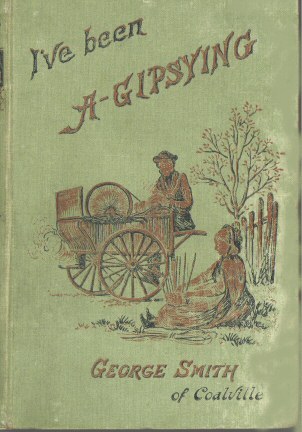
I’VE BEEN A-GIPSYING: or Rambles among our Gipsies and their Children in their Tents and Vans. By George Smith, of Coalville, Author of “Gipsy Life,” “Canal Adventures by Moonlight,” &c. With an Appendix showing the Author’s plans for the Compulsory Registration of Gipsy Vans, and the Education of Gipsy Children. New and Revised and Popular Edition. 12 Illustrations. 3s. 6d.
Her Majesty the Queen has been graciously pleased to accept, and to thank Mr. Smith for, a copy of the above work.
The Rt. Hon. Sir Stafford Northcote, M.P., thus writes to the author:—“Accept my best thanks for your book, which cannot fail to be most interesting, both on account of the subject and of the author. Your good works will indeed live after you.”
“Mr. Smith’s sketches of his visits to the gipsies are graphic and varied, and will, we trust, serve to excite a wider interest in the perplexing question of their amelioration, to which the author has already given yeoman’s service.”—Contemporary Review, September, 1883.
“The author of ‘Gipsy Life’ has so far made the characteristics and social condition of this race the study of his life, that nothing from his pen is likely to be otherwise than instructive. ‘I’ve been a-Gipsying’ will fully answer the expectations of its readers.”—The Record.
“No imaginary picture is drawn of distant sufferers on a dark continent, for the evil, vice, wretchedness, and misery may be seen any day at our very doors.”—Daily Chronicle.
“A rugged book by a rugged man in real earnest about his life work . . . These graphic sketches cannot fail to do good service by calling public attention to a crying evil, and so helping to hasten the day when an awakened Parliament shall wipe away this reproach from the nation.”—Christian.
“Those who deliberately and carefully go over Mr. Smith’s book will be able to see this is not exactly the sort of philanthropical work which is habitually dismissed with a careless wave of the hand.”—Modern Review.
“The earnestness, the enthusiasm, the high moral purpose of the man everywhere shine through, dominate the book, and enforce respect alike for the author and his design.”—Christian World.
“More interesting than any novel, and holds the reader spellbound . . . The revelations contained in this book are very startling and painful.”—Sheffield Independent.
“Will do considerable good, and it throws a flood of light on a subject of which most men know scarcely anything.”—Christian Leader.
“Merits a wide circulation, both on its literary merits, and the importance of its purpose.”—Liverpool Daily Post.
THE “LIVES WORTH LIVING” SERIES OF POPULAR BIOGRAPHIES. Illustrated Crown 8vo., cloth extra. Per vol. 3s. 6d.
1. Leaders of Men. |
3. Master Missionaries. |
2. Wise Words and Loving Deeds. |
4. Labour and Victory. |
5. Heroic Adventure. |
|
1. LEADERS OF MEN: A Book of Biographies specially written for Young Men. By H. A. Page, author of “Golden Lives.” Crown 8vo., cloth extra, with Portraits. Fourth edition. 3s. 6d.
The Prince Consort. Commodore Goodenough. Robert Dick. George Moore. |
Samuel Greg. Andrew Reed. John Duncan. Dr. John Wilson. |
Lord Lawrence. |
|
“Mr. Page thoroughly brings out the disinterestedness and devotion to high aims which characterise the men of whom he writes. He has done his work with care and good taste.”—Spectator.
“No one knows better than Mr. Page how to put within moderate compass the outstanding features of a life that has blessed the world so as to present a striking and impressive picture. This is just the volume to enlarge the views and to ennoble the aims of young men, and to such we specially commend it.”—Literary World.
“Here is a book which should be in the hands of every boy in the kingdom in whose mind it is desirable to implant a true ideal of life, and a just notion of the proper objects of ambition; and we may congratulate Mr. Page upon having carried out his task with all possible care and skill. ‘Leaders of Men’ is every way an admirable volume.”—Court Circular.